
 Medically Reviewed

Key Takeaways
- GLP-1s and ADHD medications have no known direct drug interactions, but taking them together may require closer monitoring.
- Both can suppress appetite, which may make it harder to eat enough or maintain adequate nutrition.
- Some GLP-1s and ADHD medications can affect heart rate, blood pressure, or dizziness.
- GLP-1s can slow gastric emptying, which may affect the timing or absorption of oral medications.
- If you take oral semaglutide, ask your healthcare provider how to time your ADHD medication around it.
One in nine U.S. adults take GLP-1 weight loss medications, according to a recent Gallup poll. If you’re considering joining them (or you already have), and you also have attention-deficit/hyperactivity disorder (ADHD), you may be wondering what you can expect when combining GLP-1s and ADHD medications.
You’ll be happy to hear that there are no known negative interactions between GLP-1s and commonly prescribed ADHD medications, specifically. However, it’s still a good idea to use a bit more caution when combining these medications.
Why This Medication Combination Raises Questions
The prescribing information for GLP-1s like semaglutide does not list any drug interactions for ADHD medications like Adderall (dextroamphetamine-amphetamine) or Ritalin (methylphenidate). Combining GLP-1 and ADHD medication is not necessarily dangerous. But, taking them together does warrant some extra caution. That’s because:
- GLP-1s may affect the absorption of oral medications. This may affect how your ADHD medication works or when effects kick in.
- Both GLP-1s and stimulants can reduce appetite. This may cause you to eat too little, not get enough nutrition, or lose weight too quickly.
- Both can cause gastrointestinal upset. GLP-1s and ADHD medications both cause stomach-churning side effects, so taking them together may compound these effects.
- Semaglutide and ADHD medications can both affect heart rate. People with underlying health conditions may require extra monitoring to ensure the medication combo remains safe for them to take. (link to our recent article on heart rate?)
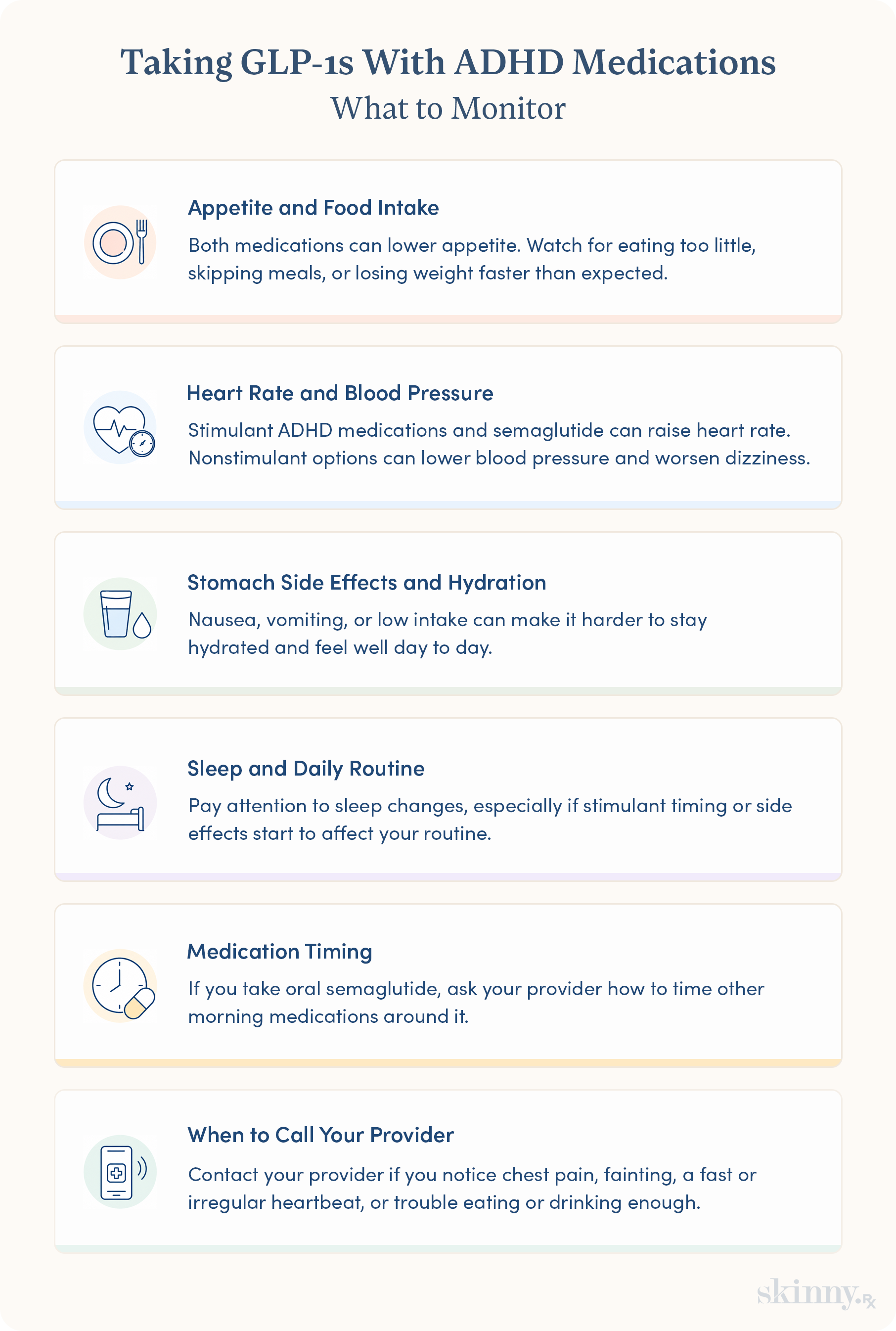
In the following sections, we’ll review each of these considerations in more detail.
Appetite Suppression From Two Directions
Stimulants like Adderall and Ritalin’s effects on the central nervous system can cause reduced appetite and weight loss as side effects. At the same time, GLP-1s produce weight loss by slowing down digestion and boosting satiety (fullness) signals in the brain. If you take stimulants and GLP-1s together, you may end up losing more weight more quickly than you expected.
If you’re taking a GLP-1 to lose weight, this may not sound all that bad. But losing weight too quickly can actually be dangerous. Not eating enough can cause you to miss out on the nutrition you need to:
- Keep your brain in good working order
- Maintain healthy muscle mass
- Have enough energy to live your day-to-day life
Rapid weight loss and malnutrition can lead to poor mental health, disordered eating, and even organ damage. If you’re taking semaglutide to manage your type 2 diabetes vs. weight loss, not eating enough can increase your risk of hypoglycemia (low blood sugar) — especially if you are also taking insulin or sulfonylureas.
Combining ADHD stimulants with GLP-1s may lead to more pronounced appetite suppression.
Consider These Tips:
- Work with a registered dietitian or nutritionist to make sure you’re a) eating enough and b) eating well.
- Monitor your weight loss progress. If you’re losing more than 1–2 pounds per week, ask your healthcare provider if you should make any changes.
- Increase your protein intake. For people actively losing weight, experts recommend 0.5–0.75 grams per pound of body weight per day. Lean (but nutrient-dense) proteins like fish, turkey, tofu, beans, nuts, eggs, and even protein shakes are all good options.
- If you have type 2 diabetes, monitor your blood sugar levels, and keep a source of fast sugar on hand in case they get low.
Weight Care Beyond the Prescription
The right weight-care treatment is important, but so is knowing what to do as things change. SkinnyRx gives you access to GLP-1 treatment, clinician guidance, and ongoing support along the way.
Heart Rate, Blood Pressure, and Stimulants
Both GLP-1s like semaglutide and ADHD medications can have heart-related effects. In some cases, this is a good thing. Semaglutide medications are medically indicated to reduce the risk of heart attack, stroke, and death in people who have heart disease and type 2 diabetes, obesity, or overweight.
While semaglutide has heart-protective effects, it can also cause heart palpitations and a small increase in heart rate (1–4 beats per minute).
On its own, this may not be a big deal. But, common ADHD stimulant medications like Adderall or Ritalin also increase heart rate (along with blood pressure). So, combining stimulants with semaglutide may not be ideal for people who have heart problems.
For people with heart issues, healthcare providers usually prescribe nonstimulant ADHD medications instead, namely alpha-2 agonists like guanfacine or clonidine. However, these can lower blood pressure and cause dizziness. Dizziness is common when taking higher doses of semaglutide, so combining semaglutide with this type of ADHD medication may lead to even more dizziness.
The bottom line: Both stimulant and nonstimulant ADHD medications, and GLP-1s like semaglutide, can have heart-related effects. Depending on your personal health situation, your healthcare provider may want to monitor you more closely or recommend a different treatment regimen.
Consider These Tips:
- Share a full list of your current medications and health conditions with your healthcare provider, so they can prescribe a safe treatment plan for you.
- Ask your healthcare provider if you should monitor your blood pressure at home, especially when increasing your GLP-1 dosage.
- Get ahead of dizziness by staying well-hydrated and drinking plenty of electrolytes.
- Seek emergency medical attention if you experience heart palpitations, shortness of breath, or chest pain.

Medicine is rarely about whether two drugs can be taken together. It's about whether that particular patient can tolerate them together. Looking at appetite, weight loss, sleep, blood pressure, hydration, and overall well-being is often more important than looking for a simple drug interaction.
–
Dr. Sajad Zalzala, Board-certified Family Medicine Physician and Medical Advisor at SkinnyRx
Nausea, Dry Mouth, Sleep, and Low Intake
GLP-1s and ADHD medications share many common side effects, including:
- Nausea
- Vomiting
- Constipation
- Abdominal pain
- Headache
- Indigestion
- Dizziness
- Abdominal bloating
- Heartburn
Because both ADHD medications and GLP-1s can cause GI upset, taking them together may worsen these side effects. If you’re feeling queasy, you may not feel like eating. This can make it even tougher to get enough nutrition when your appetite is already low.
A growing body of research suggests GLP-1s may also cause dry mouth, a common symptom of Adderall and Ritalin. And, some people report insomnia (trouble falling or staying asleep) on GLP-1s. Sleep problems are another common symptom of stimulants for ADHD.
As with GI discomfort, taking GLP-1s and ADHD medications together may worsen these side effects.
The bottom line: Combining GLP-1s like semaglutide with ADHD medication may increase the risk of digestive upset, along with dizziness, headache, sleep issues, and dry mouth.
Consider These Tips:
- Manage GI discomfort. Avoid heavy portions, fried or fatty foods, or skipping breakfast — which can all contribute to nausea.
- Stay hydrated. Drinking ice water can prevent both nausea and dry mouth.
- Practice good sleep hygiene. Avoid eating, exercising, or drinking caffeine too late in the day, and make room to get at least 7 hours of sleep per night.
- Ask your doctor when to take your ADHD medication. It’s often recommended to take stimulants earlier in the day to avoid them disrupting your sleep.
Oral Medication Timing and Gastric Emptying
Because GLP-1s slow down gastric emptying, or the process in which food leaves your stomach. This helps increase feelings of fullness, causing weight loss. However, it can also affect the absorption of any medications you take orally, including ADHD medications. A change in absorption can affect when a drug kicks in and how well it works.
According to the prescribing information for semaglutide, it didn’t affect the absorption of any oral medications they studied in clinical trials. But, ADHD medications weren’t one of the medications they studied, and the warning still stands.
It’s also worth noting that oral GLP-1s have strict requirements around when and how you take your dose. Oral GLP-1s should be taken first thing in the morning, on an empty stomach, at least 30 minutes before food, drinks, and other medications. (The same restrictions don’t apply for injectable GLP-1s.)
If you typically take your ADHD medication in the morning, your health care provider may recommend adjusting your schedule.
The bottom line: When taking GLP-1s with ADHD medications, your dosage schedule may need to be adjusted for certain medications.
Consider These Tips:
- Ask your healthcare provider if (and how) you need to adjust your dosage schedule if you take ADHD medications and GLP-1s.
- If you take oral semaglutide, ask your healthcare provider how long you should wait before taking your ADHD medication.
- Ask your healthcare provider if there are any signs you should look for that might indicate you need to adjust your medication or dosage schedule.
- If you take other oral medications, check with your healthcare provider if you need to make any dosage adjustments.
What to Ask Your Prescriber or Pharmacist
Before combining a GLP-1 and ADHD medication, ask your healthcare provider these questions:
- Which ADHD medication do I take, and is it stimulant or non-stimulant?
- What should I do if my appetite, weight, sleep, heart rate, or blood pressure change?
- What if I feel shaky, dizzy, overly wired, or unable to eat enough?
- Do I take other medications affected by meal timing?
- Should you review the timing of my medication routine?
- What symptoms should prompt a call?
If you notice chest pain, fainting, severe dizziness, shortness of breath, a fast or irregular heartbeat, or inability to eat or drink enough, contact a healthcare professional promptly.
The Bottom Line
GLP-1s and ADHD medications don’t have any known drug interactions, so taking them together isn’t inherently dangerous. Still, both can suppress appetite, cause stomach upset, and affect heart rate, which means the combination may need a little more attention.
Watch for changes in appetite, sleep, and your overall response as doses change. If you take oral semaglutide, your medication schedule may also need to be adjusted. Your healthcare provider can help you manage both safely based on your full medication list.
Frequently Asked Questions
Weight Care That Adjusts With You
Managing GLP-1 treatment alongside other medications takes more than a prescription. SkinnyRx pairs your treatment with clinician guidance and ongoing support, so you're never figuring it out alone.

By Amelia Willson
Contributing Author
Amelia Willson is a freelance health writer and content strategist based in Orange County, California. Her work has appeared in several health publications, including Ro, Klarity Health, K Health, Sleep Foundation, and A Place For Mom. Amelia covers the latest trends in health and wellness, including the research (or lack thereof) behind them, breaking down complex topics so that readers don't have to. Her writing frequently explores weight management, plant-based nutrition, and mental health.