
 Medically Reviewed

Key Takeaways
- You do not need to avoid carbs on GLP-1s, but higher-fiber choices can provide steadier energy and a more gradual effect on blood sugar.
- You don't need to cut carbs too low on semaglutide or tirzepatide, and doing so may further reduce an already low appetite.
- Whole grains, beans, lentils, fruits, and vegetables are better choices than added sugars and refined grains.
- Fiber can support gut health and help manage constipation during GLP-1 treatment.
- Pair carbs with lean protein and healthy fats, and seek individualized guidance if you have diabetes or prediabetes.
If you are taking a GLP-1 medication, you may be wondering how you should modify your diet, including how to optimize your intake of carbohydrate-rich foods.
You do not need to give up carbs. The goal is to choose carbohydrates that give you steady energy, fiber, and a more gradual effect on blood sugar. This guide covers which carbohydrates to choose, which to limit, and how to pair them with lean protein and healthy fats while on GLP-1s.
GLP-1s are FDA-approved to treat both obesity and type 2 diabetes. Because they support weight loss and lower blood sugar levels, your carbohydrate needs depend on why you are taking one. If you are taking a GLP-1 for type 2 diabetes or another blood sugar issue, your carbohydrate goals will be more individualized, and you may need to balance your choices with other medications you take. A Registered Dietitian Nutritionist (RDN) can help you build a plan that fits your needs.
Do You Need to Avoid Carbs on GLP-1 Medications?
Carbohydrates are a primary energy source for the body. Certain tissues, like the brain and red blood cells, rely almost exclusively on carbohydrates for energy.
Carbohydrate-rich foods also provide dietary fiber, which is essential to support gut health, heart health, and assist with your weight loss goals.
You should not avoid carbs on GLP-1 medications. But this can be a time to fine-tune your choices to ensure you are making smart choices about carbohydrate-rich foods.
What Foods Provide Carbohydrates?
When you think about whole foods that form the foundation of a healthy diet, most plant-based sources provide carbohydrates.
Whole grains, beans, peas, legumes, fruits, and vegetables provide about 5-15 grams of carbohydrates per serving, depending on the specific food and its serving size.
Though meat does not provide any carbohydrates– including beef, poultry, fish, and lamb– milk and dairy products provide a specific type of carbohydrate called lactose.
The carbohydrate content of dairy foods will range from 12 grams in a serving of fluid milk to virtually zero grams in hard cheeses such as Parmesan.
Note: Breaded meat contains additional carbohydrates and fat in the coating.
Carbohydrates also appear in many processed foods as added sugars. Sodas, candy, baked goods, condiments, salad dressings, granola bars, breakfast cereals, and sandwich bread often have added sugars.
Carbs and Blood Sugar Explained: The Glycemic Response
Your body doesn't metabolize all carbohydrates the same way. The “glycemic response” refers to how high, how quickly, and how long your blood sugar rises after eating a carbohydrate-rich food.
Simple carbohydrates, like added sugars found in soda or candy, are rapidly digested and absorbed into the bloodstream, causing a sharp spike and eventual drop in blood sugar levels in people who don’t have diabetes.
Complex carbohydrates, like those found in whole grains and beans, digest more slowly, causing blood sugar levels to rise and fall more gradually.
GLP-1 medications can also affect blood sugar, so it is helpful to understand when low blood sugar can occur and who may be most at risk.
Carbs, Fiber, and Digestion During GLP-1 Treatment
In addition to providing energy, carbohydrate-rich foods can provide dietary fiber. Fiber is classified as soluble or insoluble depending on how it acts in your body's water-based environment.
Soluble fiber swells in water, which helps to trap sugar molecules so that they are absorbed more slowly. It also traps and expels cholesterol, making it especially helpful for supporting your blood cholesterol levels and overall cardiovascular health.
Insoluble fiber does not swell in water, and instead adds bulk to the stool. It helps your meal to travel more quickly through the intestines, and therefore helps to prevent or treat constipation and keep bowel movements regular.
Certain types of fiber are designated as prebiotics, meaning they provide food for the healthy microbes in your gut.
Choosing foods rich in prebiotic fibers, such as bananas, onions, garlic, leeks, wheat, and oats, can help to support your overall gut health. This can even boost the natural levels of GLP-1 your gut microbes produce.
Weight Loss Is Built on Medication and Nutrition
Pair your GLP-1 treatment with nutrition guidance designed to support your weight loss goals.
Making Smarter Carb Choices
A healthy diet is built on vegetables, fruits, beans, legumes, nuts, seeds, whole grains, and lean protein sources, almost all of which contain carbohydrates.
The goal is not to avoid carbs, but to choose sources that can provide steady energy, fiber, and a more gradual effect on blood sugar.
When filling your plate, you can make smart carbohydrate choices for each food group:
Whole Grains
Choose whole grains, such as whole wheat, oatmeal, brown rice, corn, quinoa, popcorn, or millet. These are made from the entire grain kernel and are rich in fiber and micronutrients.
Limit refined grains, such as white rice, white bread, or flour tortillas, where the nutrient-dense portions of the grain kernels have been removed.
Beans and Lentils
Beans and lentils are rich in fiber and micronutrients such as iron, calcium, potassium, magnesium, and folate. Try a variety of beans, such as black beans, kidney beans, navy beans, adzuki beans, lima beans, cranberry beans, or soy beans.
In the lentil family, try brown, green, black, yellow, or red lentils. Canned or vacuum-packed beans or lentils can turn these nutritional powerhouses into a pantry staple for quick meals.
Fruit
Fruits contain slowly absorbed sugars thanks to their soluble fiber content. Choose fruits that are especially rich in soluble fiber, such as strawberries, blackberries, raspberries, apples, pears, oranges, and apricots.
Fruits can be fresh or frozen with no added sweeteners. If choosing canned fruits, make sure they are packed in water rather than syrup. Limit fruit juices as these are high in sugar and lack the fiber component of whole fruits.
Vegetables
Vegetables can be grouped as starchy (e.g., potatoes, peas, corn) or non-starchy (e.g., broccoli, carrots, cauliflower, leafy greens, cucumber, kohlrabi, peppers, and tomatoes). No vegetables are off-limits, but focus on the non-starchy vegetables to fill your plate.
Aim for a variety of different colors, including red, orange, and dark green veggies. Vegetables can be fresh or frozen. If you choose canned vegetables, look for a low-sodium variety.
Milk and Dairy Foods
Milk naturally contains a type of sugar called lactose. Dairy foods, especially yogurt, cottage cheese, cheese, and milk, are also a good protein source to help meet your daily target.
Limit dairy products with added sugars, such as flavored milks or yogurts. Ultra-filtered milks contain a lower carbohydrate count and higher protein content, in comparison to typical fluid cow's milk.
Carbohydrates to Limit
The typical American diet is high in added sugar and refined grains, which undermine weight loss and metabolic health.
Limit added or refined sugars, which are added to foods for sweetening purposes. Examples include sucrose, honey, brown sugar, high fructose corn syrup, corn syrup, or brown rice syrup. When reading the Nutrition Facts panel on a food package, keep an eye out for the line item for
Added Sugars under the “Total Carbohydrate” section. This lists the total grams of added sugars, as well as their contribution to your overall intake with a percent Daily Value. For example, a food with 10 grams of added sugars is about 20% of your Daily Value– a significant contribution.
Aim to limit your intake of refined grains, such as bread, pasta, tortillas, or crackers made with “white” or refined wheat flour. This type has been stripped of most nutrients, including the fiber-rich bran and nutrient-dense germ, leaving behind the starchy endosperm.
Instead, choose whole grains, such as foods made with 100% whole-wheat flour, brown rice, oatmeal, quinoa, millet, amaranth, or popcorn.
Meal Planning for Success: Pairing Carbs With Protein and Healthy Fats
Carbohydrates, protein, and fat are the three macronutrients you need to meet your body’s needs. These nutrients naturally coexist in many foods.
For example, nuts and seeds provide the trifecta of healthy fats, complex carbohydrates and fiber, and protein.
These nutrients also work synergistically in the body; for example, healthy fats, protein, and fiber all slow the rate of digestion and send signals to your brain that you are getting full.
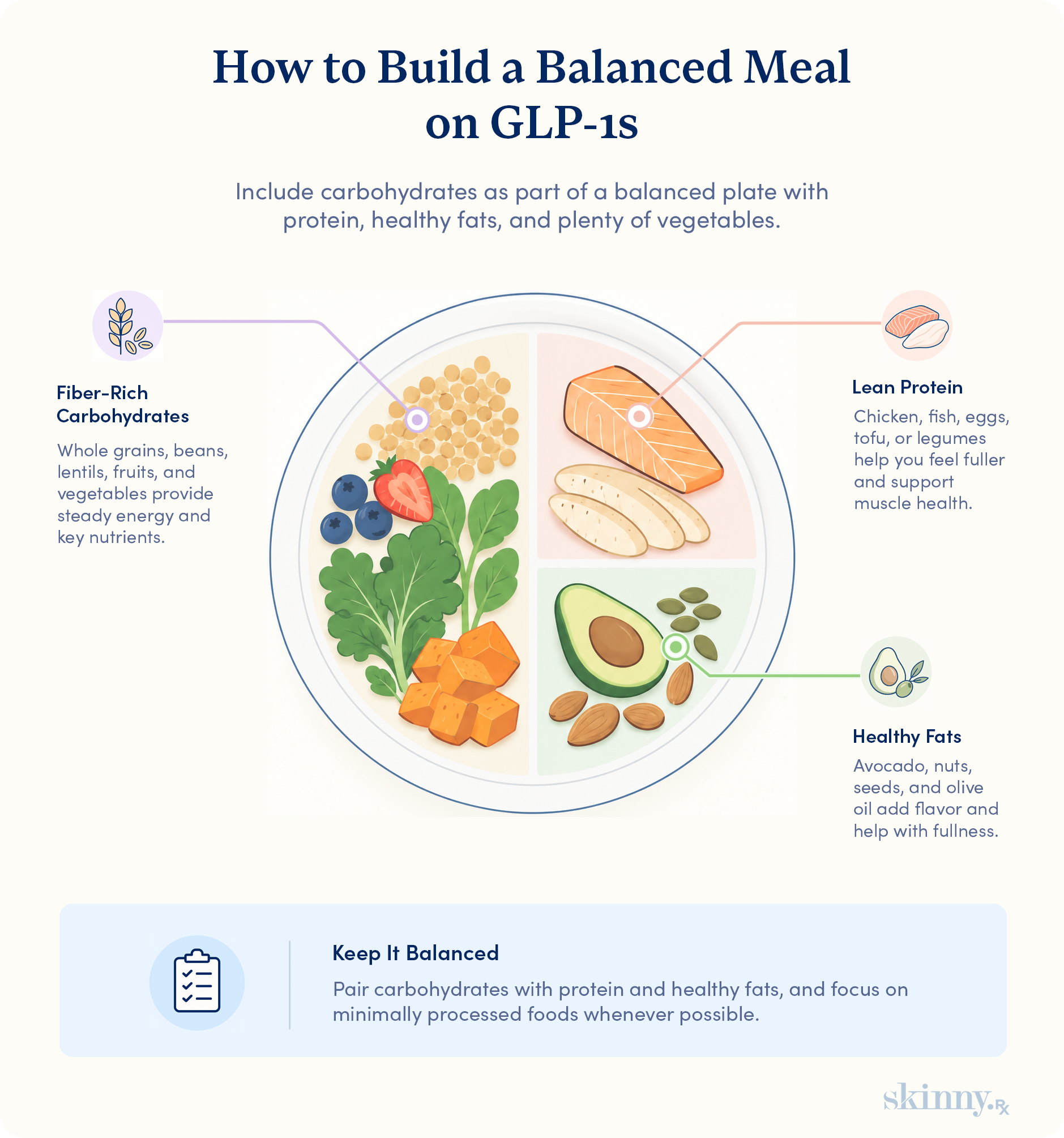
When planning your meals and snacks, aim to include a source of carbohydrate (with a focus on fiber), lean protein, and healthy fats.
To plan your meals, follow a simple formula: lean protein + whole grains/legumes + vegetables/fruits + healthy fats.
Examples of balanced meals that hit all the points include:
- Thai stir-fry with tofu, brown rice, broccoli, carrots, bell peppers, edamame, and peanut-lime sauce
- Mediterranean bowl with grilled salmon, roasted chickpeas, quinoa, cucumber, tomato, olives, and tahini-lemon dressing
- Indian curry with chicken, dal, brown basmati rice, cauliflower, spinach, and cashews
- Falafel bowl with baked falafel, hummus, bulgur, cucumber, tomato, fresh herbs, and lemon
- Tacos with pulled chicken, black beans, avocado, corn, peppers, salsa, and lime whole-grain corn tortillas
Who Needs Individual Nutrition Guidance?
Anyone needing support on their weight loss journey can benefit from individualized guidance. Those with diabetes or pre-diabetes need individualized care to ensure their nutrition is well-balanced with other medications they may be prescribed.
A Registered Dietitian Nutritionist (RDN) will assess your overall health status and help to ensure you are meeting your nutrient needs. They can help with short-term concerns, such as side effects like nausea or constipation, as well as long-term goals, such as sustained weight loss.
Bottom Line
You do not need to avoid carbohydrates on a GLP-1 medication. Build your plate around whole grains, beans, fruits, and non-starchy vegetables, and limit added sugars and refined grains. Pair these foods with lean protein and healthy fats so your meals keep you full and energized.
Small, consistent choices at each meal add up to steady energy and progress toward your goals.
Frequently Asked Questions
GLP-1 Treatment With Nutrition Guidance Included
Medication and good nutrition work hand in hand. Get both, with support from a licensed provider.

By Whitney Linsenmeyer
Assistant Professor of Nutrition and Dietetics
Whitney Linsenmeyer, PhD, RD, is an Assistant Professor of Nutrition and Dietetics at Saint Louis University and a National Spokesperson for the Academy of Nutrition and Dietetics with expertise in fad diets, culinary nutrition, and transgender health. Her research focuses on gender-affirming nutrition care, and she brings a joy-first approach to food science and eating behavior.