

 Medically Reviewed

Key Takeaways
- GLP-1 medications slow digestion, which can lead to nausea, bloating, reflux, gas, and changes in bowel habits.
- GI side effects are most common during dose increases and often improve as the body adjusts over time.
- Gas, sulfur burps, and bloating can be managed with digestive enzymes or simethicone to reduce pressure and discomfort.
- Diarrhea and constipation can be stabilized by gradually adjusting fiber intake, along with magnesium and movement when needed.
- Avoiding late meals and allowing time for digestion before lying down can help reduce acid reflux and heartburn.
Starting a GLP-1 drug (short for glucagon-like peptide-1 receptor agonists), such as semaglutide or tirzepatide, often comes with ups and downs.
There are positive effects, such as healthy weight loss and help with managing type 2 diabetes, and downsides like potential side effects.
Some of the most common side effects of these drugs are gastrointestinal (GI), meaning stomach issues such as vomiting, nausea, and more.
Managing these effects can be a learning curve, which is why we’ve provided a full guide on managing GI discomfort on GLP-1s, what to expect while taking these drugs, and why these side effects happen.
The GI Learning Curve: Why Your Gut is Reacting to GLP-1s
To better understand why GLP-1 stomach discomfort (among other side effects) happens, it’s helpful to know how these medications work.
Delayed Gastric Emptying: The Root of the Discomfort
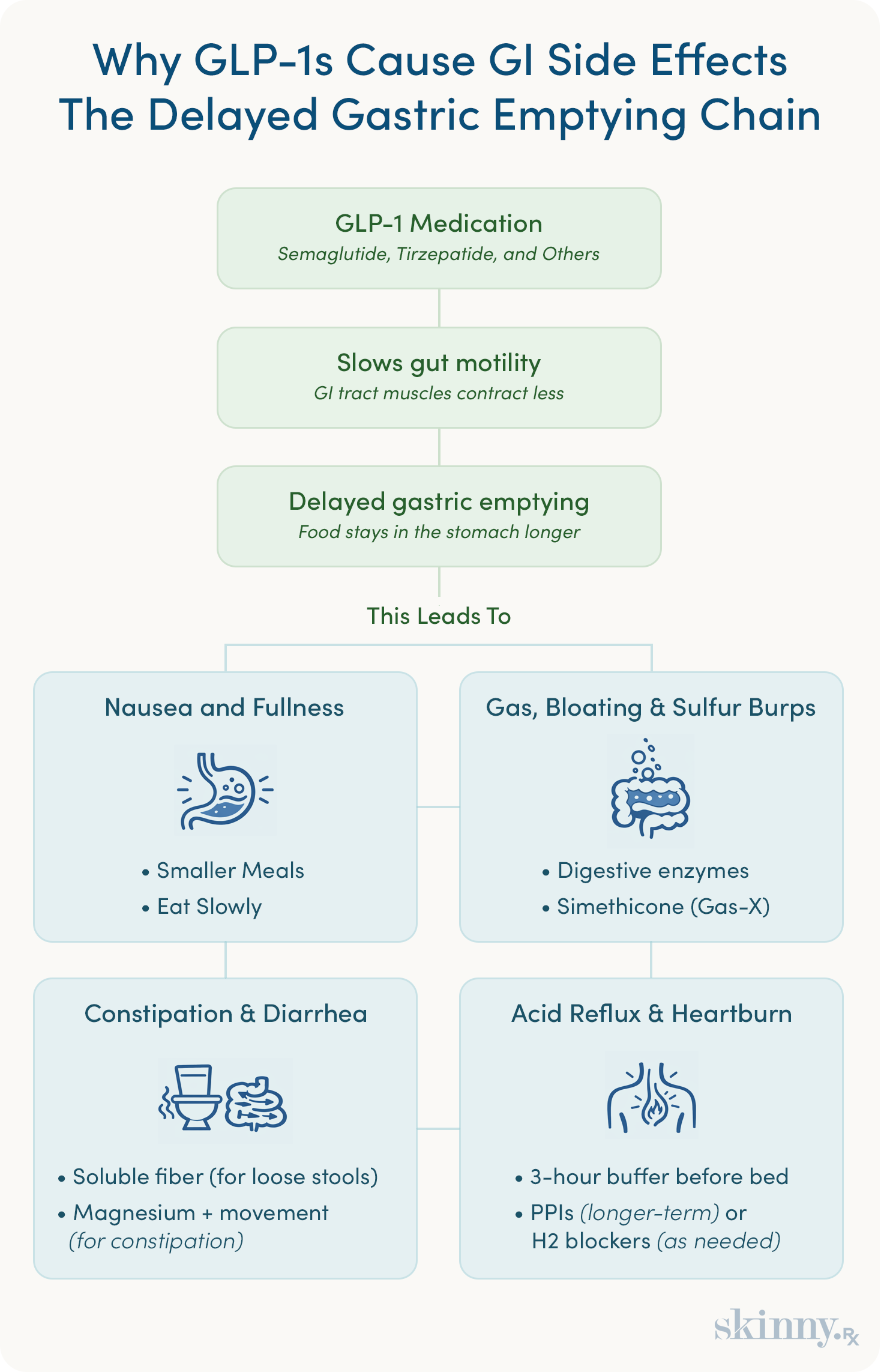
One of the main methods of GLP-1s is slowing down gut motility, or the movement and contraction of the muscles in the GI tract.
This can result in delayed gastric emptying, meaning the drug slows down the process by which food empties from the stomach.
This leads to food staying in the stomach longer, keeping you feeling full and decreasing your appetite, which can lead to weight loss.
By slowing down digestion, more gastrointestinal side effects can occur, including:
- Nausea
- Vomiting
- Diarrhea
- Constipation
- Bloating
- Indigestion
- Abdominal discomfort
- Sulfur burps (foul, rotten-egg-smelling burps)
- Acid reflux
Why Side Effects Peak During Titration
Medication can affect everyone differently, and so people may experience various side effects at different times while taking a drug, depending on their dosage and other factors.
GLP-1 side effects are often felt in the first few weeks of taking the drug or gradual dose increases, a process known as titration.
The injections also reach maximum effectiveness after 72 hours. The effects, either appetite suppression or GI side effects, can be felt within a matter of days.
Side effects can be dose-dependent, which means that as the dosage is increased, your body works to adjust to the stronger impact on delayed gastric emptying and how your gut moves.
Start Your GLP-1 Journey Right
Take a free assessment at SkinnyRx and discover a guided GLP-1 weight loss treatment that's built to work safely and effectively for you.
Solving the Sulfur Burps and Bloating Puzzle
If you’re experiencing sulfur burps or bloating on tirzepatide or another GLP-1, there are ways to manage these uncomfortable side effects.
The Fermentation Factor: Why Certain Foods Gas Up Your Gut
To understand why you’re burping more on a GLP-1, let’s take a quick look back at the delayed emptying of your stomach and how your gut’s motility is changed.
Gas is typically produced in one of two ways: when you swallow air or when bacteria break down the food that you eat. Some foods and medications can also increase gas production because of how they break down and ferment in your colon.
This intestinal gas creates air in your digestive system. Then, this air is released, either by burping or farting.
But your stomach feels like an inflated balloon because of the GLP-1 delayed gastric emptying mechanism. This can also increase the fermentation of food by gut bacteria because it stays in the stomach longer.
Not only has the medication slowed down how fast your stomach empties, but sometimes gas can be trapped within the intestines, causing discomfort.
Digestive Enzymes and Simethicone: Your First Line of Defense
Fortunately, there are two sulfur burp treatments, one of which is a type of enzyme that the body naturally produces, while the other is a medication you can buy over the counter.
Digestive enzymes are proteins made in the stomach, small intestine, and pancreas that break down food and help digestion. Several types of these enzymes break down different nutrients, like carbohydrates, proteins, and fats, into smaller nutrient molecules, or sugars, amino acids, and fatty acids.
Although digestive enzymes are produced in the body, they can also be taken in supplement form, either via prescription medication or over-the-counter supplements.
Simethicone, on the other hand, is an over-the-counter drug that you may be more familiar with as the brand names Gas-X, Mylicon, and Phazyme.
This medication is used to relieve symptoms of uncomfortable bloating, pressure, and fullness by breaking up gas bubbles in the gastrointestinal tract.
Managing Bowel Irregularity: The Diarrhea-Constipation Seesaw
GLP-1s can deliver a bit of contrast when it comes to two side effects. On the one hand, you could be experiencing diarrhea. But there could also be the issue of being backed up and constipated.
So how do you deal with this back-and-forth? Here are some diarrhea remedies, as well as clearing out constipation.
The "Soluble Fiber" Protocol for Loose Stools
When it comes to diarrhea and loose stool, one solution is fiber.
There are two types of fiber: insoluble, which helps food move through the system and prevents constipation, and soluble, which slows digestion.
Some sources of soluble fiber include barley, nuts, seeds, beans, lentils, peas, apples, and blueberries.
However, we should also note that too much fiber, particularly insoluble fiber, can cause constipation, along with more gas, bloating, farting, and burping.
You’ll want to increase your fiber intake gradually, rather than all at once, to firm up loose stool but avoid being backed up.
Magnesium and Movement: Clearing the "GLP-1 Clog"
If you’re on the opposite end of GI side effects and things aren’t moving in the gut, magnesium is how to fix GLP-1 constipation.
While other lifestyle changes can help aid gut movement, certain magnesium supplements, like magnesium citrate, magnesium oxide, magnesium hydroxide (often referred to as Milk of Magnesia), and magnesium sulfate or Epsom salt.
Acid Reflux and Heartburn: Protecting Your Esophagus
Heartburn is another common gastrointestinal side effect of a GLP-1. Heartburn is often caused by acid reflux, the backflow of stomach contents into the esophagus, which creates a mild burning sensation in the mid-chest, especially after you eat.
This side effect was less common but still reported in clinical trials, so you’re not alone if you’re experiencing it.
There are a few ways to prevent heartburn and acid reflux while on a GLP-1, including scheduling meals and over-the-counter medications.
The Three-Hour Buffer: Why Bedtime Meals Are the Enemy
If you’re prone to late dinners or eating a meal right before bedtime, but are experiencing acid reflux, you may need to reconsider your eating schedule.
Avoiding meals right before bedtime is beneficial to manage heartburn, especially by avoiding eating three hours before you go to sleep.
This three-hour buffer allows time for food to digest properly, especially as lying down right after eating can cause acid reflux to move back up into the esophagus, causing discomfort.
PPIs vs. H2 Blockers: Which One for GLP-1 Users?
There are two medications you can take for heartburn and acid reflux:
- Proton pump inhibitors (PPIs), medications that significantly reduce stomach acid production for long-term use (although they should be weaned slowly off)
- H2 blockers, drugs that reduce stomach acid production by blocking histamine signals in the stomach lining, are better for occasional use
While PPIs are generally more effective at providing 24-hour acid suppression and healing esophageal damage, they can increase the risk of nutrient deficiencies with long-term use.

My patients often ask me which type of antacid to use. If you need long-term acid reduction, then the PPI is more effective. If you, however, are looking for intermittent or occasional heartburn treatment, the H2 blocker would be a better option. Also, remember, if using a PPI long term, it is important to wean slowly off those medicines, as stopping abruptly can cause worsening reflux symptoms for the next several days, as the stomach acid may increase again quickly. Best to reduce the dose and frequency over several weeks time to avoid rebound reflux symptoms.
–
Dr. Daniel McGee, Board-certified Family Medicine Physician
When Discomfort Becomes a Danger Zone
While many of the GI side effects we discussed above are common, some more adverse effects are not and could have serious complications.
More severe issues of GLP-1s can include:
- Pancreatitis, or severe abdominal pain radiating to the back, and vomiting
- Bowel obstruction, which consists of severe abdominal pain, vomiting, bloating, and constipation
- Severe gastroparesis, a chronic condition characterized by delayed stomach emptying without a physical blockage
Identifying the Signs of Pancreatitis and Obstruction
These can seem similar to many of the common side effects, so it’s important to know the difference.
The common side effects are more manageable and often fade after being on the medication for a few weeks, though not always for every person. More serious risks are more intense abdominal pain, persistent vomiting, and severe dehydration.
If you’re experiencing any of the above severe issues, you should seek medical attention immediately.
Talk to a Medical Professional About Your GLP-1 Journey
While the strategies above can help you navigate GI discomfort, everyone’s experience with GLP-1 medications like semaglutide and tirzepatide is different.
A licensed physician can help you anticipate side effects, adjust your dosage during titration, and provide personalized guidance so your treatment works for you.
If you’re considering starting a GLP-1 or already taking one and struggling with GI symptoms, getting proper medical support can make a meaningful difference. Start with a quick assessment at SkinnyRx to connect with a provider and receive guidance aligned with your weight-loss and health goals.
Frequently Asked Questions

By Rachel Sacks
Contributing Author
Rachel Sacks is a New York-based contributing writer with more than a decade of experience covering a range of topics, including weight loss, mental health, sexual wellness, skincare, and more. Her work has been featured in The New York Post, Healthline, Hims & Hers, Business Insider, and other notable publications. She graduated from Miami University in Oxford, Ohio, with dual degrees in Journalism and Art History.