
 Medically Reviewed

Key Takeaways
- Semaglutide causes constipation in roughly one in four users, primarily by slowing digestion, reducing food intake, and affecting hydration.
- Gradually increasing dietary fiber and drinking at least 1.5 liters of water daily are the most effective first-line responses.
- Regular physical activity is associated with a 34% lower risk of constipation and supports the digestive changes semaglutide creates.
- Constipation is typically tied to the dose adjustment period and improves for most people as their bodies adapt.
- Symptoms lasting more than three weeks, or accompanied by bleeding or persistent pain, warrant medical attention.
GLP-1s have a lot of upside. The fact is, medications like semaglutide are among the most impressive pharmaceutical advancements in recent years. They regulate diabetes, help people lose weight where other methods have failed, and may even have much wider clinical applicability than previously thought.
However, like all medications, GLP-1s have side effects. Semaglutide constipation affects around one in four users, based on trial data.
If you’re part of that coalition, you’re probably looking for ways to relieve semaglutide constipation without having to adjust your dose or get off your GLP-1 altogether.
Here’s what we know about semaglutide constipation—why and how it happens, what you can do about it, and when you need to see a doctor.
Why Semaglutide Can Cause Constipation
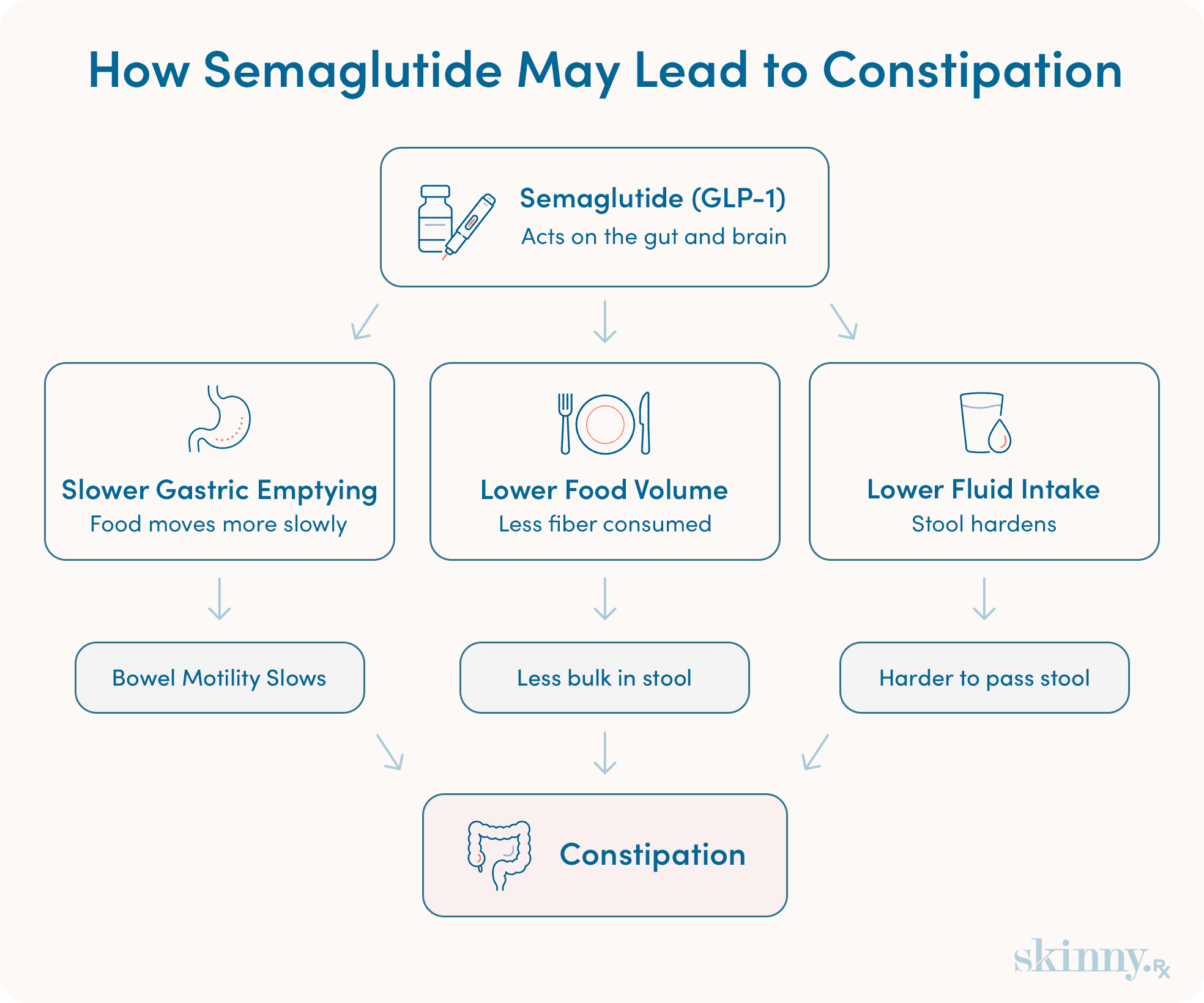
Many medication side effects occur as a result of several factors at once. Semaglutide constipation is no different. While semaglutide’s primary mechanism of action plays a role, your lifestyle choices and habits also have an impact.
Slower Gastric Emptying
One of the main actions semaglutide takes in your system is to delay gastric emptying—GLP-1s “slow traffic” between eating and passing food waste. As a result, people feel fuller, longer, during and after meals.
However, this gastrointestinal slowdown can also morph into what’s called gastroparesis. Gastroparesis describes a neuromuscular issue in which the slowdown escalates into an inability to move food waste in a timely manner.
Lower Food Volume
GLP-1s tackle overeating from both ends. Beyond slowing down digestion, semaglutide also binds to receptors in your brain to influence your relationship with food.
Put simply, it discourages you from indulgence (this is the driving force behind much of the emerging research on semaglutide, including its potential value in managing addiction).
Eating less means consuming fewer calories, but it also means getting less food volume in general—and fewer essential nutrients that help smooth out digestion, such as fiber.
Lower Fluid Intake
Your digestive system needs to be sufficiently lubricated to smoothly convert, process, and expel food waste. Unfortunately, GLP-1s can affect fluid balance and hydration in some patients.
Without drinking enough water (researchers recommend 1.5 to 2 liters as a baseline range to be tailored to individual needs) daily, stool can become too firm and thus more prone to friction against the intestinal wall.
How to Relieve Semaglutide Constipation
So, we know how semaglutide constipation happens; food stays in our bowels longer, and we’re less likely to eat and drink things that ease digestion.
When it comes to managing semaglutide constipation, you don’t necessarily need to rush to the medicine cabinet right away.
Increase Fiber Gradually
Increasing your dietary fiber intake is the least invasive, and possibly most effective, way to alleviate semaglutide constipation. Large-scale scientific data back it—upping your fiber at least 10 grams beyond your regular intake can have a “significant effect” on constipation.
Most individuals will want between 20 and 30 grams of dietary fiber per day, ideally from a variety of sources. Supplements work fine, but prioritize whole foods if you’re able to do so.
Drink Enough Fluids
You’ll also want to lubricate the digestive tract by making sure you’re drinking enough water. The 1.5 to 2-liter recommendation we discussed above is a good benchmark to shoot for.
Remember that water intake is contextual to body size; larger folks generally need to shoot for the upper end of most broad recommendations.
Add Gentle Movement
Adding more movement can help with semaglutide-related constipation (and assist with weight-loss efforts, if that’s why you’re taking a GLP-1). In 2024, researchers reviewed the existing evidence on movement and digestion—studies involving nearly 120,000 participants in total.
They observed that higher levels of physical activity were associated with a 34% lower risk of constipation. It’s why you often hear that taking a short walk after a meal can help with digestion. You don’t need to exercise right after every meal, but if you’re suffering from semaglutide constipation, try sprinkling in more walks between meals.
Time Your Meals Consistently
If possible, you should also try to eat at consistent times. Generally speaking, your body prefers to keep a schedule and stick to it. This is as true for sleep-wake cycles as it is for digestion. If your eating habits are inconsistent, the bowel movements that follow will be, too.
Discuss OTC Options
If your choices in the kitchen aren’t making a difference in your semaglutide constipation, there are pharmaceutical options to explore. You don’t need to reach right for a laxative, though they are generally safe to use if you’re on a GLP-1.
Fiber supplements can be added to help you meet your daily quota, but double-check to make sure there aren’t any harmful interactions with your existing medications. There are also stool softeners, which help change the physical texture of food waste so it passes more easily.

Weight Loss Support, Personalized to You
SkinnyRx connects you with a licensed provider who can assess your eligibility and support you throughout your weight loss journey.
Foods That May Help With Semaglutide Constipation
If you’re trying to manage semaglutide constipation, you need to be cognizant of what you’re putting into your body. Foods with high soluble (dissolves in liquid) and insoluble (roughage, physical food material) fiber content can make it easier to pass stool.
Insoluble Fiber Sources Include:
- Leafy greens
- Dried fruit
- Nuts
You Can Get Soluble Fiber From:
- Whole grains
- Cooked vegetables
- Apples
- Bananas
Eating high-fiber foods isn’t guaranteed to cure semaglutide constipation, but it’s a good box to check before taking more aggressive action.
Warning Signs and What to Avoid
Most people experience semaglutide constipation while adjusting to the medication. After a few weeks at your assigned dose, most side effects diminish in intensity. If you’re experiencing persistent (3+ weeks) or painful constipation, it might be time to seek medical help.
Meanwhile, avoid classic stomach irritants like spicy food, gorging on large meals, or excessive alcohol consumption. The Mayo Clinic recommends medical attention for constipation symptoms that include:
- Rectal bleeding or blood in stool
- Unusual discharge
- Consistent stomach pain
- Sudden or dramatic weight loss
Bottom Line
Constipation is one of the more common adjustment-period side effects of semaglutide, affecting roughly one in four users. For most people, it improves as the body adapts to the medication and responds well to straightforward changes: more fiber, adequate hydration, and consistent movement.
The key is not to ignore it. Small dietary and lifestyle adjustments made early can prevent a temporary inconvenience from becoming a persistent problem. If symptoms last more than a few weeks or are accompanied by pain or bleeding, that is a conversation for your prescribing clinician, not something to manage on your own.
Constipation alone is rarely a reason to discontinue a medication that is otherwise working. With the right support, most people find a manageable path forward.
Frequently Asked Questions
Explore Personalized Weight Loss Options
SkinnyRx connects you with a licensed provider who can assess your eligibility, prescribe GLP-1 treatment when appropriate, and support you with ongoing guidance throughout your weight loss journey.

By Jake Dickson, NASM-CPT, USAW-L2
Contributing Author
Jake holds a B.S. in Exercise Science from UNC Wilmington and began his career as a personal trainer and weightlifting coach. In recent years, he’s moved behind the page as a writer and editor, contributing hundreds of articles and being featured as a subject matter expert. Today, Jake’s goal remains the same: to empower people to change their lives by bringing heady scientific topics down to ground level.