
 Medically Reviewed

Key Takeaways
- Semaglutide and other GLP-1 medications can cause bloating by slowing digestion, allowing food and gas to remain in the stomach longer.
- Bloating is most noticeable during early treatment or dose increases and often eases as the body adjusts.
- Large or high-fat meals, sulfur-rich foods, carbonated drinks, and fast eating can intensify gas, pressure, and burping.
- Eating smaller meals, slowing down at meals, staying hydrated, and moving lightly after eating can help relieve discomfort.
- Bloating shows up quickly as stomach tightness or fullness after meals, while weight gain develops gradually and affects the body more broadly.
Starting a new medication can come with some ups and downs — like side effects. And while your doctor and the medication’s label can let you know generally what to expect, there can be some surprising adverse effects.
While nausea and diarrhea seem to get all the attention when it comes to semaglutide side effects, one unexpected potential effect of the weight loss drug is excessive bloating.
Aptly nicknamed “semaglutide bloating” because it causes stomach pressure and may even result in excess burping, this side effect can be embarrassing. But there’s relief. Read on to learn more about semaglutide bloating, why it happens, and how to stop it.
The Root Cause: Delayed Gastric Emptying
While other side effects are more common, you’re not alone if you’re experiencing more frequent or uncomfortable abdominal distension while taking semaglutide.
This semaglutide bloating occur for a few reasons. One reason? The process of how semaglutide works in the body.
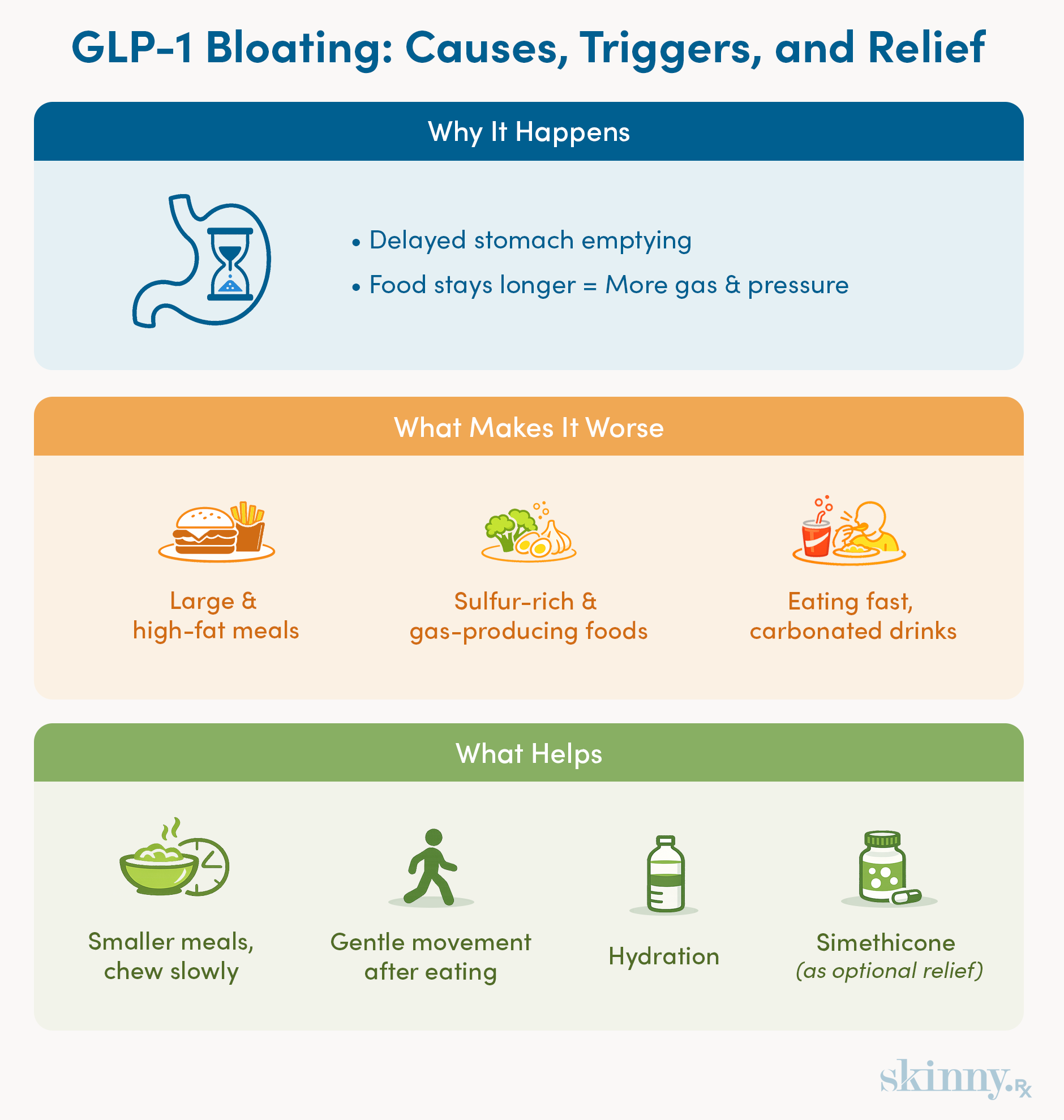
Semaglutide delays gastric emptying, which means it slows down the process by which food empties from the stomach.
This leads to food staying in the stomach longer, keeping you feeling full and decreasing your appetite, which can lead to weight loss.
By slowing down digestion, more gastrointestinal side effects like the aforementioned nausea, diarrhea, burping — and, of course, bloating — are more likely to happen.
The GLP-1 Mechanism: Slowing Down the Stomach
Of course, semaglutide isn’t the only weight loss medication that works in this way.
Semaglutide is used to control blood sugar levels in people with type 2 diabetes to help with weight loss.
These mimic the actions of the hormone GLP-1 (short for glucagon-like peptide-1 receptors), which regulates blood sugar levels by stimulating insulin release. The GLP-1 hormone also reduces appetite and makes you feel fuller.
Why Trapped Gas Leads to Bloating
Whether or not semaglutide causes excessive stomach distension, it can lead to more gas being produced because the gut’s motility is changed. This can cause abdominal distention, bloating, belching, and farting.
Generally, gas is produced in one of two ways: when you swallow air or when bacteria breaks down the food that you eat. Some foods and medications can also increase gas production because of how they break down and ferment in your colon.
This intestinal gas, whether from medication, food, or other digestive issues, creates air in your digestive system. Then, this air is released, either by burping or farting.
The Fermentation Connection: Why Your Stomach Feels Inflated
But why does sulfur production in the stomach cause your stomach to feel like an inflated balloon?
This is because of the GLP-1 delayed gastric emptying we mentioned above. This process can also increase the fermentation of food by gut bacteria because it’s staying in the stomach longer.
Not only has the medication slowed down how fast your stomach empties, but sometimes gas can be trapped within the intestines, causing discomfort.

Doctor-Guided Medical Weight Loss
Learn how prescription GLP-1 medications like semaglutide or tirzepatide may support weight loss when guided by a licensed medical provider and tailored to your health history.
Dietary Triggers and Foods to Avoid
It should be noted that semaglutide bloating can also happen from eating certain foods or making changes to your diet, which is common when people start on a weight loss journey.
High-Fat Foods and Digestion Time
As we’ve mentioned, semaglutide slows down how your stomach empties itself. But high-fat foods can also delay digestion.
This “double delay” leads to food sitting in the stomach longer, creating more gas and fermentation, and eventually causing discomfort and often stomach pressure.
One way to avoid excessive bloating? Avoid or limit greasy, fried, and fatty meals, along with spicy foods.
High-Sulfur Foods that Worsen Odor (e.g., Cruciferous Veggies)
Certain foods can worsen stomach bloating, even when not on a GLP-1.
Sulfur-rich foods like garlic, dairy, cruciferous vegetables like broccoli, and eggs (naturally) produce hydrogen sulfide gas when broken down by gut bacteria.
Additionally, fermented foods like yogurt, kefir, sauerkraut, kimchi, kombucha, or sourdough bread can also increase gas.
You’re also probably aware that beans and other fibrous foods like legumes can increase gas, bloating, farting, and burping.
While fiber is a necessary nutrient for healthy blood sugar and recommended for those on semaglutide, it is possible to overdo it and cause more uncomfortable stomach issues.
If you’re experiencing uncomfortable digestion issues, try slightly reducing your fiber intake as well as cruciferous veggies temporarily. This may temporarily help your symptoms, but fiber intake over the long-term is important.
You may also want to limit or avoid carbonated drinks, as these can add to gas in your stomach, even if you’re not on semaglutide.
Eating Habits That Increase Air Swallowing
Ozempic bloating could also be caused by more than what you eat. Certain eating habits could also be increasing the potential for abdominal distension and discomfort with these medications.
The clinical name for swallowing air while you eat is aerophagia, which involves swallowing so much air that it collects in your gut, leading to unpleasant symptoms like excessive burping, bloating, flatulence, and stomach pain.
This can be caused by:
- Eating or drinking too fast
- Talking while eating
- Chewing gum
- Using straws
- Drinking carbonated drinks
- Sucking on hard candy
Practical Strategies for Relief and Prevention
Fortunately, preventing and managing semaglutide gas is possible with a few adjustments.
The Small Meal Approach and Chewing Thoroughly
Eating smaller meals throughout the day can help manage semaglutide side effects, such as extra gas or bloating. This may help you realize when you’re full and stop from overeating.
You’ll also want to chew your food slowly and thoroughly, so it’s easier to digest and process.
Over-the-Counter Relief: Antacids and Digestive Aids
Several over-the-counter medications exist to provide relief from gas, bloating, and burping.
Antacids relieve acid reflux and heartburn symptoms. And medications containing simethicone, such as Mylanta® and Gas-X®, treat flatulence and relieve bloating, but don’t prevent gas from forming.
It is possible to experience more gas with these medications. Although semaglutide doesn’t have any known drug interactions, you’ll want to check with your doctor before starting any medication to manage bloating.
Lifestyle Adjustments: Hydration and Movement
Regular exercise is recommended while taking semaglutide to help reach health goals, whether it’s weight loss, better heart health, or managing blood sugar. And physical activity can offer relief from semaglutide bloating.
Whether it’s a short walk or gentle stretching, even some light movement after a meal can help relieve break up the gas bubbles to reduce pressure from stomach bloating and discomfort.
Staying hydrated can also provide relief from some of semaglutide’s more adverse effects. Make sure you’re drinking enough water by using a water bottle with time markers, setting a reminder on your phone, or adding fruit to flavor your water.
And while it varies by each person — especially in those with cardiovascular or kidney disease — the recommended amount of water to drink daily is 3.7 liters (125 ounces) for men and 2.7 liters (91 ounces) for women.
Timeline and Adaptation
While timelines and adapting to the medication can vary for each person, there are some general ideas of when to expect the most amount of bloating.
When Bloating is Most Common (The Titration Phase)
Stomach pressure from gas, like most gastrointestinal side effects of semaglutide, tends to be worse at the beginning of treatment and when increasing your dose (also known as the titration phase).
Some studies have found that these side effects are most common during the first eight to 12 weeks of treatment.
But they may last for up to 20 weeks if you move up to the highest dosage.
What to Expect as the Body Adapts
There’s quite a bit to expect when you first start semaglutide.
In the first few weeks, you may start to notice changes in your appetite and feel fuller sooner after a meal. You may also have fewer cravings and less “food noise”, or intrusive or obsessive thoughts about food.
These first weeks are also when gastrointestinal effects — such as bloating, burping, nausea, constipation, and diarrhea — often begin. You may also experience fatigue and headaches due to reduced calorie intake or dehydration.
Then, after about five to eight weeks, the side effects may improve or go away as your body adjusts to the medication. On average, there’s significant weight loss in the first three months on semaglutide.
You may even experience better health metrics, like improved blood pressure.
Doctor-Guided Medical Weight Loss
Learn how prescription GLP-1 medications like semaglutide or tirzepatide may support weight loss when guided by a licensed medical provider and tailored to your health history.
Frequently Asked Questions

By Rachel Sacks
Contributing Author
Rachel Sacks is a New York-based contributing writer with more than a decade of experience covering a range of topics, including weight loss, mental health, sexual wellness, skincare, and more. Her work has been featured in The New York Post, Healthline, Hims & Hers, Business Insider, and other notable publications. She graduated from Miami University in Oxford, Ohio, with dual degrees in Journalism and Art History.