

 Medically Reviewed

Key Takeaways
- GLP-1 medications reduce thirst and slow digestion, which increases the risk of dehydration even when you are not actively losing fluids.
- Poor hydration on GLP-1s can worsen constipation, nausea, dizziness, and headaches by allowing stool to harden and blood volume to drop.
- Drinking enough water supports satiety and appetite regulation, helping GLP-1 medications work more effectively.
- Sodium, potassium, and magnesium are the most important electrolytes to replace when calorie intake is low or fluid loss is high.
- Small, frequent sips of flavored or chilled water make it easier to stay hydrated without exacerbating gastrointestinal symptoms.
When you’re starting a GLP-1 medication, you need to be mindful of the risks. Most Ozempic and Wegovy side effects are mild to moderate in severity. They’re also, for the most part, temporary as you adjust to the medication.
That said, there are lesser-discussed side effects worth paying attention to, such as the risk of dehydration. Hydration on GLP-1 medications is crucial for maintaining general health, and appropriate fluid intake can even assist with weight loss efforts.
Why GLP-1s Can Affect Hydration
Hydration on GLP-1 medications matters because semaglutide (and tirzepatide) tend to create gastrointestinal side effects. In addition to improving satiety or fullness signaling in your brain, GLP-1s also affect your gut by slowing the rate at which you digest, process, and expel food waste.
The Gut-Brain Connection
Slowed digestive processes mean stool stays in your body longer than it otherwise would before being excreted. Moisture is pulled from stool while it is in your colon—the slower it takes to pass, the harder it becomes, potentially leading to constipation or cramping.
Satiety & Water Fullness
Appetite suppression on GLP-1s means more than not wanting to binge or snack. You may also find yourself less compelled to drink water. In addition to avoiding potential issues like constipation, dry skin, or lightheadedness, adequate water intake is important because it’s associated with satiety and fullness as well.
Hydration On GLP-1 Medications: Your Best Defense Against Side Effects
Paying closer attention to hydration while taking GLP-1 medications can not only mitigate the severity of certain gastrointestinal side effects but also support appetite regulation and satiety, among other benefits.

I frequently remind patients that fatigue, headaches, or constipation on GLP-1s aren’t always side effects of the medication itself—they’re often signs of dehydration. Most people are underhydrated to begin with, and appetite suppression can make it even easier to forget to drink fluids. When hydration, electrolytes, and sleep are prioritized, energy and GI symptoms often improve significantly.
–
Dr. Sajad Zalzala, MD, SkinnyRx Medical Director
Eases Gastrointestinal Issues
Proper hydration on GLP-1 medications can improve certain gastrointestinal symptoms like constipation or cramping. Studies have shown that increasing your daily water intake (2 liters or more per day) can effectively mitigate constipation by softening stool, assisting with passage.
Can Prevent Headaches
When it comes to prevalent side effects of GLP-1s, headaches don’t typically make the cut—at least not directly. That said, other side effects like nausea and diminished appetite discourage eating and drinking, which can cause headaches in some cases.
Protects Kidney Function
GLP-1s are generally kidney-protective. Clinical trials have shown that GLP-1 medications may actually improve kidney function in some cases. Still, gastrointestinal issues like vomiting or diarrhea may lead to severe dehydration, which acutely stresses the kidneys.
You can think of hydration on GLP-1 medications as a protective buffer against unwanted outcomes and cascading side effects. Drinking more water will not eliminate or prevent semaglutide side effects altogether, but it can mitigate their severity in some cases.
Doctor-Guided Medical Weight Loss
Learn how prescription GLP-1 medications like semaglutide or tirzepatide may support weight loss when guided by a licensed medical provider and tailored to your health history.
The Importance of Electrolytes on GLP-1 Medications
Electrolytes are a hot-button health issue these days. First things first, let’s get our definitions right: According to the Mayo Clinic, electrolytes are essential minerals that regulate chemical reactions and maintain healthy fluid balance—something crucial given our bodies are made up of over 60% water.
If you have a history of high blood pressure, check with your doctor before starting any electrolyte supplement, as salt can make blood pressure and other conditions worse.
Replenishing Essential Minerals
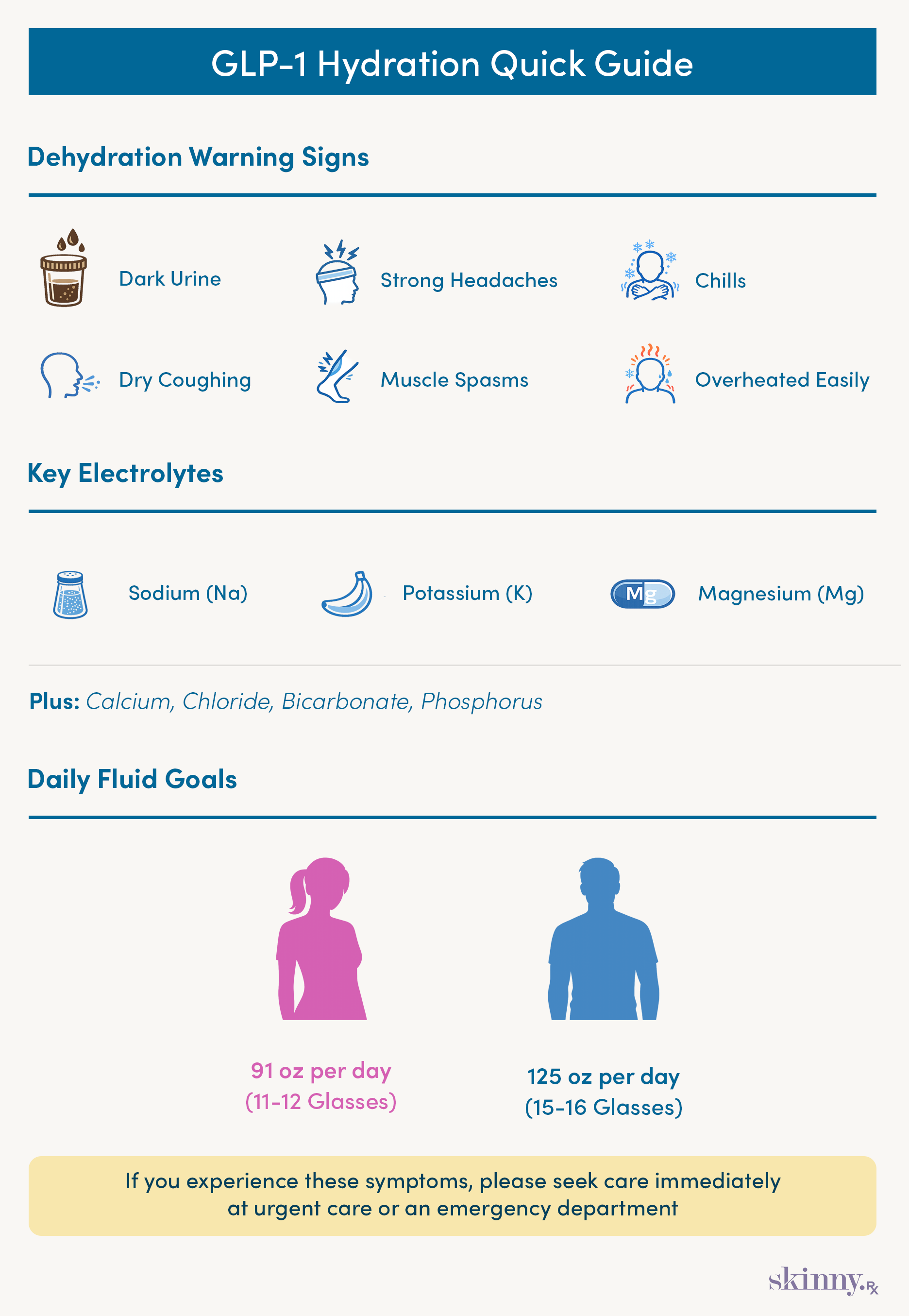
Three of the most important electrolytes are sodium, magnesium, and potassium. Reduced-calorie diets—a common outcome for those taking GLP-1s even if the goal isn’t weight loss—may deplete these essential minerals.
You can replenish electrolytes through food, but if your appetite isn’t up to the task of more fruits and veggies, an electrolyte supplement added to plain water can fill the gaps in a pinch.
How To Choose an Electrolyte Supplement
You have two concerns when selecting an electrolyte supplement: the practical and the proprietary.
Practical considerations are things like cost and taste. Feeling like you need to drink a bit more water doesn’t necessarily mean you’re also deficient in essential minerals—you may not need an electrolyte supplement, especially a pricy one, in such cases.
But if you’re going to use electrolytes to help with hydration on GLP-1 medications, make sure that the product contains plenty of the “big three”; sodium, potassium, and magnesium. For a complete profile, you’ll also want calcium, chloride, bicarbonate, and phosphorus.
Why Your Activity Habits Matter
If you’re on a GLP-1 medication for weight loss, you should strongly consider pairing it with an exercise routine to help build or maintain muscle mass as well. Your workouts can have a significant impact on the value of an electrolyte supplement.
For those exercising in hot climates or who generally sweat a lot when exercising, fluid loss is a significant health and performance concern. Most research tells us that electrolyte supplements, when paired with carbohydrate-laden beverages, help combat the water and mineral losses from sweaty sessions.
Hydration Tips on GLP-1 Medications
We know the “why” — hydration on GLP-1 medications mitigates side effects and may help the medicine work better. Let’s tackle the how. Here are some practical tips for improving hydration on semaglutide or tirzepatide.
Sip, Don’t Chug
If you’re having stomach troubles, the last thing you need is to fan the flames by chugging too much water too quickly. Take small, frequent sips instead. This ensures any extra water you consume won’t make the problem you’re trying to solve worse.
Add Flavor
Some data have shown that GLP-1 medications can change taste preferences. If semaglutide or tirzepatide has altered your palate, you might find plain water naturally unappetizing (or even nauseating). You can work around this issue by drinking chilled water, infusing stomach-friendly flavors like cucumber, lime, or mint, or adding a flavored powder.
Plan Intake Around Dosing
Do you need to plan your hydration around your GLP-1 dose? Not necessarily, but it can be helpful in some cases. If you experience symptoms like dizziness, disorientation, or a rolling stomach after your injection, having plenty of water on hand—remember, small sips—is wise.
When To See a Doctor
As with most symptoms or side effects of GLP-1s, severity is the main concern. Mild or inconsistent dehydration may come with the territory, but persistent or severe lack of fluids is worth seeing a doctor about.
Per the Cleveland Clinic, signs of severe dehydration include darkened urine, strong headaches or delirium, dry coughing, cramping, chills, intolerance to heat, and more. Your doctor can make an informed decision about adjusting your GLP-1 protocol to ensure you can appropriately manage its side effects.
Whether you're already on a GLP-1 or just starting to explore your options, having the right guidance matters. At Skinnyrx, a brief assessment can connect you with personalized resources and our physicians who specialize in weight loss.
Frequently Asked Questions

By Jake Dickson, NASM-CPT, USAW-L2
Contributing Author
Jake holds a B.S. in Exercise Science from UNC Wilmington and began his career as a personal trainer and weightlifting coach. In recent years, he’s moved behind the page as a writer and editor, contributing hundreds of articles and being featured as a subject matter expert. Today, Jake’s goal remains the same: to empower people to change their lives by bringing heady scientific topics down to ground level.