

 Medically Reviewed

Key Takeaways
- Dizziness affects fewer than 10% of people on semaglutide and is most likely to occur early in treatment during dose titration as the body adjusts.
- Low blood sugar is a key cause of dizziness, especially in people with diabetes who also use insulin or sulfonylureas, since glucose is the brain’s primary energy source.
- Dehydration from gastrointestinal side effects such as nausea, vomiting, or diarrhea can lower blood volume and blood pressure, leading to lightheadedness when standing or moving quickly.
- Maintaining adequate hydration and electrolyte balance, including sodium when appropriate, can help reduce dizziness related to fluid loss while taking semaglutide.
- Dizziness that improves with time, hydration, and slower movement is usually manageable, but severe or sudden symptoms warrant medical evaluation.
Semaglutide has rising clinical utility, both for its original purpose in managing type-II diabetes symptoms and, more recently, as a tool for weight management. But as its use expands, we must be mindful of semaglutide’s potential side effects—dizziness included.
While not always severe, dizziness can be disruptive to your day-to-day life and may pose a greater threat to certain patients.
Let’s break down the two primary causes of dizziness on semaglutide and talk about some actionable strategies for managing it.
Dizziness: A Possible Side Effect During Semaglutide Titration
Semaglutide is a GLP-1, or glucagon-like peptide-1, agonist. It works in your brain to affect how your body perceives cravings, while also regulating certain GI behaviors to discourage overeating through improved satiety.
However, while potent, semaglutide often comes with a host of common—but usually mild—side effects. Some research indicates that about half of semaglutide users will experience at least one adverse effect (typically gastrointestinal in nature).
That said, access data from the U.S. Food & Drug Administration suggests that fewer than 10% of semaglutide users experience dizziness or lightheadedness.
What Dizziness & Lightheadedness Feel Like
Dizziness can encompass a range of sensations. According to the Mayo Clinic, you may feel faint, woozy, weak, wobbly, or that your surroundings are spinning or otherwise unstable. These sensations may throw you off balance or affect your spatial perception, which can put you at risk for falls or accidents.
Why It Peaks Early in Treatment
You don’t just jump into the maximum dose of semaglutide. To best manage its side effects, you’ll undergo what’s called a titration schedule: a gradual, weeks-long escalation of the dose you take.
Titrating semaglutide helps patients manage, but not necessarily prevent, common semaglutide side effects like dizziness. For example, manufacturer Novo Nordisk’s titration protocol for weekly Wegovy injections looks like:
- Weeks 1-4: 0.25mg
- Weeks 5-8: 0.5mg
- Weeks 9-12: 1mg
- Weeks 13-16: 1.7mg
- Week 17+: 2.4mg
Despite this gradual increase, you’re most likely to experience pronounced side effects early in semaglutide treatment as your body adjusts to the medication. Symptoms generally recede in severity after you’ve been on semaglutide for several months.

Doctor-Guided Medical Weight Loss
Learn how prescription GLP-1 medications like semaglutide or tirzepatide may support weight loss when guided by a licensed medical provider and tailored to your health history.
Cause 1: Hypoglycemia
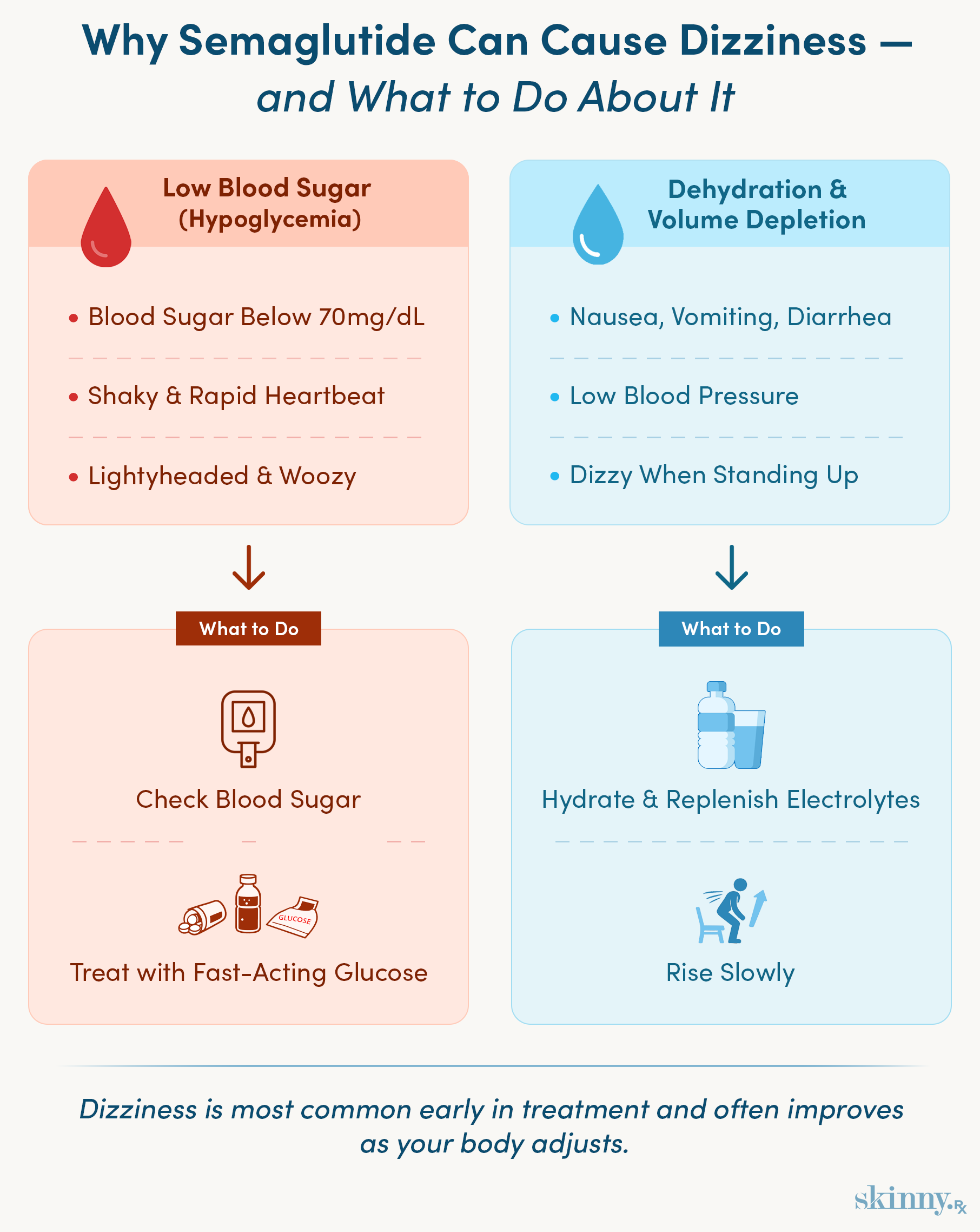
Hypoglycemia is one of two primary causes of dizziness or lightheadedness on semaglutide, particularly for patients taking GLP-1s and insulin or sulfonylurea to manage their diabetes symptoms.
What Is Hypoglycemia?
Hypoglycemia refers to an abnormally low concentration of glucose, or sugar as energy, in your blood—specifically, for those with diabetes, the threshold for hypoglycemia is 70mg/dL.
As glucose is the primary energy source for the body (and your brain in particular), hypoglycemia is a principal concern for diabetes patients.
Recognizing Signs of Hypoglycemia
Patients with diabetes are well versed in recognizing hypoglycemia symptoms early. There are tell-tale signs: Shaking or trembling, anxiety, an elevated heart rate, and, of course, dizziness all present early.
Immediate Action: Testing & Treating Low Blood Sugar
Diabetics can test their blood sugar levels by using a glucometer. This device takes a blood sample by piercing the skin on your fingertip and evaluating its glucose content. According to the Mayo Clinic, non-diabetics may need to undergo more advanced testing for hypoglycemia in a clinical setting.
Cause 2: Dehydration and Volume Depletion
Other side effects of semaglutide may contribute to feeling dizzy or lightheaded, even if you’re not diabetic.
The Link to Nausea, Vomiting, and Diarrhea
Semaglutide’s primary side effects are gastrointestinal (GI), affecting your stomach. Some studies have indicated that over 70% of semaglutide users experience at least one gastrointestinal symptom, such as:
- Nausea
- Vomiting
- Constipation
- Diarrhea
How do GI side effects of semaglutide create dizziness? If you’re experiencing symptoms like vomiting and diarrhea, you’re expelling fluid from your body faster than usual. As such, you’re prone to dehydration and the loss of critical nutrients and minerals.
The Role of Orthostatic Hypotension (Blood Pressure Drop)
Repeated expulsion may lead to hypovolemia, or volume depletion. Per the Mayo Clinic, volume depletion refers to a critical loss of fluids such that your body cannot maintain adequate circulation and blood pressure.
Insufficient hydration and low blood pressure create dizziness by affecting the brain. If your blood pressure is too low, physical motions such as rapidly standing up overpower the dampened pressurization that pushes blood (and nutrients like glucose) to your brain. In short, gravity wins.
Dizziness Prevention on Semaglutide
Dizziness may not be physically painful, but if left unmanaged, it may put you at greater risk of harm than other semaglutide side effects. As such, it’s important to take preventive measures to limit your risk of dizziness as much as possible.
Here are some evidence-based strategies for managing lightheadedness.
Consistent Fluid Intake
Whether you’re diabetic or just prone to GI side effects on GLP-1s, fluid intake should be your number-one priority. Drinking more water can help—two eight-ounce glasses have been shown to “elicit an acute hemodynamic response … associated with a marked improvement in orthostatic tolerance,” say Schroeder & colleagues.
Scholars recommend men drink 3.7 liters of water per day, while women should shoot for 2.7. As an additional benefit, drinking more water also assists with weight management by improving satiety and may help you control your caloric intake if you swap off sugary beverages.
The amount of fluids you consume daily should also be individually determined in accordance with other conditions, such as kidney disease.
Healthy Sodium Levels
Sodium is an essential mineral for helping maintain healthy fluid levels. If you’re avoiding salt like the plague in your diet, or you’re suffering from GI-related expulsion, you may be at risk of insufficient sodium levels.
Sodium is regarded as a “principal electrolyte”, responsible for helping to maintain appropriate fluid balance and pressurization. Some data have shown that increased salt intake improves orthostatic symptoms, though this doesn’t bear out for all patients. If you have a condition like cardiovascular or kidney disease, your doctor can provide more informed guidance on sodium intake.
Safe Movement
Preventing dizziness or lightheadedness may start in the kitchen, but you should also take caution regarding your movement habits. If you’re prone to lightheadedness on semaglutide, be cognizant of abrupt or jerky vertical movements.
Instead, take a breath before standing and rise gradually. Taking things deliberately slow allows time for glucose-rich blood to reach your brain, thus limiting disorientation caused by a lack of available energy.
A Word From SkinnyRx
Managing side effects is an important part of medical weight loss, especially when considering options like semaglutide or tirzepatide. At SkinnyRx, you can take a short assessment that’s reviewed by a licensed medical provider to help determine which GLP-1 option aligns with your health history, weight loss goals, and overall safety.
Frequently Asked Questions

By Jake Dickson, NASM-CPT, USAW-L2
Contributing Author
Jake holds a B.S. in Exercise Science from UNC Wilmington and began his career as a personal trainer and weightlifting coach. In recent years, he’s moved behind the page as a writer and editor, contributing hundreds of articles and being featured as a subject matter expert. Today, Jake’s goal remains the same: to empower people to change their lives by bringing heady scientific topics down to ground level.