

 Medically Reviewed

Key Takeaways
- Nausea is one of the most common side effects of GLP-1 medications and is usually most noticeable when starting treatment or increasing your dose.
- Eating smaller portions, slowing down at meals, and avoiding heavy, fatty, or spicy foods can significantly reduce nausea.
- Staying properly hydrated with small, consistent sips of fluids helps prevent worsening stomach discomfort.
- Simple remedies such as ginger, vitamin B6, light movement after meals, and temporary dietary adjustments can ease symptoms.
- Severe vomiting, persistent daily nausea, significant abdominal pain, or signs of dehydration require medical evaluation rather than at-home management.
When you start taking GLP-1s, there are many new changes to navigate. Your appetite drops, your “food noise” quiets down, and you’re seeing the scale move in a way it hasn’t in years. But there are also some not-so-great changes — like nausea.
As many as 24% to 44% of people experience nausea on semaglutide and tirzepatide. There is light at the end of this tunnel, though.
For most people, nausea typically resolves once you reach your maintenance dose. For others, it may continue past that point. Either way, we’ve got tips for managing nausea on GLP-1s and some explanations for why it happens in the first place.
Why Do GLP-1s Cause Nausea? (The Brain-Gut Connection)
GLP-1s cause nausea, in short, because of how the medications work. GLP-1s don't just suppress your appetite. They fundamentally change how your body processes food — at both a brain and gut level.
Delayed Gastric Emptying: The “Stomach Traffic Jam”
Think of your stomach as a gas tank with a pipe at the bottom that drains fuel into your engine (er, your intestines). Before you started taking GLP-1s, that pipe was wide open. Now, the medication has significantly narrowed that pipe, keeping you fuller for longer.
The medical term for this process is delayed gastric emptying. If you try to fill your tank at your “old” speed — eating the same portion sizes at the same pace — the tank overflows. That overflow manifests as nausea, as well as other GI side effects like constipation and bloating.
The Area Postrema: How Your Brain Senses the Medicine
GLP-1 medications also work by activating GLP-1 receptors, which play a role in managing your appetite and food cravings. Preclinical research shows that some of these receptors are found in the area postrema, a part of the brainstem often called the “vomiting center.” When you take semaglutide or tirzepatide, this center lights up, signaling to your body that it’s time to feel nauseous.
The “Shot Day” Protocol: Preventing Nausea Before It Starts
Many people find that their nausea follows a predictable clock, kicking in anywhere from 8 to 72 hours after taking their dose. That’s about how long it takes to reach a peak concentration in your bloodstream.
Now that you know the nausea’s coming, there are steps you can take to prevent it — or at least make it a bit more manageable.
Pre-Hydration and the Electrolyte Buffer
To avoid nausea with GLP-1s, make sure you’re hydrated on your shot day. However, it’s important not to over-hydrate. Gulping large amounts of water can overfill that slow-moving stomach, making you feel worse.
Instead, focus on micro-sipping. Consistently sip clear, electrolyte-rich fluids throughout the day leading up to your shot. This ensures you’re hydrated without overwhelming your stomach. Good hydration options include:
- Water
- Sports drinks
- Water-rich foods (soups, Jell-O)
Your Dose Day Checklist for Preventing Nausea on GLP-1s
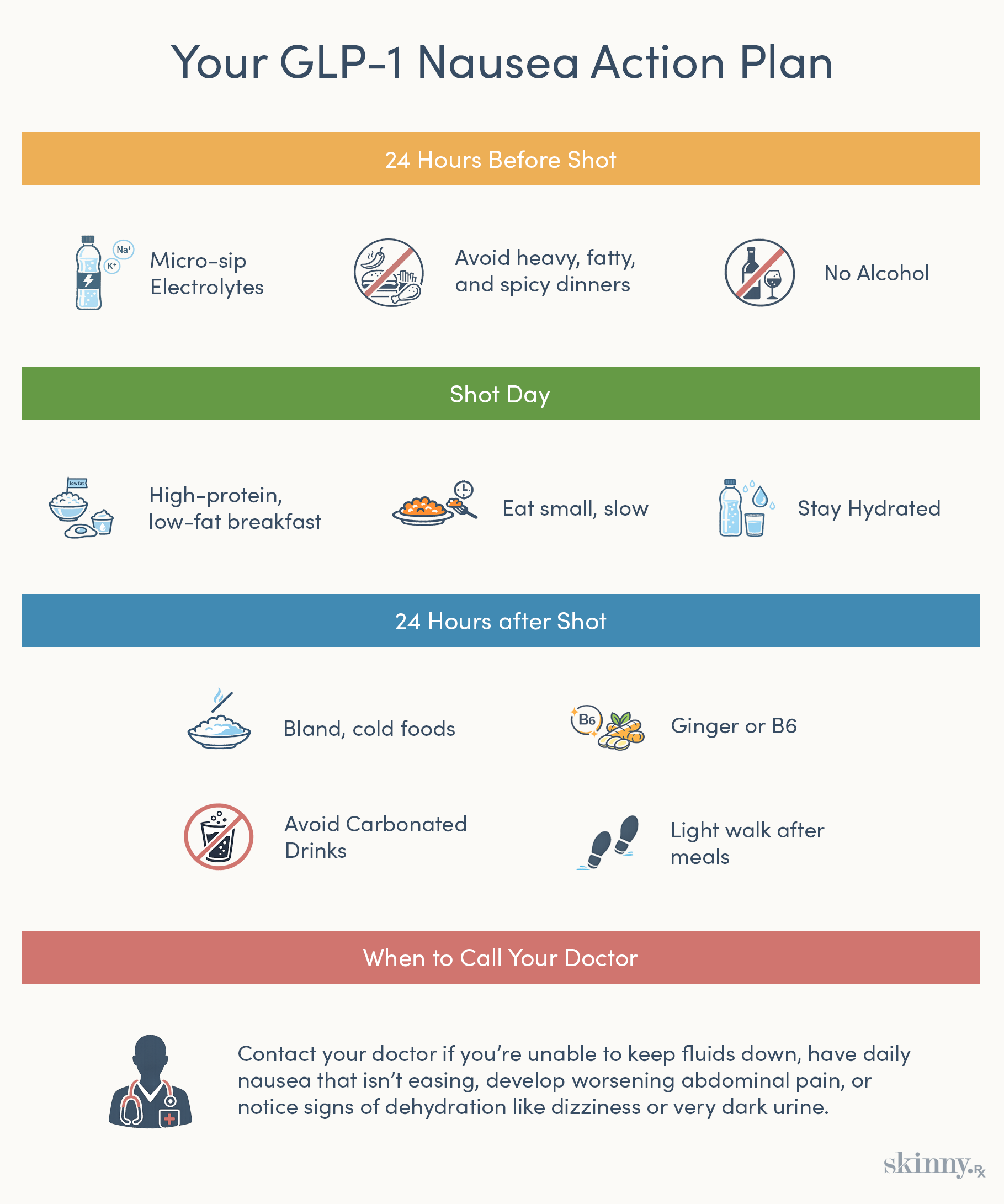
24 Hours Before Your Shot
- Hydrate with electrolytes and water, drinking in slow sips.
- Avoid heavy, fatty, or spicy meals for dinner.
The Morning You Take Your Shot
- Eat a high-protein, low-fat breakfast.
- Stay hydrated by drinking in slow sips throughout the day.
24 Hours After Your Shot
- Keep micro-sipping water.
- Eat small, bland meals.
- Avoid alcohol and carbonated beverages.
Injection Site Myths vs. Facts: Does the Thigh Reduce Nausea?
You may have seen this tip floating around social media: injecting in the thigh (or upper arm) instead of the stomach can reduce nausea. While some people swear by this tip on Reddit, there currently isn’t any clinical research to back it up.
Having said that, if you are struggling with nausea, it couldn’t hurt to switch your injection site to see if it helps. You’re supposed to rotate through them every week, anyway.
Guided GLP-1 Weight Loss
Your results matter, but so does how you feel along the way. Start a short assessment to explore personalized GLP-1 weight-loss options with clinical guidance tailored to you.
What to Eat When You’re Feeling Green
When GLP-1 nausea hits, your instinct might be to stop eating entirely. But an empty stomach can actually make nausea worse. Instead, focus on foods proven to reduce nausea and ease your symptoms.
Your Nausea-Free GLP-1 Grocery List
- Baked chicken or fish
- Potatoes
- Bone broth
- Crackers
- Plain toast or English muffins
- White rice
- Bananas
- Apple sauce
- Ginger chews or tea
- Mint
The BRAT Diet 2.0: GLP-1 Friendly Options
The traditional BRAT diet (Bananas, Rice, Applesauce, Toast) is a good option for managing nausea.
But when you’re taking GLP-1s, it’s also important to prioritize protein to prevent muscle loss. Let’s add in lean proteins like plain chicken, fish, and bone broth, and call it BRAT 2.0.
Here’s a list of GLP-1 and BRAT-friendly foods to eat when managing nausea on GLP-1s:
- Baked chicken
- Baked fish
- Bananas
- Plain white rice
- Saltines or oyster crackers
- Plain toast
- Apple sauce
Why Cold, Bland, and Low-Odor Foods Are Your Best Friend
When you’re feeling nauseous on tirzepatide or semaglutide, you want to avoid any foods that might trigger your gag reflex. These include:
- Fried foods
- Very spicy foods
- Salty foods
- High-fat foods
- Foods with strong odors
- Caffeine
- Carbonated beverages
- Alcohol
These foods can all make nausea worse. That’s why cold, bland, and low-odor foods are recommended when you’re experiencing nausea on GLP-1s.
Another thing to remember: Fiber-rich foods can help boost satiety and weight loss on GLP-1s, but you might want to temporarily limit them if your nausea is intense. Leafy greens, beans, and broccoli all digest slowly, adding to the “traffic jam.”
Natural and Medical Remedies That Actually Work
Now that you’ve got a plan for what to eat and drink, here are a few more ways you can manage nausea on GLP-1s, all backed by science.
The Power of Ginger and Vitamin B6
If you’ve ever taken a ginger chew to calm your stomach before a roller coaster, you know how powerful it can be for preventing nausea. Ginger speeds up stomach emptying (helping that traffic jam move along), reduces cramping and gassiness, and blocks serotonin receptors in the gut that cause nausea. Translation: Keep ginger chews or tea on hand.
You can also try ginger supplements. Studies show 1,500 milligrams, in divided doses throughout the day, can help relieve nausea.
If ginger’s not your thing, you could also try vitamin B6. Often used for morning sickness during pregnancy, vitamin B6 (pyridoxine) supplements can be highly effective for relieving nausea.
When to Ask Your Doctor for a Prescription Anti-Nausea Med
If your nausea is severe, not getting better, or interfering with your daily life, it’s time to call your doctor. They can write you a prescription for an anti-nausea medication like Zofran (ondansetron).
However, it’s worth noting that these meds can sometimes cause constipation — just like GLP-1s — so your doctor may recommend using it with a stool softener to avoid things getting too backed up.
Remember: You don’t need to “push through” severe nausea or vomiting on GLP-1s. These side effects can lead to serious dehydration and even kidney injury. If your symptoms are severe, persistent, or accompanied by other symptoms like belly pain, contact your healthcare provider.
Acupressure and Lifestyle Hacks (The Sea-Band Method)
Finally, there are various lifestyle hacks you can use to reduce nausea on weight loss medications. For example:
- Sea-Bands: These FDA-cleared wristbands apply continuous pressure to the P6 (Neiguan) acupressure point on the inner wrist. They have been shown to relieve nausea during pregnancy and chemotherapy. And, a small proof-of-concept study found they improved nausea for people on GLP-1s within 5–20 minutes.
- The "Sniffing Alcohol" Hack: While there hasn’t been any research on GLP-1s specifically, multiple studies of emergency room patients have found that sniffing an isopropyl alcohol pad can reduce nausea in just 30 minutes.
- Eating Habits: To reduce nausea on GLP-1s, practice eating slowly, stopping once you feel full, and eating smaller portions more frequently during the day. Think: six to eight smaller meals instead of three larger ones.
- Post-Meal Walks: Once you finish eating, go for an easy walk, ideally outside in the fresh air. This helps get your digestive system moving.
How to Reduce Sulfur Burps and Acid Reflux on GLP-1s
Excessive burping and heartburn can be other unpleasant side effects of GLP-1s. “Sulfur burps” are rotten egg-smelling burps caused by sulfur-containing foods, food fermenting in the stomach too long, or bacterial overgrowth.
If you’re experiencing acid reflux or sulfur burps on semaglutide or tirzepatide, you can try taking a broad-spectrum digestive enzyme before meals to help break down food faster. These supplements may reduce fermentation time, which can lead to gas and sulfur burps.
Probiotics may also reduce bloating and gassiness by supporting a healthy microbiome, although the evidence is limited.
Avoiding many of the same foods we listed above — such as spicy or fatty foods, alcohol, and carbonated drinks — can also help stave off burps and acid reflux.
And, avoid eating too close to bedtime. Because your digestion slows down overnight, a heavy dinner sits in your stomach for hours. Stop eating at least a few hours before bed to ensure your "tank" is empty before you lie down.
Guided GLP-1 Weight Loss
Your results matter, but so does how you feel along the way. Start a short assessment to explore personalized GLP-1 weight-loss options with clinical guidance tailored to you.
Frequently Asked Questions

By Amelia Willson
Contributing Author
Amelia Willson is a freelance health writer and content strategist based in Orange County, California. Her work has appeared in several health publications, including Ro, Klarity Health, K Health, Sleep Foundation, and A Place For Mom. Amelia covers the latest trends in health and wellness, including the research (or lack thereof) behind them, breaking down complex topics so that readers don't have to. Her writing frequently explores weight management, plant-based nutrition, and mental health.