
 Medically Reviewed

Key Takeaways
- GLP-1 medications lower appetite and energy intake, which makes protein one of the easiest nutrients to fall short on.
- Many GLP-1 users turn to protein shakes and powders to help close that gap, though whole foods and homemade smoothies can often meet the same need.
- A protein powder should supplement your diet rather than replace whole food sources of protein.
- When choosing a protein powder, look for minimal ingredients, no added sugar, and third-party certification such as USP or NSF.
- Protein powders are not tested by the FDA for safety or effectiveness before sale, so ingredient accuracy and quality can vary by brand.
Protein becomes a priority nutrient for those taking a GLP-1 medication. These medications reduce appetite and overall energy intake, which makes it harder to consistently meet protein needs even though those needs stay the same or increase during weight loss.
In fact, one study found that more than 90% of GLP-1 users weren't meeting their protein needs, alongside common deficiencies in fiber, calcium, potassium, and vitamins D, E, and C.
That gap is why many GLP-1 users turn to protein shakes and powders. Not every product is a good fit, though, and some carry real risks.
How Much Protein is Enough?
Higher protein intake is recommended for those using GLP-1 medications to help preserve muscle mass during weight loss, particularly when combined with a resistance training program.
Current recommendations are for 1.2-1.6 g/kg of ideal body weight/day. For example, someone with an ideal body weight of 140 lbs (64 kg) would need about 75 to 100 grams of protein daily.
Inadequate protein intake, especially during weight loss, can negatively impact metabolic health. Low protein intake can contribute to muscle loss and increase the risk of sarcopenia.
Other risks include poor skin health, hair loss, wounds that don’t heal, and having an impaired immune response to colds and infections.
Do GLP-1 Users Need Protein Powders or Shakes?
Those tracking their protein intake may be wondering if they need to use a protein powder or shake. The truth is that you can meet your nutrient needs, including your higher protein needs, through whole foods.
Both plant- and animal-based foods are rich in protein.
Good plant-based foods include:
- Beans and legumes (7-12 grams/serving)
- Whole grains (2-6 grams/serving)
- Nuts and seeds (5-11 grams/serving)
- Vegetables (1-5 grams/serving)
Animal-based foods include:
- Eggs (6 grams/large egg)
- Milk (8 grams/serving)
- Greek yogurt (18 grams/serving)
- Fish (21-23 grams/serving)
- Lean meat and poultry (25-28 grams/serving)
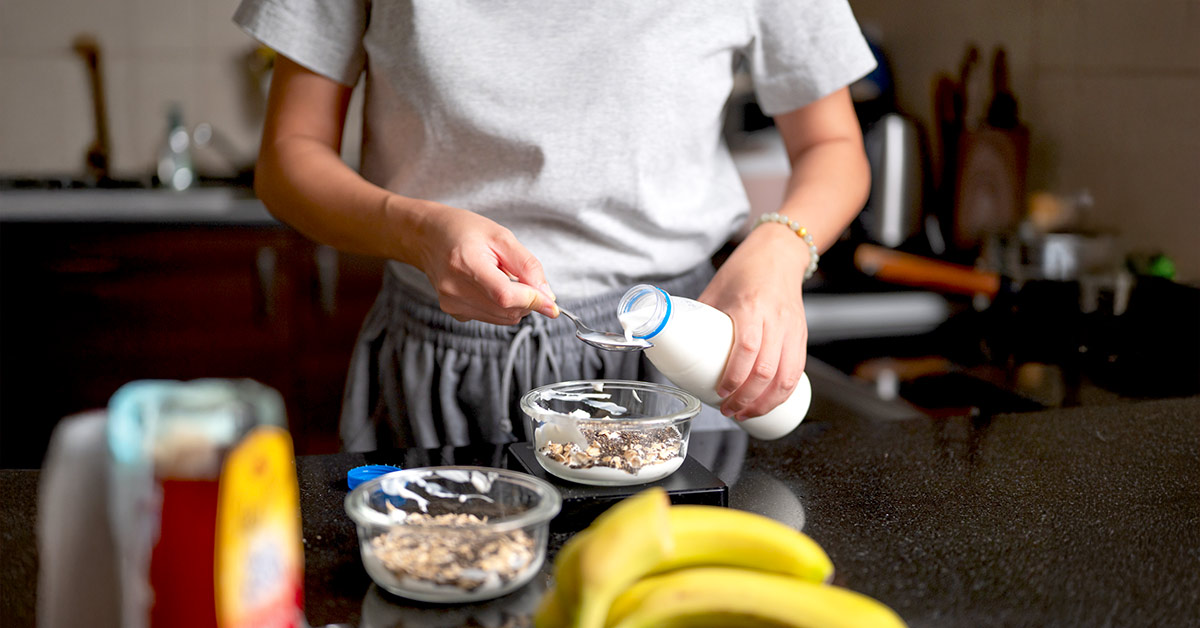
GLP-1 users can make their own protein shakes at home using whole foods. Blend protein-rich foods (e.g., Greek yogurt, silken tofu) with protein-rich liquids (e.g., milk, ultra-filtered milk), frozen fruits, and perhaps a handful of leafy greens.
Adding a scoop of nut butter, chia seeds, or hemp hearts can offer an added protein boost. The following Protein-Powered Smoothie recipe provides 46 grams of protein:
Protein-Powered Smoothie Sample
Here's what you'll need to make it at home:
Ingredients
- 1 cup plain Greek yogurt
- 1 cup ultra-filtered milk
- 1 cup frozen mixed berries
- 2 Tablespoons almond butter or other nut butter of choice
- ¼ teaspoon vanilla extract (optional)
Directions
Add the Greek yogurt and milk to the blender first. Top with frozen fruit, nut butter, and vanilla extract if using. Blend on high for 45-60 seconds until smooth.
For a dairy-free option, use 8 oz of silken tofu and 1 cup of unflavored soy milk. Note: this will lower the protein content of the smoothie by 18-25 grams. To get the smoothest texture, silken tofu should be blenderized first by itself before adding any other ingredients.
Weight Loss Care, Personalized to You
Start with a health assessment for a licensed provider to review. If appropriate, you'll receive a personalized GLP-1 treatment plan, with ongoing provider oversight and support, all in the app.
When a Protein Powder May Help
For those struggling to meet their protein needs through whole foods, a protein powder may be a helpful tool in the toolbox. Depending on the brand, one standard scoop of a protein powder can provide 15-30 grams of protein.
Keep in mind that different brands may vary widely depending on the source of the protein, as well as other key ingredients such as added sugar, fiber, vitamins, or minerals.
What to Look For on the Label of a Protein Powder
Protein Source
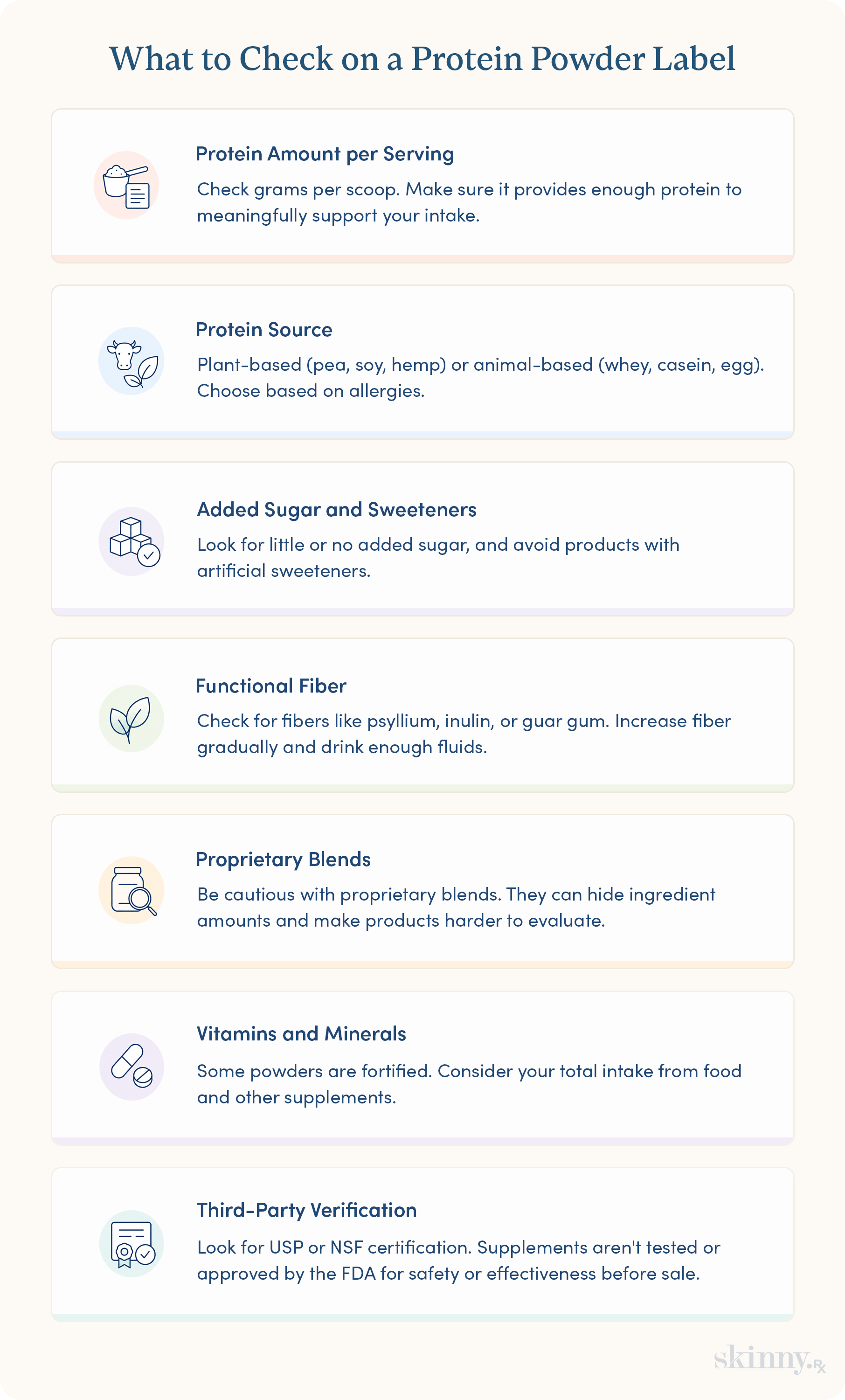
Just like whole foods, protein powders may be derived from plants (e.g., soybeans, peas, or hemp) or animals (e.g., casein, whey, eggs). Those with allergies to soy, dairy, or eggs should choose an alternative option that meets their needs.
Other considerations include the amino acid content of the protein source. Whey, pea, soy, or hempseed provide all nine essential amino acids. However, a protein powder should not be the sole source of protein in your diet, so it isn’t necessary to limit your options to those that provide the essential amino acids.
Added Sugar
Protein powders can often be a hidden source of added sugars. Choose one that is primarily protein and does not contain added sugars or artificial sweeteners. Though the powder itself may be somewhat tasteless, you can add your own flavors and textures by blending it into a smoothie with frozen fruits, yogurt, and nut butters.
Fiber
Some brands also include added fibers, often referred to as functional fibers. These fibers are either extracted from plants or synthetically made and have a beneficial impact on health.
Though the nutrition facts panel will only list the total fiber content, you can identify the presence of any functional fibers in the ingredient list; common examples include psyllium, inulin, guar gum, or maltodextrin.
Functional fibers are safe and can benefit your health, though some may cause certain gastrointestinal side effects as your intestines adapt, such as gas, bloating, or stomach cramps. This can usually be managed by gradually increasing your fiber intake and amping up your fluid intake.
Calories and Meal Context
Depending on the brand, one scoop of a protein powder may have around 100-150 calories. This may fit in your overall dietary pattern as a snack if the protein powder is blended with water, or more as an overall meal if blended into a nutrient-dense smoothie.
Vitamins and Minerals
Some protein powder brands may also be fortified with vitamins and minerals. This can help to meet your micronutrient needs, but should also be assessed within the context of your overall diet, considering any other fortified foods and dietary supplements you may be taking.
A Registered Dietitian Nutritionist (RDN) can help to evaluate your overall diet (more on that soon).
Third-Party Verification
Protein powders are classified as dietary supplements, a category the U.S. Food and Drug Administration (FDA) regulates as food rather than medication. That means they aren't tested or approved by the FDA for safety or effectiveness before hitting shelves.
Because of this, when shopping for any dietary supplement, be sure to identify a brand that has been verified by a third party, such as the U.S. Pharmacopeia (USP) or National Safety Foundation (NSF).
These organizations verify that the ingredients listed are what is actually contained in the product and conduct safety evaluations of the facilities where the products are made.
Common Mistakes to Avoid
Avoid protein powders that boast about proprietary blends, which seem alluring but are often used to mask the actual ingredients and quantities in a product. You should also avoid products with high sugar or artificial sweeteners, as well as those that lack third-party verification.
Lastly, avoid products with long ingredient lists; similar to food packages, these often contain numerous additives, such as artificial colors, dyes, or preservatives.
Risks of Protein Powders and Pre-Made Shakes
Beyond the nutrition considerations already noted, protein powders and pre-made shakes do come with certain risks to be wary of before including them in your diet. Concerns include high levels of toxic heavy metals such as lead. Given the lack of FDA oversight, many dietary supplements also contain unlisted fillers or allergens.
Protein Shake vs. Meal Replacement: What's the Difference?
Protein shakes are considered a supplement to your overall diet and protein intake. In other words, they should not be treated as a sole source of protein or nutrition, but rather a potentially helpful tool, especially for those looking to meet protein targets before and after strength training.
In contrast, a meal replacement shake is generally consumed in place of a traditional breakfast, lunch, or dinner meal. These should be higher in calories and provide a balanced amount of protein, carbohydrates, fats, fiber, and vitamins and minerals.
Though liquid meals can help meet your nutrient needs, they generally should not replace more than one meal daily.
When to Work With a Dietitian
A Registered Dietitian Nutritionist (RDN) can evaluate the totality of your diet, including whether you are getting enough energy, protein, and other key nutrients for GLP-1 users, such as fiber, vitamins, and minerals. If considering a protein shake or powder, they can help determine if it is necessary and help to find the brand that is the right fit for you.
They can also help to manage any symptoms you may be experiencing on GLP-1s, such as nausea, vomiting, or constipation. Lastly, RDNs can help you think long-term to sustain your weight loss journey on GLP-1s.
Bottom Line
Protein is one of the most important nutrients to prioritize while taking a GLP-1 medication, yet it can also be difficult to get enough as appetite and overall food intake decrease.
For many GLP-1 users, protein-rich whole foods and homemade smoothies are enough to meet their needs. When they are not, a protein powder can be a helpful tool, as long as it is chosen carefully and used to supplement a balanced diet rather than routinely replace meals.
Look for a product with adequate protein, little or no added sugar, clearly listed ingredients, and third-party verification. Be cautious of proprietary blends, excessive additives, and products that do not disclose how much of each ingredient they contain.
If you are unsure whether a protein shake or powder makes sense for your needs, a Registered Dietitian Nutritionist can help you develop an approach that supports adequate nutrition and your progress while taking a GLP-1 medication.
Frequently Asked Questions
Weight Loss Care, Personalized to You
Start with a health assessment for a licensed provider to review. If appropriate, you'll receive a personalized GLP-1 treatment plan, with ongoing provider oversight and support, all in the app.

By Whitney Linsenmeyer
Assistant Professor of Nutrition and Dietetics
Whitney Linsenmeyer, PhD, RD, is an Assistant Professor of Nutrition and Dietetics at Saint Louis University and a National Spokesperson for the Academy of Nutrition and Dietetics with expertise in fad diets, culinary nutrition, and transgender health. Her research focuses on gender-affirming nutrition care, and she brings a joy-first approach to food science and eating behavior.