
 Medically Reviewed

Key Takeaways
- GLP-1 medications slow gastric emptying, which increases stomach pressure and forces acid back into the esophagus, causing heartburn.
- Large meals, fatty foods, caffeine, alcohol, and spicy or acidic foods are the most common triggers that worsen acid reflux in GLP-1s.
- Eating smaller meals, choosing low-acid foods, and staying upright for at least two to three hours after eating can meaningfully reduce heartburn without a prescription.
- Sleeping on your left side and wearing loose clothing around the midsection reduces abdominal pressure and lowers the likelihood of nighttime acid reflux.
- When dietary and lifestyle changes fall short, antacids, proton pump inhibitors, and other medications can help manage heartburn, but talk to your physician before adding anything new while on a GLP-1.
GLP-1 medications are commonly used to treat obesity and diabetes. Like most medications, GLP-1s have known side effects, many of which stem from the gastrointestinal tract, including constipation, diarrhea, nausea, or vomiting.
Some GLP-1 users may also experience acid reflux or heartburn, which occurs when hydrochloric acid from the stomach irritates the lower portion of the esophagus. Symptoms may include burning in the chest after eating, pain that worsens when lying down, or a bitter or acidic taste in the mouth.
Though mild heartburn is common, in its more severe form, reflux can advance to a condition known as gastroesophageal reflux disease, or GERD.
Among folks with overweight or obesity, GLP-1s increase the risk for GERD by about twofold. The good news is that acid reflux can be managed through diet and lifestyle changes.
From what triggers the burn to what actually stops it, here is everything you need to manage heartburn on a GLP-1.
Why GLP-1s Trigger Acid Reflux
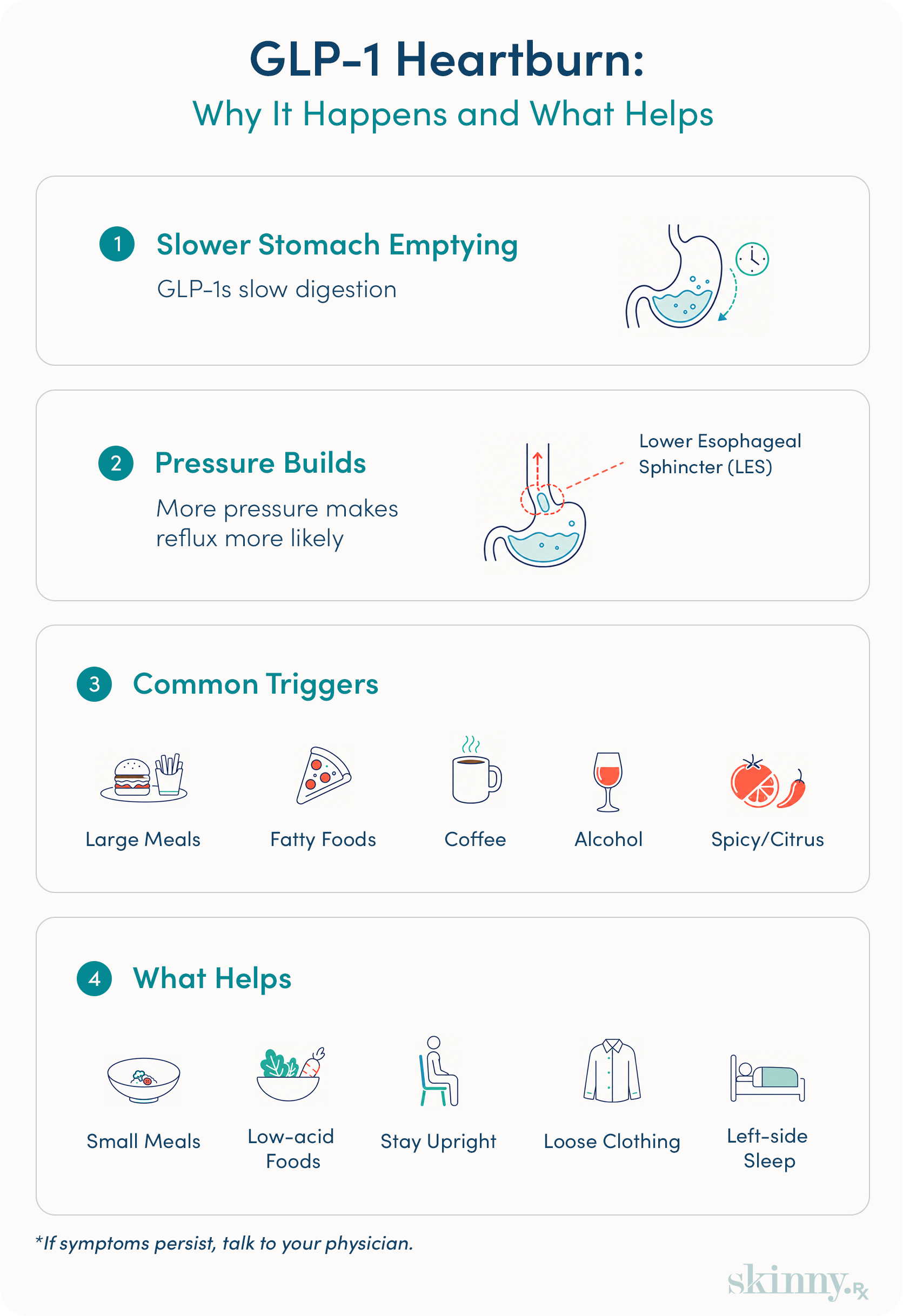
GLP-1s work by slowing the rate of gastric emptying, or how quickly a meal leaves the stomach and enters the small intestine. As a result, your meal stays in your stomach longer, increasing pressure inside it.
The sphincter that connects your stomach and esophagus is called the lower esophageal sphincter; this compensates with lower pressure, allowing for stomach acid to enter the esophagus, resulting in acid reflux.
The GLP-1 Trigger List: Foods to Limit
To prevent or manage heartburn, key dietary strategies can help to minimize reflux and avoid irritating the tissue of your esophagus.
Aim to Avoid:
Large Meals
Large meals take more time to digest and will stay in the stomach for a longer period of time, leading to increased pressure in the stomach. Think of your level of fullness on a scale of 1-10, where 1 is not full at all, and 10 is uncomfortably full. Aim to eat slowly, chew your food well, and stop eating when you reach a 6-7 to avoid feeling overly full.
High-fat Meals
Similarly, high-fat meals take longer to digest due to the chemical structure of fats and hormones sent to the brain that slow passage to the small intestine. Avoid fatty cuts of meat, fried foods, cheese, and greasy foods.
Spicy Foods, Tomato-based Foods, and Citrus Fruits
Since acid reflux irritates the lining of the esophagus, certain foods can further inflame this tissue. Avoid foods made with chili peppers, chili powders, or hot sauce (spicy), marinara sauces or red salsas (tomato-based), and oranges, grapefruit, lemon, and lime (citrus).
High Amounts of Caffeine
Found naturally in coffee, tea, and chocolate, caffeine can lower the pressure of the sphincter connecting your esophagus and stomach, which allows stomach acid to reenter the lower esophagus. Plus, coffee is naturally acidic and can aggravate inflamed esophageal tissue.
Avoid drinking coffee on an empty stomach, drip coffee that has been lightly roasted, and coffee drinks with large amounts of high-fat creamer. Although decaf coffee may have less of an import on reflux than regular coffee, sensitive individuals may also need to limit decaf coffee due to its acidity.
Alcohol
Alcohol hits the trifecta for worsening heartburn. It lowers the pressure at the lower esophageal sphincter, increases the amount of stomach acid produced, and irritates the inflamed tissue of the esophagus.
Limit or avoid wine, beer, and hard alcohol until symptoms resolve. Or, try limiting alcohol to very small amounts and making sure to consume any alcohol along with food.
Peppermint and Spearmint
Although many people turn to peppermint or spearmint to provide relief, these flavorings can make the issue worse. Peppermint and spearmint reduce pressure on the lower esophageal sphincter, allowing stomach contents to flow back into the esophagus.
Avoid candies, teas, or dietary supplements that use these herbs.
Explore Personalized Weight Loss Options
Start with an online assessment to help a licensed clinician determine whether a prescription weight loss treatment may be appropriate for you.
The Low-Acid GLP-1 Food Map: What to Eat Instead
While avoiding key trigger foods, focus on other low-acid, nutrient-dense foods across all food groups.
Focus on:
- Small, frequent meals: Eat small, frequent meals every 2-3 hours. This will help ensure that your stomach is not overly full, which will minimize pressure within the stomach.
- Vegetables: Low-acid vegetables include root vegetables (e.g., sweet potatoes, carrots, beets), green vegetables (e.g., asparagus, broccoli, green beans), and other water-rich vegetables (e.g., celery, cucumber, lettuce).
- Fruits: Focus on low-acid fruits (e.g., bananas, papayas, cantaloupe, honeydew, watermelon, pears)
- Whole grains: Choose whole grains that are minimally processed (e.g., brown rice, oatmeal, whole wheat bread, quinoa).
- Lean protein: Lean protein sources can be animal-based (e.g., fish, poultry, and some cuts of beef and pork) or plant-based (e.g., beans, legumes, soy).
- Healthy fats: Choose healthy cooking oils such as olive, canola, or avocado oil. Nuts, seeds, and avocados are also rich in healthy unsaturated fats. Take care not to overdo total fat; a high-fat meal is a common trigger for heartburn, even when it comes from a healthier source of fat.
- Dairy: Choose low-fat or fat-free milk, yogurt, or cottage cheese. Limit hard cheeses, such as cheddar or Parmesan, which are higher in fat.
For Your Morning Coffee
Though caffeine and coffee are known triggers for heartburn, there are good alternatives. Choose lower-acid coffee options, including cold-brew methods, low-acid beans, dark roasts, or decaf coffee, though the latter may still need to be limited due to its acidity.
Keep in mind that high-fat creamers will worsen reflux, so choose a lower-fat option, such as 1% or fat-free milk. You can also explore no-coffee options such as mushroom coffee or herbal teas.
Lifestyle Hacks for Acid Reflux
You may also find some relief from acid reflux using key lifestyle strategies. Ultimately, these aim to lower pressure in your stomach and increase pressure on your lower esophageal sphincter, keeping it tightly closed.
Loose and Comfy Clothing
First, wear loose and comfortable clothing, especially around your midsection. Avoid tight-fitting clothes, such as a tight belt, snug pants, or clingy fabrics that may inadvertently cause you to “suck in” your stomach region. These can worsen the pressure around your abdomen, especially in your stomach.
The 3-Hour "Upright Rule" Before Bed
Next, have your last meal of the day at least 2-3 hours before lying down to sleep. The pressure at your lower esophageal sphincter naturally decreases when you are in a supine, or horizontal position. If your last meal is still being digested in your stomach, it increases the risk of acid splashing back up into your esophagus. Some people also find relief with a wedge pillow, which helps keep the upper body elevated during sleep.
Left-Side Sleeping: The Physics of Reflux Relief
Acid reflux may worsen when sleeping on your right side. This is because the position of the esophagus relative to the stomach changes depending on how you are laying down; the stomach is positioned above the esophagus when sleeping on your right side, which weakens pressure on the lower esophageal sphincter and increases the flow of stomach contents into the esophagus. While laying on your left side, the esophagus is positioned above the stomach, which minimizes this effect.
Why Quitting Smoking Is One of the Most Powerful Steps for GERD Relief
Lastly, tobacco smoking worsens GERD by lowering pressure at the lower esophageal sphincter, increasing acid production in the stomach, and irritating the tissue throughout the gastrointestinal tract. Quitting smoking is a key lifestyle hack to managing GERD.
Natural Supplements for Soothing the Burn
While trying new diet and lifestyle changes, you may be curious if various nutritional supplements can also be helpful in calming heartburn. Existing research is promising for some options, and fairly limited for others.
Alignates
Alignates are compounds found in seaweed, particularly brown algae. When taken as a dietary supplement, they form a gel-like barrier between the stomach and esophagus, helping to prevent acid backflow. Research supports that alginates can be a helpful therapy in treating acid reflux, especially when other over-the-counter medications do not provide relief.
Ginger, Psyllium Husk, Prickly Pear and Olive Leaf, and Melatonin
Emerging research has also explored the helpfulness of various medicinal herbs, fibers, and hormones in treating acid reflux. A recent review summarized the available evidence and reported that psyllium husk, prickly pear and olive leaf extract, and a melatonin supplement may be helpful. Ginger supplements may also improve symptoms.
Important Reminders for Dietary Supplements
When considering any dietary supplement, make sure to talk to your physician or registered dietitian beforehand. Dietary supplements may interact with other foods, medications, or supplements. If you do decide to purchase a supplement, make sure to choose an option with a quality assurance label, such as the USP or NSF seal.
The Bottom Line
Heartburn on a GLP-1 isn't inevitable, but it is common and manageable. The mechanism that makes these medications effective, slowing gastric emptying, is also what puts pressure on the lower esophageal sphincter and invites reflux.
Most of the tools for managing it are already within reach. Smaller meals, low-acid foods, and avoiding known triggers like alcohol, caffeine, and fatty foods can make a real difference without a prescription.
When diet changes aren't enough, over-the-counter options exist. Your physician can help you find the right approach. Natural supplements show promise for some people, but talk to your doctor or registered dietitian before adding anything new to your routine.
Reflux tends to improve as your body adjusts to the medication and as weight loss progresses. In the meantime, small and consistent changes can go a long way toward keeping the burn at bay.
Frequently Asked Questions
Explore Personalized Weight Loss Options
Start with an online assessment to help a licensed clinician determine whether a prescription weight loss treatment may be appropriate for you.

By Whitney Linsenmeyer
Assistant Professor of Nutrition and Dietetics
Whitney Linsenmeyer, PhD, RD, is an Assistant Professor of Nutrition and Dietetics at Saint Louis University and a National Spokesperson for the Academy of Nutrition and Dietetics with expertise in fad diets, culinary nutrition, and transgender health. Her research focuses on gender-affirming nutrition care, and she brings a joy-first approach to food science and eating behavior.