

 Medically Reviewed

Key Takeaways
- Dry mouth, bad breath, and taste changes can happen with semaglutide or tirzepatide, though there's no solid clinical proof that the medication directly causes them.
- Drinking or eating less, along with nausea, vomiting, or diarrhea, can all leave you more dehydrated and dry-mouthed.
- Ignoring dry mouth for too long can lead to gingivitis, sores, or ulcers.
- Drinking 8 to 12 cups of water a day, cutting back on caffeine and alcohol, chewing sugar-free gum, and cleaning your tongue when you brush can all help.
- If things don't improve, or you're dealing with regular nausea, vomiting, or reflux, it's worth talking to your dentist or your prescribing provider.
When you start a new medication, you’re looking for positive changes. Side effects come with the territory, but that doesn’t make them any fun to deal with. Most GLP-1 side effects are gastrointestinal—so why on Earth are you having bad breath? Why does food suddenly taste different?
“Bad breath isn’t the most common complaint associated with GLP-1 medications, but it does come up occasionally,” says Dr. Daniel McGee, D.O. “I reassure my patients that it’s something they can improve. There’s no reason to stop a medication that is otherwise working well.”
Oral side effects on semaglutide, tirzepatide, and other GLP-1s occur often enough to be worth talking about. Nobody wants “Ozempic breath,” after all.
Here’s what you need to know about dry mouth, bad breath, and taste changes on GLP-1s, and what to do about it.
Saliva's Role in Dry Mouth
Saliva plays a bigger role in oral hygiene than most people think. Its primary function is to lubricate and break down food mass during mastication and swallowing, kickstarting the digestive process in your mouth.
Spit also cleanses bacteria and helps prevent conditions like cavities and gingivitis. Dry mouth is the absence of adequate saliva. The formal term is xerostomia: insufficient salivation. And according to the National Institute of Dental and Craniofacial Research (NIDCR), persistent xerostomia can erode your oral hygiene over time.
GLP-1 dry mouth isn’t just an inconvenience. If left untreated, it can have serious practical consequences.
Why GLP-1 Users Notice Oral Changes
There’s no large-scale clinical evidence proving that semaglutide directly causes dry mouth or other significant oral changes. Still, some users have reported these symptoms, and early research suggests there may be a connection.
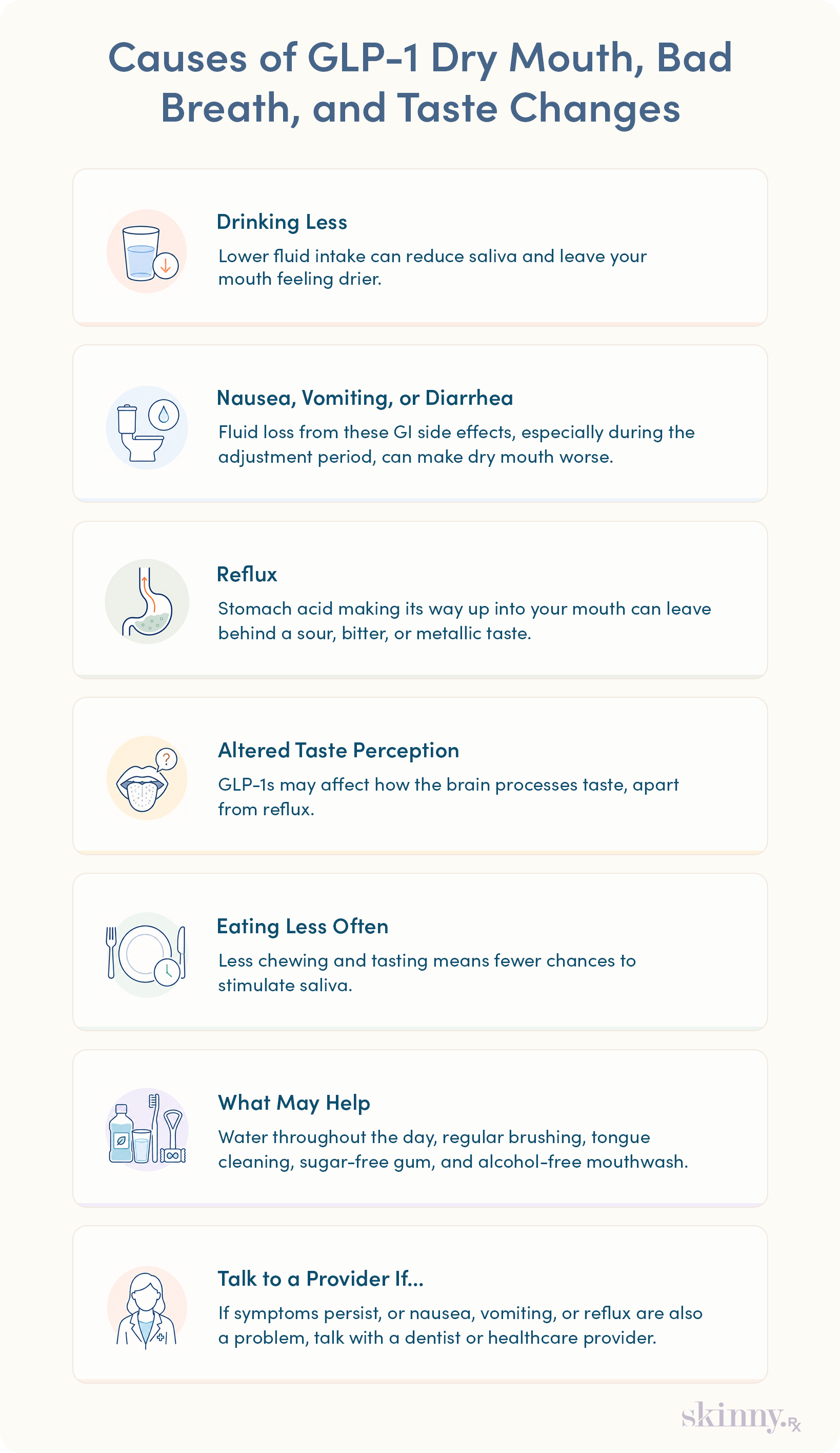
Semaglutide and other GLP-1s can change eating and drinking patterns. These changes, along with gastrointestinal side effects, may contribute to dry mouth in some users. Here’s why:
Reduced Fluid Intake
Adequate hydration helps your body produce saliva. Some GLP-1 medications may reduce thirst or fluid intake in certain patients, while eating less can also mean getting less water from food.
Nausea, vomiting, or diarrhea can reduce fluids even further. When your body does not get enough water, dry mouth can follow.
Reduced Eating Frequency
Patients using GLP-1s for chronic weight management commonly eat less and may eat less frequently. That’s the medication at work, doing what it’s designed to. However, chewing and tasting food stimulate saliva production.
Eating less frequently may therefore result in fewer periods of meal-stimulated saliva, although it is not known whether this causes persistent dry mouth in GLP-1 users.
Gastrointestinal Side Effects and Dehydration
Nausea and vomiting are among the most commonly reported gastrointestinal side effects of GLP-1s. Frequent vomiting can dehydrate you, especially during the adjustment period when you’re still getting used to the medication’s effects.
If you’re experiencing moderate to severe gastrointestinal side effects from your GLP-1, maintaining hydration is important for oral health and replacing fluid lost through vomiting or diarrhea. Persistent symptoms should be discussed with your healthcare provider.
Stomach acid that makes its way up your throat and into your mouth can also leave behind a lingering sour, bitter, or occasionally metallic taste. Nausea and vomiting may also make it more difficult for you to maintain your usual oral-hygiene routine.
See If GLP-1 Treatment Is Right for You
No two GLP-1 journeys look the same, so your prescription shouldn't either. Talk to a licensed provider who'll help you find the treatment plan best suited to your body, your goals, and where you want to go.
Altered Perception of Taste
GLP-1s alter your appetite and the way you respond to food, partly through effects on the brain that help you feel satisfied with less. Some clinical data indicate they may also affect how you perceive certain tastes.
Bear in mind that researchers still don’t know exactly how common these effects are, but studies suggest GLP-1s may affect taste perception. In real-world terms, some GLP-1 patients report that food tastes metallic, sour, or otherwise different.

In my experience, bad breath isn't one of the most common complaints with GLP-1 medications, but it does come up occasionally. I reassure patients that it's something that we can improve, so there's no need to stop a medication that is otherwise working well.
–
Dr. Daniel McGee, Board-certified Family Medicine Physician
GLP-1 Dry Mouth and Bad Breath: What Might Help
There’s no “cure” for dry mouth or bad breath, strictly speaking. Whether you’re on a GLP-1 or not, these issues correlate with your oral hygiene habits. You’ll have to be diligent to stave them off.
Let’s start at the top.
- The NIDCR recommends drinking 8 to 12 cups of water over the course of the day.
- Limit caffeine and alcohol, since both have diuretic properties.
- Chewing gum helps stimulate the production of saliva without requiring you to eat.
You should also make your dentist happy by brushing daily and using an alcohol-free mouthwash. Cleaning your tongue, not just your teeth, can help too. Bacteria collects on the tongue and may require physical scraping to remove.
One telltale sign is a white or gray film on your tongue. Start by brushing the area thoroughly, and invest in a tongue scraper if things don’t improve.
One caveat here—the American Dental Association doesn’t pinpoint any single product or habit as a primary cause of dry mouth or bad breath.It’s usually a combination of several factors at once, so don’t expect to swap your mouthwash and solve the problem overnight.
When To Call a Dentist or Healthcare Provider
Bad breath isn’t an emergency (unless you’re on a date). Still, persistent oral hygiene issues can merit a call to a dentist in some cases.
If you’re suffering from chronic dry mouth while on a GLP-1, you should be more concerned about the downstream issues: gingivitis, sores or ulcers, etc.
Dental hygienists can prescribe special medications and washes designed to combat or manage these issues while you improve your hydration. That said, if you’re regularly dealing with nausea, reflux, or are vomiting, you’ll want to also reach out to your doctor.
Questions To Ask Your Dentist or Doctor
Dry mouth and bad breath can be diagnosed under medical supervision just like any other health condition.
To get informed, keep these questions in your back pocket when speaking with a healthcare professional:
- Is my GLP-1 medication to blame for my dry mouth?
- What prescription rinses are available for my dry mouth or bad breath?
- Are my symptoms consistent with oral side effects of a GLP-1, or is something else going on?
- What should I change at home to reduce dry mouth or bad breath?
Bottom Line
Dry mouth, bad breath, and taste changes can show up with GLP-1s, even without hard proof the medication causes them directly. Dehydration, eating less, and GI side effects are the likely drivers.
You don't need to stop your medication over this. Staying hydrated, chewing sugar-free gum, and cleaning your tongue when you brush can make a real difference.
If symptoms stick around, or you're dealing with regular nausea, vomiting, or reflux, call your dentist or provider.
Frequently Asked Questions
See If GLP-1 Treatment Is Right for You
Your GLP-1 prescription should fit you, not the other way around. Talk to a licensed provider to find the treatment plan best suited to your body and your goals.

By Jake Dickson, NASM-CPT, USAW-L2
Contributing Author
Jake holds a B.S. in Exercise Science from UNC Wilmington and began his career as a personal trainer and weightlifting coach. In recent years, he’s moved behind the page as a writer and editor, contributing hundreds of articles and being featured as a subject matter expert. Today, Jake’s goal remains the same: to empower people to change their lives by bringing heady scientific topics down to ground level.