

 Medically Reviewed

Key Takeaways
- Semaglutide can slightly raise your resting heart rate, typically by just a few beats per minute.
- Palpitations may be linked to dehydration, excess caffeine or alcohol, low blood sugar, anxiety, or other medications rather than semaglutide alone.
- Palpitations differ from arrhythmia, a consistently fast, slow, or irregular heart rhythm that can signal a more serious condition.
- Contact your provider for new or different palpitations, more than 6 extra heartbeats per minute, or a resting pulse above 100 without exercising.
- Seek urgent care if a fast or irregular heartbeat comes with chest pain, shortness of breath, fainting, severe dizziness, confusion, or weakness.
If you’ve recently started semaglutide, you may be all too familiar with some of its most common side effects: nausea, diarrhea, constipation, and general gastrointestinal upset. But if you’ve noticed your heart racing on semaglutide, too, it’s natural to be a bit anxious.
So, are heart palpitations a known side effect of semaglutide? They can be. In this guide, we walk you through what the official semaglutide labeling says about increased heart rate, what other factors could be contributing to these fluttering sensations, and when it’s time to loop in your healthcare provider for support.
What Do Heart Palpitations Feel Like?
At a high level, heart palpitations are a sense that your heart is racing, pounding, or fluttering. You might feel them in your chest, neck, or throat. While heart palpitations can be unsettling, they are often brief and can feel different from person to person. You may notice:
- An unusual awareness of your own heartbeat
- A fluttering sensation in your chest
- A sense that your heart is beating too fast or racing, even when you’re at rest or sitting still
- A feeling that your heart has momentarily skipped a beat
Most of the time, heart palpitations are not something you need to worry about. However, there are times when they can be a sign of something more serious. That’s why it’s important to know how to distinguish between a brief, fleeting awareness of your heartbeat vs. something more persistent and severe.
(We’ll break down the difference later in this article, but heart palpitations may be serious when they’re especially intense, fast, and accompanied by other concerning symptoms like chest pain or shortness of breath.)
Can Semaglutide Affect Heart Rate?
Yes, semaglutide can affect heart rate. The official semaglutide labeling includes language about increased resting heart rate. For example:
- The semaglutide labeling for weight management notes that resting heart rate may increase by 1 to 4 beats per minute, on average, although some people experienced higher increases in clinical trials. It advises patients to consult their healthcare provider if they feel heart palpitations or a racing heart beat when at rest. If this increased heart rate continues, your provider may recommend stopping treatment with semaglutide.
- The semaglutide labeling for type 2 diabetes found an average increase of 2 to 3 beats per minute in clinical trials.

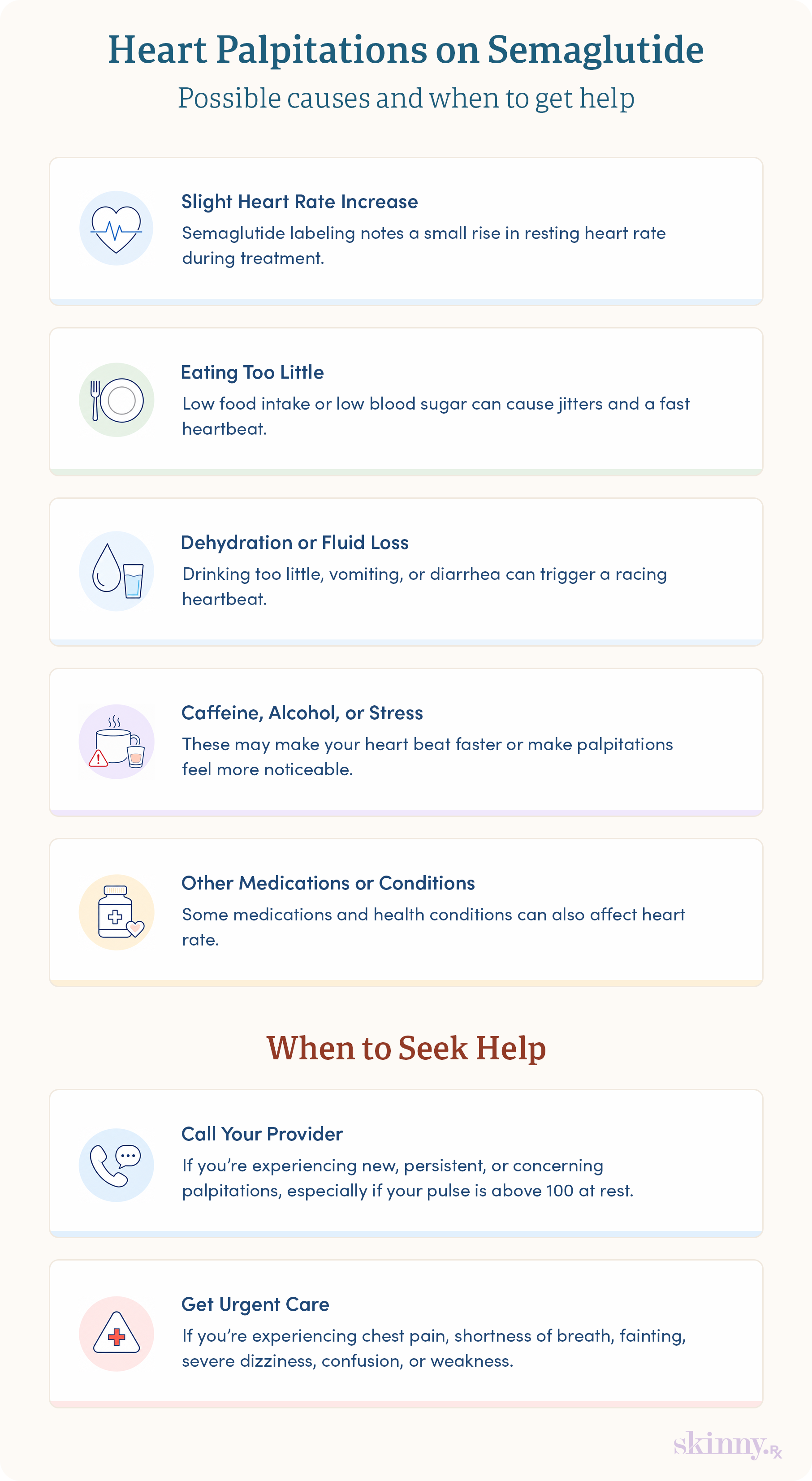
A slightly higher resting heart rate can happen with semaglutide, but patients should not ignore a racing or pounding heartbeat that feels new, persistent, or severe. The key is context: dehydration, low food intake, caffeine, anxiety, and other medications can all contribute, but chest pain, shortness of breath, fainting, or severe dizziness should be treated as urgent.
–
Dr. Sajad Zalzala, Board-certified Family Medicine Physician and Medical Advisor at SkinnyRx
Heart palpitations or increases in resting heart rate are not necessarily unique to semaglutide. Clinical studies of other GLP-1s have also documented small increases in heart rate.
It’s important to note that heart palpitations are not the same thing as an abnormal heartbeat, or arrhythmia. Arrhythmias — e.g. consistently fast, slow, or irregular heart rhythms — can be a sign of more serious heart problems, such as atrial fibrillation (AFib) or heart failure.
In people with these conditions, taking semaglutide can actually reduce the risk of AFib, heart attack, and angina (chest pain). Similarly, several studies have found that semaglutide can reduce the risk of heart disease in people with obesity or type 2 diabetes.
Note: Semaglutide labeling for weight management notes that resting heart rate can increase and advises patients to tell a healthcare provider if they feel their heart racing or pounding in the chest for several minutes.
Weight-Loss Care With Ongoing Support
Access prescription treatment, provider guidance, and helpful tools built around your progress.
Why a Racing Heart May Happen During Treatment
Semaglutide — and other GLP-1 medications — can cause a racing heart because it activates GLP-1 receptors throughout your body, including ones located in cells that control your heart rate. While semaglutide is associated with an increase in heart rate, there are several other factors that may contribute to feeling like your heart is racing on semaglutide.
Dehydration or Low Fluid Intake
The physiological changes of semaglutide that lower your appetite can also affect your water intake. If you normally drink when you eat, having a lower appetite on semaglutide may inadvertently lead you to drink less, too. Regularly not drinking enough water or fluids can lead to a state of chronic dehydration that makes your heart flutter.
The fix: Make it a goal to drink two to three liters of fluids per day (ideally from water). You can boost your fluid intake by prioritizing water-rich foods like soup and low-fat yogurt.
Nausea, Vomiting, or Diarrhea
Semaglutide side effects like nausea, vomiting, or diarrhea can drain your fluids. If you don’t make up for the loss by staying adequately hydrated, you might end up seriously dehydrated. Dehydration, in turn, can increase your risk for more serious side effects like kidney issues. But, in the short term, it can also mess with your blood pressure and cause heart palpitations.
The fix: Make sure to consistently sip water throughout the day. Limit alcohol, caffeine, and sugary drinks that aren’t as hydrating.
Eating Much Less Than Usual
Because semaglutide lowers your appetite, you might find yourself eating significantly smaller portions or accidentally skipping meals. Eating less can help support weight loss, but it’s important to make sure that you’re still eating enough. Taking in too few calories, skipping meals, or eating low-nutrition foods can cause your blood sugar to drop. Signs of low blood sugar include hunger, anxiety, feeling jittery, and a fast heartbeat.
The fix: Eat a balanced, healthy diet full of foods that support weight loss and heart health, such as lean proteins, fiber-rich fruits and veggies, and healthy fats. Eat smaller portions more frequently during the day as opposed to eating large meals more spread out.
Caffeine, Alcohol, or Stimulants
It’s generally a good idea to reassess your caffeine, alcohol, and stimulant use when you start semaglutide — all the more so if you’re experiencing heart palpitations. Because semaglutide can naturally increase heart rate, throwing caffeine into the mix can worsen or trigger palpitations or jitters.
While semaglutide labeling does not note any interactions with alcohol, the drug’s digestion-slowing effects can keep alcohol in your stomach longer, intensifying its effects on your heart, gastrointestinal system, and blood sugar regulation.
Finally, stimulants like nicotine can also speed up your heart rate, even if you’re not taking semaglutide.
The fix: Try cutting your usual caffeine intake in half and see how your body responds before establishing a new baseline with your provider. As for alcohol, established clinical guidance recommends no more than one drink per day for women and two for men. However, it’s best to avoid it altogether when in a weight loss program because of all the extra empty calories.
Anxiety, Stress, or Sleep Loss
Anxiety, stress, and poor sleep (which can cause anxiety and stress on its own) can all make your heart race. Worse, experiencing heart palpitations can crank up the anxiety, giving you something new to stress out about.
The fix: Figure out how to manage your stress and anxiety, whether it’s cutting out unnecessary responsibilities, taking up a yoga or meditation practice, practicing deep breathing, or finding a therapist. Managing your stressors can improve your sleep. So can transforming your bedroom into a relaxing, sleep-friendly environment and getting at least 7 hours per night.
Other Medications or Heart Conditions
Semaglutide isn’t the only medication that can increase your heart rate. Some decongestants, asthma inhalers, and antidepressants can, too, along with other medications.
Heart palpitations are also linked with certain health conditions, including low blood sugar (hypoglycemia), overactive thyroid (hyperthyroidism), and even allergic reactions. They may also be signs of an abnormal heart rhythm, or arrhythmia, which can be a sign of heart disease.
The fix: If you’re experiencing heart palpitations, talk to your healthcare provider. They can help you determine if it’s due to another medication or underlying health condition, and recommend the appropriate next steps.
When to Contact Your Healthcare Provider
In general, if your heart palpitations are concerning you, you should contact your healthcare provider. They are the best person to help you understand if they are something you should be worried about — or not. However, if you’re not sure if you should be worried just yet, consider using this symptom-tracking checklist as a guide:
- When did the racing or pounding feeling start?
- How long did it last?
- Did it happen after a dose change, caffeine, alcohol, exercise, vomiting, diarrhea, or dehydration?
- Did it happen with chest pain, shortness of breath, fainting, dizziness, sweating, weakness, or confusion?
- What was your pulse if you checked it?
- What other medications or supplements did you take that day?
You should also contact your healthcare provider if you:
- Feel extra heartbeats (e.g. more than 6 per minute)
- Have heart disease, diabetes, or high cholesterol or blood pressure
- Notice new or different heart palpitations
- Have a pulse above 100 beats per minute and you’re not exercising
- Have symptoms such as chest pain, shortness of breath, lightheadedness, or loss of consciousness
When to Seek Urgent or Emergency Care
While many palpitations are harmless and go away on their own, certain symptoms require immediate medical evaluation. Seek urgent medical care if a fast or irregular heartbeat occurs with:
- Chest pain
- Shortness of breath
- Fainting
- Dizziness or lightheadedness
- Unusual sweating
- Confusion
- Weakness
- Symptoms of stroke
- A feeling that something is seriously wrong
Seek urgent medical care if a fast or irregular heartbeat occurs with chest pain, shortness of breath, fainting, severe dizziness, confusion, weakness, symptoms of stroke, or a feeling that something is seriously wrong.
Questions to Ask Your Clinician
Here are some questions you may want to ask your healthcare provider about your heart palpitations on Ozempic® or Wegovy®:
- Could my current dose be contributing to these palpitations?
- Should we run any tests to check my heart function?
- Are there any other medications or supplements I am taking that could be causing my heart to race?
- What should my target resting heart rate be, and how often should I monitor it at home?
- How can I better manage my hydration and nutrition to support my heart health during treatment?
Bottom Line
A racing or fluttering heartbeat on semaglutide can feel alarming. But it does not always mean something serious is wrong.
Official labeling notes that semaglutide can slightly raise resting heart rate. Palpitations may also come from dehydration, too much caffeine, eating too little, stress, another medication, or an underlying health issue.
Pay attention to when the palpitations happen and how long they last. It also helps to note what you ate or drank, whether your dose recently changed, and whether you had any other symptoms. That information can help your provider figure out what may be causing them.
Many palpitations are brief and harmless. Still, do not ignore them if they come with chest pain, shortness of breath, fainting, severe dizziness, confusion, or weakness. Contact your healthcare provider about new or persistent palpitations, and seek urgent care if the symptoms feel severe.
Frequently Asked Questions

By Amelia Willson
Contributing Author
Amelia Willson is a freelance health writer and content strategist based in Orange County, California. Her work has appeared in several health publications, including Ro, Klarity Health, K Health, Sleep Foundation, and A Place For Mom. Amelia covers the latest trends in health and wellness, including the research (or lack thereof) behind them, breaking down complex topics so that readers don't have to. Her writing frequently explores weight management, plant-based nutrition, and mental health.