
 Medically Reviewed

Key Takeaways
- GLP-1 medications can reduce appetite and food intake, which may make it harder to meet daily nutrient needs during weight loss.
- Protein, fiber, fluids, and micronutrients are the main priorities to focus on when appetite drops, as each supports a different aspect of your health.
- Small, frequent meals with nutrient-dense foods can help you meet your needs without forcing yourself to eat more than feels comfortable.
- Fatigue, irritability, and trouble concentrating can be early signs that your food intake is falling short.
- A healthcare provider or Registered Dietitian can help assess your nutrient intake and adjust your plan as your needs change.
When you’re taking a GLP-1 medication, eating less can feel like the goal. But when your appetite drops, it can also become harder to get the nutrition your body still needs. You may feel full after only a few bites, skip meals without meaning to, or find that foods you usually rely on no longer feel appealing.
This does not mean you need to force large meals or follow a complicated diet. The goal is to make the food you can eat count.
This article explains how to focus on the Big Four priorities, which means prioritizing protein, fiber, fluids, and micronutrients, so you can stay nourished when appetite is low.
Why Nutrition Can Get Harder When Appetite Drops
GLP-1 medications support weight loss by signaling the brain that you are full and slowing a meal’s transit time through your intestines. As a result, people on GLP-1s consume significantly less energy.
In one 12-week study, adults on semaglutide consumed about 24% less energy throughout the day. In another 20-week study, participants consumed 35% less energy than those who were not on semaglutide.
Although reducing energy intake supports weight loss, it can be harder to ensure you stay well-nourished while on a GLP-1 medication.
In a preliminary study, nearly all participants (>90%) on GLP-1 or GIP medications were not consuming enough protein, fiber, vitamin D, calcium, or potassium.
This finding is not surprising. On average, Americans do not consume enough fiber or key micronutrients, including vitamins A, C, D, E, and K, as well as key minerals such as calcium, potassium, and magnesium. When your energy intake decreases on a GLP-1, it’s even harder to meet your nutrient needs.
The good news is that you can meet your nutrient needs through whole foods, even while on a GLP-1 medication. By focusing on the Big Four priorities, which means prioritizing protein, fiber, fluids, and micronutrients, you can plan for balanced meals to nourish and hydrate your changing body.
The Big Four Priorities: Protein, Fiber, Fluids, and Micronutrients
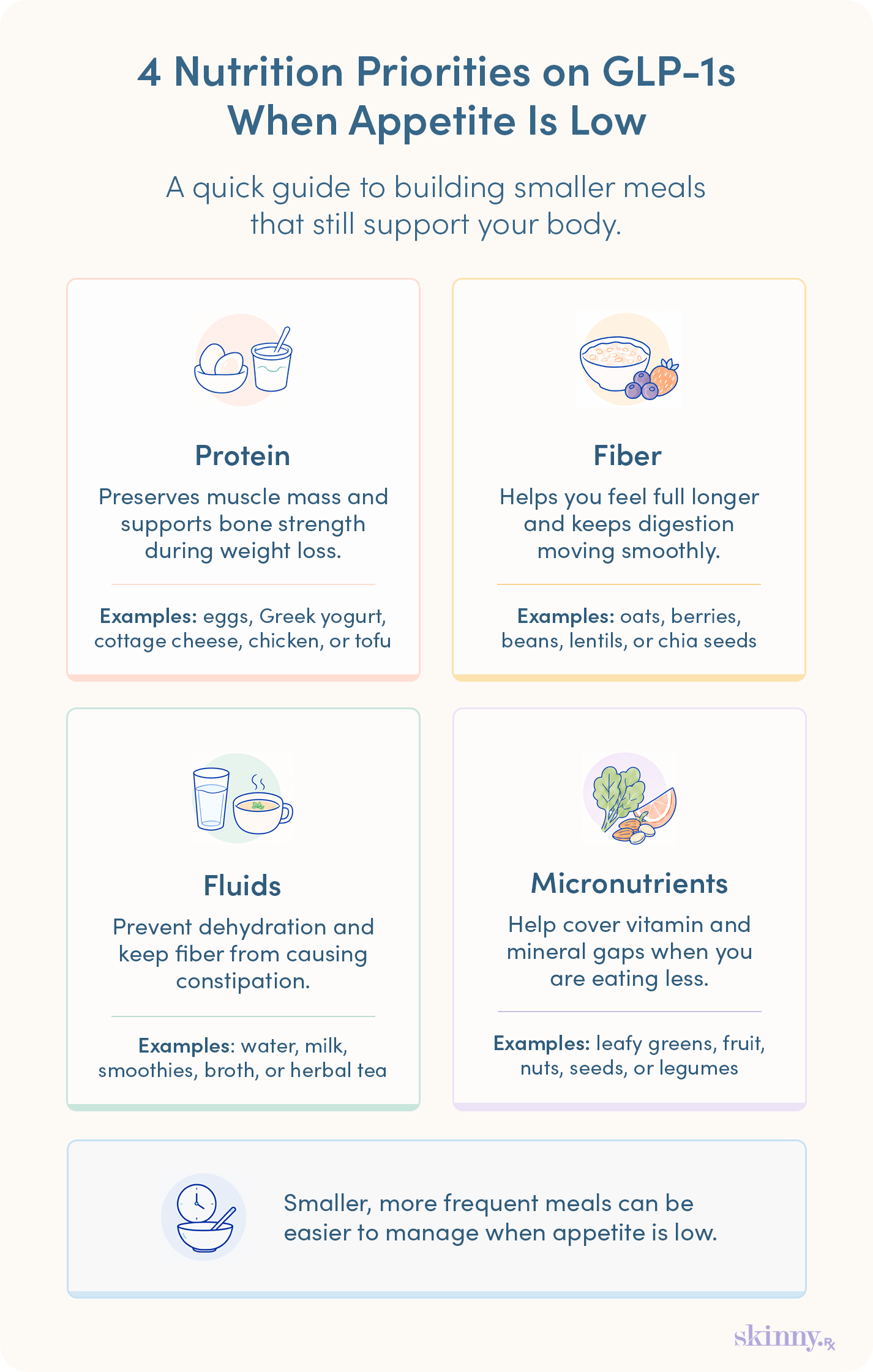
These four priorities do not work in isolation. When appetite is low, protein, fiber, fluids, and micronutrients all have to fit into less food than usual. The goal is not to build perfect meals. It is to make smaller meals more complete, so each one still supports muscle, digestion, hydration, and nutrient status.
Here is how to prioritize each one.
Protein for Muscle Support
Protein is vital to maintaining lean body mass, especially during weight loss on GLP-1s. Adequate protein is also needed to maintain bone mass, physical function, and immune function. On the flip side, inadequate protein intake can increase the risk of falls and fractures, surgical complications, and reduced quality of life, among other adverse health outcomes.
Adults on GLP-1 medications need about 1.2-1.6 grams of protein per kilogram of body weight. For example, someone who weighs 180 lbs (81.8 kg) needs about 98-131 grams of protein daily. Ideally, this should be spread throughout the day to ensure protein intake at each meal and snack.
Protein sources can be both animal-based and plant-based. Animal-based sources include fish, eggs, dairy, and lean cuts of poultry, beef, pork, or lamb. Plant-based sources include beans, legumes, nuts, seeds, soy products, whole grains, and vegetables.
As an added bonus, plant-based protein sources also hit on the other Big Four priorities– fiber, water, and micronutrients.
Fiber for Digestion and Fullness
Dietary fiber is an MVP nutrient to support your weight loss and metabolic health. Fiber can be classified as soluble or insoluble based on how it acts in the water-based environment of your intestines; both types are found naturally in plant foods and offer distinct health benefits.
Soluble fiber slows the rate of gastric emptying, helping you feel full longer. Good sources of soluble fiber include vegetables, fruits, and whole grains. Insoluble fiber adds bulk to the stool and helps the contents of the digestive tract move more easily, which helps to prevent or treat constipation. Good sources of insoluble fiber include seeds, nuts, and vegetables.
Recommendations for fiber intake are based on sex and age. Males ages 19-50 need at least 38 grams of fiber daily, while those 51 and older need at least 30 grams. Females aged 19-50 should consume at least 25 grams of fiber, while those 51 and older should aim for 21 grams or more daily.
Fluids for Hydration
As your overall food intake dips on a GLP-1 medication, your risk for inadequate hydration increases. Dehydration can worsen if you are also experiencing certain side effects of a GLP-1 medication, such as nausea or vomiting.
To stay well hydrated, drink plenty of fluids throughout the day, including water and unsweetened teas. Water-rich foods also contribute significantly to your total fluid intake, such as soups, broths, fruits, vegetables, and smoothies.
Recommendations for total fluid intake include not just water, but all foods and beverages. Females should aim for at least 2.7 liters (91 fl oz) daily, while males should aim for at least 3.7 liters (125 fl oz) daily. Note that your fluid needs may increase if you are physically active or sweating heavily.
Keep in mind that fluids are especially important when increasing your fiber intake. Without extra fluids, fiber can contribute to constipation and other gastrointestinal distress.
Vitamins and Minerals From Nutrient-Dense Plant Foods
Lastly, a variety of colorful fruits and vegetables in your diet will help ensure you meet your vitamin and mineral needs. Aim to incorporate:
- Dark, leafy greens (e.g., broccoli, kale, Brussels sprouts, Swiss chard),
- Red and orange vegetables (e.g., bell peppers, winter squash, sweet potatoes)
- Beans, peas, and lentils (e.g., pinto beans, cannellini beans, red lentils, dal).
These foods are not only rich in vitamins and minerals (e.g., potassium, vitamin C, vitamin K, folate), but also in a wide variety of phytochemicals, or natural plant-based chemicals that will bolster your overall health.
Plant-based proteins also tend to be more affordable than animal-based sources.
Provider-Guided Weight-Loss Care
Get provider-guided treatment, practical support, and tools to help you navigate appetite changes, meals, and progress along the way.
Small-Meal Strategies That May Feel More Manageable
To ensure you are well-nourished, choose small, frequent meals throughout the day. This can help to ensure that you get enough of the Big Four priorities without becoming overly full or triggering heartburn.
The following is one example of a dietary pattern that uses this strategy:
- 8:00 AM: Small Breakfast
- 11:00 AM: Morning Snack
- 1:00 PM: Small Lunch
- 4:00 PM: Afternoon Snack
- 6:00 PM: Small Dinner
If you find yourself getting full quickly, drinking fluids between meals, rather than with meals, can further help to prevent the stomach from becoming overly full. Aim to drink 4-6 fluid ounces of water every hour between meals and snacks.
Easy Protein and Fiber Pairings
Having trouble coming up with refreshing ideas for protein and fiber-rich meals? Try these easy pairings that hit on all of the Big Four nutrition priorities:
- Freshly cut vegetables with hummus
- Steamed edamame and a bowl of miso soup
- A handful of fresh berries with cottage cheese
- Nut butter on whole grain toast
- A handful of nuts and dried fruits
- A smoothie with plain yogurt, frozen fruits, and a splash of juice
- A bowl of lentil soup with whole wheat naan
- Tuna salad with whole grain crackers
Signs You May Not Be Eating Enough
Early signs that you may not be eating enough include fatigue, irritability, or poor concentration. If left unaddressed, these can eventually put you at risk for malnutrition and sarcopenia, or loss of your lean body mass.
One of the simplest ways to know if you are meeting your nutrient needs is to track your food and beverage intake. Several user-friendly apps are widely available and can provide concrete data on how your food intake matches up with your nutrient needs.
The reports will reveal key insights on your energy, macronutrient, micronutrient, and fluid intake. If you are not someone who enjoys food tracking, know that you do not have to do this forever; even tracking for a week or two can provide key insights to share with your healthcare providers.
When to Work With a Registered Dietitian or Healthcare Provider
Given the rapid metabolic and dietary intake changes seen with GLP-1 medications, most people can benefit from working with a Registered Dietitian or a food and nutrition expert.
A Registered Dietitian can help ensure you are meeting your nutrient needs, prevent or manage any complications you may be experiencing with your medications, and support long-term lifestyle changes. They can also help determine if a dietary supplement is needed to help meet your nutrient needs.
The Academy of Nutrition and Dietetics offers a Find a Nutrition Expert database that can connect you with a qualified nutrition professional. Medical nutrition therapy may be covered by your insurance plan.
Bottom Line
A smaller appetite on a GLP-1 medication does not mean you have to settle for poor nutrition. Protein, fiber, fluids, and micronutrients deserve priority at every meal, even when you can only eat small amounts.
Small, frequent meals paired with nutrient-dense foods can help you meet your needs without forcing yourself to eat more than feels comfortable.
Watch for fatigue, irritability, or trouble concentrating, as these are early signs that your food intake may not be meeting your body's needs. A healthcare provider or Registered Dietitian can help you adjust your plan accordingly.
Frequently Asked Questions
Provider-Guided Weight-Loss Care
Get provider-guided treatment, practical support, and tools to help you navigate appetite changes, meals, and progress along the way.

By Whitney Linsenmeyer
Assistant Professor of Nutrition and Dietetics
Whitney Linsenmeyer, PhD, RD, is an Assistant Professor of Nutrition and Dietetics at Saint Louis University and a National Spokesperson for the Academy of Nutrition and Dietetics with expertise in fad diets, culinary nutrition, and transgender health. Her research focuses on gender-affirming nutrition care, and she brings a joy-first approach to food science and eating behavior.