

 Medically Reviewed

Key Takeaways
- Semaglutide is not FDA-approved for blood pressure control, but clinical trials show it may indirectly lower blood pressure through weight loss and improved heart health.
- Both high and low blood pressure can be asymptomatic, making routine monitoring important for anyone taking semaglutide.
- People already on blood pressure-lowering medications should watch for blood pressure that drops too low and consult their prescriber about any needed adjustments.
- Diet and exercise play a meaningful role alongside semaglutide, and following an approach like the DASH diet may further support healthy blood pressure levels.
- Semaglutide should be viewed as part of a broader health strategy, not a standalone solution or replacement for prescribed blood pressure treatments.
High blood pressure is a common, yet often overlooked health condition. According to the National Heart, Lung, and Blood Institute, half of all Americans have high blood pressure, but the condition often goes undiagnosed since it’s symptomless in many cases. When left untreated, high blood pressure (also known as hypertension) may increase the risk of heart disease, stroke, and other serious conditions.
In clinical trials, some participants have experienced a reduction in blood pressure while taking semaglutide, yet defining the exact relationship between semaglutide and blood pressure is tricky.
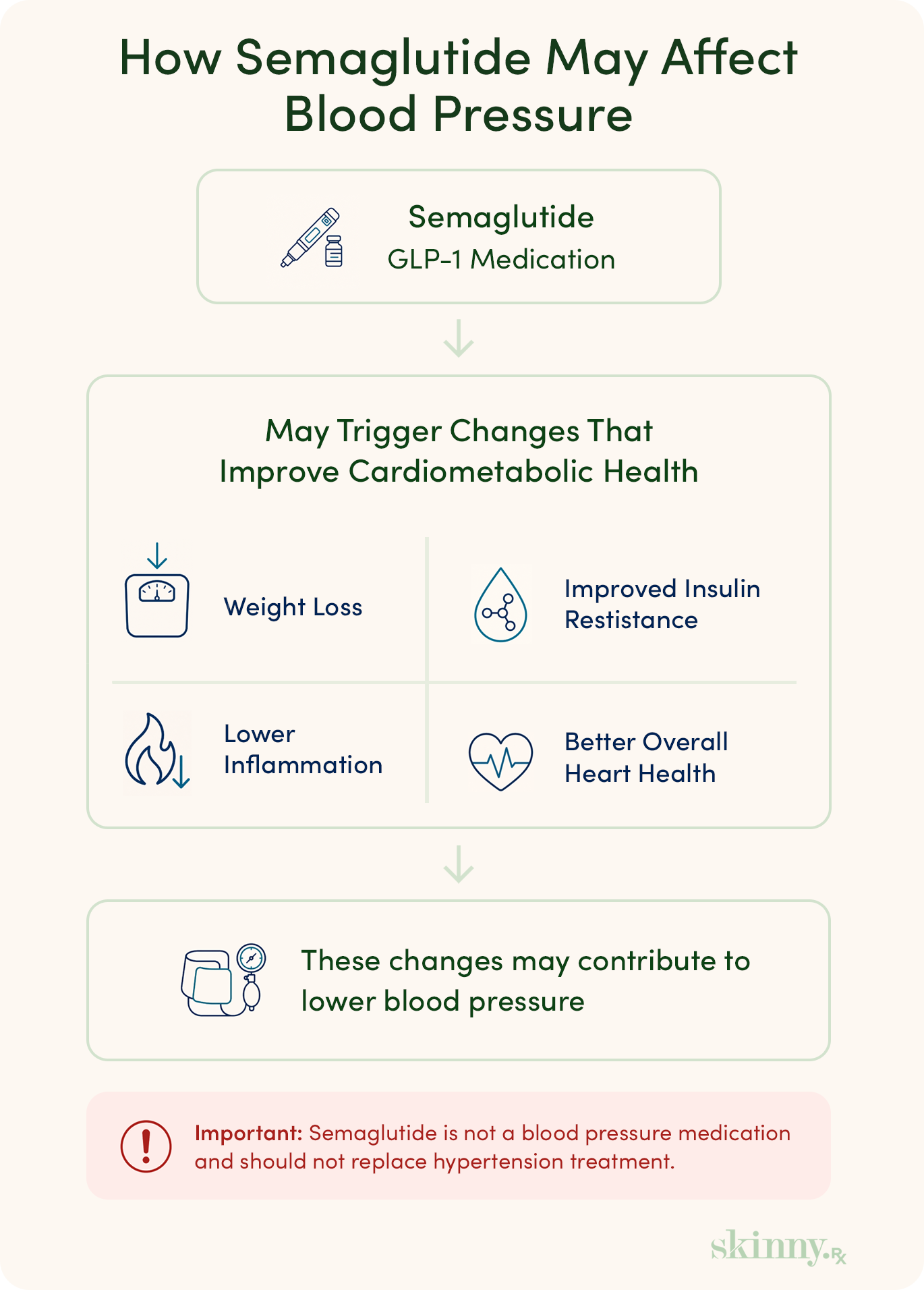
While semaglutide appears to have an impact on blood pressure, this may be indirect. It most likely stems from semaglutide’s effects on weight and overall heart health. "Semaglutide isn’t a blood pressure medication, but improving weight, inflammation, insulin resistance, and cardiometabolic health can create meaningful downstream effects on blood pressure,” explains Sajad Zalzala, MD, a board-certified family medicine physician, “The important thing is to view it as part of a broader health strategy — not a replacement for proper hypertension care."
While semaglutide probably won’t replace blood pressure medications anytime soon, the medication may have an indirect, beneficial effect on high blood pressure.
Here’s everything you need to know about semaglutide and hypertension.
Can Semaglutide Affect Blood Pressure?
Participants in clinical trials have experienced drops in their blood pressure while taking semaglutide. Blood pressure measures the force of the blood pushing against those arteries. Every time your heart beats, it pushes blood into blood vessels around the heart, which are called arteries.
Blood pressure falls within three ranges:
- Normal: This range indicates that there’s adequate pressure to move blood through the arteries.
- High: Too much pressure may be asymptomatic at first, but high blood pressure can contribute to serious health problems, such as stroke, heart disease, and kidney disease.
- Low: When blood pressure is too low, it may be asymptomatic as well. In other cases, low blood pressure causes symptoms like dizziness, confusion, blurry vision, and headaches.
Meanwhile, semaglutide is a medication class that mimics GLP-1, a naturally occurring hormone involved in appetite regulation, digestion, and blood sugar control. Thanks to the medication class’ effects, multiple name brand medications are FDA-approved for:
- Assisting with type 2 diabetes management
- Reducing the risk of adverse cardiovascular events
- Helping with weight management
At first glance, it may appear that semaglutide is not related to blood pressure. Yet thanks to the medication’s effect on heart health and weight, semaglutide may impact blood pressure too. In the SOUL randomized clinical trial on oral semaglutide, for example, all participants taking semaglutide experienced clinically significant drops in blood pressure.
A 2025 meta-analysis reviewed results from 20 clinical trials with 18,231 participants who took semaglutide injections. Participants experienced blood pressure drops, though the effect was more significant in those without diabetes and who took the medication for 50 to 100 weeks.
Another paper suggests that the blood pressure effects may increase with higher semaglutide doses.
What these papers don’t establish is direct causation; the current evidence doesn’t support that semaglutide may act as a blood pressure medication. Instead, it may indirectly impact blood pressure due to how the medication affects weight and heart health.
Explore Personalized Weight Loss Options
Start with an online assessment to help a licensed clinician determine whether a prescription weight loss treatment, along with guided nutritional support, may be appropriate for you.
Why Blood Pressure May Change During Weight Loss
Semaglutide is not a blood pressure medication. None of the three name-brand drugs in this medication class is FDA-approved for blood pressure control. Still, semaglutide may lower blood pressure through its cardiometabolic effects.
Weight Loss and Heart Health
Obesity increases the risk of high blood pressure by 65-75%. While excess weight is an established risk factor, the reasons why it causes high blood pressure are less clear.
Possible reasons why weight impacts blood pressure include:
- Visceral fat (fat deep inside the belly) may impair how the kidneys handle sodium and increase sodium reabsorption, contributing to elevated blood pressure.
- Excess fat may activate the sympathetic nervous system (SNS), increasing heart rate and causing other cardiovascular changes which contribute to high blood pressure.
- Visceral fat may promote chronic inflammation and hormonal changes that are associated with vascular dysfunction and hypertension.
Diet and Exercise
The number on the scale isn’t the only potential risk factor for high blood pressure. The condition is much more likely in people who eat a diet high in sodium and saturated fat, as well as those who don’t meet the government’s exercise guidelines (at least 150 minutes a week of aerobic exercise and two or more strength training sessions a week).
Conveniently, semaglutide is intended to be taken alongside a healthy diet and physical activity as well.
When it comes to defining a “healthy diet” multiple guidelines fit the bill. For high blood pressure specifically, someone taking semaglutide may consider following the DASH diet. The DASH diet reduces salt and saturated fat intake, prioritizes whole foods, and is associated with lowering blood pressure.
Main principles of the DASH diet are:
- Eat plenty of veggies, fruits, and whole grains
- Get lean protein from sources like lean poultry, fish, beans, nuts, and tofu
- Limit how often you drink sugary drinks, eat salt, indulge in red meat or sweets, and drink alcohol

Semaglutide isn’t a blood pressure medication, but improving weight, inflammation, insulin resistance, and cardiometabolic health can create meaningful downstream effects on blood pressure. The important thing is to view it as part of a broader health strategy — not a replacement for proper hypertension care.
–
Dr. Sajad Zalzala, Board-certified Family Medicine Physician and Medical Advisor at SkinnyRx
Blood Pressure Medications
While semaglutide may impact blood pressure, don’t stop taking blood pressure medications or change medications unless recommended by your prescribing healthcare provider. Instead of viewing semaglutide as a replacement, it may be perceived as an adjunctive (add-on) for other treatments that reduce blood pressure.
When Lower Blood Pressure May Become a Concern
A 2023 meta-analysis analyzed multiple studies in populations with a normal blood pressure who took semaglutide for weight management. The authors concluded that semaglutide may result in a clinically significant drop in patients with normal blood pressure.
While the authors did not mention concerns that this drop would be so drastic that it would cause low blood pressure, that is possible. Here are the signs of low blood pressure and how to approach a conversation with a healthcare provider if you experience any.
Symptoms of Low Blood Pressure
Symptomatic low blood requires medical attention. Here are the symptoms to watch out for:
- Blurred vision
- Cold or clammy skin
- Confusion
- Lightheadedness
- Dizziness
- Fainting
- Fatigue
- Nausea
- Racing heart
When someone notices these signs, it’s recommended to check blood pressure periodically to see if it normalizes. If it doesn’t, contact a healthcare provider. Symptoms that severely interfere with everyday life or make it difficult to remain conscious often require emergency medical care.
Medication Adjustment Questions
If someone finds themself in the low blood pressure range after taking semaglutide, they should have a conversation with the prescribing healthcare provider about strategies to manage this side effect or possible semaglutide alternatives. For those on blood pressure-lowering medications, a drop in blood pressure may also warrant a discussion with that prescriber about adjusting their medication.
Questions to ask if blood pressure is consistently low include:
- Are there any steps I can take to get my blood pressure back into a normal range?
- Should I stop taking semaglutide? If so, what are my alternatives?
- How often do you recommend monitoring blood pressure to see if it returns to a normal range?
How to Monitor Blood Pressure Safely
Healthcare providers take blood pressure as part of a patient’s physical. Since high and low blood pressure can be asymptomatic, this is a necessary step to determine if someone’s blood pressure falls within the normal range.
When there are concerns, a healthcare provider may recommend a patient monitor blood pressure at-home too. If taking blood pressure yourself, follow these steps:
- Don’t smoke, exercise, or drink within 30 minutes of taking blood pressure.
- Remove clothing that covers the arm before taking blood pressure.
- Rest for five minutes before taking blood pressure. This includes not going on your phone or doing anything that may increase stress.
- Measure blood pressure at the same time each day.
- Take two readings one minute apart.
- When taking blood pressure, sit upright with feet on the ground. Rest the arm on a flat surface and place the blood pressure monitor’s cuff on the upper part of the arm.
- Check your monitor’s instructions or ask a healthcare provider to make sure you are taking blood pressure in alignment with what your specific machine recommends.
A blood pressure monitor will provide two numbers which together capture blood pressure. The numerical ranges are:
- High: Over 130/80
- Elevated: Between 120-129 and less than 80
- Normal: Lower than 120/80 but above 90/60
- Low: Less than 90/60
The American Heart Association details these ranges in more detail and offers a calculator where you can input the two blood pressure numbers and discover your risk level.
Questions to Ask Your Healthcare Provider
When a healthcare provider prescribes semaglutide, you may want to ask these questions related to blood pressure:
- How might semaglutide affect my blood pressure?
- Should I be worried about low blood pressure? If so, what might that look like?
- Along with taking semaglutide, is there anything else I can do to keep my blood pressure within a normal range?
- Do you recommend monitoring my blood pressure at home? If so, are there any resources or guides to make sure I’m monitoring it correctly?
- How often should I take my blood pressure? What should I do if it’s high or low?
Bottom Line
Semaglutide is not a blood pressure medication, but research suggests it may contribute to meaningful reductions in blood pressure as a result of weight loss and improved cardiometabolic health.
For people with high blood pressure, this can be an encouraging added benefit. For those with already normal or low blood pressure, it is worth monitoring and discussing with a healthcare provider.
As with any medication, semaglutide works best as part of a broader health strategy that includes a balanced diet, regular physical activity, and routine check-ins with a healthcare provider.
If you have questions about how semaglutide may specifically affect your blood pressure, your prescribing provider is the best resource for personalized guidance.
Frequently Asked Questions
Explore Personalized Weight Loss Options
Start with an online assessment to help a licensed clinician determine whether a prescription weight loss treatment, along with guided nutritional support, may be appropriate for you.

By Angela Myers
Contributing Author
Angela Myers is a freelance health writer covering weight management, healthy aging, and nutrition. Her work has appeared in AARP, Well+Good, and Forbes, among others. Before starting her writing career, she conducted award-winning research on how to improve sexual violence prevention courses on college campuses. That research sparked a passion for health communication, and she's been writing about making healthcare accessible and inclusive ever since.