

 Medically Reviewed

Key Takeaways
- GLP-1 medications may support long-term kidney health in some people with type 2 diabetes and chronic kidney disease, but the research is still mixed.
- Serious kidney problems from GLP-1 therapy are rare, but vomiting, diarrhea, and dehydration may impair kidney function in the short term.
- Staying hydrated can be harder on GLP-1s because these medications may reduce thirst and lower fluid intake.
- Contact your healthcare provider promptly if GI side effects are persistent, severe, or accompanied by a significant drop in urination.
- Before starting a GLP-1, discuss kidney health with your provider if you have kidney disease, diabetes, high blood pressure, recent dehydration, or take medications that affect the kidneys.
GLP-1s and kidney function have a complicated relationship. Some evidence suggests GLP-1s support long-term kidney health, while other research points to how the medication’s side effects can impair kidney functioning in the near future.
Untangling these contradictory findings can be tricky, which is why we’ve done it for you. Continue reading to learn about how GLP-1s may both support and impair kidney function, as well as how to discuss kidney health with a healthcare provider before starting this medication.
What Kidney Function Means
The kidneys are two organs in the abdomen that are about the size of a fist. Their job is to remove waste and extra fluid from the body. They also play a role in maintaining the balance of salts, water, and minerals in the blood.
The CDC estimates that about 14% of Americans have chronic kidney disease (CKD), which is when the kidneys don’t function correctly for an extended period. In the more severe stages of CKD, extra waste and toxic fluids linger in the body because the kidneys aren’t getting rid of them at the rate they should.
GLP-1s and Kidney Function
Many medical conditions, medications, and lifestyle choices may contribute to kidney disease. Three common risk factors, diabetes, high blood pressure, and obesity, may be treated with GLP-1s. GLP-1 medications are prescribed to treat type 2 diabetes and help with weight management. They may also indirectly help with blood pressure regulation, though they are not yet FDA-approved for this purpose.
Since these effects all reduce the risk of chronic kidney disease, it’s easy to assume that GLP-1s support kidney health. However, the research on this is mixed.
Some evidence supports that GLP-1s enhance long-term kidney function. In the FLOW clinical trial, semaglutide reduced the risk of some adverse outcomes for participants who had both type 2 diabetes and chronic kidney disease. That said, more evidence is required to confirm this benefit.
At the same time, some people taking GLP-1s have experienced acute kidney injuries. These cases are rare and most likely stem from the gastrointestinal (GI) side effects of GLP-1s or the medication’s risk of dehydration, though dehydration from kidney-injuring medications, like NSAIDS, is more likely to be involved than dehydration from GLP-1s.
“The vast majority of patients will never experience a serious kidney problem from a GLP-1 medication,” says Sajad Zalzala, MD, a board-certified family medicine physician, “The key is understanding the warning signs, staying hydrated, and communicating with your healthcare provider if side effects become severe or persistent.”

The vast majority of patients will never experience a serious kidney problem from a GLP-1 medication. The key is understanding the warning signs, staying hydrated, and communicating with your healthcare provider if side effects become severe or persistent.
–
Dr. Sajad Zalzala, Board-certified Family Medicine Physician and Medical Advisor at SkinnyRx
Why Dehydration Matters for GLP-1s
For those on GLP-1s, dehydration is a possible concern. That’s because GLP-1s may cause GI side effects, such as vomiting and diarrhea, that can contribute to dehydration. They may also reduce thirst, meaning someone may feel the urge to drink water less than usual while on this medication.
Dehydration leads to many adverse health effects, including impaired kidney function.
The kidneys help manage fluid levels in the body, and this includes flushing out toxic waste. When there’s not enough water in the body, this process is disrupted. Repeated dehydration may even contribute to permanent kidney damage.
Weight Care Built Around Your Goals
Take the assessment to learn whether GLP-1 treatment may be appropriate for you, with licensed provider support along the way.
How GI Side Effects Can Affect Fluid Balance
About 60-70% of people who take a GLP-1 experience minimal or no GI side effects. The other 30-40% may struggle with vomiting, diarrhea, and other digestive impacts, particularly when starting the medication or after increasing the dose. These digestive changes may lead to a fluid imbalance, which may impair kidney function. Fortunately, significant dehydration from GLP-1 therapy is rare.
Vomiting
Nausea, a stick to the stomach feeling, is a common side effect of GLP-1 medications. According to a 2026 review of clinical trials, about half of people reported nausea at some point while taking this medication.
Nausea isn’t the same thing as vomiting. Throwing up the contents of the stomach may have a significant impact on overall well-being as well as kidney health. Vomiting occurs in less than a quarter of people taking a GLP-1. Like many GLP-1 side effects, it is most likely to happen when someone starts the medication or around dose increases.
When someone vomits, the body prematurely gets rid of food and fluids, which may contribute to dehydration. That’s why it’s important to continuously sip clear liquids if vomiting. There are medications and other therapies that can help with both nausea and vomiting, so it's important for patients to discuss this with their prescriber.
Diarrhea
Diarrhea occurs when someone frequently has to go to the bathroom and experiences three or more watery stools a day. Because someone with diarrhea goes to the restroom frequently, it may be hard for the body to absorb nutrients from food and retain enough fluids.
In clinical trials, 5-25% of people taking semaglutide experienced diarrhea. The exact percentage varied from study to study, and severe diarrhea is rare.
The healthcare provider who prescribed GLP-1s can help someone manage this symptom, which may include dietary changes, taking antidiarrhea supplements or medications, or stopping GLP-1s if diarrhea is severe.
Low Fluid Intake
Part of the reason why GLP-1s are so effective for weight loss is that they contribute to weight management in multiple ways. One of those ways is that GLP-1s suppress appetite. GLP-1 medications mimic a naturally occurring hormone that triggers cell receptors in the brain and digestive tract. The receptors in the brain help control how hungry we feel. GLP-1, whether naturally occurring or from a medication, decreases hunger cues, suppressing appetite.
This effect can help promote weight loss, but GLP’s may suppress thirst in the same way. In a 2024 study, researchers observed participants on GLP-1 medications had lower than usual fluid intake, which can contribute to dehydration as well..
When taking a GLP-1, someone may have to actively remind themselves to drink water throughout the day. The CDC offers a few ways to make this easier:
- Carry a reusable water bottle
- Choose water when eating out
- Drink water with meals
- Track how much water you’re drinking
- Add ice or a lemon wedge to water if either helps you drink more
Warning Signs to Report
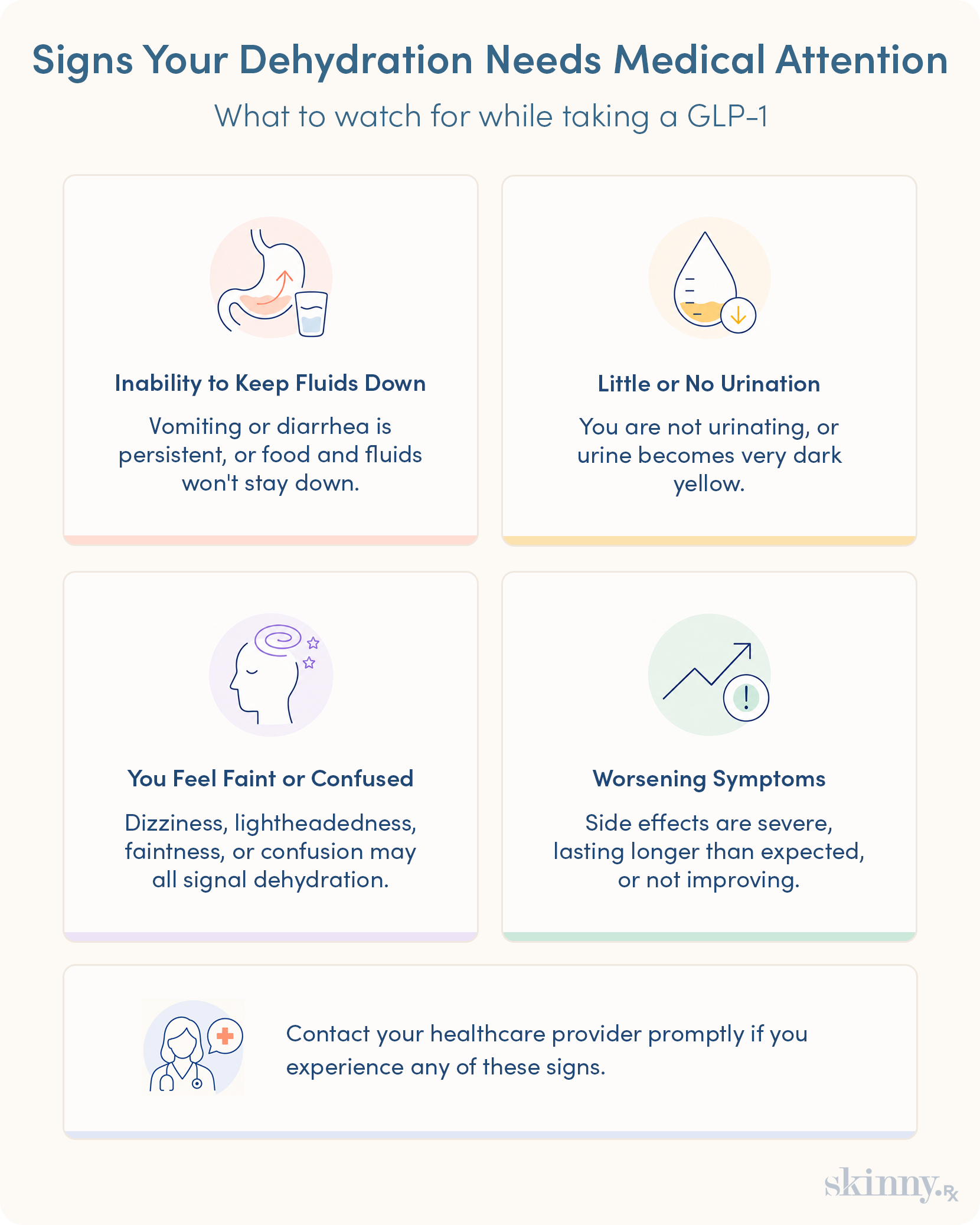
There are various warning signs of dehydration, vomiting, and diarrhea to watch out for. If experiencing any of the following signs, contact the healthcare provider who prescribed the GLP-1 medication. They can recommend solutions and, if necessary, adjust medication dosage or your treatment plan.
- Severe thirst
- No urination or urination that is a very dark yellow color
- Feeling dizzy or lightheaded
- Fast heartbeat and/or breathing
- Headaches with the above symptoms
- Vomiting lasts more than 24 hours
- An inability to keep food or fluids down for 12 or more hours
- No urination for eight or more hours
- Vomiting three or more times within 24 hours
- Stool movements occur more than three times a day, especially if they’re loose or watery
- A frequent urge to use the restroom
- Difficulty controlling bowels
- Bloody stools
- Feeling dizzy or lightheaded
Important: Contact a healthcare provider promptly if vomiting or diarrhea is persistent, you cannot keep fluids down, you feel faint or confused, urination drops significantly, or symptoms are getting worse.
Labs Clinicians May Use to Check Kidney Function
When a healthcare provider suspects kidney function may be impaired, they will order one or more of the following tests:
- Urine dipstick test: Provides a glance at albumin levels in urine. Albumin is a protein made by the liver, and abnormal levels of this protein indicate that a provider should run further testing on kidney function.
- Blood test for glomerular filtration rate: Measures the kidneys’ ability to get rid of toxic waste and extra fluid.
- Blood test for serum creatinine: Evaluates the amount of creatinine in the blood. Creatinine is a waste product produced by meat consumption or the breakdown of muscle tissues. It’s normal and naturally occurring, but high levels may indicate that the kidneys aren’t getting rid of waste products as intended.
- Blood urea nitrogen test: Offers a view of how much urea nitrogen, a waste product from food, is in the blood. Lower levels indicate better kidney function.
- Urine albumin-to-creatinine ratio: Assesses the ratio of albumin to creatinine. It’s normal to have both in urine, but an abnormal ratio may indicate kidney disease.
Who Should Discuss Kidney Risk Before Starting?
GLP-1s require a prescription, meaning a healthcare provider will assess any risks, including to kidney function, before prescribing a GLP-1.
Should a provider not bring up kidney health, you may want to ask about it if you have:
- A history of kidney disease
- An active chronic kidney disease diagnosis
- Diabetes
- High blood pressure
- Used medications that may impact kidney function, such as diuretics, NSAIDs, and ACE inhibitors
- Recently experienced dehydration
Bottom Line
The research on GLP-1s and kidney function points in two directions: some evidence suggests these medications support kidney health over time, while their GI side effects can contribute to dehydration that may impair kidney function in the short term.
For most people, serious kidney problems from GLP-1 therapy are rare. Staying hydrated, recognizing early warning signs, and keeping your provider informed about side effects are practical steps that help reduce kidney-related risks with this medication.
If you have a history of kidney disease, diabetes, or high blood pressure, talking to your provider about kidney health before starting is an important step. With the right precautions and open communication, most people on GLP-1 therapy can manage the risk of serious kidney problems and dehydration-related complications.
Frequently Asked Questions
Start Weight Care That’s Built Around You
Complete a health assessment to find out whether GLP-1 treatment may be an option for you.

By Angela Myers
Contributing Author
Angela Myers is a freelance health writer covering weight management, healthy aging, and nutrition. Her work has appeared in AARP, Well+Good, and Forbes, among others. Before starting her writing career, she conducted award-winning research on how to improve sexual violence prevention courses on college campuses. That research sparked a passion for health communication, and she's been writing about making healthcare accessible and inclusive ever since.