
 Medically Reviewed

Key Takeaways
- Semaglutide doesn’t directly interact with alcohol, but drinking can intensify nausea, vomiting, and dizziness.
- Alcohol increases hypoglycemia risk, especially if semaglutide suppresses appetite and reduces food intake.
- Heavy or frequent drinking can undermine semaglutide’s weight-loss effects by adding calories and disrupting metabolism.
- Staying within standard drink limits is important to avoid GI distress and other complications while on semaglutide.
- Regular drinkers should discuss their habits with a healthcare provider to determine safe, individualized guidelines.
When starting any medication, it’s important to examine how it may interact with your lifestyle as a whole. Otherwise, you’re not only rolling the dice on potentially diminishing the medicine’s effects, but you may also be putting your health at risk.
Can you mix semaglutide and alcohol? The short answer is yes: The U.S. Food & Drug Administration’s official drug label for Ozempic makes no mention of alcohol, and there’s no evidence that semaglutide and alcohol directly interact.
In fact, some early data have even shown that semaglutide may help deter cravings for alcohol and curb drinking habits. “When semaglutide acts on GLP-1 receptors in the brain, they seem to make the urge to drink alcohol less appealing, similar to how ‘food noise’ is also reduced,” says Dr. Daniel McGee, D.O.
But that’s not the whole story—here’s what you need to know about mixing semaglutide and alcohol.
Understanding Semaglutide: How It Works for Your Health
Semaglutide is a GLP-1 receptor agonist. By mimicking the hormone GLP-1, semaglutide gently rewires your brain away from food cravings and improves satiety.
In addition, GLP-1 agonists like Ozempic or Wegovy delay gastric emptying, slowing the rate at which food leaves your stomach after a meal, helping you feel fuller.
Key Therapeutic Effects
Before its expansion as a weight loss panacea, semaglutide was (and still is) used primarily for treating patients with Type-2 diabetes, by helping to regulate blood sugar.
Expanded research has shown that semaglutide’s potential benefits go beyond weight loss or diabetes management and may include:
- Cardiorespiratory regulation
- Reduced incidence of stroke
- Management of dementia and Alzheimer’s
As well as prospective improvements in patients suffering from chronic kidney disease and polycystic ovary syndrome.
Alcohol’s Impact on Your Body: A Quick Review
Alcohol is much more than a social lubricant—it’s a toxin. While the severe effects of chronic alcohol use (and overuse) are well known, it’s important to highlight that, as a drug, alcohol can be significantly disruptive to your health even at moderate doses.
Metabolic Effects
When ingested, alcohol is quickly distributed throughout the body, affecting most major organs. Its surface-level effects are easy enough to spot; disorientation and slurred speech are par for the course.
But on a metabolic level, alcohol has been shown to negatively impact:
- Glucose tolerance
- Lipid metabolism
- Liver function
Alcohol can also potentially lead to severe hypoglycemia, which is crucial to note if you’re taking semaglutide.
Why Mixing Semaglutide and Alcohol Can Be Problematic
There’s no direct evidence showing that alcohol is more harmful if you’re taking semaglutide, or that semaglutide isn’t as potent if you like to consume alcohol. That said, there are potential pitfalls to be aware of.
Magnified Gastrointestinal Side Effects
Semaglutide, like any medication, comes with side effects. Many of the commonly reported adverse effects of Ozempic or Wegovy are gastrointestinal—think nausea, vomiting, cramping, or diarrhea.
If you regularly consume alcohol, some of those effects might sound familiar. For many people, alcohol is a real stomach-turner. If you’re drinking alcohol on Ozempic or Wegovy, these gastrointestinal side effects could compound.
Increased Risk of Hypoglycemia
Both alcohol and semaglutide come with a risk of hypoglycemia—low blood sugar. For diabetes, managing blood sugar is literally priority number one.
That said, even if you aren’t diabetic, drinking alcohol while on semaglutide may significantly lower your blood glucose levels, inducing side effects like chills, shakes, confusion, dizziness, or fainting.
Interference With Weight Loss
On a practical level, alcohol consumption while on semaglutide may pose a threat to your weight loss efforts. Semaglutide is primarily an appetite suppressant, dissuading the consumption of excessive calories, which are eventually stored as body fat.
As mentioned, one of alcohol’s side effects is interference with lipolysis, the process of converting stored fat, or lipids, into energy.
Alcohol is also calorie-dense, clocking in at 7 calories per gram (for context, protein and carbs have 4 calories per gram, while dietary fat has 9). And although the body may not store alcohol calories as fat, research indicates that the “empty” calories from alcohol encourage your body to store other energy rather than burn it off. In essence, it steals their spot in the metabolic queue.
On a practical level, alcohol also reduces inhibitions and self-control, which increases your tendency to snack or binge eat during a night of drinking, especially in social environments. These factors converge into alcohol being a real nuisance for weight loss if you don’t strictly monitor your intake.
Potential for Pancreatitis
Your pancreas assists with regulating blood sugar, among other general health functions. While not listed as a likely side effect of semaglutide, some data have been presented showing a potential for acute pancreatitis.
Alcohol is known to be disruptive to pancreatic function—studies have pegged it as causing as many as a quarter of acute cases of pancreatitis worldwide.
Liver Strain
Similarly, rare cases of liver injury have been reported in semaglutide users. While uncommon, alcohol is particularly harmful to the liver. If you or your family have a history of liver disease, drinking while on semaglutide may be a no-go.
Expert-Guided, Sustainable Weight Loss
Discover how proven medications such as semaglutide or tirzepatide, combined with expert support, can help you achieve lasting weight loss results.
The Dose Matters: How Much Alcohol Is Too Much?
You can thank the Swiss physician Paracelsus for the famous adage, “The dose makes the poison.” This idea neatly characterizes alcohol consumption; while toxic, in small enough doses, it shouldn’t be too harmful.
But that requires us to define “small enough.” How much alcohol is too much? Generally speaking, the answer is the same whether you’re on semaglutide or not.
Moderate vs. Heavy Drinking on Semaglutide
Semaglutide and alcohol can have overlapping side effects in some cases. As such, it’s wise to lower your intake ceiling if you’re drinking while on semaglutide.
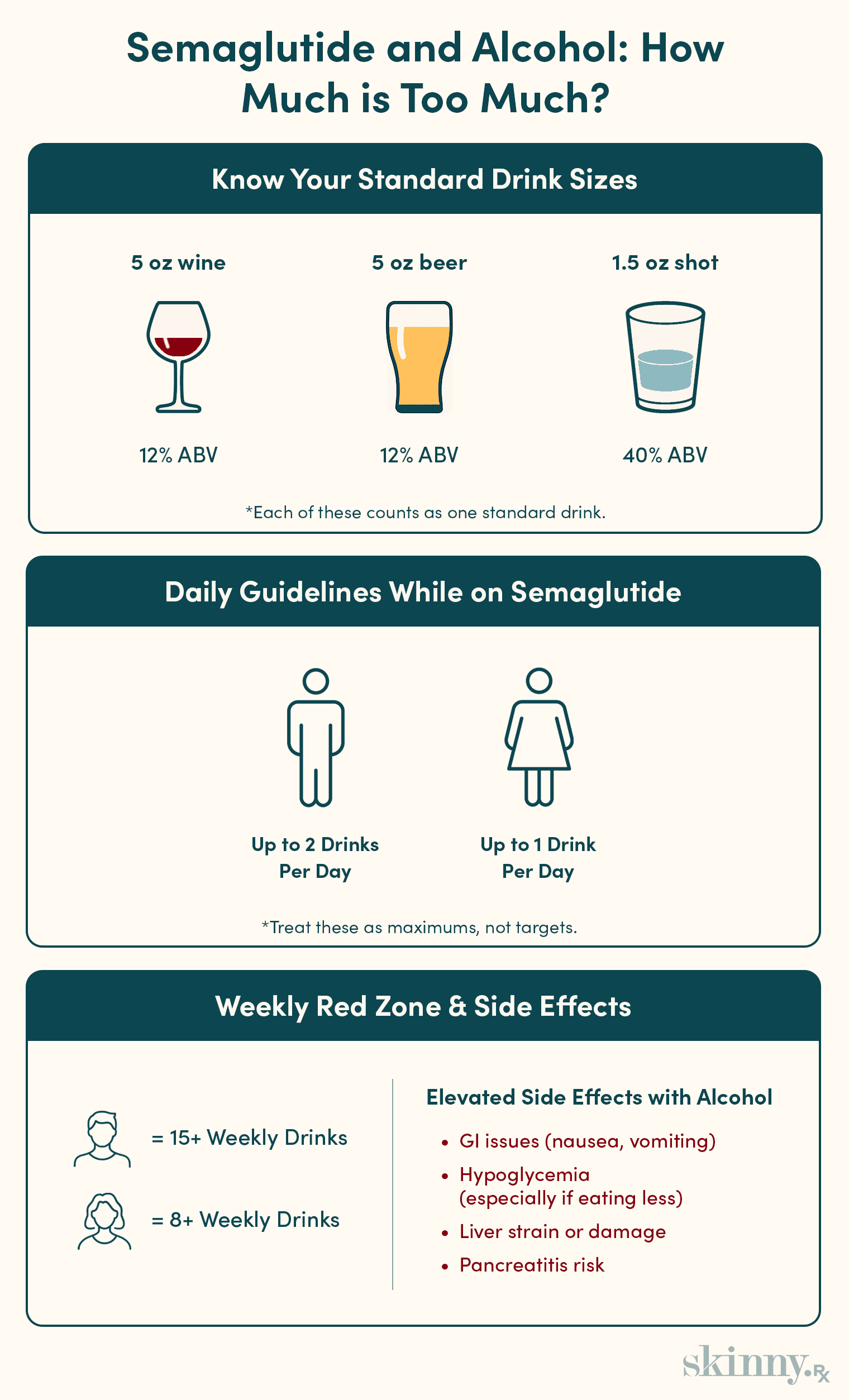
The U.S. Centers for Disease Control & Prevention defines moderate alcohol intake as up to two drinks per day for men, and one drink per day for women. The National Institute on Alcohol Abuse and Alcoholism defines a drink as
- A 12-ounce beer with 5% alcohol by volume (ABV)
- A 5-ounce glass of wine with 12% ABV
- A 1.5-ounce shot of liquor with 40% ABV
Which is less than most people expect. If you’re taking semaglutide and want to play it safe, you may want to treat these designations as hard limits. Excessive drinking, or 15+ weekly drinks for men / 8+ for women, is a no-go on semaglutide, and is something you should avoid even if you aren’t.
Practical Strategies for Patients on Semaglutide
Now that you’ve got a handle on the potential perils of drinking alcohol on Ozempic or Wegovy, you can get practical. Here are some strategies for keeping tabs on your intake if you’re on a GLP-1.
The Safest Option
Cards on the table, the most sure-fire way to avoid potential issues of crossing alcohol and semaglutide is to abstain from drinking altogether. This guarantees you don’t make yourself susceptible to any serious issues that may arise.
Planning Ahead
However, abstinence is easier said than done for most people. If you’d rather not give up booze altogether, it pays to plan ahead.
When you know you have a social obligation that involves alcohol, set a drink limit for yourself beforehand. Tell someone close to you so they can hold you accountable. If possible, get an impression of the environment you’ll be in and know where alcohol sources are located so you can position yourself away from temptation.
Hydration, Food, & Monitoring
The same set of best practices apply to everyone consuming alcohol, even if they’re not on semaglutide. One caveat: If you also have blood sugar issues, you should be extra diligent about monitoring your status.
Beyond that, Johns Hopkins University recommends the following:
- Eat before drinking, as the food will help absorb some of the alcohol and slow its impact on your organs
- Alternate alcoholic drinks with water, one-to-one, to avoid alcohol’s dehydration effects.
Communicating With Your Healthcare Provider: Why It’s Essential
Like abstinence, confiding in your healthcare provider is sometimes easier said than done, especially when it comes to addictive substances like alcohol. Regardless, you must be honest and forthright with your doctor about your alcohol consumption habits before starting semaglutide—or any medication, for that matter.
Healthcare professionals are sworn, literally, to provide care in the best interests of their patient, and to do so without judgement or scorn. “A good doctor isn’t just someone who prescribes medicine,” notes Dr. McGee. “You should feel safe, heard, and understood in the exam room.”

A good doctor isn’t just someone who prescribes medicine, it’s someone you can trust with the whole truth. You should feel safe, heard, and understood in the exam room. That’s the only way we can make the right decisions together for your health.
–
Dr. Daniel McGee, Board-certified Family Medicine Physician
Put simply, they need to know about your health habits so they can do their jobs. Don’t be afraid to confide in and communicate with your healthcare provider if you’re thinking about starting semaglutide.
If you’re exploring whether semaglutide or tirzepatide is the right step for your goals, SkinnyRx offers guided support tailored to your needs. You can take a short assessment to see which treatment options may be appropriate and get connected with clinicians who can help you move forward safely and confidently.
Frequently Asked Questions

By Jake Dickson, NASM-CPT, USAW-L2
Contributing Author
Jake holds a B.S. in Exercise Science from UNC Wilmington and began his career as a personal trainer and weightlifting coach. In recent years, he’s moved behind the page as a writer and editor, contributing hundreds of articles and being featured as a subject matter expert. Today, Jake’s goal remains the same: to empower people to change their lives by bringing heady scientific topics down to ground level.