

 Medically Reviewed

Key Takeaways
- Menopause-related weight gain is driven by a combination of declining estrogen, muscle loss, poor sleep, and insulin resistance, not lifestyle choices alone.
- Semaglutide produces comparable weight loss results in women both before and after menopause, making it a viable option across the menopausal transition.
- Women over 40 taking semaglutide face an elevated risk of muscle and bone loss, making resistance training and increased protein intake especially important during treatment.
- Semaglutide is most effective when combined with lifestyle changes, including a protein-rich diet, regular exercise, improved sleep, and stress management.
- Semaglutide may also improve cholesterol, blood pressure, and blood sugar levels, addressing cardiometabolic risks that increase with menopause and age.
If you’ve noticed the belly fat feels stickier than before, and diet and exercise just aren’t cutting it the way they used to, you’re not alone. Weight gain becomes increasingly common as we age, especially during menopause. In fact, weight gain is so common — affecting 60%–70% of women in middle age — that it’s considered a symptom of menopause.
Fortunately, there are options, from lifestyle changes to hormone replacement therapy and, yes, even GLP-1s. Read on as we explore how semaglutide can help with weight loss during menopause.
Why Weight Gain Can Happen During Menopause
Weight gain is a frustratingly common experience during perimenopause and menopause. Starting in their 40s, women gain 1.5 pounds per year. By their 50s, that number increases up to 15 pounds per year.
Not only that, but where you gain the weight also changes. Instead of your usual spots, like your hips, thighs and glutes, you may notice the fat starts to settle more around the belly. Yes, we’re talking about the dreaded “meno belly.”
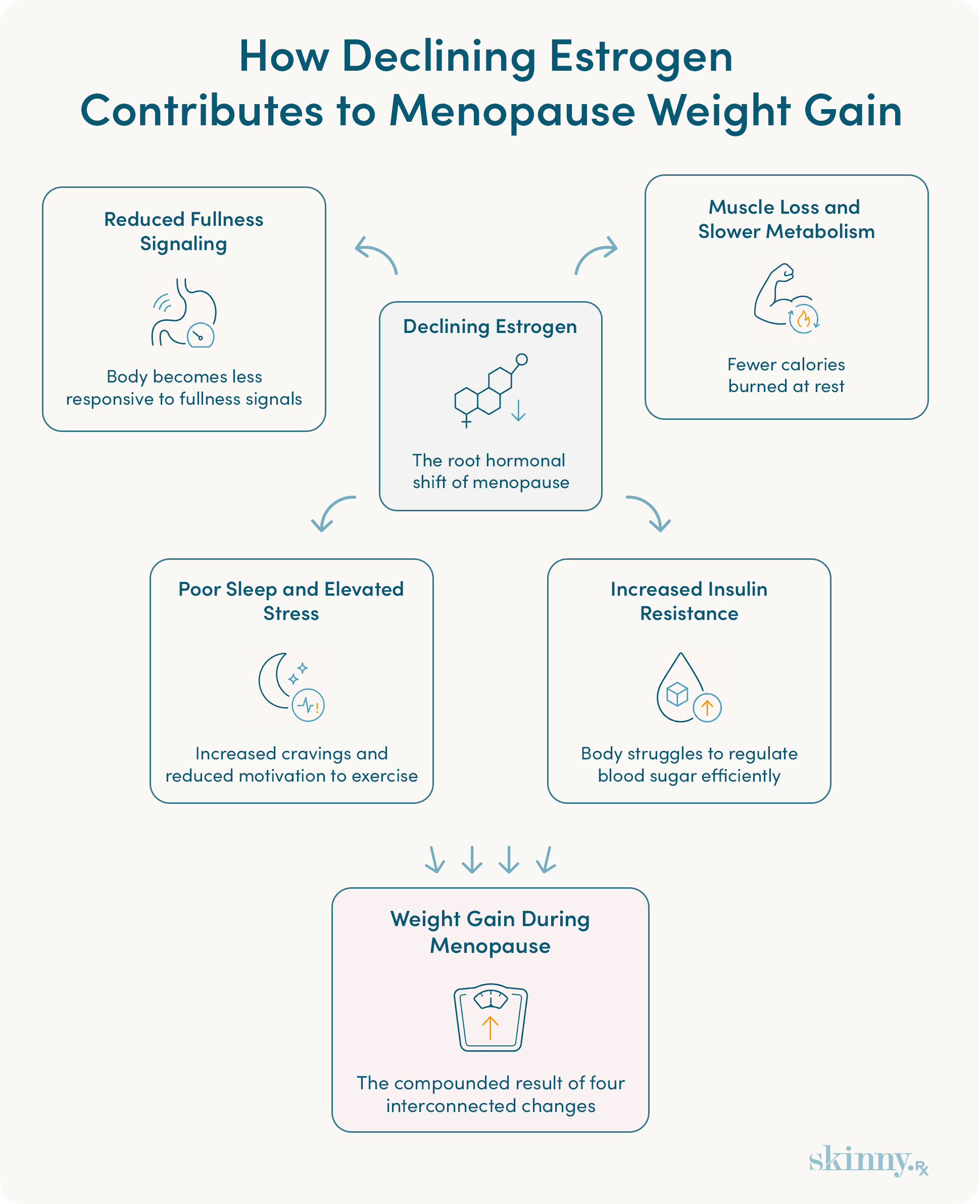
You can largely thank your declining estrogen levels for menopause-related weight gain. These hormonal changes wreak havoc on your muscle mass, metabolism, sleep, stress, and more.
Hormonal Changes
We tend to think of estrogen as a sex hormone, and it is, but it does so much more. For example, estrogen helps regulate your appetite. Specifically, it increases your body’s response to leptin (the “fullness” hormone), which has an appetite-suppressing effect. When estrogen levels start to fall during perimenopause, so do its effects on your appetite.
The decrease in sex hormones slows down your metabolism, too, so you end up burning about 250–300 fewer calories per day. As a result, women may gain up to 5 pounds per year starting in perimenopause. (There are a few more reasons for menopausal weight gain, which we’ll get into in the following sections.)
Muscle and Metabolism
Estrogen also helps your body maintain muscle mass, strength, function, and performance. Reduced estrogen levels during menopause make it even harder to maintain muscle mass and volume while increasing your risk of injury.
This is a particular problem for women trying to maintain a healthy weight through perimenopause and beyond. Muscle revs up your metabolism, and the less muscle you have, the fewer calories you burn.
Worse, this loss of muscle mass gets accelerated by the aging process. In other words, the older you get, the easier it becomes to gain fat, while at the same time it becomes harder to build muscle.
Sleep and Stress
Increased stress and poor sleep are common experiences during perimenopause and menopause, thanks to changing caregiving needs, empty nest syndrome, and, of course, hot flashes and night sweats.
Stress significantly worsens sleep quality, makes you less motivated to exercise, and leads you to overindulge on comfort foods, which tend to be high in calories, fat, and sugar. It’s no wonder we gain weight when we’re stressed.
Sleep disruptions from night sweats and hot flashes can ratchet up your stress levels and contribute to even more weight gain. And, reduced sleep overall is linked to higher body weight, diabetes, sleep apnea, and insulin resistance. Speaking of which…
Insulin Resistance
Reduced muscle mass has other, perhaps less obvious effects than how much weight you can lift. It also increases your insulin resistance, a condition where your body becomes less responsive to insulin, the hormone responsible for directing your body to use sugar for energy.
When your body becomes insulin-resistant, it makes it harder for insulin to do its important job of regulating your blood sugar levels. Hence, insulin resistance is linked to prediabetes, type 2 diabetes, and heart disease, all of which become more common as we age.
How Semaglutide Supports Weight Management
A common recommendation for people with obesity is 5% weight loss. It’s possible to do this with lifestyle changes alone — like diet, exercise, managing stress and sleep — but it’s rare. Only about one in seven women successfully lose this amount of weight and keep it off.
Semaglutide, on the other hand, has been shown to cause an average weight loss of 15% in 68 weeks. In the long run, about one in three people lose at least 20% of their body weight. Research shows that semaglutide has similar weight and fat loss effects in women both pre- and postmenopause.
Semaglutide supports weight management by:
- Slowing down digestion, so you feel full sooner and longer
- Suppressing your appetite so you eat less
- Reducing “food noise” and cravings
- Balancing your blood sugar levels

Many women notice that weight loss becomes harder during perimenopause and menopause, and I see this sometimes in practice. Hormonal changes, especially declining estrogen, can affect body composition, appetite, insulin sensitivity, and where fat is stored. For the right patient, GLP-1 medications can be a helpful tool, but they work best when combined with lifestyle strategies like protein intake, resistance training, sleep, and long-term health habits. If a woman is struggling with weight gain during this stage of life, it’s worth discussing GLP-1 options with her doctor.
–
Dr. Daniel McGee, Board-certified Family Medicine Physician
Who May Be a Candidate?
When prescribed for weight loss, Wegovy® and other GLP-1 medications are generally intended for people with:
- Obesity, defined as a body mass index (BMI) of 30 or more
- Overweight, defined as a BMI of 27 or more, and a weight-related health problem (e.g., high blood pressure, high cholesterol, type 2 diabetes)
Your prescribing doctor may also ask about your previous experiences with weight loss. If you’re losing less than a pound a week on average, despite diet and exercise, you may be a good candidate for Wegovy® or another weight loss medication.
GLP-1s are contraindicated in people who are pregnant or who have a personal or family history of thyroid cancer. And some people may be more likely to experience serious side effects on GLP-1s, including people with kidney or gallbladder problems or diabetic retinopathy.
Before starting Ozempic or Wegovy, it’s important to share your full medical history with your provider, along with a complete list of prescription medications or over-the-counter supplements you're taking.

Explore Personalized Weight Loss Options
Start with an online assessment to help a licensed clinician determine whether a prescription weight loss treatment, along with guided nutritional support, may be appropriate for you.
Special Considerations for Women Over 40 or 50
While semaglutide produces similar results in women regardless of their age, those going through perimenopause or menopause may have additional health concerns to consider — namely, the risk of muscle and bone loss.
Muscle Preservation
When you lose weight, whether through semaglutide or another method, some of that weight loss can be from muscle mass.
However, when you lose weight quickly, as is more often the case with GLP-1 medications, the risk of muscle loss increases. And, as we’ve already discussed, women in their 40s and older are already at a greater risk of muscle mass loss.
That’s why it’s especially important to either start a strength training routine or intensify your existing workouts when taking semaglutide.
Bone Health
Bone loss can also occur when you lose weight. This is an increasingly important concern as you age, given that menopause brings with it a loss of bone mineral density — and an increased risk of fractures.
This is yet another area where exercise helps, according to a study that compared people taking a GLP-1 against those who paired a GLP-1 with a moderate- to high-intensity workout routine. Not only did the people who exercised lose more weight than the non-exercisers, but they also preserved their bone health, based on DEXA scans. The non-exercisers, on the other hand, lost bone in both their spine and their hips.
Protein Intake
Increasing your protein intake can help preserve both muscle and bone mass. At the same time, it further slows down digestion — helping you feel full longer — while boosting your metabolism. Talk about a win-win.
For people taking semaglutide, health experts recommend eating more lean proteins such as chicken, turkey, fish, and seafood instead of cholesterol-laden red meat. Other good sources of protein include low-fat yogurt and cottage cheese as well as tofu, nuts, seeds, and quinoa.
Cardiometabolic Risk
Research shows that semaglutide can help reverse some of the cardiometabolic risks that come with menopause and older age. In addition to weight loss, people taking semaglutide may experience significant improvements in their cholesterol, blood pressure, blood sugar levels, and heart disease risk.
In many cases, these improvements may be significant enough that they can stop taking one or more medications related to these conditions.
Lifestyle Habits That Matter Alongside Medication
Lifestyle changes are strongly recommended when taking semaglutide or other weight loss medications. For people on GLP-1s specifically, experts recommend:
- Changing your eating habits. Shift to eating smaller meals more frequently vs. larger meals more spread apart. Stay hydrated and reduce your alcohol intake. These small changes can reduce the kind of binge eating that contributes to weight gain, while also minimizing semaglutide side effects like nausea and constipation.
- Improving your diet. While there’s no official “semaglutide diet,” diets that are high in protein, fiber, and whole foods — like the Mediterranean diet — can support weight loss on semaglutide. Stay away from processed foods and eat more fruits, veggies, whole grains, nuts, seeds, and lean proteins.
- Increasing your physical activity. Aim for 360 minutes of exercise per week, with at least 150 minutes of moderate-intensity aerobic exercise (like brisk walking) and at least 3 resistance-based workouts.
- Managing your sleep and stress levels. Do what you can to improve your sleep quality. Make your bedroom dark and cool (with a heavy emphasis on cool), and follow a regular sleep schedule. Resistance-based workouts like yoga or Pilates can help with stress, as can deep breathing exercises, meditation, and talk therapy.
Questions to Ask Your Healthcare Provider
If you’re interested in semaglutide for menopause weight loss, make an appointment with your healthcare provider. Here are some questions you may want to ask:
- Am I eligible for an FDA-approved GLP-1 medication?
- How do my blood pressure, cholesterol, A1C, and family history affect the decision?
- How should I protect muscle and bone health during weight loss?
- Should I check vitamin D, iron, thyroid, or other labs?
- How will we monitor side effects?
The Bottom Line
Menopause weight gain is real, common, and not a willpower problem. The hormonal shifts that come with this stage of life create genuine biological challenges that diet and exercise alone may not fully address.
Semaglutide is a clinically supported option, but it works best when paired with strength training, good nutrition, and healthy sleep habits. For women over 40, protecting muscle and bone health during weight loss matters just as much as the number on the scale.
If you are curious whether semaglutide is right for you, start with your healthcare provider. They can help you weigh your options and build a plan that fits your body and your goals.
Frequently Asked Questions
Explore Personalized Weight Loss Options
Start with an online assessment to help a licensed clinician determine whether a prescription weight loss treatment, along with guided nutritional support, may be appropriate for you.

By Amelia Willson
Contributing Author
Amelia Willson is a freelance health writer and content strategist based in Orange County, California. Her work has appeared in several health publications, including Ro, Klarity Health, K Health, Sleep Foundation, and A Place For Mom. Amelia covers the latest trends in health and wellness, including the research (or lack thereof) behind them, breaking down complex topics so that readers don't have to. Her writing frequently explores weight management, plant-based nutrition, and mental health.