

 Medically Reviewed

Key Takeaways
- GLP-1 medications are associated with a higher risk of gallstones and gallbladder disease, and FDA labeling for Zepbound and Wegovy lists gallstones and acute cholecystitis as possible risks.
- Rapid weight loss combined with reduced gallbladder motility increases the risk of cholesterol buildup, which may turn into gallstones.
- Gallbladder symptoms such as nausea and abdominal discomfort can overlap with common GLP-1 side effects, making the two easy to mistake for one another.
- Fever, jaundice, and abdominal pain that is severe or lasts for hours require immediate medical attention.
- A history of gallstones, gallbladder disease, pancreatitis, rapid weight loss, or a family history of gallstones should be discussed with the prescribing clinician.
GLP-1 medications are commonly prescribed for weight management and blood sugar regulation. They may offer other health benefits as well, such as support for heart health, PCOS symptom management, and help with addiction treatment. But like any medication, GLP-1s carry a few risks alongside their benefits.
The FDA labels for GLP-1 medications list a higher chance of gallstones and gallbladder disease as a potential risk. Ahead, we’ll discuss what this warning means and why there’s a relationship between GLP-1s, gallstones, and gallbladder disease.
What Does the Gallbladder Do?
The gallbladder is an organ shaped like a pear that’s located in the abdomen. It stores and concentrates the bile produced by the liver. The gallbladder then releases concentrated bile into the common bile duct, a long tube that transports it to the small intestine.
When we eat, food travels through the mouth, throat, esophagus, and stomach before ending up in the small intestine. There, it comes into contact with this bile, which helps eliminate cholesterol. This bile also supports the absorption of fatty acids, which are healthy fats the body needs for various biological processes.
This is just one part of the digestive system, which operates like a fine-tuned machine with many smaller processes. If something isn’t working as it should in the gallbladder, it may disrupt this specific function as well as the entire digestive tract.
There are many possible causes of gallbladder issues, including gallbladder disease, gallstones, and other rarer conditions which impair gallbladder functioning.
What Are Gallstones?
Gallstones are rock-like deposits that can build up in the gallbladder. They can be a tiny speck or as large as a golf ball. Gallstones are commonly made of cholesterol that builds up in the gallbladder, though they may also consist of bilirubin, a yellow pigment produced from red blood cell breakdown.
About 10-15% of people have gallstones though most cases are silent, meaning gallstones don’t cause symptoms. Larger gallstones may block the bile ducts, leading to abdominal pain and other symptoms.
What is Gallbladder disease?
Gallbladder disease is a catch-all term for conditions that affect how the gallbladder functions. The most common type of gallbladder disease is cholecystitis, which is when there’s inflammation in the gallbladder that disrupts how it functions and leads to disruptive symptoms. Cholecystitis may be short-term (acute) or ongoing (chronic).
See If GLP-1 Treatment May Be Right for You
A licensed provider can review your health history and weight-loss goals to help determine whether GLP-1 treatment is appropriate for you.
Why Gallbladder Issues Are Discussed With GLP-1 Medications
GLP-1 medications are associated with a higher risk of gallbladder issues. The FDA labels for Zepbound and Wegovy both list acute cholecystitis and gallstones as possible risks.
Yet the risk level isn’t the same for everyone who takes a GLP-1. A 2022 review of 76 clinical trials noted participants who used GLP-1s specifically for weight loss, took a higher dose, and/or used the medication for more than 26 weeks were at a higher risk for gallbladder issues.
So, why exactly does this connection exist? In part, this risk relates back to one of the main benefits of GLP-1s: rapid weight loss. When someone loses weight quickly, whether from GLP-1s or another method, the liver releases extra cholesterol into the bile. At the same time, GLP1 suppresses gallbladder motility. Together, these two factors increase the risk of cholesterol buildup, which may turn into gallstones.
Over time, gallstones impede the flow of bile from the gallbladder to the common bile duct, increasing pressure in the gallbladder. That pressure may then trigger inflammation in the gallbladder wall, which is the driver of cholecystitis.
Common Digestive Side Effects vs. Gallbladder Warning Signs
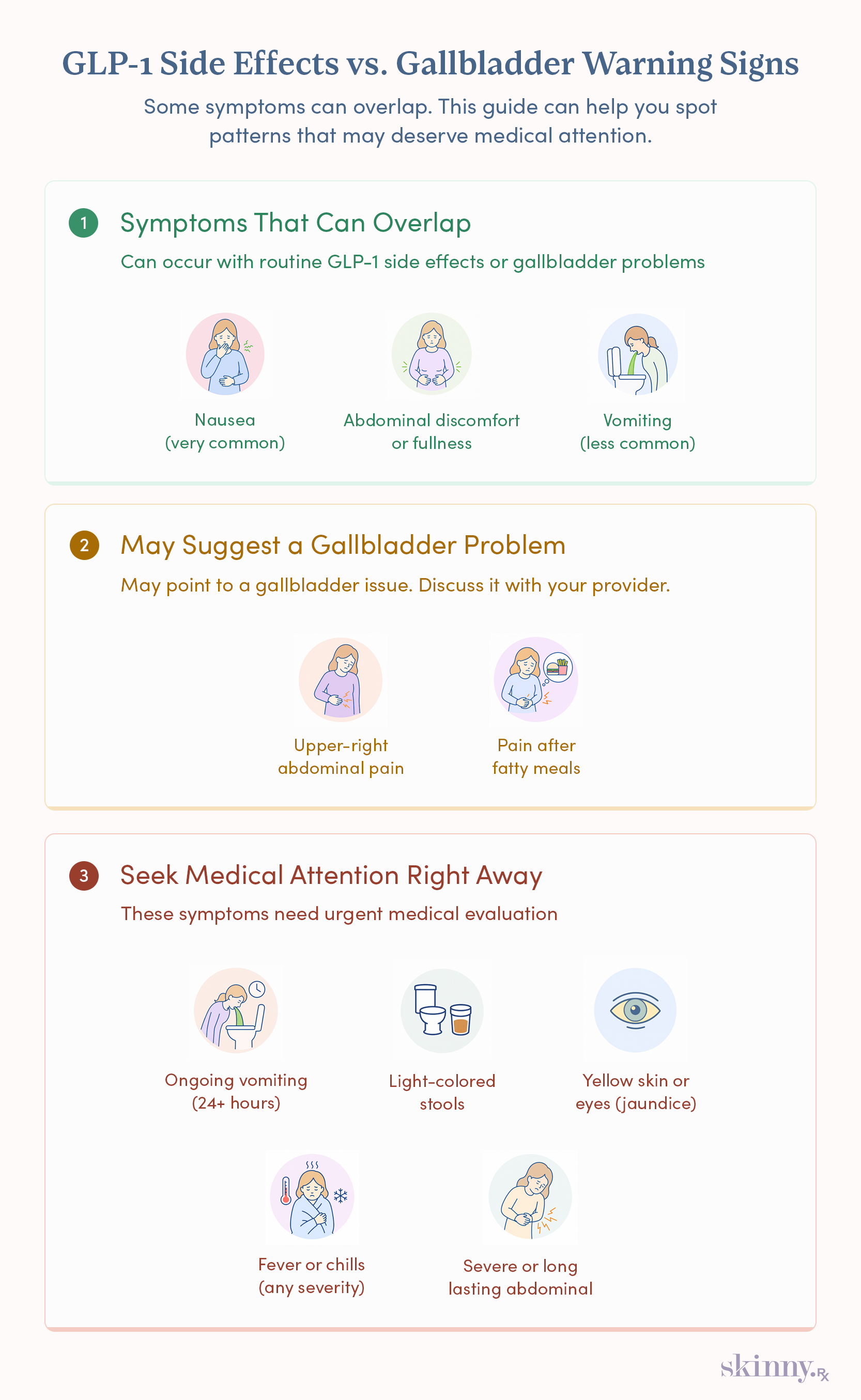
To make matters more confusing, GLP-1s may cause gastrointestinal side effects that are similar to the symptoms of gallstones and gallbladder disease.
If experiencing any of the symptoms/side effects below, consult a healthcare provider, ideally the one who prescribed the GLP-1. They can help determine the underlying cause and recommend ways to relieve symptoms.
Nausea and Vomiting
About half of all people experience nausea, or a sick to the stomach feeling, at some point when taking a GLP-1. Nausea is also a known symptom of gallstones and gallbladder disease.
Vomiting, throwing up stomach contents, is typically attributed to a “gallbladder attack,” an unofficial term for when symptoms of gallbladder issues flare up suddenly. Similarly, it is a more severe side effect of GLP-1s, occurring in less than a quarter of people taking this medication.
If vomiting for more than 24 hours or if you haven’t been able to keep food and water down for twelve hours, contact a healthcare provider, regardless of what the underlying cause may be.
Pain in the Upper Right Abdomen
The classic symptom of many gallbladder problems is pain in the upper right abdomen. If this pain is caused by chronic gallbladder disease, it’s likely to be dull and to come and go over weeks or months. Acute gallbladder disease, which is more closely associated with GLP-1s, will trigger more severe pain.
Upper-right abdominal pain is also possible with GLP-1s. That said, it’s more common for people taking GLP-1s to report abdominal discomfort that’s similar to the feeling of being uncomfortably full or more generalized abdominal pain (as opposed to pain in one concentrated area).
Pain After Eating Fatty Meals
Gallbladder pain often hits after eating, especially if the meal had lots of unhealthy fats or ultra-processed foods. This pain type, for example, would be more common after a hamburger and fries or greasy pizza than a salad.
While there are some case studies of patients experiencing pain after eating when taking a GLP-1, these are rare. What’s more prevalent is feeling uncomfortably full after eating due to how GLP-1s suppress appetite.
Fever and Yellowing Skin
Two other symptoms of gallbladder problems are jaundice (the yellowing of the skin and eyes) and a fever, which could be low-grade or high-grade. These usually indicate more severe gallbladder issues that require prompt medical attention.
Risk Factors to Discuss With a Clinician
GLP-1 medications require a prescription. That means the prescribing healthcare provider will assess a patient’s medical history and any risk factors and make a clinically informed decision on whether this medication is appropriate.
If a provider doesn’t bring up gallbladder-related risks, here are some signs that you should:
- A history of gallstones or gallbladder disease
- Previous pancreatitis
- Rapid weight loss in the past, such as due to weight loss surgery
- Family history of gallstones
- Being overweight or experiencing obesity
- Being biologically female
What to Do If Symptoms Appear
If any symptoms associated with gallbladder problems appear, contact a primary care provider or gastroenterologist. This advice applies whether you’re taking a GLP-1 or not. A healthcare provider can assess what’s going on and provide ways to relieve symptoms or treat the underlying cause.
The following symptoms indicate the need for immediate medical care:
- Abdominal pain that lasts hours and/or is so debilitating you can’t move
- Ongoing vomiting and nausea
- Fever or chills
- Jaundice, which is the yellowing of the eyes or skin
- Light-colored stools
- Urine is the color of black tea
Bottom Line
GLP-1 medications carry a real, documented risk of gallstones and gallbladder disease, largely because rapid weight loss and reduced gallbladder motility work together to encourage cholesterol buildup. The tricky part is that early warning signs can look a lot like typical GLP-1 side effects, so it's easy to write off symptoms that actually deserve attention.
Watching for red flags like persistent upper right abdominal pain, fever, or yellowing skin, and contacting a provider as soon as they appear, is the most reliable way to catch a problem early. Gallbladder risk is a known tradeoff of GLP-1 therapy, and managing it well means working with a provider before and during treatment, not waiting until symptoms escalate.
Frequently Asked Questions
See If GLP-1 Treatment May Be Right for You
A licensed provider can review your health history and weight-loss goals to help determine whether GLP-1 treatment is appropriate for you.

By Angela Myers
Contributing Author
Angela Myers is a freelance health writer covering weight management, healthy aging, and nutrition. Her work has appeared in AARP, Well+Good, and Forbes, among others. Before starting her writing career, she conducted award-winning research on how to improve sexual violence prevention courses on college campuses. That research sparked a passion for health communication, and she's been writing about making healthcare accessible and inclusive ever since.