

 Medically Reviewed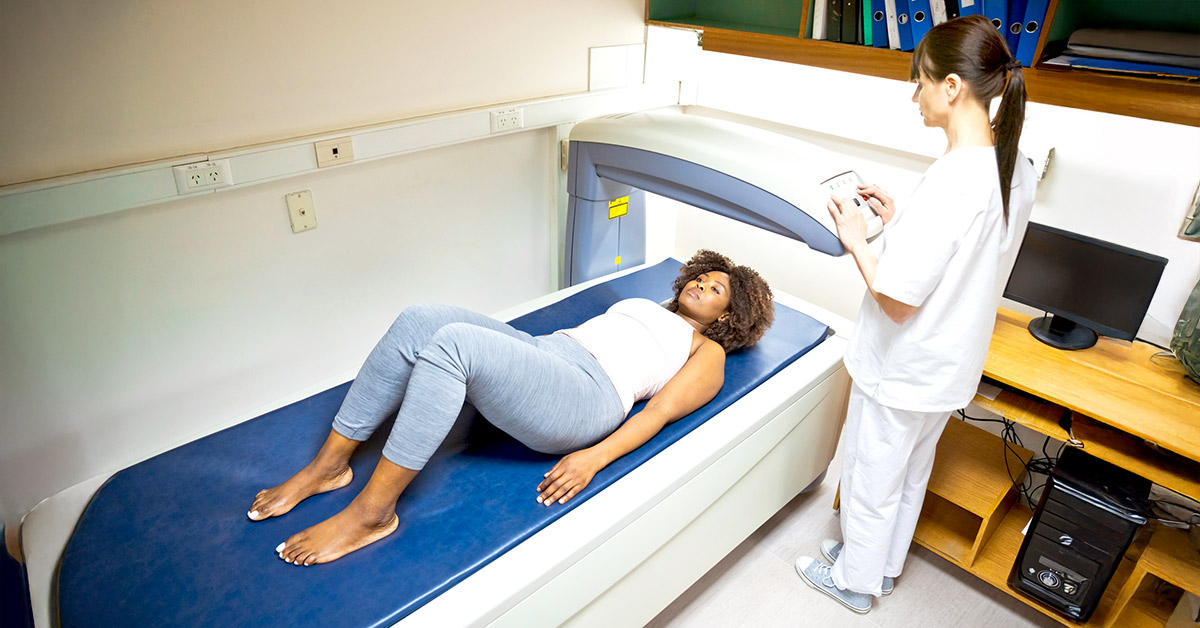

Key Takeaways
- DEXA scans can help semaglutide users monitor changes in body composition, including fat mass, lean mass, visceral fat, and bone-related metrics.
- Scale weight and BMI do not show whether weight loss is coming from fat, muscle, or other lean tissue.
- Some lean mass loss can happen during weight reduction, so tracking muscle changes may help guide adjustments to protein intake and strength training.
- Visceral fat is linked to cardiometabolic risk, and DEXA scans can help measure changes that a standard scale cannot capture.
- A baseline scan and follow-up scans may help patients and clinicians better evaluate whether weight loss is supporting long-term health, not just a lower number on the scale.
GLP-1 medications like semaglutide can produce up to 15% weight loss in under a year and a half.
With results like these, the conversation is no longer about how to lose weight. It’s about how to do so in a healthy way. You don’t just want to be a lighter version of yourself. You want to be a healthier one, too.
That’s where DEXA scans come in. Short for dual-energy x-ray absorptiometry, this scan is a valuable tool for anyone losing weight on semaglutide. DEXA scans help guide your weight-loss journey, ensuring that the pounds you lose come from fat, not muscle.
For why that difference matters, and how DEXA scans for semaglutide users work, read on.

Weight loss is easy to measure, but health is not. If you’re only watching the scale, you’re flying blind. The real goal isn’t just to lose weight — it’s to improve body composition, and that requires better data.
–
Dr. Sajad Zalzala, Board-certified Family Medicine Physician and Medical Advisor at SkinnyRx
Limitations of BMI and Scale Weight in Assessing Health
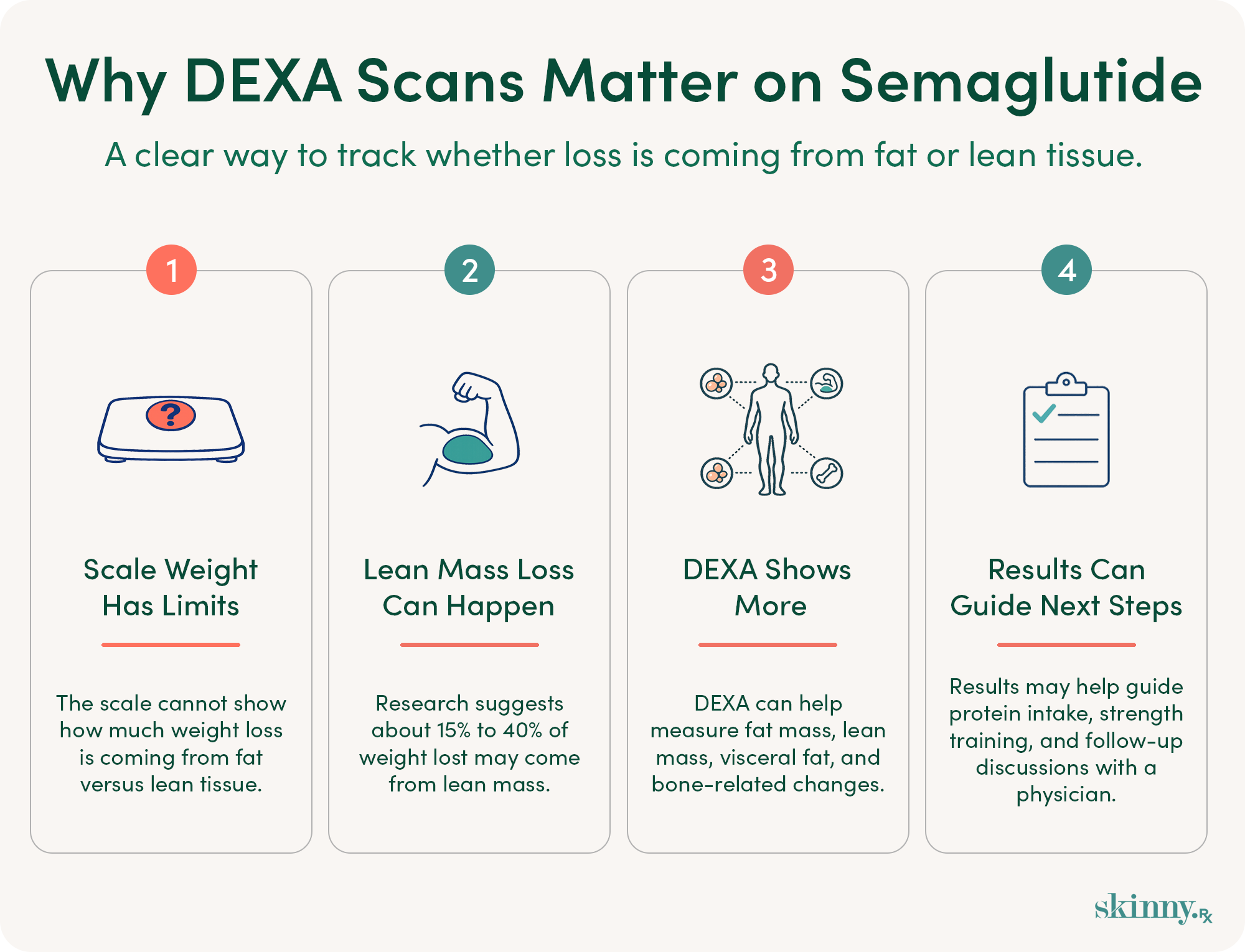
For decades, patients and healthcare providers have relied heavily on the bathroom scale and the body mass index (BMI) to gauge health and weight loss success. However, these old-school tools are fundamentally flawed because they don’t capture the full picture:
- A bathroom scale simply tells you how much you weigh, not how much of that weight represents fat (which you want to lose) or muscle (which you don’t want to lose). Worse, it can be a source of frustration. As you start building muscle, that number on the scale might not change — leading you to feel defeated instead of motivated.
- BMI can also be misleading. It creates an assessment solely based on your weight and height, with no accounting for your muscle vs. body fat composition. As a result, an ultra-muscular Olympic athlete could be labeled “overweight” or even “obese” when they’re actually quite healthy.
These tools can be inaccurate (in the case of BMI) and demotivating (in the case of the bathroom scale) for some people. But, they can also mask real issues that can happen when you’re losing weight quickly, as so many people do with semaglutide.
Explore Personalized Weight Loss Options
Start with an online assessment to help a licensed clinician determine whether a prescription weight loss treatment may be appropriate for you.
Risk of Muscle Loss During Semaglutide Treatment
Losing weight brings a lot of health benefits, from lower blood pressure and cholesterol to being able to walk or play with your kids without feeling exhausted. There’s only one potential downside: the loss of muscle mass.
There are a number of reasons you don’t want to lose muscle mass (beyond looking great in a gym selfie):
- Muscle provides critical strength and stability to your bones and joints. Having a healthy amount of muscle is one of the best ways to prevent injury and stay mobile well into your golden years.
- Low muscle mass is a risk factor for other serious health issues. These can include a higher risk of death, heart problems, and type 2 diabetes.
- Muscle is metabolically active and constantly burning calories, even while you are deep asleep. When you lose muscle, you slow down your metabolism, which not only slows your weight loss now but also increases your risk of weight gain in the future.
Expected Lean Mass Loss During Weight Reduction
Before you get too worried, know that almost all weight loss tends to include some loss of lean body mass. This is not a unique phenomenon to semaglutide — or other GLP-1s, for that matter.
In typical diet-induced weight loss, the loss of lean tissue (which includes muscle, bone, and water) represents about 20% to 30% of the total mass lost.
However, because GLP-1s like semaglutide can help you lose weight so quickly, the risk of muscle loss is also higher. In fact, research shows as much as 15% to 40% of weight lost comes from muscle instead of fat.
This amount of lean tissue loss can lead to a serious condition called sarcopenic obesity (essentially, being “skinny fat”). You may reach a “normal” BMI or a low body weight, but your body composition has way too much fat and way too little muscle. This leaves you looking lean on the outside but lacking the functional strength to support your joints, mobility, and a healthy metabolism.
To understand the dangers of being “skinny fat” on semaglutide, think of your weight loss as an iceberg melting in the ocean. The portion of the iceberg visible above the water represents your scale weight. It is easy to see, simple to measure, and highly satisfying to watch shrink.
However, the massive, hidden structure underwater represents your lean muscle mass and bone density. This underwater foundation is what keeps you stable, upright, and metabolically resilient. If that underwater foundation melts away too rapidly, the entire structure becomes unstable, causing you to “capsize” into a state of metabolic slowdown and physical frailty.
Note: There are active steps people can take to avoid becoming skinny fat on semaglutide. When coupled with a protein-rich diet and regular strength training, the muscle loss can be kept to a minimum.
For many people, their body-fat-to-muscle ratio usually improves, as the drug helps them lose body fat without too much muscle. Still, it’s a real risk, and something DEXA scans can help you watch out for.
How a DEXA Scan Works: The Gold Standard of Body Data
If weight loss is a melting iceberg, a DEXA scan is the medical-grade sonar that allows you to see the whole iceberg clearly. Originally developed to evaluate bone density, dual-energy x-ray absorptiometry (DEXA) is considered the gold-standard technology for body composition analysis.
The process is surprisingly quick and painless. You’ll lie down fully clothed on a table while a scanning arm passes over your body, emitting two low-dose X-ray beams at different energy levels.
Because different tissues in your body absorb X-rays at different rates, the machine can precisely differentiate between your bone, fat mass, and lean muscle. Don’t worry, the amount of radiation is tiny — equivalent to roughly half a day of natural background radiation.
Fat Mass vs. Lean Mass vs. Bone Mineral Content
A DEXA scan report provides a comprehensive breakdown of your body composition, showing you your:
- Total body fat percentage
- Total fat mass
- Total lean mass
- Visceral fat
- Bone mineral content
Not only that, the report breaks down these percentages by body area, such as your arms, legs or torso. This segmental analysis allows you to see exactly where you are losing fat and whether your exercise routine is successfully building muscle in specific regions.
Visceral Fat and Its Role in Metabolic Risk
Not all fat acts the same way in the body. While subcutaneous fat sits just under the skin, visceral fat is the deeper “deadly” fat that wraps around internal organs like the liver, secreting dangerous hormones along the way. It’s more commonly known as belly fat.
Excessive visceral fat is a major risk factor for various cardiometabolic diseases, including heart disease, fatty liver disease, type 2 diabetes, and even cancer — so it’s worth losing it. Unlike your bathroom scale, DEXA scans can actually see this fat and help you track how much you lose while taking semaglutide.
Using DEXA Results to Adjust Your Approach
A DEXA scan can be an invaluable tool in understanding your body composition on Ozempic® or Wegovy®. You can use your muscle mass and visceral fat DEXA results to make targeted changes to your weight loss approach, from boosting your protein intake to strength-based workouts.
When to Increase Protein Intake
If your body composition analysis indicates excessive lean tissue loss, step one is aggressively increasing your protein intake. That’s because protein is the basic building block of muscle. Plus, it offers other benefits for semaglutide users, such as a nice metabolism boost and increased satiety.
So, how much protein should you eat on semaglutide? Experts recommend a healthy intake of 0.55 to 0.73 grams of protein per pound of body weight to support muscle preservation on GLP-1 medications, although some research suggests you can go as high as 1 gram per pound.
Good sources of protein include:
- Lean chicken
- Fish and seafood
- Low-fat yogurt and cheese
- Protein shakes or bars
- Beans and lentils
- Nuts and seeds
Role of Strength Training in Preserving Muscle Mass
Now that you’re eating more of the foods that help you build muscle, it’s time to go out there and actually build it! Resistance training and targeted strength workouts are non-negotiable for people taking semaglutide.
These are exercises that use free weights, resistance bands, or even your own body weight as a form of resistance. For example:
- Weightlifting
- Yoga
- Pilates
- Squats and lunges
- Push-ups
DEXA scans show that nine months of resistance training can lead to significant increases in your resting metabolic rate. Translation: doing more of these workouts helps your body burn more calories when you’re not working out.
For people taking GLP-1s, experts recommend at least 3 strength-training workouts per week. If your DEXA scans show a loss of lean muscle, you’ll want to bump that number up.
Explore Personalized Weight Loss Options
Start with an online assessment to help a licensed clinician determine whether a prescription weight loss treatment may be appropriate for you.
Monitoring Bone Density During Weight Loss
While much of this conversation has centered around fat and muscle, your bones are just as important. That’s why an increasing amount of research has focused on actively monitoring the effects of GLP-1s on bone density. As we mentioned above, rapid weight loss can lead to bone loss, too.
Fortunately, a few studies have shown that taking GLP-1s did not significantly increase the risk of bone fracture, although researchers note that more studies are needed.
This is yet another area where regular DEXA scans can help. Experts recommend getting an initial baseline scan, ideally before starting semaglutide. From there, follow-up scans may take place every three to six months while you’re actively losing weight.
Once you’ve reached your goal weight, a yearly maintenance scan can make sure things are still heading in the right direction.
Frequently Asked Questions

By Amelia Willson
Contributing Author
Amelia Willson is a freelance health writer and content strategist based in Orange County, California. Her work has appeared in several health publications, including Ro, Klarity Health, K Health, Sleep Foundation, and A Place For Mom. Amelia covers the latest trends in health and wellness, including the research (or lack thereof) behind them, breaking down complex topics so that readers don't have to. Her writing frequently explores weight management, plant-based nutrition, and mental health.