
 Medically Reviewed

Key Takeaways
- Bloodwork is not always needed before or during GLP-1 treatment, but it can help show how your body is responding.
- Labs may be useful when they answer a clear question about blood sugar, kidney health, liver health, cholesterol, or nutrition.
- People with diabetes, kidney disease, pregnancy concerns, or rapid weight loss may need more individualized monitoring.
- Severe belly pain, ongoing vomiting, dehydration, weakness, numbness, or hair loss can be reasons to ask about testing.
- Keep your provider informed about new symptoms, major diet changes, or rapid weight loss so your lab plan matches what is happening.
GLP-1 receptor agonists (or GLP-1s) have gained popularity for managing type 2 diabetes and weight. These medications work to lower blood sugar levels, reduce appetite, and quiet food noise in those with obesity or high blood sugar.
While they work best when combined with a balanced diet and regular exercise, GLP-1s not only lower weight for many but can also reduce weight-related health risks such as high blood pressure, elevated blood sugar levels, and heart-related issues.
Since they can have such an impact on health, you may be wondering which metrics are important to track if you’ve been prescribed a GLP-1 weight loss drug like Ozempic, Wegovy, or Zepbound.
We’ll cover what bloodwork you need before and during GLP-1 treatment to navigate the journey confidently.
Why Labs May Be Part of GLP-1 Care
Whether you have type 2 diabetes or a body mass index in the obese range (30 or higher), regular blood work or tests are typically part of routine healthcare.
And while lab work isn’t required while on a GLP-1, some patients and providers find that blood work provides useful information for tracking progress, monitoring metabolic improvements, and catching any potential issues early on.
Similar to how a doctor asks about your medical history, lifestyle habits, family history, or which medications or supplements you take, these tests may also be done to review baseline health information before prescribing any medications:
- Hemoglobin A1c (HbA1c) and fasting glucose to see how well your body processes sugar
- Kidney and liver function as GLP-1s can cause dehydration, which puts stress on the kidneys
- Lipid panel to measure cholesterol and heart health over time
- Vitamin deficiencies or electrolyte imbalances
Not every patient will need the same semaglutide bloodwork labs before GLP-1 treatment, though.
Lab monitoring is individualized. Your provider may recommend different tests depending on your health history, medications, symptoms, and treatment goals.
Common Labs Clinicians May Review
While blood tests while taking GLP-1 can vary by person, we’ve explained a few common tests and the function of each one.
A1C or Blood Glucose
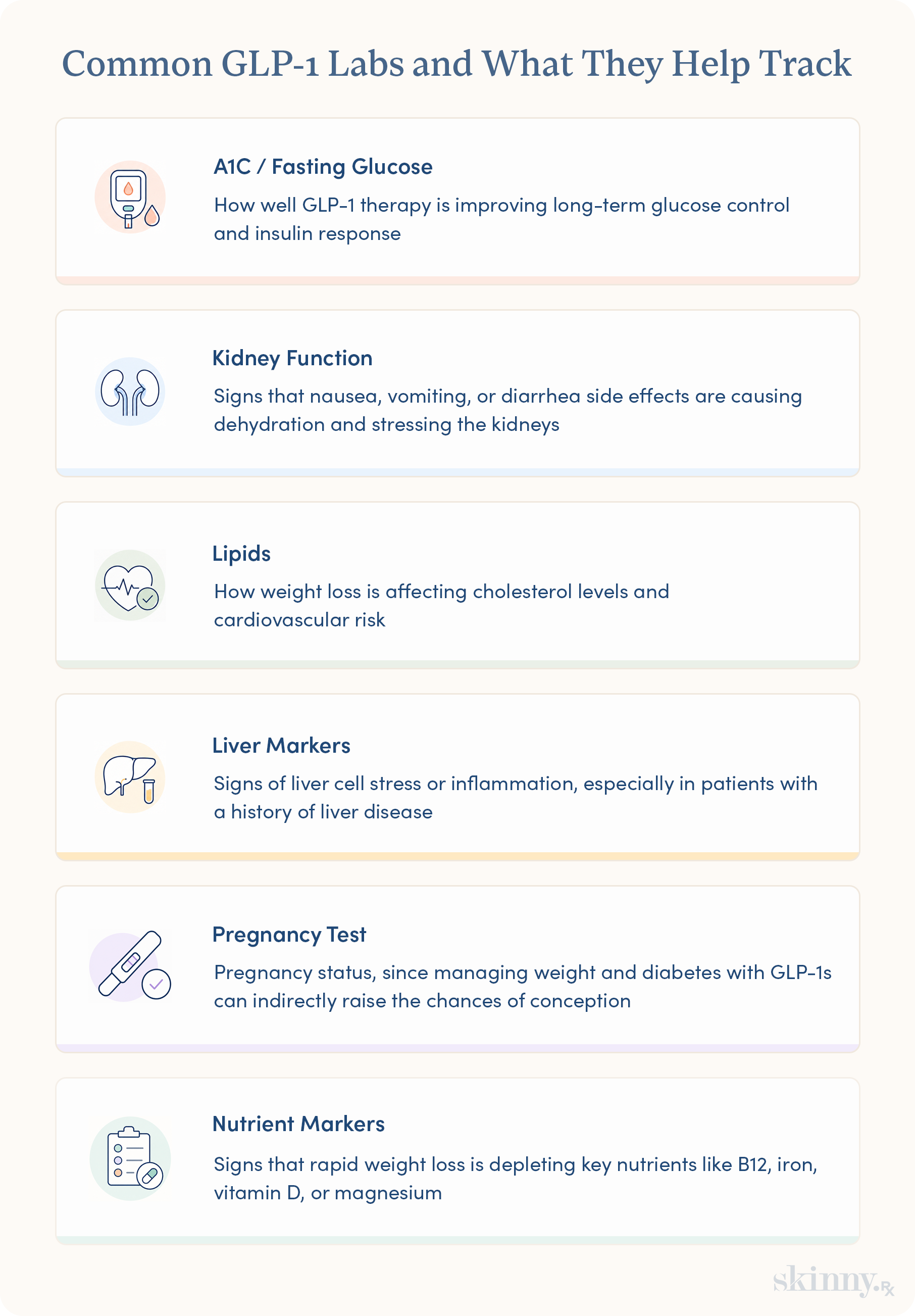
One important biomarker while on a GLP-1 drug is blood glucose, or your blood sugar levels. Specifically, hemoglobin A1c (or HbA1c), which reflects blood sugar levels over the previous two to three months.
Meanwhile, a fasting glucose test measures blood sugar after a night of not eating and at a single point in time, like a snapshot.
GLP-1s work to manage blood sugar levels by promoting insulin release only when blood glucose is elevated. They also reduce appetite and delay gastric emptying, or slow the rate at which food leaves the stomach.
The American Diabetes Association states that type 2 diabetes patients typically get their HbA1c checked every two years or more often, as some recommend every three months until blood sugar targets are achieved.
Even those without diabetes may benefit from knowing their blood sugar levels are in a healthy range while losing weight.
Kidney Function
While small, the kidneys do many important jobs, such as removing waste and excess water, regulating essential minerals, maintaining blood pressure, and more.
Getting kidney function checked while on a GLP-1 can be useful due to the potential side effects of the medication.
GLP-1 drugs can cause adverse effects like nausea, vomiting, and diarrhea, which in turn can cause dehydration and stress the kidneys.
There are a few tests used to check how the kidneys are functioning:
- Serum creatinine: Creatinine is a byproduct created from food waste and the normal breakdown of muscle tissue, which is then removed by the kidneys. While a “normal” creatinine level can vary by age, sex, body size, and other factors, a lower number is better for this test.
- Estimated glomerular filtration rate (eGFR): This estimates how well your kidneys are filtering waste using serum creatinine levels, age, and sex. “Normal” eGFR varies by age and decreases as you get older, but a higher number is better, typically equal to or above 60.
- Blood urea nitrogen (BUN): When protein from food you eat breaks down, it creates a product called urea nitrogen in the blood that’s removed by the kidneys. A “normal” BUN level varies, and a healthcare provider will likely compare your level to your creatinine and eGFR levels when evaluating overall kidney health.
Lipids and Cardiometabolic Risk
By promoting weight loss, GLP-1 medications can also improve cardiometabolic protection — that is, improving heart health by reducing the risk of factors like heart attack and stroke — in those without diabetes.
Weight loss can also somewhat improve lipids — fatty compounds, like cholesterol, that perform a variety of functions in the body.
Measuring your lipid profiles while on a GLP-1 — such as total cholesterol, low-density lipoprotein (LDL, or “bad” cholesterol), and high-density lipoprotein (HDL, or “good” cholesterol) — can help track cardiovascular health and risk of disease or stroke.
Weight-Loss Care With Ongoing Support
Access prescription treatment, provider guidance, and helpful tools built around your progress.
Liver Markers
One health risk of obesity is fatty liver disease, which is why testing liver markers may be helpful for those on a GLP-1.
About 1 in 4 U.S. adults has metabolic dysfunction-associated steatotic liver disease (MASLD.)
Those with known fatty liver disease or a history of liver disease could benefit from tests that measure enzymes that leak into the blood when liver cells are damaged or inflamed, including alanine aminotransferase(ALT) and aspartate aminotransferase (AST).
Pregnancy Testing When Relevant
If there’s a possibility of getting pregnant while taking a GLP-1, standard over-the-counter urine pregnancy tests still work.
However, it should also be known that GLP-1s can affect fertility by managing factors like weight and diabetes, thereby increasing the chances of pregnancy in many.
If you become pregnant, stop taking the medication immediately and contact your healthcare provider.
Labs May Depend on Your Medical History
Again, lab tests before and while on a GLP-1 can depend on each individual.
Many people — such as those who are healthy aside from weight concerns, have no chronic conditions, aren’t taking other medications that interact with GLP-1s, and are tolerating treatment well — successfully use the medications without testing.
If you have certain health conditions, want to track metabolic improvements beyond weight loss, or have certain health goals, selective lab testing could provide helpful information. This should be discussed with your healthcare provider.
Those with diabetes should have their blood glucose regularly checked, similarly with periodic kidney function checks for those with kidney disease.
Symptoms That May Prompt Additional Testing
While some side effects are typical with GLP-1 use — nausea, vomiting, constipation, diarrhea, bloating, and heartburn, for example — others may prompt immediate medical attention.
Severe abdominal pain that persists alongside vomiting could be a sign of acute pancreatitis, or inflammation of the pancreas. If left untreated, severe cases can cause organ damage.
GLP-1 users should be on the lookout for signs of dehydration, including dizziness, urinating less frequently, fainting, or extreme thirst. A comprehensive metabolic panel can check kidney function.
Rapid weight loss and a decreased appetite can sometimes lead to nutritional deficiencies, such as low vitamin B12 or iron, and cause worsening numbness, weakness, hair loss, or vision trouble.
Various tests can measure vitamin B12, vitamin D, iron, ferritin, and magnesium levels.
Questions to Ask Your Provider About Monitoring
If you’re curious about monitoring certain biomarkers while on a GLP-1, talk to your doctor beforehand about what to expect and what information you want to know.
Unsure what to ask? Questions about certain health conditions as well as what information concerning your medical history are important.
- Do I have diabetes or prediabetes?
- Do I take insulin, sulfonylureas, blood pressure medication, or diuretics?
- Do I have a history of kidney disease, gallbladder disease, liver disease, or pancreatitis?
- What labs did you review before prescribing?
- When should labs be repeated?
- What symptoms should I report before the next scheduled check?
Bottom Line
Lab monitoring for GLP-1 looks different for everyone. While bloodwork is not required, many patients and providers find that certain tests provide useful information for tracking progress and catching potential issues early.
Your health history, your goals, and how your body responds to treatment all play a role in what your provider may recommend.
If you are curious about which tests make sense for you, talking it through with your doctor is the best next step. You do not need to figure this out on your own.
Frequently Asked Questions
Support for the Whole Journey
Access prescription treatment, provider guidance, and helpful tools built around your progress.

By Rachel Sacks
Contributing Author
Rachel Sacks is a New York-based contributing writer with more than a decade of experience covering a range of topics, including weight loss, mental health, sexual wellness, skincare, and more. Her work has been featured in The New York Post, Healthline, Hims & Hers, Business Insider, and other notable publications. She graduated from Miami University in Oxford, Ohio, with dual degrees in Journalism and Art History.