
 Medically Reviewed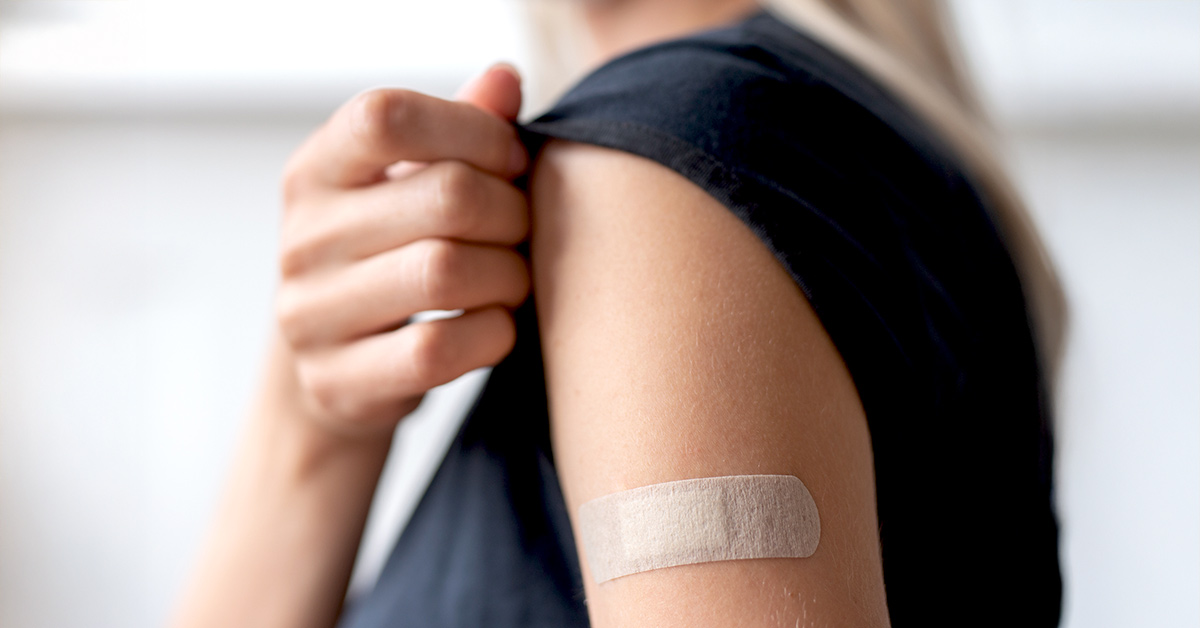

Key Takeaways
- GLP-1 injection site reactions can include redness, itching, rash, bruising, swelling, pain, lumps, or thicker skin.
- Most reactions are mild and temporary, but call a provider if they spread, worsen, or do not go away.
- Rotating injection sites and avoiding irritated skin can help reduce discomfort.
- Let alcohol dry, follow the medication guide, and do not reuse needles or single-use devices.
- Seek urgent care for trouble breathing, face or throat swelling, widespread hives, dizziness, or a severe rash.
Injection site reactions are a common side effect of GLP-1s like semaglutide or tirzepatide, affecting around 1% to 8% of people taking the medications.
Still, it can be helpful to know whether the redness, rash, or pain you’re experiencing is normal and expected — or if it’s something you need to discuss with your healthcare provider.
Below, we review the most common injection site reactions of GLP-1s, why they happen, and what you can do to minimize pain and irritation after your dose.
What Is an Injection Site Reaction?
Injection site reactions describe the pain, redness, rash, bruising, and itching you might feel around the spot where you injected your dose of GLP-1 medication. They’re a common side effect of GLP-1s, as well as other injectable medications like insulin. Typically, they go away on their own within a few days (if not sooner).
Common Local Reactions
The most common local reactions of GLP-1 injections include:
- Itching
- Redness
- Rash
- Bruising
- Pain
- Inflammation or swelling
- Irritation
- Small lumps (nodules)
- Skin thickening
Let’s take a look at some of these in more detail.
Redness or Warmth
Some redness with swelling is one of the most common injection site reactions of GLP-1s. A red rash may also develop after you inject your dose.
Usually, this goes away on its own. But if it doesn’t, or if it spreads, contact your healthcare provider to make sure you’re not experiencing an allergic reaction to the medication. Significant warmth or fever can be signs of an infection.
Itching or Tenderness
Itching and mild pain are also common injection site reactions with GLP-1s like tirzepatide, semaglutide, or liraglutide. Like rash or redness, they typically go away on their own.
If the itching is severe or accompanied by other symptoms such as hard bumps, contact your healthcare provider. Severe itching could be a sign of an allergic reaction. If you have mild itching with bumps, your provider may try lowering your dose or switching you to another weight loss medication.
Bruising
You may experience some mild pain or bruising after GLP-1 injections of tirzepatide or semaglutide.
If you develop a bruise, avoid injecting in that spot with your next injection. It’s recommended to rotate through the injection sites — upper arm, abdomen, and thigh — with each dose, anyway. This gives your skin time to heal between injections.
However, some people do find that injecting into the thigh can be more painful than the stomach or upper arm. If that’s the case for you, rotate through different sites on your stomach and left and right arms.
Small Lumps or Firmness
Some people notice small lumps, called nodules, or a thickening of the skin around the area where they inject their GLP-1. These may occur with or without pain, and, as with other injection site reactions, usually go away on their own within a few days.
While generally harmless, these bumps can affect how well the medication gets absorbed. So, it’s best to avoid injecting directly into a nodule or thick skin if you notice it.
Get Support Beyond the Prescription
SkinnyRx pairs prescription weight-loss treatment with guidance, tools, and resources designed to support your progress.
Why Injection Site Reactions Can Happen
Injection site reactions can happen for a number of reasons, from using an improper injection technique to not cleaning your hands or the area beforehand. Your body may simply be experiencing a mild inflammatory reaction to the medication.
Injection site reactions seem to be more commonly reported by people taking tirzepatide vs. semaglutide. In clinical trials of tirzepatide, they seemed to be slightly more common with higher doses of the drug.
Ways to Reduce Irritation
If your injection site reaction is causing you significant pain, rash, or itching, contact your healthcare provider. But if it’s only mildly irritating, there are several steps you can take to reduce discomfort in the future.
- Only inject into healthy, undamaged skin. Never inject into skin that is scarred, red, bruised, tender, irritated, tender, or otherwise damaged or injured. Injecting into healthy skin helps your body better absorb the medication.
- Rotate through the injection sites. The recommended injection sites include your thighs, abdomen (at least 2 inches away from your belly button), and back of the upper arms (at least 3 inches away from your shoulder and elbow). Rotate through these sites with each injection to give your skin time to heal between injections.
- Never reuse needles or single-use pens. Doing so enables bacteria to enter through your skin and increases your risk of infection.
- Follow the proper injection technique. The instructions included with your medication will demonstrate how to properly inject your GLP-1. Pinch an inch of skin and insert the needle at a 90-degree angle to prevent lumps from forming.
- Clean the area beforehand. To lower the risk of infection, thoroughly clean your hands beforehand with soap and water. Then clean the skin of the injection site with an alcohol swab, but let the skin fully dry before injecting. Alcohol swabs can trigger a skin rash in some cases.
- Do not inject two medications in the exact same spot. If you take other injectable medications, such as insulin, inject the medications at least a few inches away from each other or use different injection sites altogether.
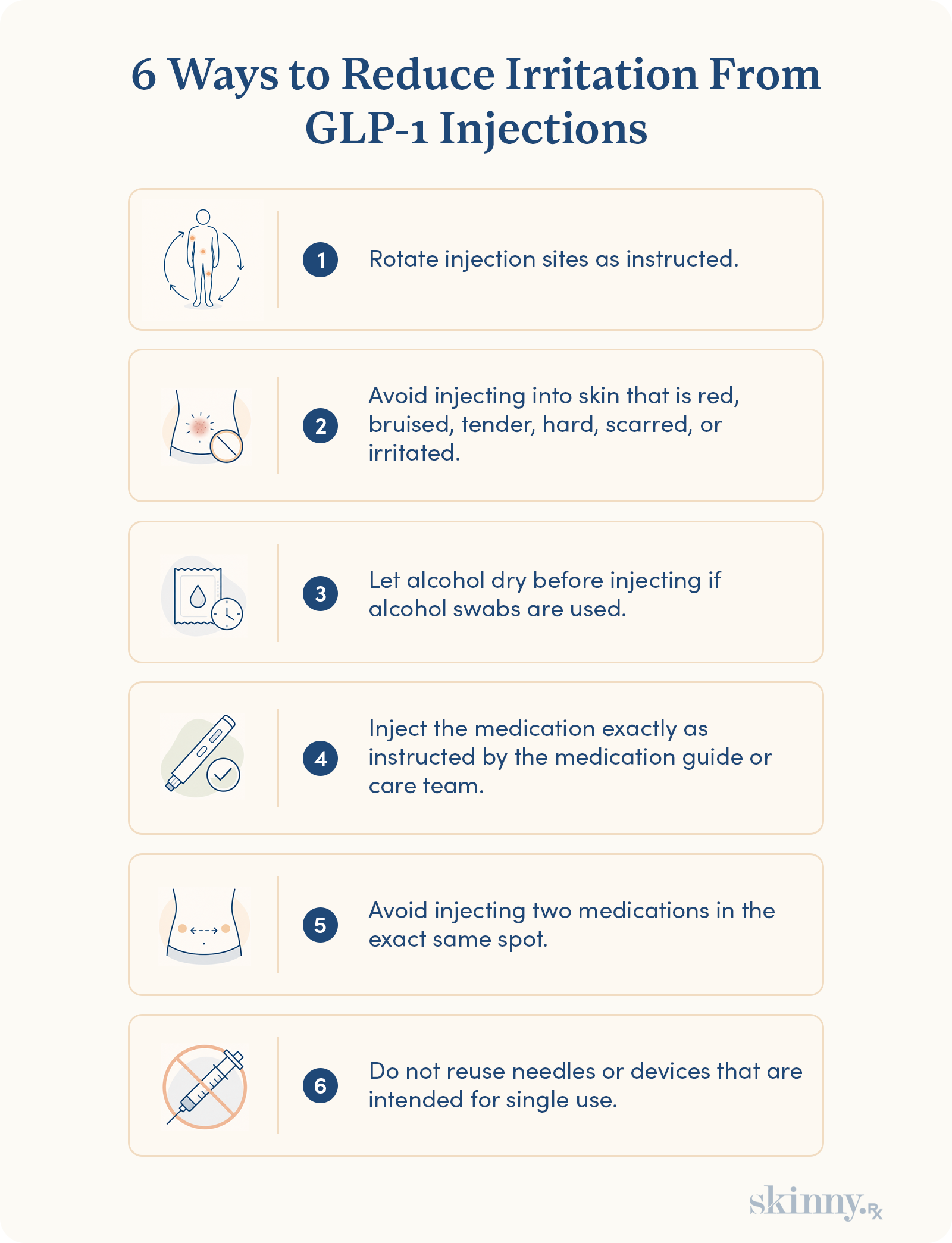
Here’s a quick checklist to help you remember these tips:
Checklist: 6 Ways To Reduce Irritation From GLP-1 Injections
- Rotate injection sites as instructed.
- Avoid injecting into skin that is red, bruised, tender, hard, scarred, or irritated.
- Let alcohol dry before injecting if alcohol swabs are used.
- Inject the medication exactly as instructed by the medication guide or care team.
- Avoid injecting two medications in the exact same spot.
- Do not reuse needles or devices that are intended for single use.
When a Reaction May Be More Concerning
A tirzepatide or semaglutide injection site reaction is concerning if it is causing you significant pain, irritation or discomfort. If your reaction doesn’t go away, gets worse, or spreads, contact your healthcare provider to ensure you’re not experiencing an infection or allergic reaction.
- Signs of an infection include redness, swelling, red streaks, and fever.
- Signs of an allergic reaction include severe itching or rash, hives, difficulty breathing or swallowing, lightheadedness, facial flushing, nausea, vomiting, heart palpitations, and swelling of the face, eyes, tongue, or throat.
Important Note: Seek urgent medical care for trouble breathing, swelling of the face or throat, widespread hives, dizziness, or symptoms that suggest a serious allergic reaction.
What to Tell Your Healthcare Provider
If you’re experiencing persistent lumps, rash, or redness after a GLP-1 injection — or if they’re simply becoming bothersome — contact your healthcare provider. If possible, be prepared to answer questions about:
- When the reactions first started
- How long you’ve experienced them
- If they’ve gotten worse or stayed the same
- What the reactions look or feel like (e.g. pain, lumps, bruising, rash)
- Your injection routine, such as how you prepare your dose and where you inject it
This information helps your provider determine the best next steps to minimize your discomfort. For example, there could be small tweaks you could make to your injection routine to reduce bruising after a GLP-1 injection.
If the reactions are particularly bothersome, your healthcare provider may want to try lowering your dose or switching you to another GLP-1 medication. Some GLP-1 medications are available as oral tablets, which don’t cause the injection site reactions common to injectable GLP-1s.
Bottom Line
Injection site reactions are one of the more common experiences when starting a GLP-1, and for most people, they stay mild and resolve on their own within a few days.
Small adjustments to your routine, like where you inject and how you prepare the skin beforehand, can make each dose noticeably more comfortable over time.
That said, it's worth knowing the difference between typical irritation and something that needs prompt attention. Reactions that spread, worsen, or come with symptoms like fever, hives, or difficulty breathing deserve a call to your provider or urgent care right away.
If your symptoms are not improving, are getting worse, or feel severe in any way, contact your healthcare provider right away rather than waiting it out.
Frequently Asked Questions
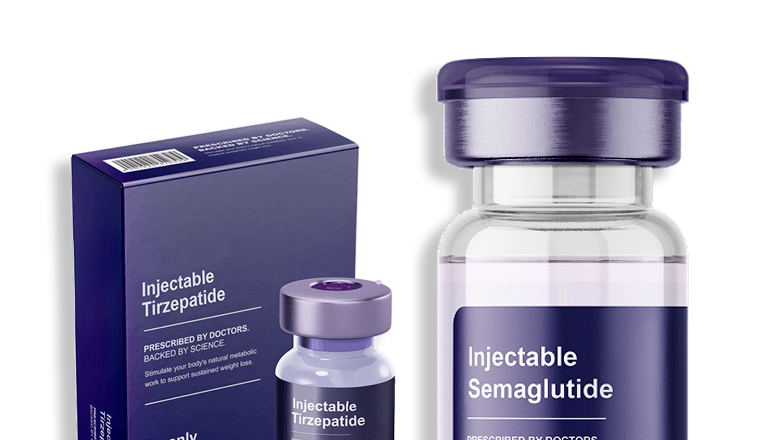
Get Support Beyond the Prescription
SkinnyRx pairs prescription weight-loss treatment with guidance, tools, and resources designed to support your progress.

By Amelia Willson
Contributing Author
Amelia Willson is a freelance health writer and content strategist based in Orange County, California. Her work has appeared in several health publications, including Ro, Klarity Health, K Health, Sleep Foundation, and A Place For Mom. Amelia covers the latest trends in health and wellness, including the research (or lack thereof) behind them, breaking down complex topics so that readers don't have to. Her writing frequently explores weight management, plant-based nutrition, and mental health.