
 Medically Reviewed

Key Takeaways
- Semaglutide slows digestion, so your body responds differently to food and alcohol during the holidays than it did before.
- Building a GLP-1-friendly plate, anchored in protein and vegetables, is the most practical way to enjoy holiday meals without triggering side effects.
- You do not owe anyone an explanation. Having a few ready responses for food pushers and curious family members is preparation, not confrontation.
- Alcohol hits harder and faster on semaglutide. One drink can feel like several, and the risks go beyond just feeling tipsy.
- Skipping your dose to "enjoy the holidays freely" is not advised without your doctor's input and can backfire when you resume.
GLP-1 weight-loss medications are seemingly taking over every conversation, including at the holiday dinner table.
While still growing in popularity, GLP-1 weight loss drugs are often misunderstood and come with a lot of controversy and confusion. Managing various holidays can already be stressful — now add in social pressure around drinking and eating while on a weight loss medication.
But you can still have fun with your friends and family during the holidays. Here’s a detailed guide to navigating holidays while on semaglutide.
Why the Holidays Feel Different This Year: The GLP-1 Shift
If you’ve started taking a GLP-1, holiday eating on them may feel and look different than in the past.
That’s most likely because of the medication taking action in your body, and all the potential side effects that may come with it.
From "Food Noise" to "Holiday Cheer"
These medications were initially developed to help manage blood sugar levels in people with type 2 diabetes and have since been used in broader metabolic and weight management contexts.
They support weight management by mimicking GLP-1, a hormone naturally produced in our bodies.
This hormone regulates blood sugar levels by stimulating insulin release and increases feelings of fullness after eating by slowing down the rate at which food leaves your stomach. Semaglutide and other GLP-1s can also reduce “food noise”, which is obsessive or intrusive thoughts about food.
These mechanisms can affect how soon you feel full while eating. In the past, it may have taken longer to feel full.
But on semaglutide, food stays in your stomach for a longer period of time, making the sensation of satiety, or fullness, come on faster.
To avoid feeling as stuffed as the holiday turkey, slow down throughout your meal, savor each bite, thoroughly chew your food, and remain aware of when you feel full.
Weight Loss, Done the Right Way.
At SkinnyRx, our licensed physicians provide personalized GLP-1 weight loss programs with the medical oversight and ongoing support to help you reach your goals.
Why You Can't Eat the Way You Used To on Holidays
Here’s an all too familiar scenario at the holidays: it’s time for a meal, and the table is filled with delicious foods you or your family have spent time cooking.
The big difference when you’re navigating holidays on semaglutide, though, is that your eating habits have changed, and you simply can’t eat the way you did before.
The Risk of "The Big Sick": Nausea, Bloating, and Gastric Distress
Holiday eating can look different while on semaglutide due to how the medication slows down digestion, keeping food in your stomach for longer.
While this mechanism can result in weight loss, it can also lead to gastrointestinal side effects such as:
- Nausea
- Diarrhea
- Vomiting
- Bloating
- Abdominal pain
- Constipation
- Sulfur burps (foul, rotten-egg-smelling burps)
- Acid reflux
These adverse effects can be worsened if you overeat past the point of feeling full. But that’s not the only culprit.
Why High-Fat Holiday Classics are the Main Culprits
One of the highlights of holidays is food, especially rich, decadent foods we may not normally eat throughout the year.
But the high-fat holiday classics can cause or worsen many of the side effects that occur when taking this medication.
Consuming high-fat, fried, or greasy foods — which already take longer to digest — aggravates the delayed gastric emptying effect of semaglutide that keeps food in the stomach too long. This, in turn, can cause intense nausea, bloating, vomiting, and diarrhea.
But one GLP-1 holiday travel tip to manage any side effects is to plan and pack a “holiday carry-on” to bring to a host’s house that includes:
- Ginger chews for nausea
- Magnesium supplements for managing sulfur burps after big meals
- Electrolytes to replenish fluids if you’re experiencing vomiting or diarrhea
- Digestive enzyme supplements help with the digestion process
How to Build Your "GLP-1 Friendly" Holiday Plate
You don’t have to completely avoid any foods at holiday gatherings — it’s more about building a GLP-1-friendly plate with certain choices.
The 50/25/25 Rule (Vegetables, Protein, Starches)
One way to manage GLP-1 side effects is by following the 50/25/25 rule when building your plate.
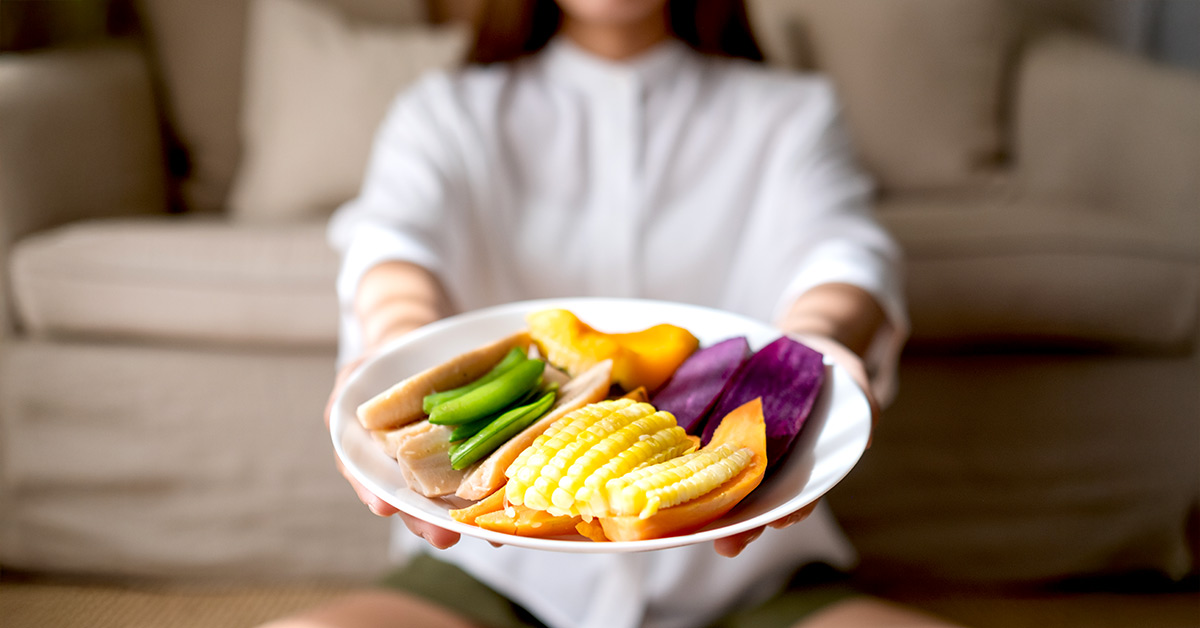
This means splitting your plate into 50 percent vegetables, 25 percent protein, and the remaining 25 percent starches, making sure you’re including protein and fiber.
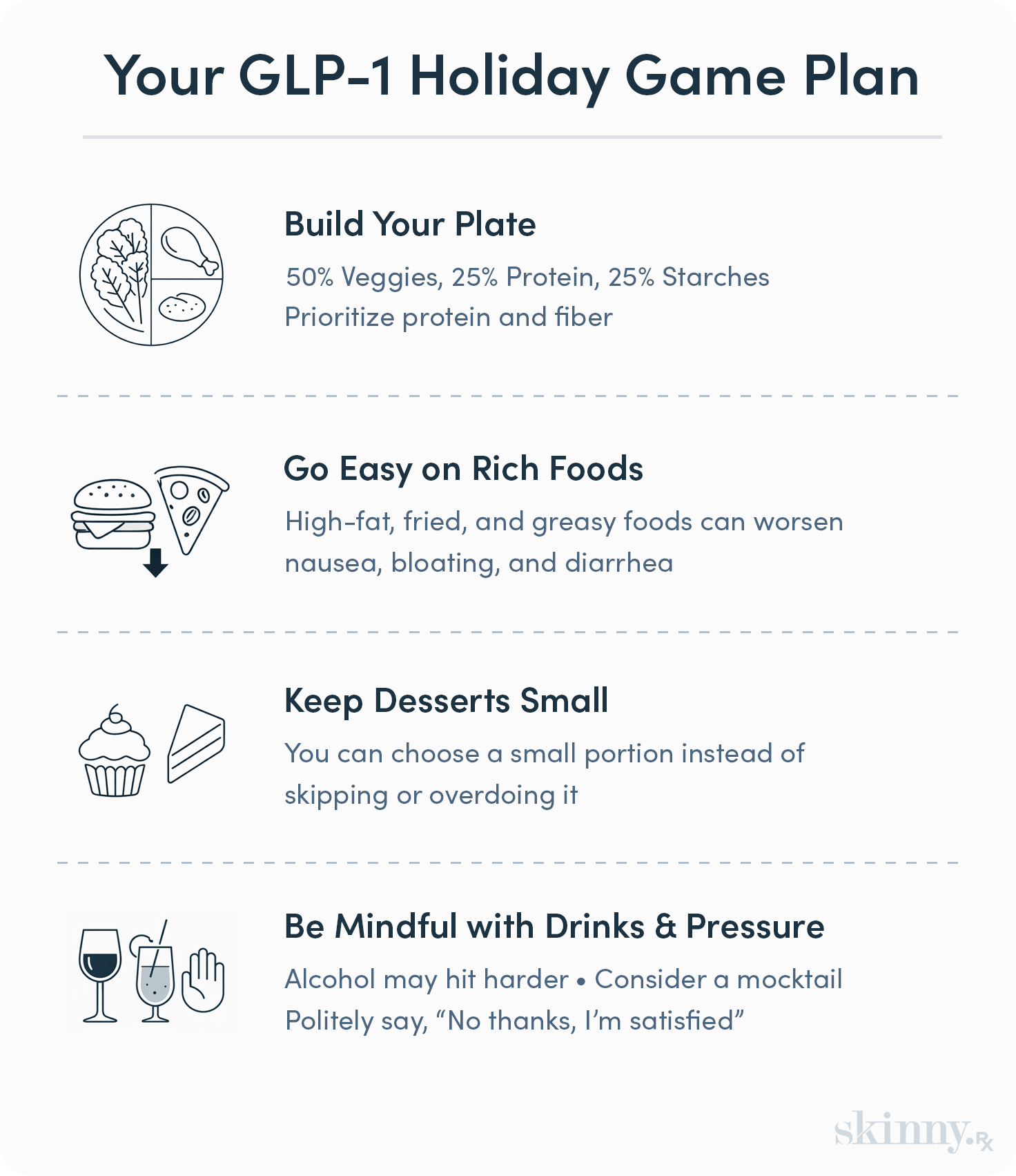
Prioritizing these two macronutrients is important for a few key reasons.
With the significantly reduced appetite that often accompanies semaglutide, protein ensures that the limited food you eat is highly nutritious and keeps you full longer. Meanwhile, fiber can help with gastrointestinal distress, such as constipation and stomach discomfort.
You can also pass on the foods you can get any day of the year, such as rolls, crackers, or chips, and focus on savoring the special once-a-year holiday food.
The "Bite-Sized Strategy" for Desserts
You can have your cake while on semaglutide and eat it too — or at least a miniature version of it.
Instead of completely avoiding your aunt’s famous pie or those holiday cookies, opt for a smaller-portioned mini treat.
If possible, you can also aim for nutrient-dense options like Greek yogurt with berries, protein-packed dessert balls made with nut butters and protein powder, or dark chocolate, or offer to bring a healthy, homemade dessert.
How to Handle Food Pushers and Awkward Questions
Feeling the Wegovy® social pressure while home for the holidays? You may be bombarded with statements and questions like “You looked great before!”, “Why have you lost so much weight?”, or “Why aren’t you eating more tonight?!”
Those on GLP-1s may find themselves facing a lot of scrutiny or stigma over their food choices.
But there are ways to handle “food pushers”, curious cousins, and various friends and family at any holiday party.
"No Thank You" Without the Drama
If Mom or that one friend insists you “just try a piece of pie” one more time, you may scream.
But no need to flip out. If you’re worried about experiencing judgment or pressure to eat more, think ahead about how you’ll respond to questions or offers of food. You can gently remind them of your new medication to help you on your weight management journey.
You can share your reasons why you’re taking it, like managing a health condition, such as type 2 diabetes or a high BMI. Sharing your personal reason with people who care about you and your health can help them empathize with you or give them insight into your motivation.
Be a broken record by simply repeating phrases until they stop offering food, or decline, then change the subject.
You may also need to set polite, firm boundaries around what you can and cannot eat.
Here are a few suggestions on what to tell friends and family:
- Broken record: I'm good, thanks!
- Change the subject: No, thank you. So, how’s the new job?
- Compliment and decline: That looks amazing, but I’m satisfied.
- Briefly use health reasons: I’m focusing on foods that make me feel my best right now.
Deciding Whether to Share Your GLP-1 Journey with Family
Taking a GLP-1 is a very personal decision, and you may not want to share that information with your family.
Letting them know you’re taking a weight loss drug could offer support, make changes in eating habits easier to explain, and combat stigma.
However, not sharing medical information could be to avoid any judgment or protect your mental health.
Whatever your decision or reasons may be, the best choice is the one that ultimately makes you feel comfortable and supported.
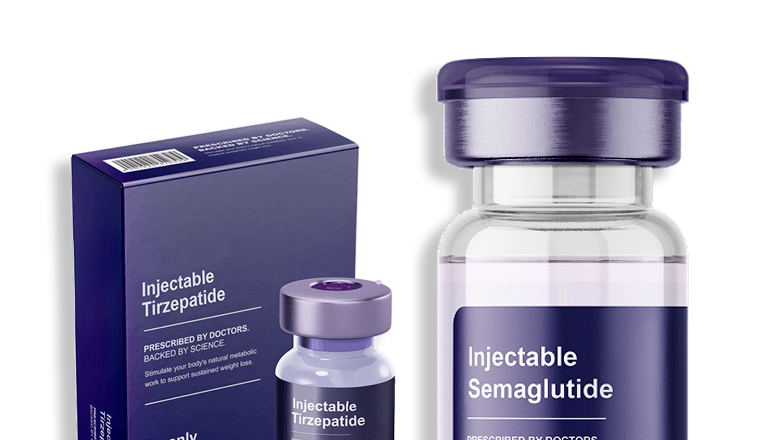
Your GLP-1 Weight Loss Journey Starts Here
Find out if GLP-1 medication is right for you. Get matched with a licensed provider and a plan tailored to your weight-loss goals.
Why Alcohol Hits Harder on Semaglutide
Another staple of holidays and celebrations? Alcohol, which can also exacerbate the side effects of GLP-1s and affect you differently when taking the medication.
Why One Drink Now Feels Like Three
It all goes back to semaglutide’s delayed stomach emptying mechanism. Just as food stays in your body longer, so does alcohol.
This can change how even just one drink affects you, as there’s a difference in how your body now responds to alcohol.
Mixing alcohol and certain medications used to treat type 2 diabetes — like GLP-1s — could also result in low blood sugar if you take insulin, which can cause symptoms like drowsiness, slurred speech, and trouble walking.
Another potential adverse effect of consuming alcohol while on a GLP-1 is an increased risk of pancreatitis, which can already be another uncommon but still possible side effect of the medication on its own.
Festive Mocktails: The 2026 Social Secret
Beyond these risks, alcohol can hinder weight loss efforts, as various alcoholic beverages still contain a high amount of calories. For example, drinking a beer five days a week can add over 700 calories to your diet alone.
Switching to mocktails is a good way to avoid worsening gastrointestinal effects. But be sure to avoid beverages that are high in sugar, as well as carbonated drinks that can result in extra gas in the stomach or bloating.
You actually may not feel like drinking alcohol at all. GLP-1 medications have been shown to reduce alcohol cravings in some studies.
The Bottom Line
The holidays are about connection, celebration, and good food. Being on semaglutide does not change that. It just means showing up more prepared and more in tune with your body than you used to be.
That preparation looks different for everyone, but the principles are consistent. Build your plate with protein and vegetables first. Slow down at the table and stop when your body tells you to, not when the plate is clean. Treat high-fat, rich holiday foods as something to sample rather than as the centerpiece of your meal. If you plan to drink, go in knowing that one drink may land very differently than it used to, and that mocktails are a genuinely solid alternative, not a consolation prize.
On the social side, you do not owe anyone a detailed explanation of your medication or your plate. A warm, firm response and a subject change are enough.
The goal was never to get through the holidays. It was always to actually enjoy them. A little preparation makes that possible.
Frequently Asked Questions

By Rachel Sacks
Contributing Author
Rachel Sacks is a New York-based contributing writer with more than a decade of experience covering a range of topics, including weight loss, mental health, sexual wellness, skincare, and more. Her work has been featured in The New York Post, Healthline, Hims & Hers, Business Insider, and other notable publications. She graduated from Miami University in Oxford, Ohio, with dual degrees in Journalism and Art History.