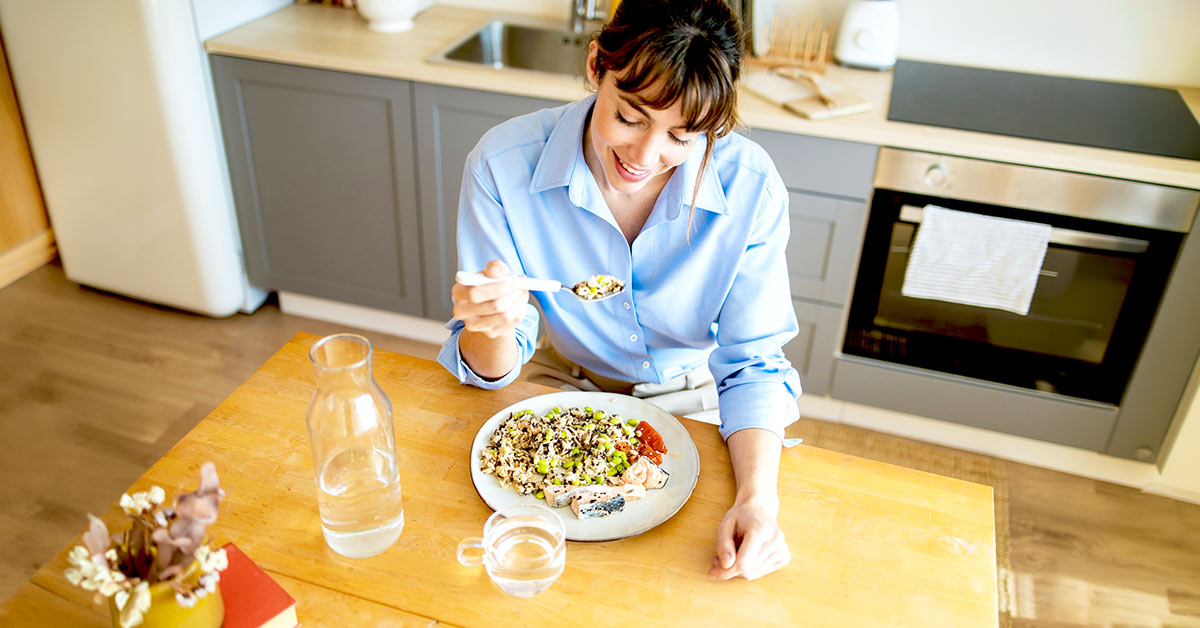

 Medically Reviewed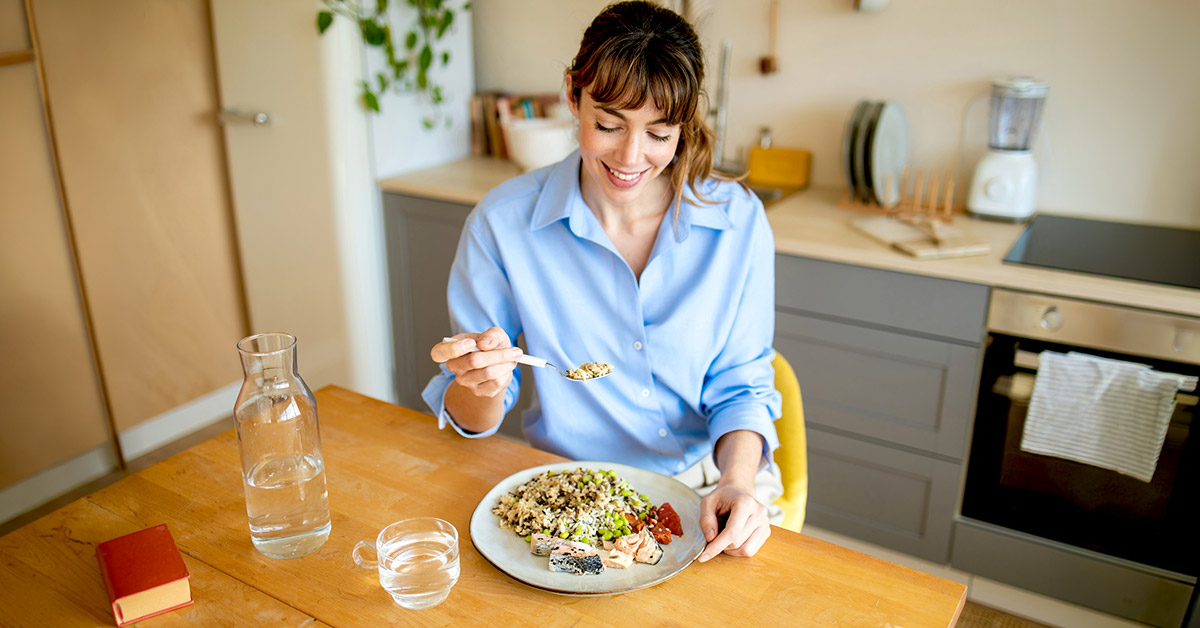

Key Takeaways
- There is no special diet required on GLP-1 injection day, but some people may need to adjust their eating as appetite and side effects change.
- Smaller, lower-fat meals may be easier to manage when you feel full quickly or have nausea.
- Staying well hydrated and getting enough protein and fiber can help support your nutrition while you eat less overall.
- If nausea develops, bland, low-fat foods and cold drinks may be easier to tolerate.
- Contact your healthcare provider if symptoms are severe or do not improve, and consider an RDN if you need help adapting your diet.
Many GLP-1 medications are taken as once-weekly injections. Common side effects, such as low appetite, nausea, or vomiting, tend to occur within 1 to 3 days after the injection. These also tend to be dose-dependent, meaning you may experience side effects to a greater degree at higher versus lower doses.
As you begin your GLP-1 journey, you may be wondering if you need to modify your diet on certain days of the week. The truth is that there is no special diet you need to follow on the day you take your GLP-1 medication. But some people feel best when they modify their food choices around the time they tend to experience side effects.
Part of the reason is how these medications affect appetite and digestion. GLP-1 medications mimic the naturally occurring hormone glucagon-like peptide-1, which signals your brain that you are full and slows the movement of food through your gastrointestinal tract.
Taking a GLP-1 medication increases the effect of this hormone in your body, similar to turning up the dial on a radio. As a result, smaller meals, thoughtful food choices, and hydration may feel more manageable when appetite is low or nausea develops.
Why Some People Plan Meals Around Dose Day
That being said, the higher level of this hormone does tend to produce side effects as your body adapts. The most common side effects with GLP-1s include nausea, vomiting, constipation, or diarrhea.
These tend to take effect within a few days of starting the medication and resolve within a few weeks for most people. However, if symptoms are especially severe or don’t resolve on their own, contact your healthcare provider.
What to Prioritize on GLP-1s
Your nutrition priorities do shift while on GLP-1s, especially as you are likely consuming less energy overall. This can make it more challenging to get enough nutrients. Key dietary strategies can help to ensure you are meeting your nutrient needs, while also helping to manage side effects and support your long-term weight-loss goals.
Fluids
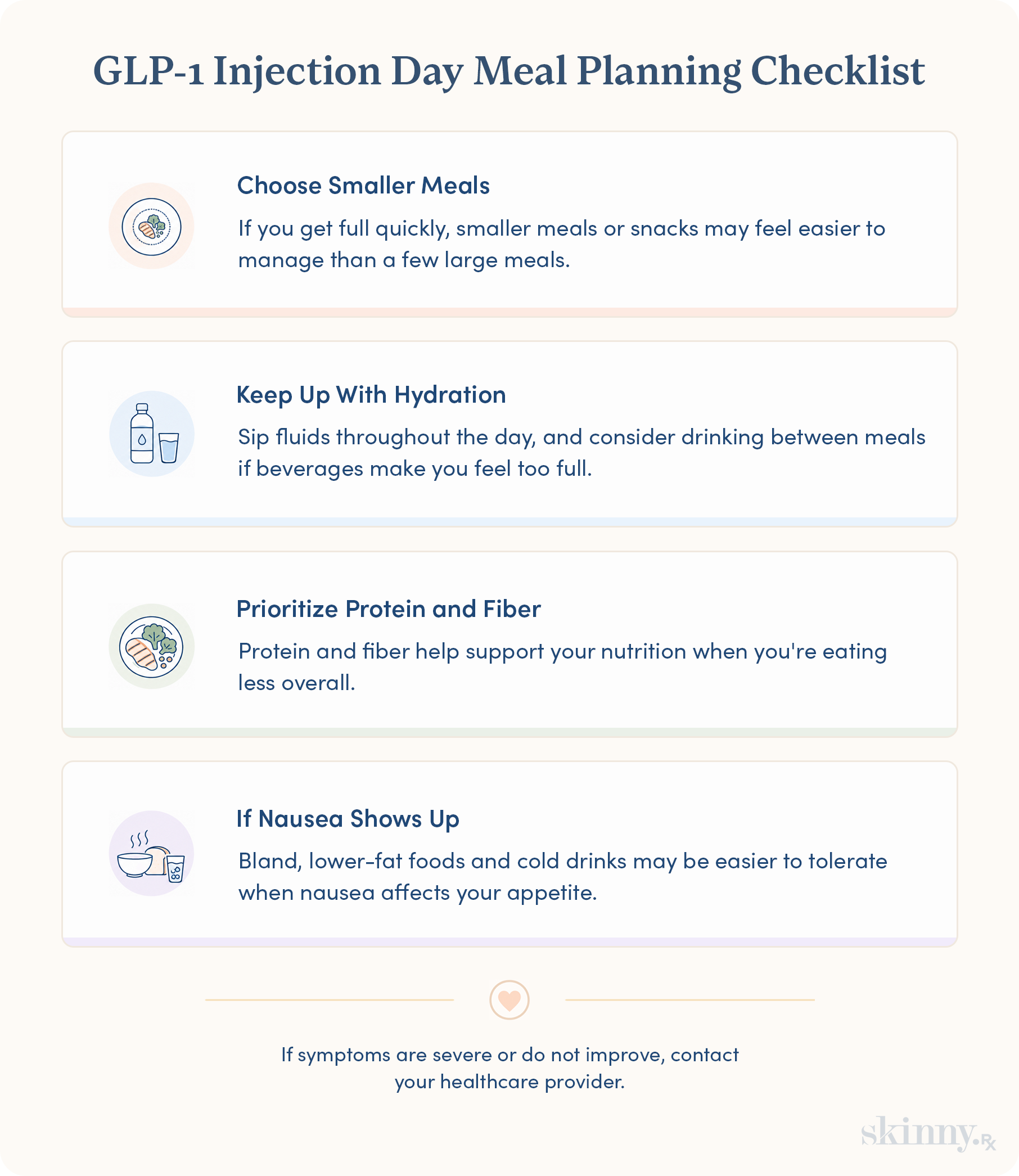
Staying hydrated is critical to ensuring your body systems function at their best. Good hydration can be more challenging for a few reasons. First, you are likely eating less food overall, and therefore consuming less water in your diet.
You may also be experiencing side effects of the medication that increase your dehydration risk, such as vomiting and diarrhea.
The good news is that you can combat these side effects by staying well-hydrated throughout the day. Choose calorie-free options like plain water and unsweetened tea. Water-rich foods, such as vegetables, fruits, and broth-based soups, will also contribute to good hydration.
If you find yourself getting full very quickly at mealtimes, try having beverages in between meals instead of with meals.
Protein
Protein is a priority nutrient while on GLP-1s. As you are losing body weight, protein and resistance training are needed to minimize loss of your lean body mass. Aim for 1.2 to 1.5 grams of protein per kilogram (kg) of body weight daily.
Protein sources can be plant-based, such as lentils, beans, nuts, seeds, or tofu, or animal-based, such as eggs, dairy, fish, poultry, or beef. Incorporating a mix of different protein sources can help ensure variety in the diet.
Fiber
Fiber is another priority nutrient for GLP-1 users. Fiber is necessary to prevent constipation (a common side effect with GLP-1s) and support overall gut health. It also helps with blood sugar and cholesterol control. Recommended targets for daily fiber intake vary based on age and sex.
Males ages 19-50 should consume at least 38 grams daily, while those 51 and older should aim for at least 30 grams. Females ages 19-50 should consume at least 25 grams daily, while those 51 and older should aim for 21 grams.
Fiber is found exclusively in plant-based foods, such as vegetables, fruits, lentils, beans, nuts, and seeds. Examples include navy beans (9 grams per ½ cup), avocado (5 grams per ½ cup), raspberries (8 grams per cup), chia seeds (4 grams per 1 Tablespoon), and bran cereal (14 grams per ½ cup).
When adding more fiber-rich foods to your diet, aim to do so slowly to give your intestines plenty of time to adapt to the additional bulk. Try adding one fiber-rich food every few days.
Also, make sure to drink plenty of water to account for the additional fiber intake. This will not only help to stay hydrated, but also prevent constipation on a higher-fiber diet.
Weight Care With Support Built In
Get GLP-1 treatment, clinician guidance, and ongoing support as your appetite, routine, and progress change, all in one app.
Smaller, Lower-Fat Meals
One dietary strategy GLP-1 users can adapt is eating smaller meals throughout the day. If you used to eat two or three larger meals in a day, shifting to five or six smaller meals may be helpful for a number of reasons.
First, this strategy can help those who feel full very quickly. Eating smaller amounts can lessen that uncomfortable, overly full feeling.
Second, since both an overly full and an empty stomach can be nausea triggers, this strategy can help ensure you have some, but not too much, food in your stomach.
Lastly, this strategy can help to prevent heartburn, which some GLP-1 users face as a side effect.
A sample eating pattern can look like:
In addition, choosing lower-fat meals can help to prevent multiple GLP-1 side effects. High-fat meals tend to slow the rate of gastric emptying, or how quickly a meal takes to leave the stomach and enter the intestines.
Since GLP-1 medications already have this effect, high-fat meals can be especially difficult to digest. Choosing lower-fat meals will help to ensure your meal is more easily digested and prevent symptoms of an overly full stomach, such as nausea and heartburn.
Simple High-Protein, High-Fiber Meal Ideas
Adopting these eating strategies can be an opportunity to try out new go to meals. The following meals and snacks are simple and check the three boxes of being high protein, high fiber, and low fat.
- Plain Greek yogurt with berries
- Eggs with whole grain toast or fruit
- Cottage cheese with whole wheat crackers
- Chicken, tofu, or tuna with brown rice or whole wheat toast
- Smoothie with protein source (e.g., Greek yogurt, tofu), frozen fruit, and spinach
- Soup with beans, lentils, chicken, or tofu
- Oatmeal with nut butter or Greek yogurt
- Small turkey, egg, or tofu wrap
Foods That May Feel Harder if You Are Nauseated
If you are battling nausea after your GLP-1 injection, avoid certain foods that tend to worsen this symptom, such as high-fat or greasy foods, spicy foods, and foods with strong odors.
Instead, try choosing bland, low-fat foods, such as chicken breast and rice, toast with a scrambled egg, or plain yogurt with a banana. For beverages, choose very cold drinks and drink from a cup with a lid.
When to Ask a Registered Dietitian Nutritionist (RDN)
A Registered Dietitian Nutritionist (RDN) can help you with any stage of your GLP-1 journey, from injection day to lifelong habit planning.
If you are already following a specific diet to help manage a medical condition such as diabetes or kidney disease, meeting with an RDN is especially important to plan your diet in a way that accounts for your new medication.
Bottom Line
There’s no special diet required on GLP-1 injection day, but a little planning can help you adjust if your appetite drops or side effects affect how you eat.
Focus on smaller, lower-fat meals, stay well-hydrated, and prioritize protein and fiber to help meet your nutrient needs. If nausea does hit, bland, low-fat foods and cold beverages may be easier to tolerate.
For most people, side effects ease within a few weeks as the body adjusts. If symptoms are severe or don’t improve, reach out to your healthcare provider. An RDN can also help you adapt your eating habits to your individual needs.
Frequently Asked Questions
Weight Care With Support Built In
Get GLP-1 treatment, clinician guidance, and ongoing support as your appetite, routine, and progress change, all in one app.

By Whitney Linsenmeyer
Assistant Professor of Nutrition and Dietetics
Whitney Linsenmeyer, PhD, RD, is an Assistant Professor of Nutrition and Dietetics at Saint Louis University and a National Spokesperson for the Academy of Nutrition and Dietetics with expertise in fad diets, culinary nutrition, and transgender health. Her research focuses on gender-affirming nutrition care, and she brings a joy-first approach to food science and eating behavior.