
 Medically Reviewed

Key Takeaways
- Nutrition strategies can complement GLP-1 medications by improving adherence, reducing hunger, and supporting more sustainable weight loss outcomes.
- Natural GLP-1 production can be supported through diet, helping improve fullness and reduce overall calorie intake, though it does not replicate the effects of medication.
- Fiber-rich, prebiotic foods slow digestion and enhance satiety signals, making it easier to stay in a calorie deficit.
- Protein and healthy fats stimulate GLP-1 and other satiety hormones while helping preserve lean muscle during weight loss.
- A balanced intake of protein, fats, and carbohydrates supports the activity of multiple gut hormones that regulate appetite, digestion, and metabolic function.
Glucagon-like peptide-1 (GLP-1) receptor agonists are medications used to treat obesity and type 2 diabetes. These medications work by mimicking the hormone GLP-1, which is naturally secreted by your intestines.
GLP-1 sends signals to your brain that you are full and slows the rate of gastric emptying, or how quickly a meal leaves the stomach and enters the small intestine. This delayed emptying can help you eat less because you feel fuller for longer, which is one of the main ways GLP-1 medications support weight loss.
If you’re currently taking a GLP-1 medication like tirzepatide or semaglutide, or considering starting one, you may be looking for ways to further support your results through nutrition.
While these medications are highly effective, your dietary habits still play a meaningful role in satiety, metabolic health, and overall outcomes.
With this in mind, it’s natural to ask whether you can influence your body’s own GLP-1 production through what you eat. In short, the answer is yes, but there is more to consider beyond GLP-1.
Beyond the Needle: How Your Gut Makes Its Own GLP-1
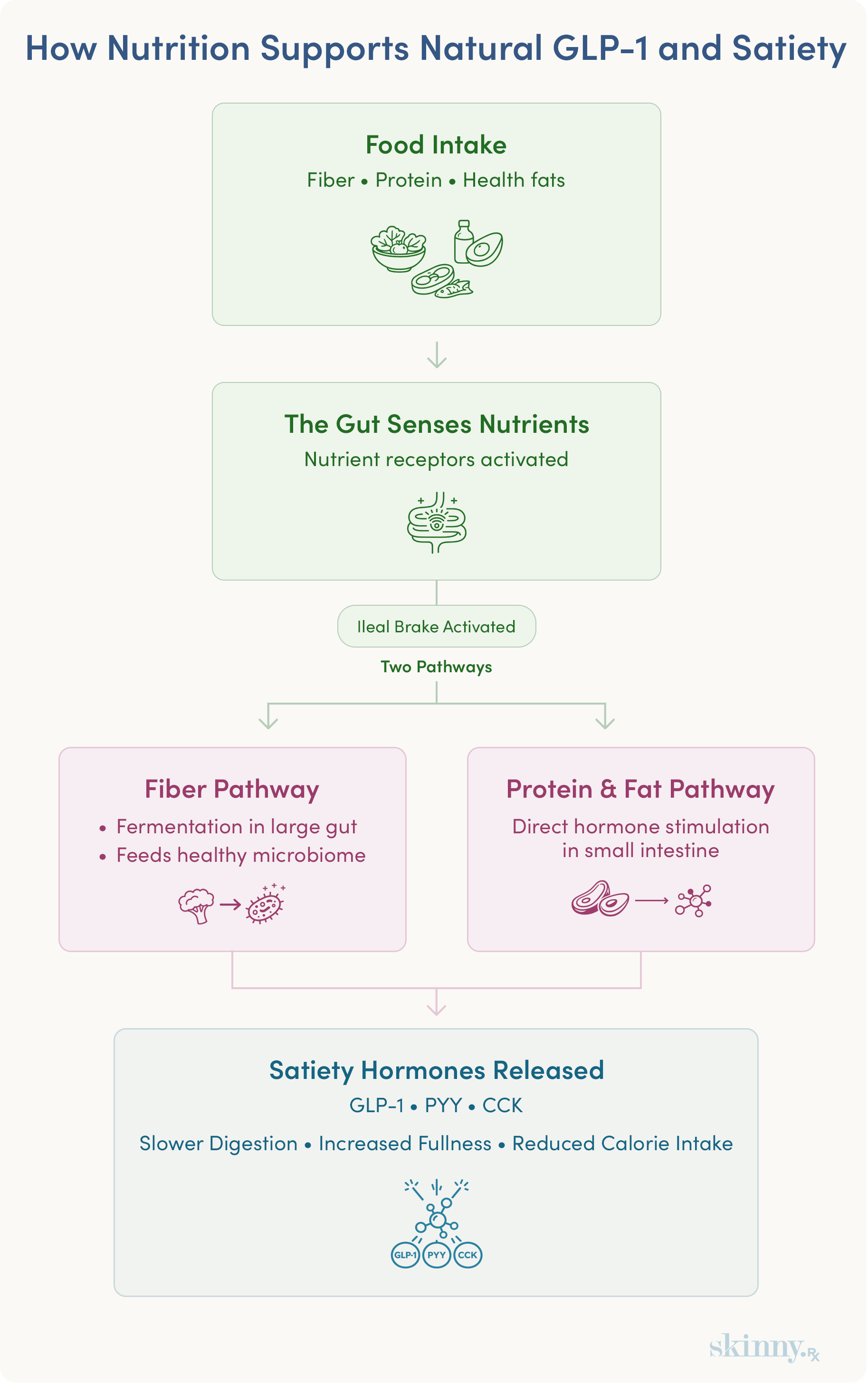
The gut naturally produces multiple hormones that send satiety signals to your brain and delay gastric emptying. In addition to GLP-1, these include GIP, peptide YY, and cholecystokinin (CCK), among others. These hormones are released when receptors in the gut detect the presence of nutrients, including proteins, fats, and carbohydrates.
A balanced diet that includes protein, fats, and carbohydrates is critical for weight loss and overall health.
Meet the L-Cell: Your Body’s Natural GLP-1 Factory
GLP-1 is produced by L-cells in your intestines. Following a meal, the levels of GLP-1 in your blood rise within minutes and can stay elevated for several hours. This hormone helps with weight loss in multiple ways.
First, it signals the hypothalamus, or the hunger and satiety control center of your brain, that you are full.
Second, it slows down the rate of passage of your meal from your stomach to your small intestine, which helps you feel fuller longer.
The "Ileal Brake" Phenomenon Explained
The GLP-1-producing L-cells are found throughout your intestines, but are mostly located towards the end of your small intestine, also known as the ileum. Nutrition scientists have used the term “ileal brake” to describe the activation of the L-cells and delayed intestinal time, or how quickly your meal is passing through your intestines.
In other words, when nutrients reach different portions of the intestines, especially the ileum of the small intestine, the “ileal brake” slows down the passage of your meal through your intestines and helps you feel full longer.
Maximize Your GLP-1 Results
Support your weight loss with a structured approach. Take a quick assessment to see if semaglutide or tirzepatide is right for you, with doctor-prescribed treatment and nutrition guidance built in.
The GLP-1 "Fiber-Forward" Protocol
When planning your meals, you may be used to centering your meal around a protein-rich food like poultry or fish. Though protein is important while taking a GLP-1, fiber-rich foods are critical to increasing natural GLP-1 levels.
Dietary fiber is a type of carbohydrate that cannot be digested and plays a key role in weight loss. Fiber can be classified as soluble or insoluble; both types are found naturally in plant foods and offer distinct health benefits.
Similar to GLP-1s, soluble fiber slows the rate of gastric emptying, helping you feel full longer.
Good sources of soluble fiber include vegetables, fruits, and whole grains. Insoluble fiber adds bulk to the stool and helps the contents of the digestive tract move more quickly, which makes it a helpful tool in preventing or treating constipation. Good sources include seeds, nuts, and vegetables.
Recommendations for fiber intake vary based on sex and age. Males ages 19-50 should consume at least 38 grams, while those 51 and older should aim for at least 30 grams. Females ages 19-50 should consume at least 25 grams, while those 51 and older should aim for 21 grams.
With a fiber-forward diet, you’ll aim to include fiber-rich foods at every meal. For example, if you typically include three meals and two snacks daily, the following meals could set you up to meet or exceed your daily fiber target:
- Breakfast: 6 grams of fiber (½ cup of oatmeal, ½ cup of berries, ½ cup of milk)
- Morning Snack: 7 grams of fiber (¼ cup almonds, 1 medium apple)
- Lunch: 6 grams of fiber (1 cup vegetable and bean soup, 1 slice whole grain bread)
- Afternoon Snack: 4 grams of fiber (2 Tablespoons hummus, ½ cup raw vegetables)
- Dinner: 8 grams of fiber (1 cup cooked barley, ½ cup cooked vegetables, 4 oz lean protein)
Note that there is no “one size fits all” eating pattern. You can choose foods in your culture’s cuisine that center on whole grains, beans and legumes, nuts and seeds, and vegetables and fruits.
When increasing your fiber intake, do so gradually to give your intestines time to adapt to the larger bulk. Try adding a fiber-rich food to your diet every few days. Drink plenty of water to help your intestines adapt and prevent constipation.
The Best GLP-1 Boosting Fibers (The Fermentation Factor)
Once your meal passes from the small intestine to the large intestine, certain types of fiber are fermented and stimulate the natural production of GLP-1 and PYY. Both hormones will again signal the brain that you are full.
These fibers are considered “prebiotic” because they stimulate the growth of beneficial gut microbes. The bacteria, viruses, and fungi that live within the human body are known as the microbiome.
Examples of prebiotic fibers and top food sources include:
As an added bonus, soluble fibers help manage your blood sugar and lower your cholesterol. Incorporating soluble fiber-rich foods in your daily diet can work synergistically with GLP-1s and improve your overall metabolic health.
Protein and Healthy Fats: The Direct Stimulators
A balanced diet that provides all three macronutrients (protein, fat, and carbohydrates) is essential for supporting your weight-loss goals. Each macronutrient stimulates the release of specific satiety hormones, in addition to providing other essential functions for your health.
Protein for GLP-1 Release: Plant- and Animal-Based Sources for Maximum Benefits
A protein-rich meal will stimulate the release of GLP-1 in the intestines, as well as other satiety hormones such as peptide YY and CCK. Aim for 1.2-1.5 grams of protein/kg of ideal body weight while taking GLP-1s.
Protein will promote the release of natural satiety hormones and help maintain your lean body mass during your weight-loss journey.
Choose plant-based sources, such as beans, legumes, nuts, seeds, and whole grains, which provide the added benefit of a fiber boost. Animal-based protein sources, such as dairy, eggs, fish, poultry, or lean cuts of beef and pork, can also be part of a healthy dietary pattern.
MUFAs and PUFAs: The Role of Healthy Fats in GLP-1
Fats also stimulate the natural release of GLP-1, as well as peptide YY and CCK. Choosing healthy fats, including monounsaturated fatty acids (MUFAs) and polyunsaturated fatty acids (PUFAs), will help with the satiety factor and are also beneficial to your heart health.
Good food sources of MUFAs and PUFAs include nuts, seeds, avocados, and plant-based oils (e.g., olive oil, canola oil, avocado oil).
Maximize Your GLP-1 Results
Support your weight loss with a structured approach. Take a quick assessment to see if semaglutide or tirzepatide is right for you, with doctor-prescribed treatment and nutrition guidance built in.
Polyphenols and Bitter Compounds: The Modern Frontier
Outside of a fiber-rich, balanced diet, nutrition scientists are studying whether specific herbal supplements can aid in weight loss efforts.
If you are considering a dietary supplement, consult with your physician or registered dietitian to determine if it is safe and if it may interact with any other medications you may be taking.
Note that although these supplements may have a small impact on weight loss, they are not a replacement for a healthy diet and a calorie deficit where you expend more calories than you consume through food. GLP-1s make it easier to achieve a calorie deficit by helping you feel less hungry throughout the day.
Common supplements marketed for weight loss include:
Berberine: Berberine is found naturally in plants, such as goldenseal, barberry, and Oregon grape. Though some research suggests berberine may be helpful with weight loss, much of the existing research has a high risk of bias, meaning there were certain flaws that make their findings less reliable.
Curcumin: Curcumin, a bioactive compound in turmeric, has also been studied for its effects on weight loss. Research supports that curcumin supplements may help with weight loss, though much of the existing research has also had a high risk of bias.
Green Tea and Green Tea Extract: Green tea may help with weight loss, though research is still fairly inconclusive. Though green tea is considered fairly safe as a beverage, note that it naturally contains caffeine. Green tea extract carries a higher risk of side effects, especially for those with certain genetic risk factors.
Maximizing Your Diet: Key Takeaways for GLP-1 Optimization
When taking a GLP-1 medication, a fiber-forward, balanced diet will set you up for success to maximize your natural GLP-1 levels.
Focus on prebiotic fiber-rich foods at each meal, such as oats, barley, berries, apples, onions, and asparagus. Choose plant- or animal-based protein foods, keeping in mind that plant-based proteins offer an added bonus: a fiber boost.
Eat healthy fats, especially those found in nuts, seeds, avocados, and oils. Taken together, these strategies can help you maximize your diet and optimize your body’s natural GLP-1 levels.
If you’re considering GLP-1 treatment or looking to optimize your current plan, a structured approach can make a meaningful difference. At SkinnyRx, you can take a short assessment to see if semaglutide or tirzepatide may be a good fit for you, with prescriptions provided by licensed doctors and guidance to support your nutrition along the way.
Frequently Asked Questions

By Whitney Linsenmeyer
Assistant Professor of Nutrition and Dietetics
Whitney Linsenmeyer, PhD, RD, is an Assistant Professor of Nutrition and Dietetics at Saint Louis University and a National Spokesperson for the Academy of Nutrition and Dietetics with expertise in fad diets, culinary nutrition, and transgender health. Her research focuses on gender-affirming nutrition care, and she brings a joy-first approach to food science and eating behavior.