

 Medically Reviewed

Key Takeaways
- Tirzepatide may be relevant for PCOS because it can support weight management and insulin sensitivity, two issues that often overlap with the condition.
- Tirzepatide mimics both GIP and GLP-1 activity, which may help regulate appetite, fullness, blood sugar, and weight.
- Tirzepatide is not FDA-approved specifically for PCOS, so using it for PCOS-related concerns would be considered off-label.
- Some evidence suggests GLP-1-based treatments may support menstrual regularity and other PCOS symptoms, but research on tirzepatide for these outcomes is still limited.
- Tirzepatide may offer stronger weight and insulin-sensitivity effects than semaglutide in broader studies, but PCOS-specific head-to-head data remain limited.
Polycystic ovarian syndrome (PCOS) is a hormonal health condition that can greatly impact someone’s overall quality of life. Among other symptoms, PCOS increases the risk of insulin resistance and obesity, two conditions that may be treated by weight loss medications like tirzepatide.
But how does tirzepatide compare to other treatments for people with PCOS?
Turns out tirzepatide could be a frontrunner in the medication category because of its ability to target weight, help blood sugar regulation, and potentially reduce other PCOS symptoms. “In clinical practice, I’ve seen GIP/GLP-1 based medications be a helpful option for some patients with PCOS, particularly when insulin resistance and weight management are part of the picture,” says Daniel McGee, D.O., a board-certified family medicine physician.
Continue reading to learn more about tirzepatide, including a side-by-side comparison of tirzepatide vs semaglutide for PCOS.
The PCOS Paradox: Why It’s Harder To Manage Weight
Somewhere between 10-13% of people who menstruate have PCOS. While weight management isn’t a universal struggle for people with this condition, many people with PCOS express frustration when trying to lose weight.
The Role of the "Hunger Hormones" in PCOS
Hormones can be thought of as the body’s chemical messenger. When someone has a hormonal health condition, such as PCOS, those messengers don’t work as intended. In the case of PCOS, multiple hormones related to appetite and fat storage are impacted:
- Insulin: This hormone plays a role in fat storage and regulating blood sugar. Between 35-80% of people with PCOS are insulin resistant, meaning this hormone doesn’t function as intended. Because insulin resistance often increases fat storage, it can contribute to weight gain.
- Cortisol: While nicknamed the “stress hormone,” cortisol also plays a role in fat storage. More specifically, high levels of cortisol are associated with greater fat, particularly around the belly, and people with PCOS just so happen to typically have increased cortisol levels.
- Leptin: This hormone helps regulate appetite. People with PCOS have higher levels of leptin, which may at first sound like they have better appetite regulation. However, when levels are too high for a long time, it results in leptin resistance, which is a state where the hormone is no longer effective at regulating hunger.
- Androgens: “Male sex hormones” are referred to as androgens, and people with PCOS have higher levels than necessary. Increased androgens can impact the body in many ways, and for people who menstruate the effects include a disruption in glucose metabolism, which is how the body breaks food into glucose that can be used for energy. Any glucose that isn’t broken down is stored as fat.

Explore Personalized Weight Loss Options
Start with an online assessment to help a licensed clinician determine whether a prescription weight loss treatment, along with guided nutritional support, may be appropriate for you.
Why Tirzepatide is Different: The Power of GIP + GLP-1
When someone has PCOS, hormonal imbalances may work against weight loss goals. Weight loss medications may help level the playing field because they mimic naturally occurring hormones that support appetite regulation and the breakdown of food into usable energy.
One of those medications is tirzepatide, which mimics two hormones:
- Glucose-dependent insulinotropic polypeptide (GIP): This hormone is released earlier in a meal to help the body break down sugar from food more effectively.
- Glucagon-like peptide-1 (GLP-1): This hormone is released later during a meal to regulate blood sugar and appetite. It may also promote satiety, or feeling full, for longer after a meal.
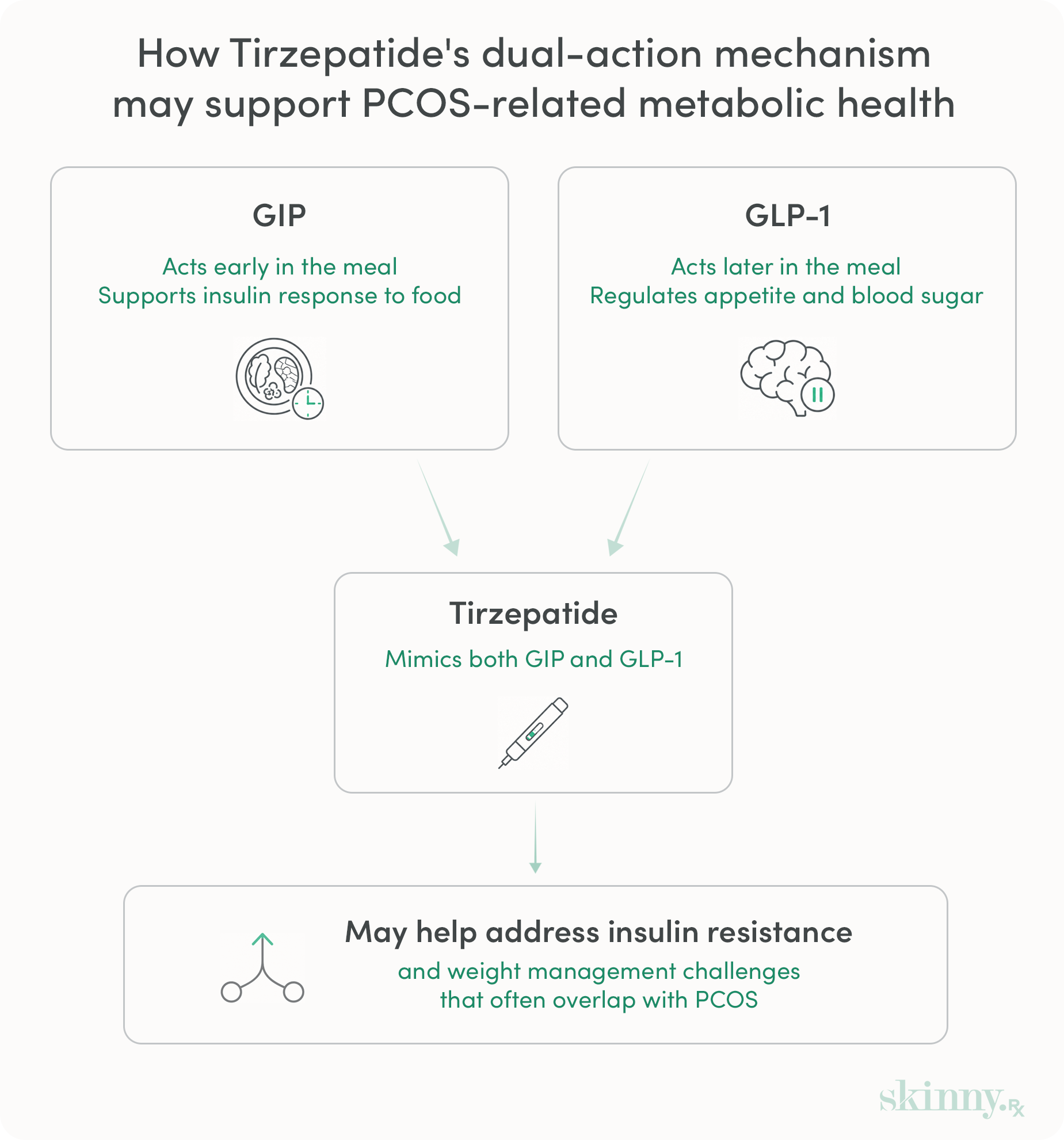
Since tirzepatide mimics these two hormones, clinical trials suggest this medication is a useful tool for weight management and to combat insulin resistance, two very common problems for people with PCOS.
In one clinical trial, for example, participants saw a mean weight reduction of 25.3% in 88 weeks. Plus, they experienced enhanced insulin secretion and sensitivity by the end of those 88 weeks too, suggesting tirzepatide may help regulate blood sugar levels.
Currently, there are two FDA-approved medications. They have slightly different recommended uses:
- Zepbound: Approved to help reduce weight in those with obesity or who are overweight and have at least one weight-related condition. It’s also approved for obstructive sleep apnea in populations who have obesity or are overweight with at least one weight-related condition.
- Mounjaro: Approved to help improve blood sugar control in adults with type 2 diabetes.
Other Ways Tirzepatide May Impact PCOS
Right now, tirzepartide is not FDA-approved for PCOS. Still, researchers are exploring tirzepatide’s impact on other PCOS symptoms.
“While this is considered off-label use, some patients report improvements in energy, metabolic health, and overall well-being as they work toward their goals,” says Dr. McGee, “It’s not the right approach for everyone, but it can be a valuable option to discuss with a healthcare provider as part of a broader, individualized plan."

In clinical practice, I’ve seen GIP/GLP-1-based medications be a helpful option for some patients with PCOS, particularly when insulin resistance and weight management are part of the picture. While this is considered off-label use, some patients report improvements in energy, metabolic health, and overall well-being as they work toward their goals. It’s not the right approach for everyone, but it can be a valuable option to discuss with a healthcare provider as part of a broader, individualized plan
–
Dr. Daniel McGee, Board-certified Family Medicine Physician
Support Menstrual Cycle Regularity
Irregular menstrual cycles are a hallmark symptom of PCOS, which is part of the reason this condition is associated with infertility. Some research supports that medications that contain GLP-1s support menstrual regularity.
The addition of GIP in tirzepatide may also contribute to menstrual regularity, but there is even less research on GIP and the menstrual cycle.
For people with PCOS, a more regular menstrual cycle may contribute to improved fertility and ovarian function. A 2026 meta-review suggests that weight loss medications may possibly improve fertility and ovarian functioning as well as menstrual regularity. However, most research is required to confirm this effect.
Possible Effect on Androgens
GLP-1s may play a modest regulatory role for androgens, aka male sex hormones. When these hormones are better regulated, it may lead to a reduction of certain PCOS symptoms, such as:
- Excessive hair growth on the body
- Loss of hair on the scalp
- Acne
To date, there haven’t been any studies on if tirzepatide is more effective at managing androgen hormones than medications with only GLP-1. Even the evidence connecting GLP-1s with androgen hormone regulation is extremely limited, and more clinical trials are required to confirm this benefit.
May Reduce Fatigue and Brain Fog
People with PCOS often experience fatigue and brain fog, partially due to poor blood sugar regulation, though other factors, such as sleep issues or hormonal imbalances, play a role too.
When blood sugar isn’t regulated properly, there are spikes and crashes in energy—and those crashes could contribute to exhaustion or fuzzy thoughts. Because tirzepatide affects blood sugar regulation, it may help these overlapping symptoms in certain patients.
Obstructive Sleep Apnea and PCOS
Obstructive sleep apnea (OSA) is the most common sleep disorder experienced by people with PCOS. This does not mean that PCOS necessarily causes OSA or vice versa, but the association between the two is significant.
Along with making it harder to get a good night’s sleep, OSA may negatively affect weight management and blood sugar control, which can already be challenging for people with PCOS.
Zepbound is approved for adults with obstructive sleep apnea and obesity, meaning it may help people with both PCOS and OSA manage both conditions.
The Ripple Effect of Weight Loss
PCOS and obesity or being overweight have a bidirectional relationship: PCOS increases the risk of being overweight or obese, while the latter can make other PCOS symptoms worse.
A 2024 study found that people with PCOS and obesity who lost weight also experienced improvements in menstrual cycle regularity and multiple indicators of insulin sensitivity.
Tirzepatide vs. Semaglutide: Which is Better for PCOS?
Semaglutide is another weight loss medication. It only mimics GLP-1 while tirzepatide mimics GLP-1 and GIP. While both may be effective at promoting weight loss and blood sugar regulation, clinical trials suggest tirzepatide is more effective at both. This could be because it provides many of the same effects as two naturally occurring hormones instead of one.
In a randomized controlled study, people with type 2 diabetes who already took metformin, a medication for blood sugar regulation, either added semaglutide or tirzepatide to their medication line-up. The researchers then tracked weight loss and insulin sensitivity over 28 weeks.
Those who took tirzepatide experienced greater insulin sensitivity per unit of weight loss than the semaglutide group. This suggests that tirzepatide may contribute more to blood sugar regulation and weight management.
Yet that randomized control trial included a more general population, not specifically participants with PCOS. Comparative studies focused solely on populations with PCOS are uncommon.
That said, a 2023 review suggests tirzepatide may be more effective than semaglutide for people with PCOS thanks to a few key reasons:
- Great weight loss: The review’s authors cite that tirzepatide has demonstrated more significant weight loss than semaglutide in multiple clinical trials.
- More effective insulin management: The dual effect of GLP-1 and GIP in tirzepatide may impact blood sugar control and insulin sensitivity more significantly than drugs like semaglutide, which only contain GLP-1.
- Fewer side effects: While most weight loss medications come with gastrointestinal side effects like nausea and diarrhea, the dual effect of GLP-1 and GIP means these side effects may be less severe with tirzepatide than alternatives like semaglutide.
Bottom Line
Tirzepatide isn't FDA-approved to treat PCOS directly, but its dual-action mechanism makes it a compelling option for people with the condition who are also managing insulin resistance, weight, or obstructive sleep apnea.
By mimicking both GIP and GLP-1, it addresses more of the hormonal disruption that makes PCOS so difficult to manage in the first place.
That said, PCOS looks different for everyone, and tirzepatide isn't the right fit for all patients. If you're curious whether it could help with your symptoms, the next step is a conversation with your healthcare provider.
Frequently Asked Questions
Explore Personalized Weight Loss Options
Start with an online assessment to help a licensed clinician determine whether a prescription weight loss treatment may be appropriate for you.

By Angela Myers
Contributing Author
Angela Myers is a freelance health writer covering weight management, healthy aging, and nutrition. Her work has appeared in AARP, Well+Good, and Forbes, among others. Before starting her writing career, she conducted award-winning research on how to improve sexual violence prevention courses on college campuses. That research sparked a passion for health communication, and she's been writing about making healthcare accessible and inclusive ever since.