
 Medically Reviewed

Key Takeaways
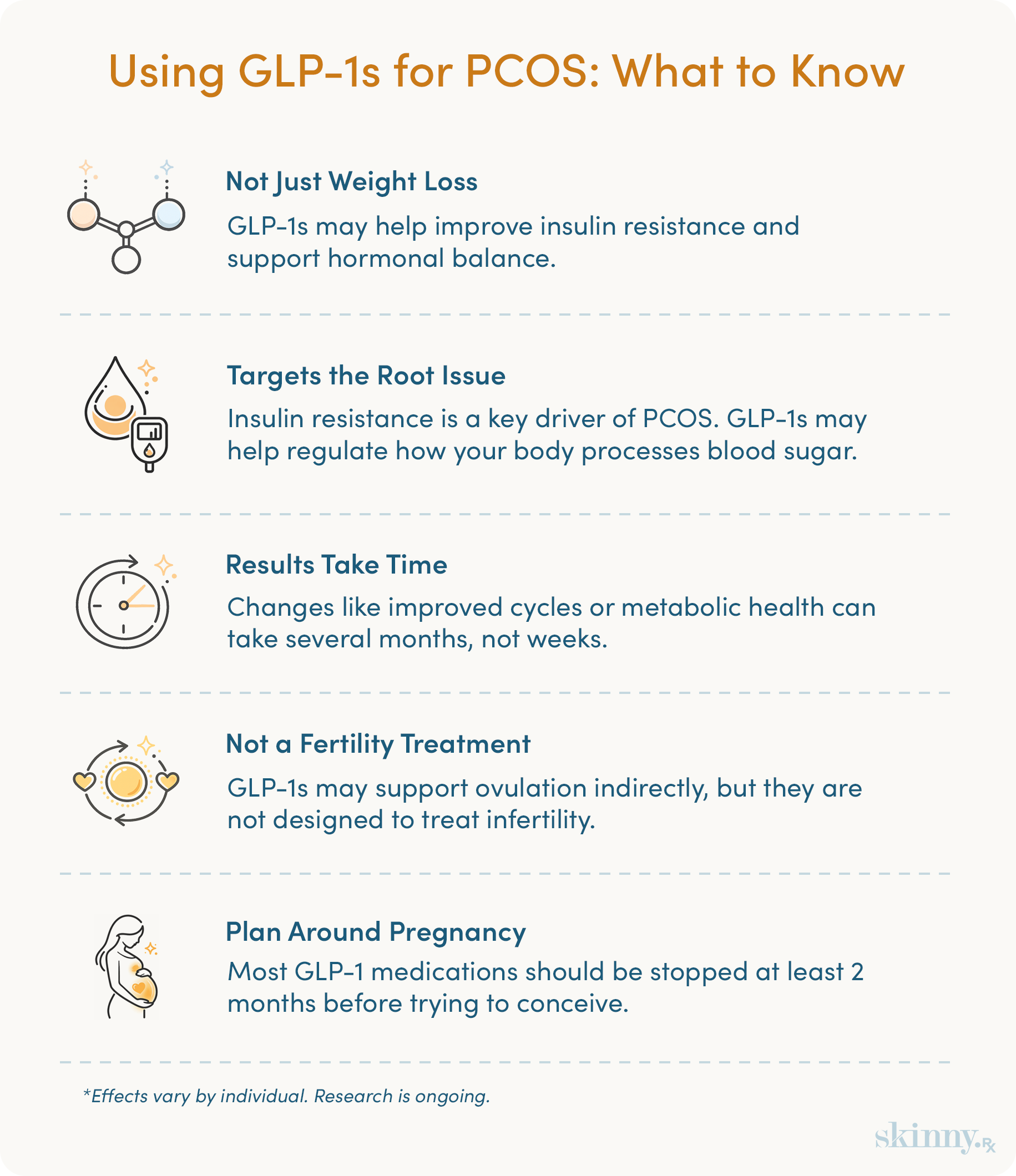
- GLP-1 medications like semaglutide and tirzepatide may help address insulin resistance in PCOS, which plays a central role in hormonal imbalance, weight gain, and metabolic dysfunction.
- Improvements in weight, blood sugar regulation, and hormone levels may support more regular menstrual cycles and ovulation, though outcomes vary and are not guaranteed.
- GLP-1s are not fertility treatments, but their metabolic effects may indirectly improve reproductive function in some individuals with PCOS.
- Clinical benefits often take several months to develop, requiring consistent use and realistic expectations around timing and results.
- GLP-1 medications should be discontinued at least two months before trying to conceive due to safety considerations during pregnancy.
Some medical conditions make it harder to lose weight. One of those conditions is polycystic ovarian syndrome (PCOS), a common hormonal health disorder that impacts about 10-13% of people who menstruate. PCOS is also associated with insulin resistance and a higher risk for diabetes. GLP-1 medications may help with weight loss and blood sugar regulation, which is why GLP-1s for PCOS is such a hot topic.
Continue reading to learn what weight loss medications can realistically do for people with PCOS and how GLP-1s might impact other symptoms and overall hormonal health.
Why PCOS Impacts Metabolism
PCOS is a hormonal health condition, meaning it creates an imbalance in hormones, the body’s chemical messengers. When hormones are disrupted, it can have a ripple effect on many areas of health, including metabolism or how fast your body turns food into energy.
PCOS affects many hormones that play a role in metabolic health. These include:
- Cortisol: People with PCOS typically have higher levels of cortisol. Although it’s nicknamed the stress hormone, higher cortisol levels can lead to greater fat storage, particularly around the belly.
- Leptin: People with PCOS have higher levels of leptin, an appetite regulating hormone, which can make them leptin resistant. Leptin resistance means the hormone is no longer as effective at regulating appetite.
- Androgens: Androgens are known as “male sex hormones,” but everyone has some level of androgens regardless of gender. People with PCOS have higher levels than necessary, which can disrupt glucose metabolism, or how the body breaks down food into glucose that can be used for energy. When this process is disrupted, the body stores more fat.
- Insulin: Last but not least is insulin, a hormone involved in fat storage and regulating blood sugar levels. Somewhere between 35-80% of people with PCOS are insulin resistant, meaning this hormone doesn’t work as intended. In turn, this impacts overall metabolic health and may contribute to weight gain.
Imbalances in the above hormones may also lead to other symptoms that aren’t directly related to weight, such as hair loss on the scalp, hormonal acne, hair growth on the body, fatigue, an irregular period, and fertility problems.
The Role of Insulin Resistance in Hormonal Imbalance
Out of all the hormones above, insulin is particularly important for weight management. When we consume food, our body breaks it down into glucose which then enters the bloodstream. The pancreas (an internal organ in the abdomen) then creates insulin to help get the glucose into cells that use it as energy. Any glucose that doesn’t enter those cells remains in the bloodstream, which is measured as someone’s blood sugar level.
When blood sugar levels are too high for months or years, the body creates more insulin. Over time, the cells stop responding to insulin’s effects, a condition known as insulin resistance.
The body has to store the excess glucose somewhere since it can’t stay in the bloodstream. It is temporarily stored in muscles and the liver, though when those are at capacity, the body stores it as fat, which leads to weight gain. Alongside weight gain, insulin resistance can increase the risk of type 2 diabetes.
Researchers are still exploring if there’s a correlation or causation between PCOS and insulin resistance. We do, however, know that people with PCOS are more likely to develop it, and over half of people with PCOS develop type 2 diabetes before they turn 40.
PCOS weight gain has a root cause. GLP-1s may address it.
GLP-1 medications may help improve insulin resistance, support meaningful weight loss, and positively impact hormonal balance. Take SkinnyRx's quick assessment to see if a prescription may be right for you, reviewed by a licensed provider.
How GLP-1s May Help With PCOS
GLP-1s are a medication class that mimic a naturally occurring hormone by the same name. This hormone is involved in appetite regulation and blood sugar regulation. Its effects are well-known for weight loss and insulin resistance, two common struggles for people with PCOS, though it may help with other symptoms too.
A 2025 meta-analysis analyzed various clinical trials and studies on GLP-1 medications’ effects on PCOS. It found that these medications may facilitate weight loss, help regulate blood sugar levels, and may even offer hormonal health benefits, such as improved menstrual cycle regularity.
Insulin Resistance
GLP-1s are a class of medications that mimic a naturally occurring hormone by the same name. Both the naturally occurring hormone and these medications help the body produce appropriate insulin levels.
Admittedly, researchers are still investigating the exact ways that GLP-1 impacts insulin, but a leading theory is that GLP-1s regulate beta cell activity, leading to insulin regulation.
Weight Management
The weight loss benefits of GLP-1s are well-documented in clinical trials. However, those trials don’t often focus specifically on people with PCOS. There are some exceptions, and trials in populations with PCOS suggest GLP-1s are an effective weight management tool for people with this condition.
GLP-1 medications, such Wegovy and Zepbound, impact weight in a few key ways:
- Reduce fat storage in the belly: PCOS increases fat storage, particularly around the belly. Fat in this location is called visceral fat, and it’s more likely to negatively affect metabolism and heart health than other types. In clinical trials, GLP-1s led to significant reductions in visceral fat, though these studies took place in populations with obesity. PCOS-specific data is still evolving.
- Balance hunger hormones: While PCOS increases ghrelin levels and lowers leptin levels, GLP-1s do the opposite. They increase leptin levels, leading to improved appetite control, and decrease ghrelin levels, which may decrease food noise.
- Improve insulin sensitivity: Last but not least, insulin sensitivity also plays a role in weight management. When insulin is properly regulated, less blood sugar gets stored as fat in the body.
An End to the "Sugar Crash" Cycle
Another common PCOS symptom is fatigue, which is in part related to poor blood sugar regulation. When someone has insulin resistance, they may experience a more intense blood sugar spike after eating, followed by a crash that can lead to fatigue and hunger.
Since GLP-1s slow digestion, someone with PCOS may avoid this spike and feel full for longer.
Possible Effect on Androgen Hormones
GLP-1s’ role in managing appetite, weight, and blood sugar levels has led doctors to prescribe these medications to people with PCOS. Interestingly, these medications not only impact metabolic health but may also have an impact on androgen hormones.
As a hormonal health condition, PCOS often leads to hyperandrogenism, which is when someone who menstruates produces more androgen hormones than necessary. In some studies, GLP-1s play a modest regulatory role for these hormones, meaning weight loss medications may help people with PCOS experience more balanced androgen levels.
However, results are varied, with some studies suggesting the type of GLP-1 may matter. For example, semaglutide may have a more significant impact on androgen hormones than liraglutide.
Hormonal Acne and Reducing Hirsutism
Two PCOS symptoms related to hyperandrogenism are hormonal acne and hirsutism, which is when someone has excess hair growth on their body and hair loss on their scalp. In theory, GLP-1s might help with these symptoms, though there is a lack of clinical evidence to support this benefit.
Potential to Help With Reproductive Function
PCOS may disrupt menstrual cycle regularity, which is of particular concern to people trying to get pregnant. Limited evidence suggests GLP-1s improve menstrual cycle regularity for people with PCOS. That means if someone with PCOS who has inconsistent periods takes a GLP-1, they may find their period becomes more predictable.
A 2026 meta-review takes this finding a step further, suggesting GLP-1s may positively impact ovarian functioning, possibly increasing fertility. Again, the research is limited, and much of the clinical trials we do have on this topic were animal studies, so the results might not translate to people with PCOS.
GLP-1s may be a real option for PCOS
Stubborn weight gain is one of PCOS's hardest symptoms to treat. Find out if a GLP-1 prescription may be an option for you.
The "Ozempic Baby" Phenomenon: Fertility and Safety
People on social media are reporting “Ozempic babies,” which has led some women to believe GLP-1s may increase fertility. This probably isn’t true for most women, though a 2025 study found it might increase the chance of conception for some people with PCOS.
This is due to how GLP-1s could restore menstrual regularity for some people with PCOS. While we often think of menstruation as monthly periods, that’s just one part of this cycle. Another is ovulation, when the ovary releases an egg and fertility is at its highest.
When someone’s cycle becomes more regular and consistent, they experience ovulation on a more predictable timeline, which may lead to a higher chance of conceiving.
Another reason why GLP-1s may increase fertility is that some GLP-1 medications may impact oral contraceptives, aka birth control pills.
Mounjaro and Zepbound have the strongest labeled interaction with contraceptives. These often require a non-oral backup, such as condoms, for four weeks after initiation and any time the dosage increases.
Other medications with GLP-1s have limited to no evidence of affecting oral contraceptives, but discuss any potential interactions with a healthcare provider beforehand.
The "Washout Period": Why You Must Stop Before Conceiving
While GLP-1s may increase fertility, drug manufacturers do not recommend taking most GLP-1s when trying to get pregnant. In fact, Wegovy, Ozempic, and Rybelsus all have a two-month “washout period,” meaning someone should stop taking these medications at least two months before trying to conceive.
This is because we unfortunately don’t have a lot of clinical data around GLP-1s and pregnancy, and more research is required to determine if these medications are safe for the parent and baby.
Comparing the Options: Semaglutide vs. Tirzepatide for PCOS
Semaglutide and tirzepatide are two types of weight loss medications. Both have demonstrated meaningful weight loss, insulin sensitivity improvements, and possible hormonal health benefits for people with PCOS. However, if someone’s goal is weight management, tirzepatide might be the better option.
Is the GIP Component in Zepbound a Game Changer?
In a 2025 clinical trial, people who took tirzepatide experienced an average weight loss of -20.2%, while those who took semaglutide lost -13.7% on average. The reason why tirzepatide may be more effective is that it mimics two hormones involved in weight management: GLP-1 and GIP.
Managing PCOS Symptoms Beyond Weight
GLP-1 medications may help people with PCOS improve insulin sensitivity and meet weight loss goals. There’s also limited evidence that these medications might improve menstrual regularity, reduce androgen hormones, and help with other PCOS symptoms, though more research is needed to confirm these effects. If curious about whether a GLP-1 medication may help manage PCOS, talk to a trusted healthcare provider about this treatment option.
For those actively exploring their options, SkinnyRx offers a quick assessment reviewed by licensed clinicians to help determine whether a GLP-1 prescription may be appropriate for your health history and goals. It takes just a few minutes and carries no obligation to proceed.
Frequently Asked Questions

By Angela Myers
Contributing Author
Angela Myers is a freelance health writer covering weight management, healthy aging, and nutrition. Her work has appeared in AARP, Well+Good, and Forbes, among others. Before starting her writing career, she conducted award-winning research on how to improve sexual violence prevention courses on college campuses. That research sparked a passion for health communication, and she's been writing about making healthcare accessible and inclusive ever since.