
 Medically Reviewed

Key Takeaways
- Tirzepatide works by targeting two hormones, GLP-1 and GIP, to regulate blood sugar, reduce appetite, and enhance fullness, resulting in stronger weight-loss outcomes.
- Zepbound is FDA-approved for chronic weight management and moderate to severe sleep apnea in adults with obesity, with clinical trials showing up to 25% body weight reduction in 72 to 88 weeks.
- Mounjaro is FDA-approved to improve blood sugar control in adults with type 2 diabetes and is sometimes prescribed off-label for weight loss.
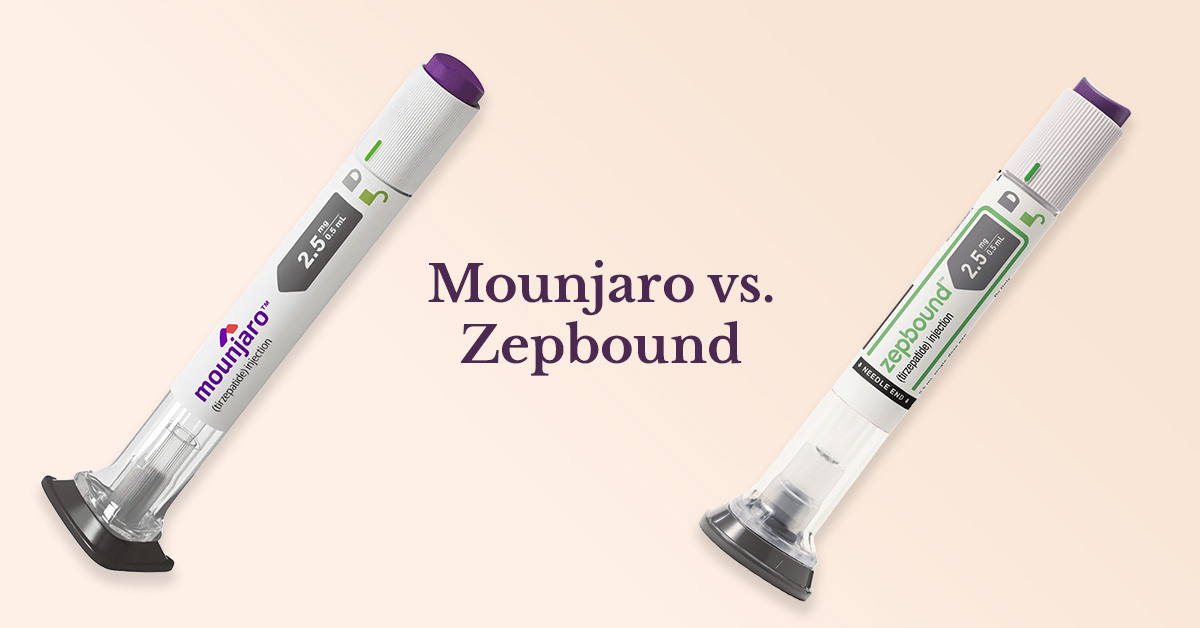
Conversations about weight loss drugs often center around Wegovy and Ozempic, but newer drugs, have been commercially available since 2022, known as Mounjaro and Zepbound.
While all three versions can be safe and effective, knowing which one is right for you or if you’re a good candidate for tirzepatide in the first place is important.
Here’s what you need to know about tirzepatide, including how its different forms impact weight management, sleep apnea, and blood sugar control.
What is Tirzepatide?
Tirzepatide is a medication that may be used for weight management, moderate to severe sleep apnea, and type 2 diabetes.
Tirzepatide triggers the same effects as two naturally occurring hormones:
- Glucose-dependent insulinotropic polypeptide (GIP): released earlier in a meal to help the body more effectively break down sugar from food.
- Glucagon-like peptide-1 (GLP-1): released later in a meal to regulate blood sugar and appetite. It also promotes feeling full for longer after a meal.
Tirzepatide offers potential benefits, such as improved blood sugar control for those with type 2 diabetes and weight management. Some studies suggest tirzepatide may be better at promoting weight loss because it mimics two hormones instead of one.
FDA Approved Uses
Mounjaro is FDA-approved for blood sugar control in adults with type 2 diabetes but is also sometimes used off-label for weight loss. Off-label uses are not FDA approved, meaning there is no guarantee of their effectiveness or safety for an off-label purpose.
Zepbound is FDA-approved for weight loss in individuals with a BMI of 30 or higher or a BMI of 27 or higher with at least one weight-related condition, such as heart disease, sleep apnea, or type 2 diabetes.
Weight Loss Efficacy
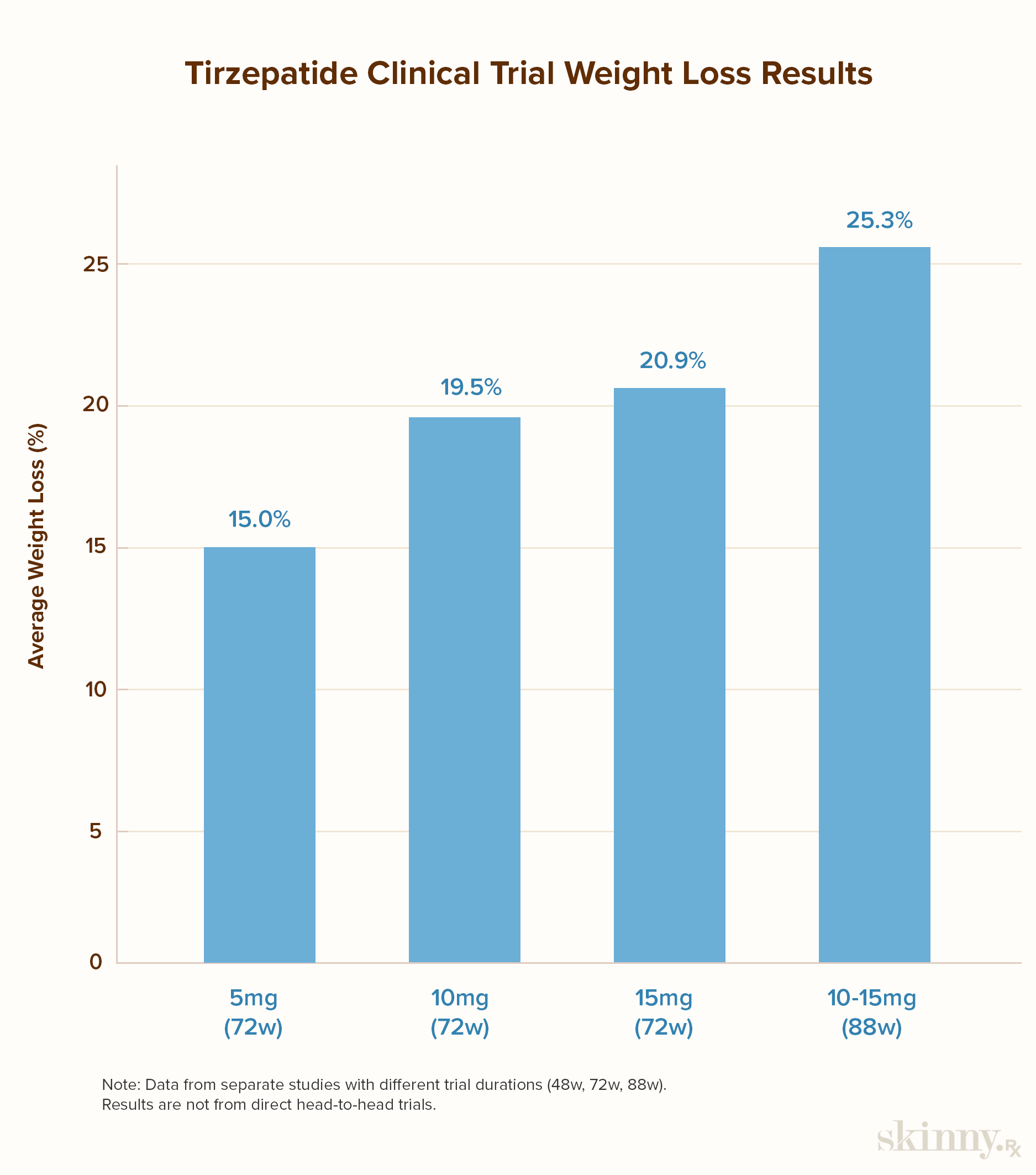
Tirzepatide’s promise for weight loss started in its earliest clinical trials. In the SURMOUNT-1 trial, for example, individuals taking a 5mg weekly dose experienced 15.0% weight loss over 72 weeks.
Those taking a 10mg dose experienced a 19.5% reduction, while participants on a 15mg dose saw a 20.9% reduction.
The SURMOUNT-4 trial boasted even more impressive results, with an overall mean weight reduction of 25.3% in 88 weeks.
Yet these trials took place in clinical settings, meaning trial participants had regular support and follow-up appointments with medical professionals. This may not reflect most people’s experience on tirzepatide.
In real-world settings, more factors influence how much weight someone loses. Diet, exercise, and other lifestyle habits sway how well this medication works, as does the exact type of Tirzepatide.
Zepbound is indicated for weight loss and is most commonly used in weight loss trials. The drug’s manufacturer reports one in three people on the 10mg or 15mg dose of Zepbound experienced a -25% change in weight in 72 weeks.
Side Effects of Each
Tirzepatide’s side effects are well-established. Common ones are:
- Abdominal pain
- Dizziness
- Sweating
- Confusion
- Headache
- Shakiness
- Fast heartbeat
- Mood changes
- Nausea
- Diarrhea
- Vomiting
- Decreased appetite
- Constipation
- Indigestion
Allergic reactions at the injection site and hair loss are also reported for Zepbound, but not Mounjaro.
Dosing and Administration
Tirzepatide usually comes as a weekly injection. Patients administer a weekly injection at home into the thigh, abdomen, or upper arm at any time of day, with or without a meal.
For both Mounjaro and Zepbound, titration is recommended, which is when you start on a lower dose and increase gradually. Both start at 2.5mg dose. If there are no severe side effects, someone can increase the dose to 5mg at the four week mark.
The maximum recommended dose for Mounjaro and Zepbound is 15mg a week, though not everyone requires this dose to see results. Work with a healthcare provider to figure out when it’s safe to increase the dosage and what the best maximum dose is for your needs.
Cost and Accessibility
Tirzepatide is available to the public in three forms. All have a different list price, which is the cost before insurance or any discounts.
If using insurance, most plans cover FDA-approved medications, including Zepbound and Mounjaro. Usually, a medication must be prescribed for a use stated on the FDA label. A doctor will submit a request to the insurance provider, detailing the exact reason it’s medically necessary.
The insurance company then accepts or denies. If denied, there’s a 30 day window to submit an appeal.
When covered by insurance, Eli Lilly, the manufacturer of both drugs, states that out-of-pocket costs for the consumer could be as low as $25 a month for Zepbound or Mounjaro.
Eli Lilly also states that those who are self-paying (i.e. paying without insurance) could get Zepbound for as low as $349 (for a 2.5mg dose) if they purchase directly through the manufacturer’s pharmacy. There isn’t a similar savings program for Mounjaro.

Expert-Guided, Sustainable Weight Loss
Discover how proven medications such as semaglutide or tirzepatide, combined with expert support, can help you reach lasting weight loss results.
Patient Selection: Who Is a Better Candidate for Each?
When deciding which version will best work for you, a good place to start is with each version's FDA-approved uses. As a quick refresher, that means Mounjaro is probably the best bet for managing blood sugar levels for individuals with type 2 diabetes.
It may also be prescribed off-label to help manage levels in those with prediabetes or as a weight loss drug, though off-label uses may or may not be covered by insurance.
For maximum weight loss, Zepbound wins out. This drug is FDA-approved for weight management in individuals who are obese or overweight with the presence of one weight-related comorbid condition, such as heart disease or hypertension.
It’s also approved for sleep apnea when symptoms are moderate to severe, and someone also has obesity.
Bottom Line
Tirzepatide is an option worth considering for blood sugar control, weight management, or sleep apnea. The right choice depends on your specific health goals, insurance coverage, and personal preferences.
For most people, the decision comes down to purpose. If blood sugar management is the primary goal, Mounjaro is the FDA-approved, clinically supported choice. If you're focused on weight loss or managing sleep apnea related to obesity, Zepbound is purpose-built for exactly that, with clinical trials showing up to 25% body weight reduction over 88 weeks.
What matters most is working with a licensed healthcare provider who can weigh your health history, goals, and any medications you're currently taking to determine which option and dose makes sense for you. Tirzepatide isn't a one-size-fits-all solution, but for the right candidate, it can be a meaningful tool in a longer-term approach to health.
Frequently Asked Questions

By Angela Myers
Contributing Author
Angela Myers is a freelance health writer covering weight management, healthy aging, and nutrition. Her work has appeared in AARP, Well+Good, and Forbes, among others. Before starting her writing career, she conducted award-winning research on how to improve sexual violence prevention courses on college campuses. That research sparked a passion for health communication, and she's been writing about making healthcare accessible and inclusive ever since.