
 Medically Reviewed

Key Takeaways
- Tirzepatide can begin reducing appetite in the first few weeks, but early changes are usually mild and inconsistent because most people are still on the starting dose.
- Appetite suppression becomes stronger and more predictable between weeks 5 and 12 as the dose increases and satiety signals stabilize.
- The most reliable appetite control typically appears around the three-month mark when the medication reaches its full effect.
- Weight loss may lag behind changes in appetite due to normal metabolic adaptation, so early reductions in hunger do not always translate into weight loss.
- Long-term results depend on consistent habits, such as balanced eating and regular activity, since appetite often returns if these behaviors are not maintained after stopping tirzepatide.
GLP-1s are helping millions of people worldwide improve their health. Semaglutide and tirzepatide aren’t miracle drugs—more than anything, they’re appetite regulators. Tirzepatide is particularly potent at managing hunger, ultimately translating to reductions on the scale.
One meta-analysis from 2025 concluded that tirzepatide makes a significant impact on weight loss efforts, including about 10 extra pounds lost compared to semaglutide.
While compelling, it begs the question: Just how long does it take for tirzepatide to suppress appetite? We’re breaking down the data so you know what your weight loss journey on tirzepatide will actually look like.
The Science of Satiety: How Tirzepatide Works
Tirzepatide’s calling card is its versatility. By interacting with more aspects of weight management than semaglutide, it produces more robust results, according to the clinical data we have. Here’s what you need to know.
Dual-Action: GIP and GLP-1 Hormones
You don’t need a chemistry degree to benefit from tirzepatide, but it’s worth giving a brief overview of how it all works under the hood.
Tirzepatide is a dual agonist, or activator, of both GLP-1 and GIP receptors. But separately, they actually promote opposing functions; GLP-1 helps move fat out of fat cells to be used, while GIP facilitates fat deposition—putting it back in.
One big caveat: When paired together, GIP amplifies the effects of GLP-1, creating a synergistic effect on mobilizing fatty acids out of fat cells. Thus, tirzepatide tends to create better weight loss outcomes than semaglutide, which only affects GLP-1.
Impact on the Brain and Gut: Slowed Gastric Emptying
Secondarily, tirzepatide (and semaglutide) enforces reductions in your caloric intake by delaying gastric emptying, or slowing the rate at which food leaves your stomach. There’s a clear, marked relationship between sensations of fullness in the stomach and hunger signaling from the brain.
One study alleged that the relationship “may involve interaction with neurons in the hypothalamus either directly or via the nodose ganglion.” Regardless of the exact mechanism, a fuller stomach helps your brain suppress the need for more food, subtly discouraging you from overeating.
Those are the nuts and bolts of tirzepatide at work. But the real question is, what does the tirzepatide appetite suppression timeline actually look like?

Your Weight Loss Journey, Guided by Experts
Everyone’s weight loss journey is different. Learn whether semaglutide or tirzepatide could be an effective option for you through a short medical assessment.
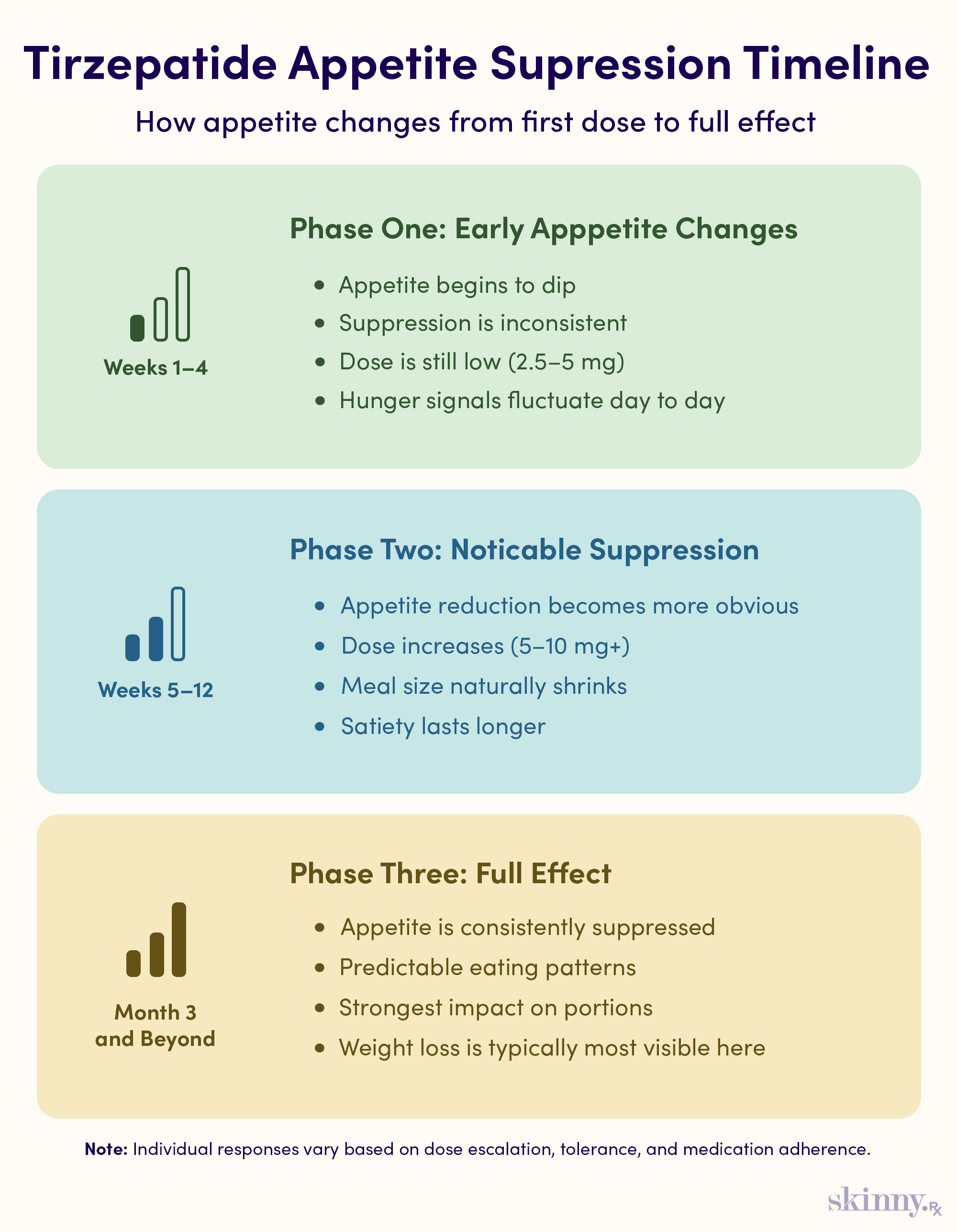
Weeks 1-4: Immediate and Early Effects
Like semaglutide, tirzepatide is administered with a ramp-up protocol. You don’t jump into the maximum dosage straight away. Gradually increasing your dose helps your physician identify the appropriate concentration of the medication for your needs, while also mitigating any side effects that may occur as you adjust to the medicine.
The First Dose: Subtle Changes in Hunger Signals
After administering your starter dose—usually 2.5mg, once weekly for a month—don’t expect your appetite to drop off a cliff. You may, however, experience subtle changes in the foods you crave, or you might feel fuller sooner than usual.
You might also experience a bit of placebo effect; simply knowing of tirzepatide’s potency might influence you to eat less.
Initial Dose Titration and Mild Side Effects
Dose titration refers to adjusting the dosage of a medication such that you get the most benefit with the least harm or fewest side effects. That’s exactly what’s happening when you ramp up tirzepatide—jump into the maximum allowable dosage right away might make side effects overwhelming, so it’s best to take things slow.
Doing so ensures that side effects like nausea or disordered bowel movements are mild and transient.
Weeks 5-12: Building Control
After four weeks on the starter dose of tirzepatide, you’ll likely escalate things to ensure you get the most bang for your buck. Here’s what to expect.
Escalation to Therapeutic Doses
You should notice tirzepatide really kicks in after roughly 4 to 6 weeks ramping up your dosage to what’s called a therapeutic level. According to GoodRx, the standard dose for weight loss with tirzepatide starts at 5mg, but most people will still want to graduate to their maximally tolerable dose, or the 15mg “ceiling.”
Appetite Suppression Becomes Consistent
As your dosage ramps up, so does the appetite suppression. Studies demonstrate that satiety levels become more consistent after five weeks. But it’s not a total plateau—-satiety scores for patients taking 15mg continued to improve for up to 25 weeks.
3 Months+: Sustained and Full Effect
After several months on tirzepatide, your appetite should be on cruise control, allowing you to take a more active role in setting up long-term eating habits that work for you.
Reaching the Maintenance Plateau
Most data indicates that patients taking tirzepatide will experience a plateau in the medicine’s effects. This is normal, expected, and frankly, a good thing; you don’t want to suppress your appetite so much that you run the risk of losing weight too quickly or developing a nutrient deficiency.
Profound Changes in Food Noise & Cravings
Once you’ve been cruising on tirzepatide for several months, you might not even notice that “food noise”, or the spontaneous compulsions to eat, have partially or completely dissolved. Cravings should be few and far between by then as well.
Managing Expectations: What “Appetite Suppression” Actually Means
Tirzepatide isn’t a miracle drug (though for some patients, it can feel that way). Your appetite is the result of a confluence of different biological factors. Some are hormonal, others are behavioral, and even your environment plays a role.
When you start tirzepatide, don’t mistake the drug as a means of flipping the “hunger switch” overnight. More importantly, you may even need to remind yourself to eat sufficiently to avoid muscle loss or other symptoms of malnutrition.
Appetite suppressants like tirzepatide “clear the airwaves” in your brain so you don’t feel compelled to prioritize food when you aren’t hungry.
Linking Appetite Timeline to Weight Loss Outcomes
Your weight loss efforts should correlate pretty well with your appetite—up to a point. That said, there’s more going on under the hood that you should be aware of so you start tirzepatide with realistic expectations.
The Lag Between Hunger Control & Measurable Results
Here’s the thing. You might notice suppressed hunger—and changes in your eating habits—well before the scale starts to move. You may not notice changes on the scale until a few weeks into your protocol.
One purported explanation in the scientific literature is called adaptive thermogenesis. Put simply, your body may naturally downregulate some of its energy expenditure if it “notices” you’re eating less. Over time, and especially if combined with a diligent exercise routine, these adaptive effects shouldn’t impede your weight loss efforts.
The Critical Role of Lifestyle Factors
You can’t expect tirzepatide to do all the work when it comes to weight loss. Appetite suppression is a bit like power steering on a car; it helps you get control over the wheel, but won’t stop you from running off the road if you aren’t paying attention.
To stave off weight loss plateaus both on and after tirzepatide, you’ll need to change your lifestyle habits. Your time on tirzepatide is a great opportunity to establish an exercise routine, and reconfigure your eating habits—developing a healthy and sustainable relationship with food, practicing portion control, and diversifying your food sources to include more whole foods packed with protein, fruits, or vegetables.
These habits must remain in place after you stop taking tirzepatide, or you’re more likely to gain weight back.
If you’re exploring whether tirzepatide is the right fit for your goals, the clinical team at SkinnyRx is here to help you navigate the process safely and confidently. You can take a short assessment to see what your options may look like.
Frequently Asked Questions

By Jake Dickson, NASM-CPT, USAW-L2
Contributing Author
Jake holds a B.S. in Exercise Science from UNC Wilmington and began his career as a personal trainer and weightlifting coach. In recent years, he’s moved behind the page as a writer and editor, contributing hundreds of articles and being featured as a subject matter expert. Today, Jake’s goal remains the same: to empower people to change their lives by bringing heady scientific topics down to ground level.