

 Medically Reviewed

Key Takeaways
- Pancreatitis affects roughly 0.3% of semaglutide users in clinical trials, far less common than nausea, which affects over 40%.
- A March 2026 review found no link between semaglutide and increased risk of pancreatitis, though the findings are still awaiting peer review.
- Unlike typical GLP-1 stomach issues, pancreatitis pain is severe, travels to your back, and often comes with vomiting that brings no relief.
- A history of pancreatitis, gallstones, heavy alcohol use, or high triglyceride levels should be disclosed to your doctor before starting a GLP-1.
- Severe, traveling abdominal pain or persistent vomiting requires prompt medical attention, not a wait-and-see approach.
If you take semaglutide, you need to be aware of all risk factors involved. Most semaglutide side effects are mild to moderate—and often manageable. Others are rarer, but potentially more serious.
Semaglutide has a risk of pancreatitis. However, that shouldn’t necessarily dissuade you from trying or continuing a GLP-1.
Here’s what the science says about the risk of pancreatitis with semaglutide, and how you can distinguish between standard side effects and something potentially more serious.
What Is Pancreatitis?
Your pancreas is a 6-to-10-inch organ located deep within your upper abdomen. According to Johns Hopkins Medicine, your pancreas is responsible for secreting important hormones like insulin, glucagon, and somatostatin.
Pancreatitis is painful inflammation of the pancreas. Severity varies, but studies tell us that acute, untreated pancreatitis can have “serious long-term impact” and “significant” mortality rates.
While there is a known genetic risk component to pancreatitis, it’s generally caused by lifestyle choices, as a consequence of other conditions (like gallstones), or from prescription medications like GLP-1s.
Does Semaglutide Cause Pancreatitis?
Novo Nordisk’s prescribing information highlights a potential risk of pancreatitis from Ozempic and Wegovy. However, the prevalence of acute pancreatitis pales in comparison to other common side effects.
For example, Novo Nordisk highlights clinical trial data showing about 0.3% of people develop pancreatitis. Semaglutide’s most common side effect, nausea, occurs in over 40% of patients per other clinical trials.
Semaglutide may cause pancreatitis, yes, but the risk is quite low compared to other side effects.
A brand-new, March 2026 systematic review of semaglutide pancreatitis risk—which is still in pre-print, and may not hold up to peer review—concluded semaglutide “was not associated with an increased risk of acute pancreatitis” compared to placebo.
While reassuring, the authors also touched on the “rapidly evolving” nature of GLP-1 science. Semaglutide pancreatitis risk may be even lower than previously indicated, but it’s hardly an open-and-shut case.
See Whether You Qualify for GLP-1 Treatment
Complete a 5-minute intake so a licensed provider can review your health history, weight goals, and whether GLP-1 treatment may be appropriate.
Common Side Effects vs. Warning Signs
Most semaglutide side effects are gastrointestinal in nature. GLP-1s take a two-pronged approach to managing diabetes or accelerating weight loss:
- Semaglutide affects your brain’s relationship with food as a reward, and
- Delays gastric emptying, slowing the rate at which you process meals
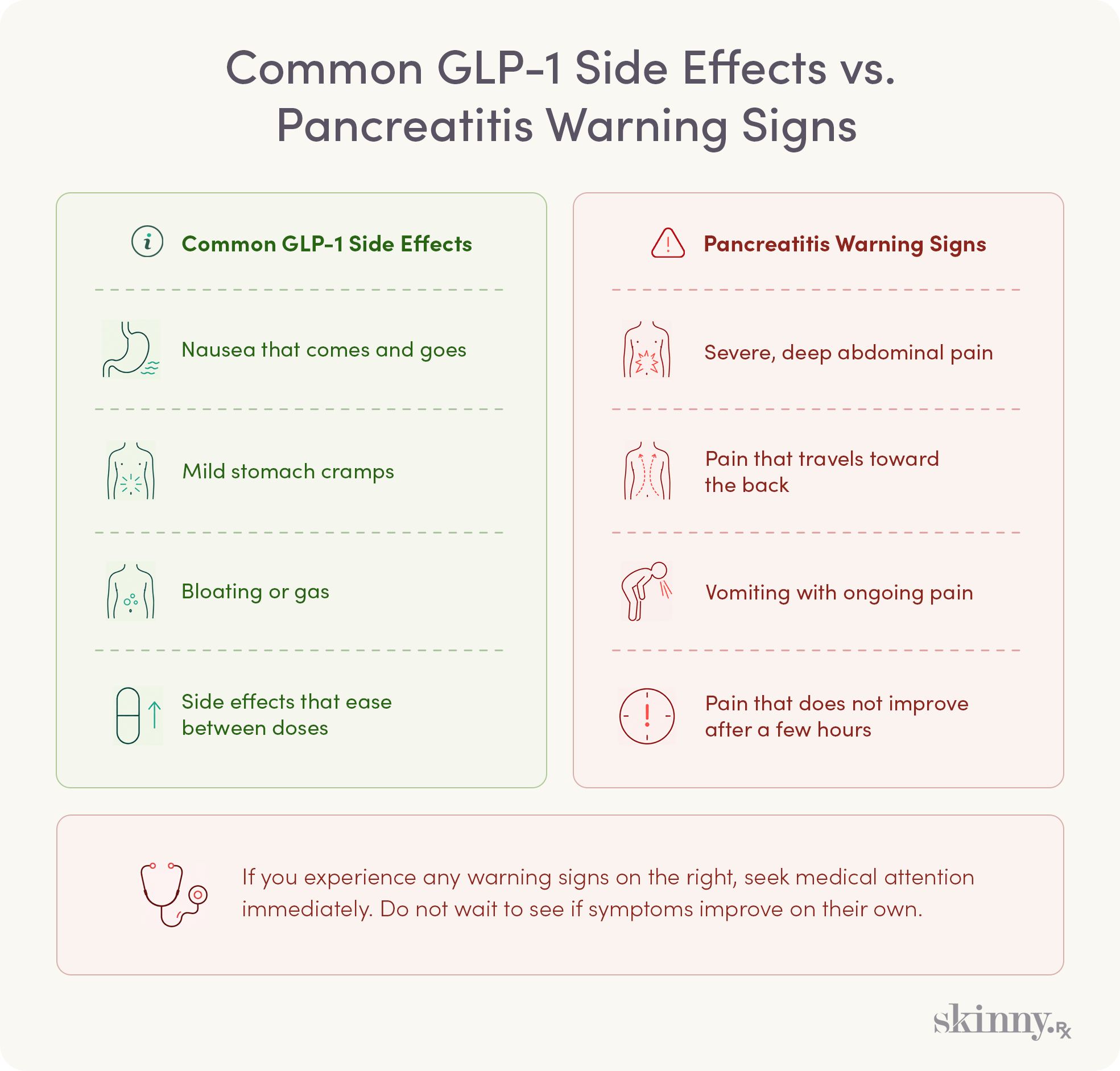
As such, the majority of issues folks experience with semaglutide are stomach-related. Think nausea, bloating, cramps, or abdominal pain. The problem? Many of these issues are also hallmarks of pancreatitis.
If you’re taking a GLP-1, you need to be able to discern the difference between standard side effects and something that may require medical attention.
Nausea, Mild Stomach Pain, or Gas
These conditions tend to come with the territory for GLP-1 users, especially during the dose titration period where you escalate toward your specific target dosage. These symptoms usually come and go within a few days, and can be managed by over-the-counter remedies if needed.
Severe, Traveling Pain
One key facet of pancreatitis is pain that travels, rather than staying in one place. Stomach knots or cramps are one thing on GLP-1s, but pancreatitis-related pains are characteristically severe.
Deep, constant aching—especially if it travels backward toward your spine—is cause for concern. If you’re experiencing similar pain that won’t resolve within a few hours, play it safe and seek medical attention.
What About Vomiting?
Throwing up on semaglutide is common and not always cause for alarm. The medication can be quite disruptive to the digestive system initially, and some people have anxiety about the physical process of injection, too.
That said, vomiting paired with the aforementioned abdominal pain is a red flag. This is doubly true if you don’t experience any relief after expelling vomit.
Should You Talk To Your Doctor?
Before you begin any new medication, including semaglutide, it’s essential to be clear and transparent with your healthcare provider. They need to understand both your health history and habits so they can make informed choices and keep you safe.
If you’re worried about rare or severe semaglutide side effects like pancreatitis, it’s probably worth mentioning to your physician if:
- You have a history of pancreatitis
- You’ve had gallstones
- You drink alcohol regularly/heavily
- You suffer from hypertriglyceridemia
- You’re currently taking medication, which also carries a risk of pancreatitis
Checking one or more of these boxes does not automatically mean you’ll develop pancreatitis from your GLP-1 medication. However, these are considerations worth weighing in tandem with your doctor.
What To Ask Your Doctor
First and foremost, you can have your healthcare provider break down the various risk factors associated with GLP-1s. They can dive into specifics on things like pancreatitis and help you construct an action plan in the event something goes awry.
You should also ask whether anything in your medical history amounts to a contraindication, or even constitutes a potential concern. Healthcare providers have the most up-to-date information and can provide unbiased advice free from emotional influence.
What To Do About Pancreatitis Symptoms on Semaglutide
Remember—pancreatitis symptoms present more aggressively than regular GLP-1 side effects. You don’t need to rush to the hospital if you feel your stomach turn over, but it’s essential to be diligent and monitor the progression and severity of your symptoms.
Keeping a symptom journal is a smart move here. Record the time, date, duration, and intensity of all symptoms, so you can identify trends or share the information with a doctor if needed.
Above all, don’t try to tough it out. If you’re experiencing deep, traveling stomach pain or vomiting that does not resolve your discomfort, seek medical attention.
Bottom Line
Semaglutide's pancreatitis risk is real but rare, and the science continues to trend in a reassuring direction.
While some pancreatitis symptoms can overlap with typical GLP-1 side effects, severe abdominal pain that travels to your back and vomiting that brings no relief are the key signs that warrant immediate medical attention.
Understanding your personal risk factors and keeping your doctor informed are the most important steps you can take.
Frequently Asked Questions
See Whether You Qualify for GLP-1 Treatment
Complete a 5-minute intake so a licensed provider can review your health history, weight goals, and whether GLP-1 treatment may be appropriate.

By Jake Dickson, NASM-CPT, USAW-L2
Contributing Author
Jake holds a B.S. in Exercise Science from UNC Wilmington and began his career as a personal trainer and weightlifting coach. In recent years, he’s moved behind the page as a writer and editor, contributing hundreds of articles and being featured as a subject matter expert. Today, Jake’s goal remains the same: to empower people to change their lives by bringing heady scientific topics down to ground level.