
 Medically Reviewed

Key Takeaways
- Muscle cramps aren't known to be a direct side effect of GLP-1 medications, but dehydration, GI symptoms, and reduced food intake can contribute to them.
- Staying hydrated, eating enough to support your muscles, and easing into new exercise routines may help deter cramping.
- Electrolyte supplements aren't necessary by default, but they can help if cramps stem from low food intake, vomiting, diarrhea, or intense exercise in heat.
- Severe cramps accompanied by swelling, redness, warmth, weakness, dark urine, fainting, chest pain, or shortness of breath require prompt medical attention.
- Bringing up persistent or unexplained cramps with your provider can help identify contributing factors like medications or underlying health conditions.
GLP-1 medications have a wide array of common side effects. Muscle cramps are not listed among them. But if you’ve found yourself awake in the middle of the night, grasping a cramping calf, it can certainly feel like they’re related.
Just because a side effect isn’t named on the label doesn’t mean you won’t experience it while you’re on your GLP-1. Downstream effects do occur.
Here’s how muscle and leg cramps may relate to GLP-1s, and what you can do about them.
What Are Muscle Cramps?
Your muscles are stronger than you think. Muscular contractions are controlled by your central nervous system, but a muscle cramp is a sudden, involuntary contraction of muscle tissue caused by your peripheral nervous system
However, these neural actions are hardly the sole culprit. Scientific data point to non-exercise-related cramps being typically idiopathic (spontaneous and unattributable to a specific trigger), but their prevalence may relate to dietary factors as well.
Iron deficiencies, or imbalances between crucial electrolytes like magnesium and potassium, likely play a role.
Why Cramps May Happen During Weight Loss
Cramps can occur for several reasons. Pinning down exactly why you’re cramping on GLP-1s requires you to understand the various possible culprits.

Muscle cramps on a GLP-1 are usually a signal to look at the basics first: fluid intake, nutrition, electrolytes, exercise changes, and other medications. Most of the time it’s manageable, but severe or one-sided cramping, swelling, weakness, dark urine, or shortness of breath should never be ignored.
–
Dr. Sajad Zalzala, Board-certified Family Medicine Physician and Medical Advisor at SkinnyRx
Dehydration
Water is utilized in nearly all bodily functions. Without adequate hydration, things can go awry quickly. Dehydration describes an imbalance between the amount of water your body needs and what you’re giving it from liquids and food.
Without enough water, your body cannot maintain the delicate, essential balance of electrolytes, or clear metabolic waste products from your muscles.
The GLP-1 connection: GLP-1 medications blunt your appetite. Eating less means taking in fewer calories, yes, but also tends to slow down your fluid intake as well.
It’s worth restating that science hasn’t conclusively attributed cramping to dehydration, at least during physical activity. Still, dehydration on GLP-1s is a risk factor for other issues, so there’s no reason not to play it safe and drink more water than you’re used to.
Vomiting or Diarrhea
Most GLP-1 symptoms are gastrointestinal, or “of the stomach.” This includes vomiting and diarrhea, two conditions which force the expulsion of significant amounts of fluid and minerals, particularly magnesium, calcium, and potassium.
Your body expels waste by contracting muscles. You can easily experience deep cramps during bouts of vomiting or diarrhea as a result.
Stop Guessing. Start With an Assessment
Complete a health assessment, and a licensed clinician will determine if GLP-1 treatment is right for your weight loss goals.
Reduced Food Intake
When your GLP-1 takes effect to deter you from overeating, you may enter what’s called a calorie deficit. Like dehydration, it’s a gulf between the calories your body needs to maintain its weight and what you’re giving it.
During a prolonged calorie deficit, two things tend to occur:
- Your body may cannibalize existing muscle tissue as well as body fat for energy.
- Insufficient food depletes glycogen from muscle tissue, making muscles more prone to cramps.
There’s no direct link between muscle loss and cramping, but you should still strive to preserve as much muscle as possible while on a GLP-1.
Exercise or Strength Training Changes
Most of the research on muscle cramps is conducted on subjects who exercise. Cramps can derail physical performance in an instant.
This is where the CNS comes into play; abrupt or significant changes to your exercise routine may lead to cramping as you ask your CNS to perform tasks it isn’t used to handling.
This doesn’t mean you should avoid exercising on a GLP-1; quite the opposite. It does mean you should be cognizant of jumping into new or intense exercise. The best way to deter cramping is to start slowly, hydrate more than you think, and stretch often.
Other Medications & Health Conditions
Cramps may also stem from factors that are wholly unrelated to your GLP-1 prescription. Research tells us that certain medications, such as diuretics or long-acting beta-agonist therapies, may induce cramping.
Your healthcare provider should have a list of your current medications alongside your GLP-1 and can help you discern what may be causing cramps.
What May Help With Mild, Occasional Cramps
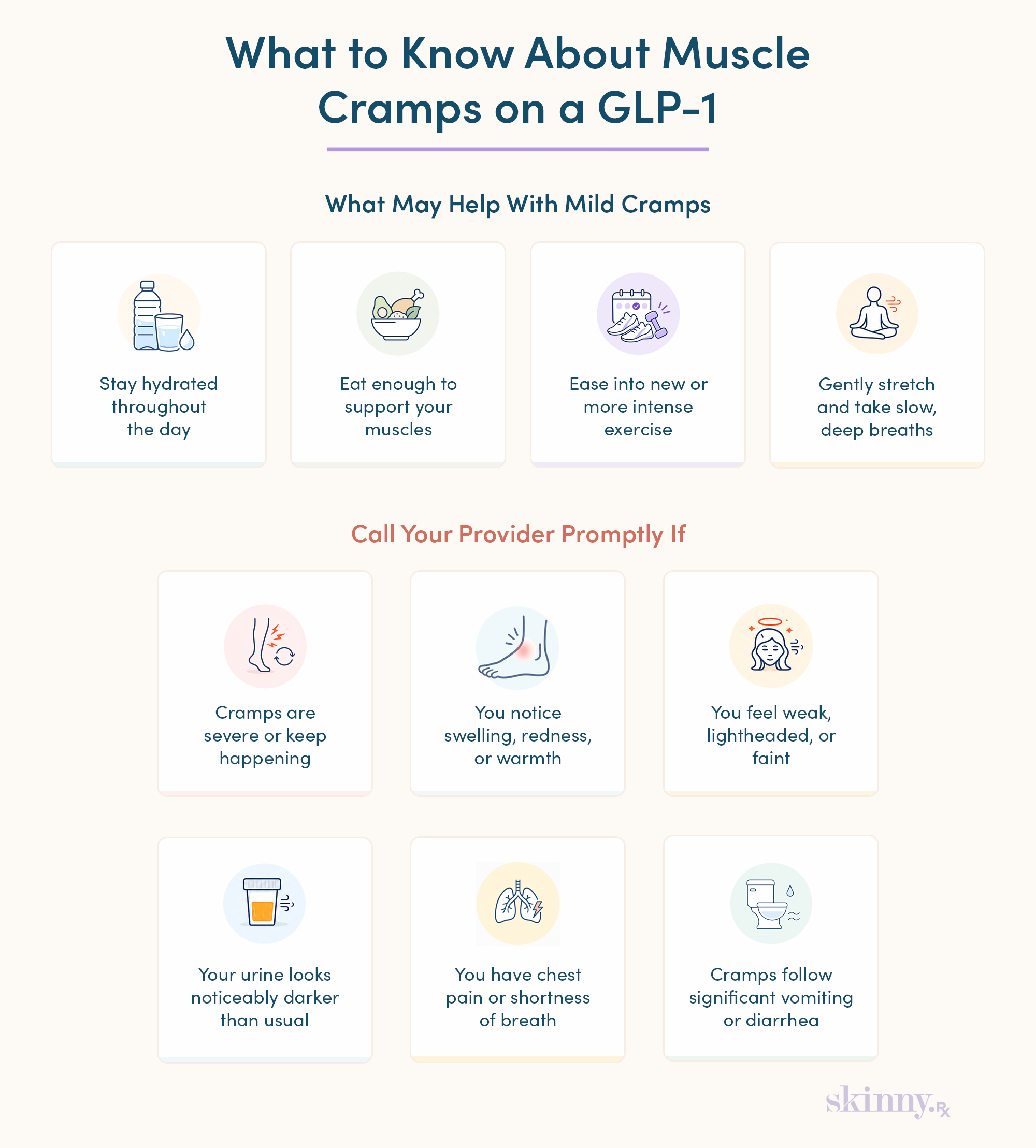
Mild cramps generally aren’t more than a temporary inconvenience. If you’re experiencing uncomfortable but tolerable cramping, stop whatever you’re doing and try to relax.
Remember—it’s not the muscle itself; it’s both activity in your nervous system and what you’re fueling your body with.
You can attempt to quell cramps in the moment by gently stretching the muscle while also taking long, slow, deep breaths.
Beyond that, there really isn’t much you can do to immediately alleviate cramping. Certain supplements such as magnesium are marketed as helpful for cramping, but the scientific support is spotty at best as to their potency.
Before Adding Electrolytes
Electrolyte supplements have a lot of hype, but they aren’t magic. By default, most people do not need electrolyte supplements—a balanced diet generally accounts for most of what you need, making electrolyte powders redundant under normal circumstances.
Cramping isn’t a normal circumstance. Some studies have shown that “alterations” in serum electrolyte content can lead to cramping. Reduced serum electrolyte content can come from sustained exercise in hot weather, persistent expulsions like vomiting or diarrhea, or simply eating too little, for too long.
All of those factors relate to GLP-1 medications on some level, but you shouldn’t have to do the detective work yourself. Run these questions by your healthcare provider first:
- Do I have kidney disease or impaired kidney function?
- Do I take blood pressure medications, diuretics, or heart medications?
- Have I had vomiting, diarrhea, or low fluid intake?
- Are cramps severe, one-sided, or swollen?
- Would lab work be appropriate before changing supplements?
Certain supplements should not be taken by patients who have kidney disease or cardiovascular conditions.
Must do: Call a healthcare provider promptly for severe cramps, weakness, swelling, redness, warmth, chest pain, shortness of breath, dark urine, fainting, or symptoms after significant vomiting or diarrhea.
When Muscle Cramps Need Medical Attention
Most cramps amount to a brief nuisance and nothing more. However, severe, persistent cramping warrants medical attention. To know the difference, pay close attention to how the cramping actually presents:
- Mild cramping is uncomfortable, but usually brief, and may display as visible tremors or twitches in the muscle.
- Painful or persistent cramps that present alongside other acute symptoms like swelling, redness, or localized warmth may indicate something more sinister is happening.
Questions To Ask Your Provider
If you’re dealing with cramps while on a GLP-1, raise the concern with your doctor at your next appointment. Ask these questions when you go:
- Are my cramps related to my GLP-1?
- Do my dietary habits have an influence on cramping?
- Should I get lab work done to rule out other potential causes?
- Is it safe for me to take supplements to reduce cramping on my GLP-1?
Bottom Line
Muscle cramps aren't known to be a direct side effect of your GLP-1, but that doesn't mean they're unrelated. Reduced appetite, GI symptoms, and shifts in your exercise routine can all contribute to cramping, even if the medication itself isn't the direct cause.
Most cramps amount to a brief nuisance. Staying hydrated, eating enough to support your muscles, and easing into new activity may help deter cramping. If cramps do show up, gentle stretching and slow breathing can help in the moment.
Persistent or severe cramps are a different story. Swelling, redness, warmth, weakness, dark urine, fainting, chest pain, shortness of breath, or cramping alongside significant vomiting or diarrhea are signs it's time to call your provider, not wait it out.
If cramps are becoming a regular part of your GLP-1 experience, bring it up at your next appointment. Your provider can review what might be contributing and decide whether lab work or another step makes sense.
Frequently Asked Questions
Stop Guessing. Start With an Assessment
Complete a health assessment, and a licensed clinician will determine if GLP-1 treatment is right for your weight loss goals.

By Jake Dickson, NASM-CPT, USAW-L2
Contributing Author
Jake holds a B.S. in Exercise Science from UNC Wilmington and began his career as a personal trainer and weightlifting coach. In recent years, he’s moved behind the page as a writer and editor, contributing hundreds of articles and being featured as a subject matter expert. Today, Jake’s goal remains the same: to empower people to change their lives by bringing heady scientific topics down to ground level.