 Medically Reviewed

Key Takeaways
- Zepbound was FDA-approved in December 2024 for adults with obesity (BMI 30+) and moderate to severe OSA, defined as 15 or more events per hour.
- Two clinical trials showed that Zepbound reduced OSA events by roughly half and improved hypoxic burden, blood pressure, and body weight.
- Zepbound doesn't replace CPAP; it works by promoting weight loss, which eases airway pressure over time rather than opening the airway directly.
- Eligibility requires a sleep study, and patients should talk to their provider about when or whether CPAP use might change.
- A 10% increase in body weight is associated with over 30% more adverse sleep events, underscoring the role of weight in OSA.
GLP-1 medications continue to surprise. They were initially developed for the treatment of type 2 diabetes, but in the years since, scientists are uncovering many more potential applications, from their now-recognized weight-loss potential to emerging utility in treating addiction.
In a landmark decision in late 2024, the FDA approved Zepbound for the treatment of sleep apnea—the first of its kind. For obese sufferers of obstructive sleep apnea, it was a long time coming.
However, the parameters under which Zepbound can be used for OSA are highly specific. There are crucial limitations to the drug’s utility as well. This article will explain both aspects of the relationship between Zepbound and sleep apnea so you can make an informed decision.
What Is Obstructive Sleep Apnea (OSA)?
Obstructive sleep apnea (OSA) describes a condition in which the body’s upper airway constricts or closes altogether during sleep. This leads to a disruption in sleep patterns as the brain is deprived of oxygen.
Throughout the night, the brains of OSA sufferers repeatedly pull a “fire alarm” to partially wake the sleeper and restore the flow of oxygen. Research indicates this pattern can happen dozens of times over the course of an evening.
The result? Sufferers contend with persistent, disruptive symptoms like fragmented or “nonrestorative” sleep and excessive daytime tiredness, which confer their own downstream issues as well.
The OSA statistics are staggering: Statistical data published in The Lancet suggest that up to one billion people worldwide suffer from OSA on some level.
Zepbound’s eligibility in treating sleep apnea directly marks a potential paradigm shift, but it’s not a cure-all. Let’s dig deeper.
Zepbound and Obstructive Sleep Apnea: What Did the FDA Approve?
On December 20, 2024, the FDA approved Zepbound for adults who have moderate or severe sleep apnea (15+ adverse events per hour) and who are obese (BMI >=30), with doctors at the time calling it a “major step forward.”
According to the FDA’s press release, the approval was granted after two significant clinical trials. Here’s what they found:
- Zepbound reduced OSA “events per hour” by roughly half.
- Zepbound also helped patients cut back on body weight, hypoxic burden, blood pressure, and other biomarkers.
Despite these findings—which did not come without the standard fare gastrointestinal side effects common to GLP-1s—the scope of Zepbound’s approval for OSA is relatively narrow.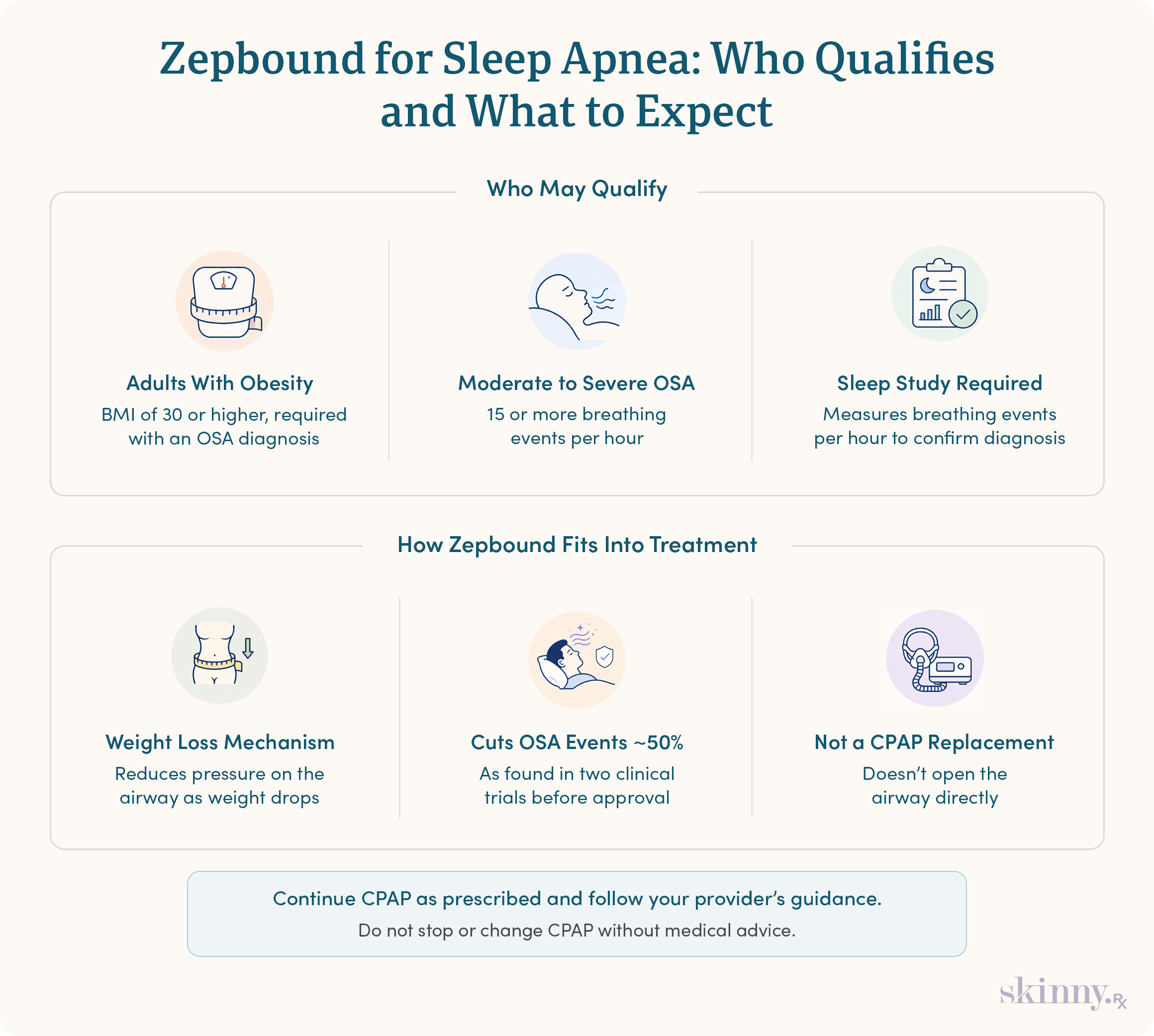
Who the Approval Applies To
Zepbound has been approved for adults who have both obesity and sleep apnea simultaneously; you can’t get it prescribed for OSA if you aren’t obese, nor if your OSA is considered mild.
Why this matters: Sleep apnea symptoms occur in healthy sleepers, too. People who snore or toss and turn at night don’t necessarily have OSA.
- “Normal” snoring is generally slow and rhythmic. Sleep apnea sufferers tend to exhibit volatile snoring patterns, which are accompanied by choking sounds or gasps as well. That’s the brain startling the body to recover oxygen.
- Restlessness at night may be attributable to many other conditions, from insomnia to anxiety to substance abuse.
Before being prescribed Zepbound for sleep apnea, a doctor will want to ensure you meet both inclusion criteria. Your BMI will need to land in the obese range, while OSA is determined after conducting a sleep study to measure adverse events per hour.
Weight-Loss Care With Ongoing Support
Access prescription treatment, provider guidance, and support tools built around your weight-care progress, all in one app.
Can Zepbound Replace CPAP for Sleep Apnea?
Historically, those suffering from OSA have turned to CPAP treatment. CPAP stands for “continuous positive airway pressure.” It’s a machine designed to provide air through a mask you wear while sleeping.
Zepbound does not replace CPAP therapy by default. It’s important to acknowledge that, even in the clinical trials upon which FDA approval was granted, many participants continued to use their CPAP machine throughout the observation period.
Why? Zepbound does not physically open airways or provide oxygen. The mechanism of action at play revolves around how GLP-1s encourage steady weight loss, which does have a tangible impact on sleep apnea over time.
You can’t swap a CPAP machine for a Zepbound prescription and get the same results the next night. Zepbound gradually helps shift the conditions that enable and worsen OSA. In the meantime, those reliant on CPAP machines will likely continue to need them.
How Excess Weight Contributes to Sleep Apnea
Research has made one thing crystal clear: Obesity has a wide array of deleterious effects on health, including, and especially, being a significant risk factor for sleep apnea. When people gain weight, it doesn’t just go to the stomach or thighs. Excess body fat accumulates everywhere, including around the neck, applying extra pressure to airways at all times.
The relationship between excess body fat and disordered sleep is consistent and exponential. Some data show that gaining 10% extra body weight as fat predicts over 30% more adverse sleep events.
This is the crux behind why Zepbound was approved to help with OSA—not because it was designed specifically to do so, like a CPAP machine, but because GLP-1s consistently affect weight loss, alleviating pressure and discomfort in multiple areas of well-being.
Questions To Ask Your Sleep Specialist or Prescriber
FDA approval is authoritative, but it can still be scary to embark on taking a new medication, even if the underlying science is sound. It’s not your job as the patient to investigate the nitty-gritty, but it does pay to be informed about what you’re taking, why you’re taking it, and how it might impact you.
If you’re considering trying Zepbound for obstructive sleep apnea, these are the questions worth asking your doctor:
- Is my disordered sleep consistent with symptoms of obstructive sleep apnea?
- Are there other treatment options I should consider before jumping to Zepbound?
- Is Zepbound appropriate for me given my health history?
- If I start Zepbound, when can I stop using my CPAP machine?
Bottom Line
Zepbound may be an option for adults with obesity, but a sleep study must also confirm moderate to severe obstructive sleep apnea before they qualify for treatment.
The medication does not directly open the airway. Instead, it helps reduce body weight, which can lessen the pressure around the airway and improve OSA over time. Because CPAP works by keeping the airway open during sleep, any change to CPAP use should be made in consultation with your healthcare provider.
Frequently Asked Questions

By Jake Dickson, NASM-CPT, USAW-L2
Contributing Author
Jake holds a B.S. in Exercise Science from UNC Wilmington and began his career as a personal trainer and weightlifting coach. In recent years, he’s moved behind the page as a writer and editor, contributing hundreds of articles and being featured as a subject matter expert. Today, Jake’s goal remains the same: to empower people to change their lives by bringing heady scientific topics down to ground level.