

 Medically Reviewed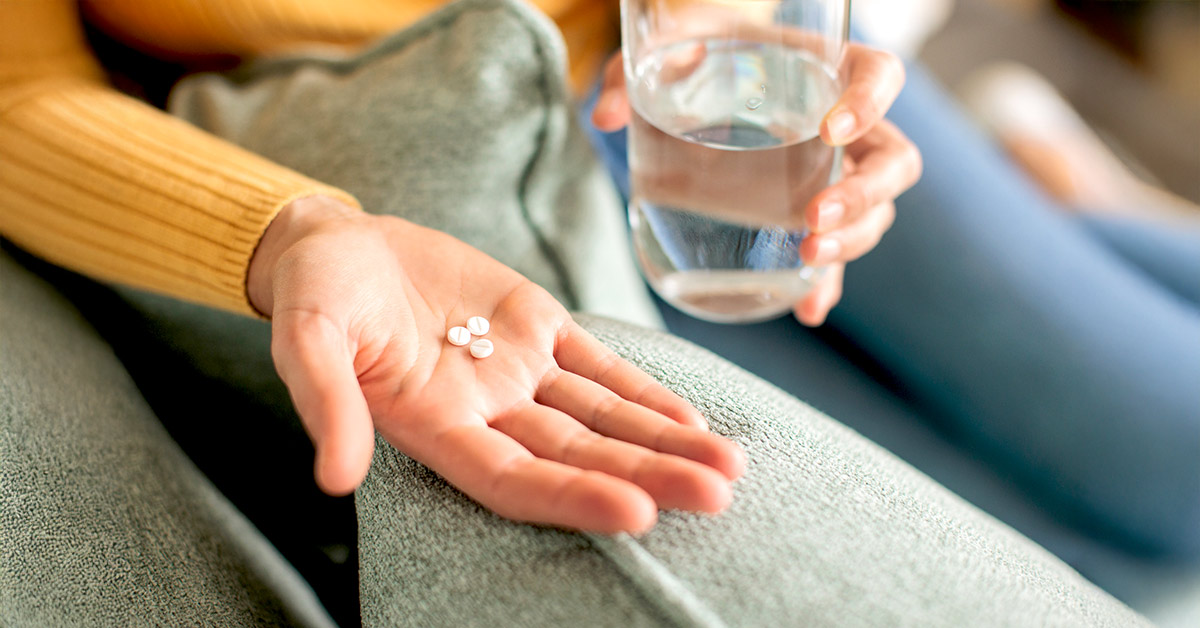

Key Takeaways
- Injectable GLP-1s have significantly higher bioavailability than oral formulations, which can translate into stronger, more predictable clinical effects.
- Oral GLP-1s require strict fasting and timing protocols, while most injections are taken once weekly without food restrictions.
- Clinical trial data show that injectable options slightly outperform oral options for weight loss, but real-world results vary by adherence and tolerability.
- Side effect profiles are largely similar between oral and injectable semaglutide, with fewer than 10% of patients discontinuing due to adverse effects.
- Choosing between a pill and a shot often comes down to lifestyle, needle comfort, travel needs, cost considerations, and the ability to take the medication consistently.
GLP-1s may help with weight management and blood sugar control, whether you take them by injection or by mouth. They’re currently available as injectable medications and pills.
Clinical and real-world trials suggest differences in weight-loss results between oral GLP-1s and injections, but the medications’ biological effects are only part of the equation. Someone’s preferences, lifestyle, and ability to take it consistently play a major role, too.
“I don’t want patients to feel like they’re choosing between ‘the good option’ and ‘the easy option,” says Sajad Zalzala, MD, a board-certified family medicine physician and SkinnyRx medical advisor. “If a pill fits your life better, that can be a clinical advantage—because consistency beats perfection. The goal is a plan you can live with, not just a prescription.”
Why Delivery Method Matters
Many popular weight-loss medications are GLP-1 receptor agonists, short for glucagon-like peptide-1 (GLP-1). This medication class works by mimicking GLP-1, a naturally occurring hormone that helps control blood sugar levels and regulate appetite.
The first medications the FDA approved in this class were injectables, though oral GLP-1s have since made their way to the market.
The Peptide Problem: Why We Used to Only Have Shots
GLP-1s are a type of peptide, a short string of amino acids. Researchers began studying peptide weight loss medications in the 1970s and eventually discovered GLP-1’s effects on weight and blood sugar.
But there was one problem. The stomach acid and digestive enzymes broke down peptides before much could be absorbed by the bloodstream. This reduces the drug’s bioavailability, the amount of the drug that reaches the target site. It impacts the drug’s effectiveness and higher bioavailability may lead to fewer side effects.
That’s why researchers initially focused on developing injectables, which had a higher bioavailability. These GLP-1s were injected right into the body, forgoing the digestive tract.
Novo Nordisk, the manufacturer of Ozempic, Wegovy, and Rybelsus, overcame this peptide problem by adding a security guard to their oral medication. In the medical world, this security guard or “carrier molecule” is referred to as SNAC.
It neutralizes the stomach acid long enough for the GLP-1 to be absorbed into the bloodstream, retaining higher bioavailability, though still not as high as injectable GLP-1s.
Oral GLP-1s (Rybelsus and Beyond)
Until recently, Rybelsus® (manufactured by Novo Nordisk) was the only oral medication in its class with FDA approval. That status changed in December 2025 with the FDA approval of an oral version of Wegovy® (also manufactured by Novo Nordisk). This version of Wegovy® is the first oral GLP-1 specifically approved for chronic weight management, while Rybelsus® is FDA-approved for blood sugar control in adults with type 2 diabetes.
How the Pill Survives Your Stomach Acid
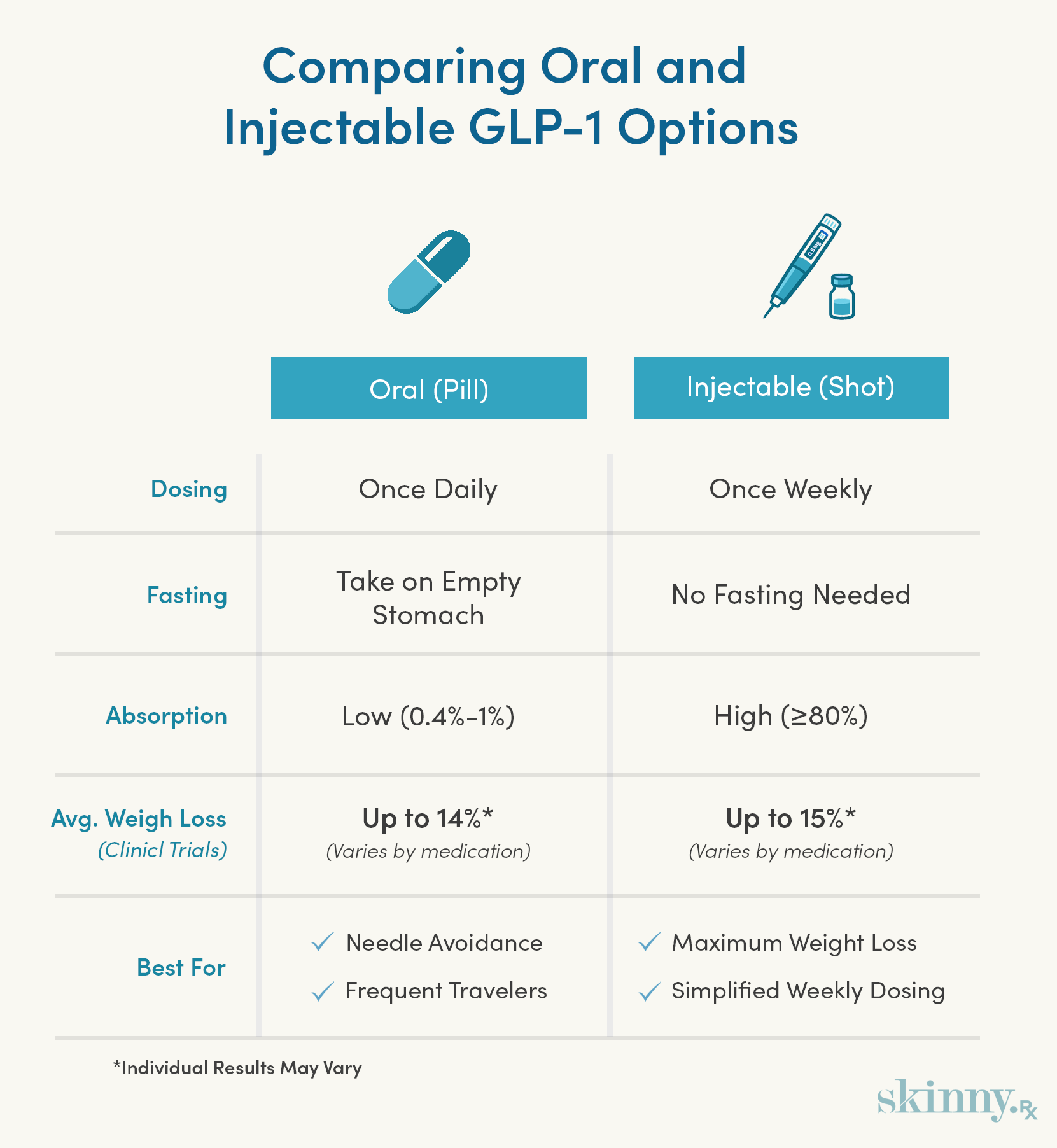
Both oral Wegovy and Rybelsus use SNAC technology to temporarily neutralize stomach acid, allowing more GLP-1 to enter the bloodstream. Without this technology, the bioavailability of GLP-1 is 0.1%. With it, that number rises to 0.4% to 1%. This may seem like a small difference, but it greatly impacts the drug’s effect on weight and blood sugar control.
The Strict Morning Routine: No Food, No Coffee, Just 4oz of Water
Due to the SNAC technology temporarily neutralizing stomach acid, you only want the medication, not any food, in your stomach when that effect takes place. That’s why both medications are taken after eight hours of fasting. For most people, this is right in the morning after they wake up.
To safely take an oral GLP-1, create a morning routine like this:
- Take the GLP-1 oral medication before eating anything or having a morning beverage
- Take the medication with a maximum of four ounces of water
- Wait 30 minutes before taking any other medications, eating anything, or drinking anything (including water). This gives the pill time to be absorbed.
Injectable GLP-1s
FDA-approved injectable GLP-1 medications vary in how they work, how long they last, and what conditions they're approved to treat. The two covered below are liraglutide and tirzepatide. Liraglutide acts faster but requires daily dosing, while tirzepatide targets an additional hormone pathway that may make it more potent for weight loss.
Liraglutide
Unlike semaglutide, liraglutide is a short-acting GLP-receptor agonist, meaning the effects happen more quickly. However, they also don’t last as long, so the medication must be taken daily instead of weekly to maintain the drug’s effects.
There are two FDA-approved versions of liraglutide, both of which are injections:
- Saxenda: FDA-approved for weight loss.
- Victoza: FDA-approved for blood sugar control and to reduce the risk of heart disease for those with type 2 diabetes.
Tirzepatide
Tirzepatide is a dual agonist, meaning it acts as both a GLP-1 and GIP receptor agonist. GIP is another naturally occurring hormone involved in blood sugar control and weight management. Since it mimics both GLP-1 and GIP, it may be more effective than semaglutide.
- Zepbound: FDA-approved for weight management and moderate to severe obstructive sleep apnea.
- Mounjaro: FDA-approved for blood sugar control.
Clinician-Guided Weight Loss Options
Access oral or injectable medications with licensed clinician oversight to pursue safe, personalized, and sustainable weight loss.
The Advantage of Higher Bioavailability
Injectable medications offer higher bioavailability, whether we’re discussing semaglutide, tirzepatide, or liraglutide. Even among injectables, bioavailability differs:
All three are much higher than oral, which can range from 0.4% to 1%.
Side-by-Side Comparison: Efficacy and Results
To keep things simple, let’s compare the efficacy of injections and oral semaglutide. You can learn more about semaglutide vs liraglutide here or tirzepatide vs semaglutide here.
Weight Loss Percentages: Which Works Better?
Rybelsus and Wegovy all facilitate weight loss, but to varying degrees. The averages in clinical trials run by the drug’s manufacturer were:
- Wegovy (injection): 15% weight loss in 68 weeks
- Wegovy (pill): 14% weight loss in 64 weeks
- Ozempic: 7% weight loss in 30 weeks
- Rybelsus: 4% weight loss in 6 months
These statistics are from clinical trials, where the research team controls many of the variables. In real-world settings, efficacy may differ due to patients’ ability to remember to take the medication, administer it properly, tolerate its side effects, and more.
Studies looking at real-world results offer mixed results:
- A 2024 study suggests that oral semaglutide may be better than injectables for blood sugar control in real world settings.
- To contrast that, a 2025 study suggests injectable semaglutide provides better blood sugar control.
- A 2024 study suggests injectable semaglutide leads to more weight loss in real-world settings.
- Another 2024 study said the weight loss benefits were similar between oral and injectable versions.
The mixed results are confusing, but they also serve as a reminder that the most effective GLP-1 is the one you will remember to take, can administer properly, and can tolerate its side effects.
Side Effect Profiles
Whether semaglutide comes in a pill or injection, the most common side effects are the same:
- Stomach pain
- Yellow skin or eyes
- Fever
- Sweating
- Dizziness
- Anxiety
- Nausea
- Bloating
- Vomiting
- Constipation
- Diarrhea
- Faster heartbeat
- Shakiness or weakness
- Headaches
- Blurred vision
- Fatigue
Interestingly, oral and injectable options have about the same risk of adverse side effects. In real-world trials, fewer than 10% of patients discontinued both oral and injectable semaglutide due to side effects.
Oral semaglutide may even lead to less nausea and vomiting than once-weekly dulaglutide and once-daily lixisenatide (two less common GLP-1 injectable medications), though its nausea profile is similar to that of injectable semaglutide.
Once-Weekly Convenience vs. Needle Anxiety
When choosing a GLP-1, consider if you’re more likely to stick to a pill or an injection. Someone with a needle phobia or who isn’t confident in their ability to self-administer an injection, for example, will probably take the pill more consistently.
Similarly, oral medications may be more practical for those who travel frequently, since they don’t require refrigeration and can be stored at room temperature.
On the flipside, injectable medications are administered once weekly, meaning they could be better for people who may forget to take a once-daily medication. Plus, they don’t require fasting for eight hours before taking them.

I don’t want patients to feel like they’re choosing between ‘the good option’ and ‘the easy option.’ If a pill fits your life better, that can be a clinical advantage—because consistency beats perfection. The goal is a plan you can live with, not just a prescription.
–
Dr. Sajad Zalzala, MD, SkinnyRx Medical Director
The Future of Oral GLP-1s
Oral GLP-1s are much newer, with Rybelsus only receiving FDA-approval in 2019. In 2025, Novo Nordisk submitted Orforglipron for regulatory review by the FDA, but it is not yet approved. In a clinical trial, participants lost an average of 5.1% of their body weight in 72 weeks, suggesting Oroforglipron may be more effective for weight management than Rybelsus.
How Orforglipron is Changing the Fasting Rule
A key feature of Orforglipron is that it has no food restrictions. That means someone may take this medication at any time of day with no fasting beforehand. This could make oral semaglutide more accessible, though it’s important to remember that orforglipron is not yet commercially available.
Which One is Right for You? A Decision Matrix
Injections and pills both offer unique benefits, and it’s important to discuss which medication may work best for you with a healthcare provider. That said, there are some GLP-1 superlatives to keep in mind.
Best for Frequent Travelers
If you travel frequently, oral GLP-1s are easier to take on the road. That’s because they don’t require refrigeration and may be easier to take if somewhere busy, such as on a plane or at a train station.
Oral weight loss medications are also preferred by people with a needle phobia or who don’t feel confident self-administering an injection.
Best for Maximum Weight Loss
Injectable GLP-1s outperform oral GLP-1s in terms of weight loss in clinical trials, but results are mixed in real-world settings. Both can be effective at helping someone lose weight, and the best option is the one you’ll remember to take and can tolerate.
Frequently Asked Questions
Clinician-Guided Weight Loss Options
Access oral or injectable medications with licensed clinician oversight to pursue safe, personalized, and sustainable weight loss.

By Angela Myers
Contributing Author
Angela Myers is a freelance health writer covering weight management, healthy aging, and nutrition. Her work has appeared in AARP, Well+Good, and Forbes, among others. Before starting her writing career, she conducted award-winning research on how to improve sexual violence prevention courses on college campuses. That research sparked a passion for health communication, and she's been writing about making healthcare accessible and inclusive ever since.