

 Medically Reviewed

Key Takeaways
- GLP-1s are not known to commonly cause direct changes in periods.
- Weight loss or eating too little can make periods lighter, irregular, or temporarily stop.
- PCOS/PMOS may improve with weight loss and better insulin sensitivity, which can make cycles more regular.
- Perimenopause, pregnancy, birth control, stress, and other health issues can also affect your cycle.
- Tirzepatide can reduce how well oral birth control works, which may raise the risk of unintended pregnancy, and a missed period may be the first sign.
- Track changes and contact a provider for missed periods, persistent changes, postmenopausal bleeding, or severe symptoms.
If you’ve recently started taking GLP-1s, you’re probably experiencing a lot of changes. Some of those may be expected, such as less hunger and fewer cravings. But others can be surprising, such as changes to your menstrual cycle.
Do a quick search on Reddit and you’ll find plenty of threads discussing improved cycle regularity or, on the flip side, a sudden stop to periods after starting treatment with GLP-1s. So, can GLP-1s change your period?
Why This Question Comes Up
First, let’s get one thing out of the way. Menstrual changes are not considered a common side effect of GLP-1s. But, if Reddit is any indication, plenty of women do report period changes on GLP-1s, including:
- Changes in bleeding or PMS symptoms
- Cycle regularity
- A stop to their periods
Here’s a sampling of the Reddit comments you’ll find on the topic:
“I have PCOS and haven't had a period in something like 5 years. I thought I was post-menopausal. Since I started [tirzepatide] I began spotting monthly. This past week I had a full period - only lasted 1 day, but I was pretty excited. I interpreted it as another sign that my body is healing.” — SlowDescent_
“The one side effect that I wasn't prepared for was the fact that my period would just stop. I have PCOS, so my period is not always regular anyway but, I have noticed that ever since I started with the shots, my period has just disappeared. I am still getting the monthly cramping and moodiness.” - throwawaymylove220
These two experiences reflect the wide range of responses women report across online communities, from periods returning after years of absence to cycles disappearing entirely. So what's actually going on?
Period Changes Can Have Many Causes
So, if women are experiencing period changes on GLP-1s, but they’re not caused by the drug, what is causing them? The reality is that many things can affect your cycle. Some of those things can be caused by a GLP-1, such as weight loss or improved insulin sensitivity. In those cases, the drug may indirectly contribute to period changes, even if it’s not affecting your cycle directly.
However, other causes of menstrual changes are completely unrelated to GLP-1s, such as perimenopause, other medications, or another health issue. If one of these causes started around the same time you started taking a GLP-1, it could explain the changes you’re experiencing.
Weight Loss and Energy Intake
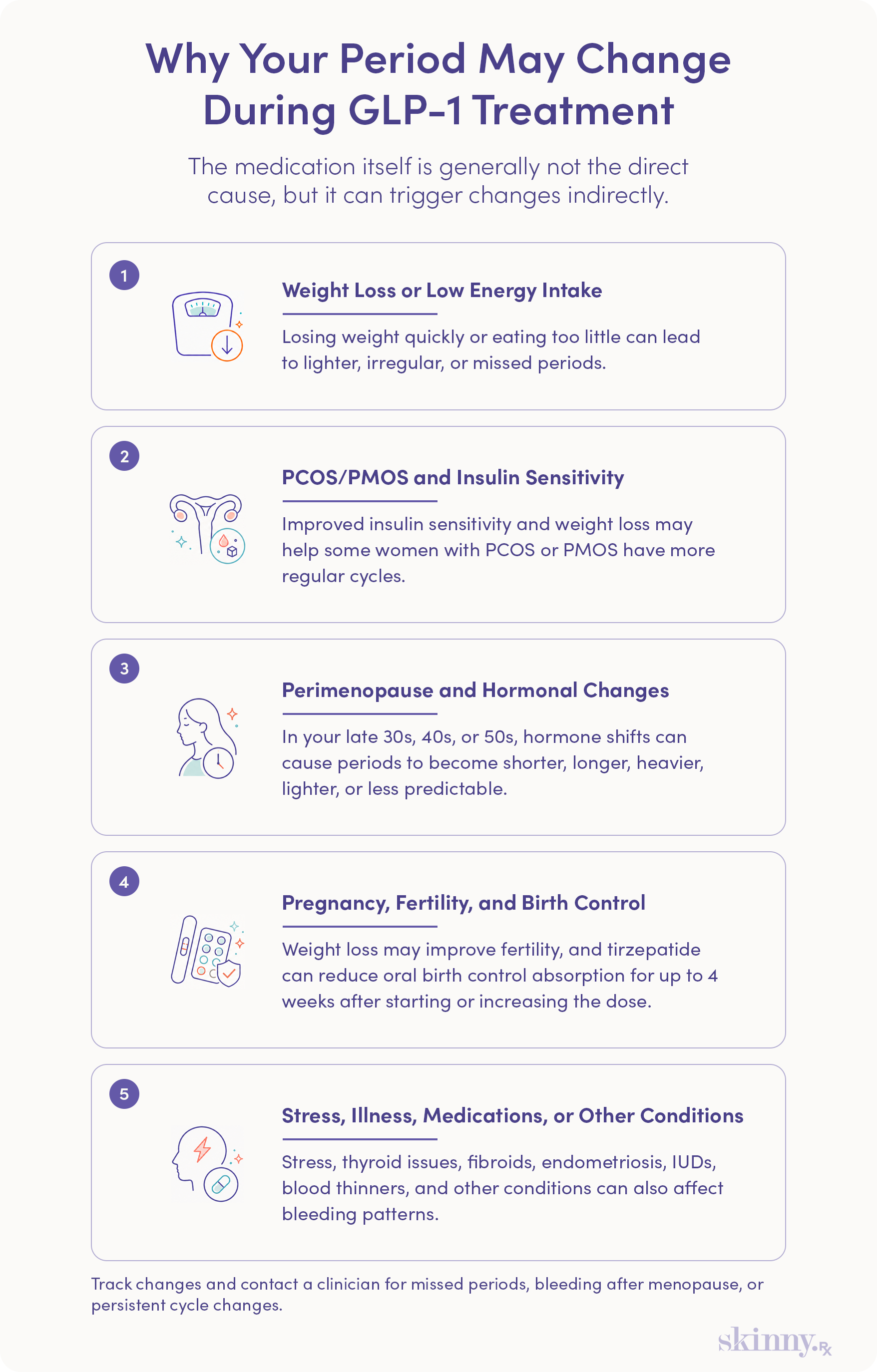
In people with obesity, GLP-1s can drive an average weight loss of up to 15% to 25% in one year. That’s a lot of weight to lose in a short amount of time. A large amount of weight loss, as well as losing weight too quickly, can both result in irregular periods or amenorrhea, where you stop having a period.
At the same time, obesity can lead to irregular periods or heavier periods. So, if your periods have become lighter or more regular since you’ve lost weight on GLP-1s, that could be a possible explanation.
However, if you’ve already gone through menopause and start experiencing bleeding on your GLP-1, that is not expected and should be reported to your healthcare provider.
PCOS and Insulin Resistance
Around one in ten premenopausal women have polyendocrine metabolic ovarian syndrome (PMOS). Formerly known as polycystic ovarian syndrome, or PCOS, this hormonal condition is characterized by insulin resistance, weight gain, high testosterone levels, and irregular or absent periods.
Because GLP-1s improve insulin sensitivity and regulate blood sugar levels, they may be prescribed off-label to treat symptoms of PCOS/PMOS, sometimes along with a diabetes medication called metformin.
Research shows that as GLP-1s regulate hormone levels and drive weight loss, many women with PCOS/PMOS experience more regular periods. While this is often a sign that the medication is working, it can be alarming if you were used to really irregular periods — or no periods at all.
Weight Loss Treatment Built Around You
Complete a short intake assessment to see if prescription weight-loss treatment is right for you, and get guidance on next steps tailored to your health history.
Perimenopause and Hormonal Changes
That’s right: the big M could be behind missed periods on GLP-1s. Menopause is defined as the day you’ve gone 12 months without any periods, but perimenopause starts years before that, often in your 40s.
If you’re in your late 30s, 40s, or 50s and you’re experiencing period changes like the following, perimenopause could be the reason why:
Irregular periods
- Shorter or longer periods
- Lighter or heavier periods
These changes are caused by a drop in estrogen and progesterone levels. These declining hormone levels can also cause other telltale signs of perimenopause, such as:
- Hot flashes or night sweats
- Trouble sleeping or daytime fatigue
- Forgetfulness or brain fog
- Vaginal dryness
- Pain or discomfort during sex
- Mood changes, such as increased anxiety or irritability
- Reduced bladder control or an increase in urinary tract infections (UTIs)
Pregnancy and Birth Control
If you’ve recently started birth control, that could be affecting your cycle regularity or bleeding. And speaking of birth control, it’s worth noting that some GLP-1s — namely, tirzepatide — can lower the effectiveness of oral birth control pills.
GLP-1s work by slowing down digestion, which means they can interfere with the absorption of oral contraceptives. For this reason, it’s strongly advised to use a backup birth control method for 4 weeks after starting tirzepatide and after every dose increase.
A growing body of research suggests GLP-1s can help reverse fertility issues caused by obesity, including in women with PCOS/PMOS. Weight loss — from GLP-1s or otherwise — can significantly increase fertility, hence the rise of “Ozempic® babies.” If you don’t want to get pregnant, it’s important to use contraception when you start a GLP-1.
However, these weight loss medications are not recommended for use during pregnancy, and ideally should be stopped at least 2 months before any planned pregnancy.
Stress, Illness, and Other Medications
Other health conditions you have, medications you’re taking, and even chronic stress can affect your cycle.
For example, stress can delay or prevent ovulation, leading to a late or missed period. Even if you can’t identify a specific stressor in your life, it’s possible that switching up your diet, managing GLP-1 side effects, and the emotional journey of weight loss can all contribute to your overall stress load.
Changes in menstrual bleeding can signal other health conditions, including fibroids, ovulation issues, hypothyroidism, polyendocrine metabolic ovarian syndrome (formerly PCOS), endometriosis, pelvic inflammatory disease (PID), bleeding disorders, and endometrial cancer.
Finally, medications that can affect your period include:
- Hormonal birth control, which can cause breakthrough bleeding
- Copper intrauterine devices (IUD), which are nonhormonal but can cause heavy periods during the first year you use them
- Blood thinners and aspirin, which can cause heavier bleeding
What Symptoms to Track
If you’re noticing period changes on semaglutide, tirzepatide, or other GLP-1s, it can be helpful to create a symptom tracking checklist. Consider tracking your:
- Cycle dates: Record when your period starts and ends.
- Flow changes: Are you noticing lighter or heavier bleeding, clots, or spotting between periods?
- Missed or late periods: Note how many days late your cycle is, or if you skip a month entirely.
- Body changes: Track your body weight, changes in appetite or cravings, any episodes of nausea or vomiting, and your calorie intake.
- Other symptoms: Note down any pelvic pain, severe cramping, dizziness, or unusual fatigue.
- Pregnancy test results: Document the dates and results of any home pregnancy tests you take.
- Birth control method: Track the forms of birth control you use and record any days you miss a pill.
When to Contact a Clinician
While some period changes are nothing to worry about, others can be a sign of something more serious. Either way, it’s worth talking to your clinician if you’re noticing any changes to ease your mind or get treatment if needed. If you’re experiencing any of the following, contact your provider:
- You’ve missed multiple periods in a row
- You’re experiencing changes to your bleeding, including heavier, lighter, or more painful periods
- You’re spotting between periods
- You have a history of PMOS/PCOS, endometriosis, fibroids, or fertility issues
- You recently started a new medication or birth control method, such as an IUD (intrauterine device)
- You think you might be pregnant
- You’re postmenopausal and experience new bleeding
- You have questions or concerns about the changes you’re experiencing
Important Note
- Seek urgent care for very heavy bleeding, severe pelvic pain, fainting, chest pain, shortness of breath, or symptoms that feel severe or unusual.
- Contact an OB-GYN or clinician for missed periods, bleeding after menopause, or persistent cycle changes.
Questions to Ask Your Healthcare Provider
It can be helpful to prepare questions ahead of time to ensure you get the answers you need. Consider asking your healthcare provider these questions:
- Given my weight loss and current dosage, are these cycle changes expected?
- Should I be concerned about the heaviness or lightness of my flow?
- Does my GLP-1 medication affect the reliability of my current birth control method?
- Are there specific blood tests (like thyroid, iron, or hormone panels) we should run to rule out other causes?
- At what point should we consider adjusting my weight loss treatment plan based on these menstrual changes?
Bottom Line
Period changes while on GLP-1s are real, and plenty of women experience them. But in most cases, the medication itself is not the direct cause. What's more likely driving the changes is weight loss, improved insulin sensitivity, or simply where you are in your hormonal life.
Understanding the likely causes is a good starting point. Track your symptoms, know what to watch for, and speak to your doctor if something feels off or persists. Staying informed is one of the most useful things you can do throughout treatment.
Frequently Asked Questions
Find the Right Treatment for You
Complete a short intake assessment to see if prescription weight-loss treatment is right for you, and get guidance on next steps tailored to your health history.

By Amelia Willson
Contributing Author
Amelia Willson is a freelance health writer and content strategist based in Orange County, California. Her work has appeared in several health publications, including Ro, Klarity Health, K Health, Sleep Foundation, and A Place For Mom. Amelia covers the latest trends in health and wellness, including the research (or lack thereof) behind them, breaking down complex topics so that readers don't have to. Her writing frequently explores weight management, plant-based nutrition, and mental health.