

 Medically Reviewed

Key Takeaways
- Weight management after 50 can change as menopause, sleep, stress, muscle loss, and insulin resistance affect hunger, metabolism, and fat storage.
- Semaglutide may help eligible women feel less hungry and fuller, but it should be used with medical guidance.
- Strength training and adequate protein intake can help protect muscle mass during semaglutide-supported weight loss.
- Bone health deserves extra attention after 50, especially during menopause and active weight loss.
- Side effects should be tracked early so your provider can adjust your plan if symptoms worsen or persist.
Maintaining a healthy weight comes with many benefits, such as reduced risk of cardiovascular disease and type 2 diabetes, lower blood pressure, and a higher quality of life.
But weight loss after 50 can seem to come with a new set of rules for many women due to several factors at play, including menopause, stress, and more.
GLP-1 weight-loss drugs like semaglutide can be part of a potential solution for reaching a healthy weight after 50 — but there are some important considerations.
Here’s everything to know about semaglutide for women over 50.
Why Weight Management Can Change After 50
Hitting a milestone birthday like 50 is something to celebrate. And it comes with several changes that affect your health, including weight management.
From big hormonal changes to natural muscle loss as we get older, we’ve discussed why weight loss after 50 can change for women.
Menopause and Hormonal Changes
Menopause is nicknamed “the change” for a reason, as it signals the end of a woman’s ability to conceive children and shifts into another chapter of life.
While the average age of menopause is 51, it can start as early as the 30s or up to the mid-50s.
This change brings on a slew of symptoms, including night sweats, hot flashes, relaxation of the pelvic muscles, mood changes, hormonal changes, and weight gain for some.
While weight gain isn’t automatically caused by menopause on its own, the changes in hormone levels — namely, a drop in estrogen and progesterone — can alter metabolism and how the body stores fat.
This hormonal drop can bring about changes in body composition and weight.
Rather than previously storing subcutaneous fat (fat stored just below the skin) typically in the hips and thighs, the body starts accumulating visceral fat, or body fat stored deep in the abdomen that carries significant health risks.
Sometimes called “menopause belly,” this fat accumulation can also bring about modest weight gain for some women.
Muscle Loss and Metabolism
Losing weight after 50 can also change, thanks largely to muscle loss and shifts in metabolism.
Loss of muscle mass as we age is natural, known as sarcopenia. This age-related loss actually starts in our 30s or 40s, then picks up between 65 and 80.
This is brought on by a combination of physical inactivity, the body's decreased ability to make protein (which is necessary for muscle growth), and hormonal changes.
In fact, the sharp decrease in estrogen during menopause accelerates this natural age-related loss of both muscle mass and strength.
And this loss of muscle can also affect metabolism, or how the body converts food into energy.
Muscle is metabolically active, meaning it burns more calories than fat to maintain itself. Therefore, a decrease in muscle mass can lower metabolism, meaning fewer calories are being burned.
Sleep, Stress, and Appetite
Weight at any age is not just influenced by diet and exercise, but also by things like sleep, stress, and appetite.
Some women over 50 may find themselves struggling to get enough sleep due to night sweats and insomnia brought on by menopause.
Yet, sleep and weight are strongly associated with one another, especially as we age.
One study of women ages 30 to 55 found that getting less than seven hours of sleep a night led to weight gain.
This could be because a lack of sleep decreases leptin (the hormone that signals fullness) and increases ghrelin (the hormone that boosts appetite), triggering cravings for more carbohydrates and overeating.
Aging can also bring on more stress, whether from mood changes linked to hormonal changes or other big shifts happening in life.
While one stressful day won’t cause weight gain, chronic stress can affect weight in the long run by influencing both eating behaviors and physiological processes.
Being stressed doesn’t just cause you to reach for comfort foods that may be higher in fat or sugar. Chronic stress can increase levels of cortisol, a hormone that is released when you’re feeling physical or psychological stress.
This may change appetite, cravings, and fat distribution over time, particularly with long-term stress.
Women over 50 can also experience appetite changes, thanks again to menopause.
Estrogen also regulates hormones involved in hunger and how full you feel after a meal, like leptin and ghrelin.
Without enough estrogen, the body’s natural appetite suppressants are less effective, leading to more hunger signals and increased food intake.
Insulin Resistance and Cardiometabolic Risk
Another effect of aging that influences weight is insulin resistance, or when the pancreas makes insulin, but the body's cells don't use it in an efficient manner.
Insulin is supposed to help cells take in sugar derived from food to produce energy. But insulin resistance instead causes sugar to build up in the bloodstream, which can lead to prediabetes or type 2 diabetes, among other health issues.
Women over 50 are more susceptible to insulin resistance because of the hormonal changes brought on by menopause and the shift to storing more fat in the belly.
This change in how the body processes insulin can also increase cardiometabolic risk, the combined threat of cardiovascular disease (like heart attacks or strokes) and metabolic issues (like type 2 diabetes and insulin resistance).
Not only can menopause drastically increase this risk, but the blood vessels lose elasticity as we age, which can accelerate plaque buildup in the arteries.
Weight Loss Support, Personalized to You
SkinnyRx connects you with a licensed provider who can assess your eligibility, prescribe GLP-1 treatment when appropriate, and support you with ongoing guidance throughout your weight loss journey.
How Semaglutide Supports Weight Management
Semaglutide can help with weight management by mimicking a natural gut hormone called glucagon-like peptide-1 — also called GLP-1.
This drug also manages diabetes by helping the pancreas release the right amount of insulin when blood sugar levels are high.
By mimicking GLP-1, semaglutide affects receptors in the brain that are linked to hunger and appetite, turning down or muting hunger signals, and reducing hunger and cravings.
The medication also slows down gut motility, or the movement and contraction of the muscles in the GI tract.
This can result in delayed gastric emptying, meaning the process by which food empties from the stomach is slowed down, leading to food staying in the stomach longer, keeping you feeling full and decreasing your appetite.
Who May Be a Candidate?
While semaglutide is a useful part of the various tools to manage weight, it’s not a magic bullet for everyone.
Eligibility for the medication can depend on body weight, existing health conditions, and medical history.
Typically, semaglutide is prescribed for weight loss in those with a body mass index (BMI) of 30 or higher, or a BMI of 27 or higher with one weight-related health condition such as type 2 diabetes or high blood pressure.
Semaglutide shouldn’t be taken by those who:
- Are pregnant or breastfeeding
- Have a history of medullary thyroid carcinoma (a rare thyroid cancer) or Multiple Endocrine Neoplasia syndrome type 2 (MEN 2)
- Have a history of pancreatitis or severe gastrointestinal diseases like gastroparesis

In my practice, a question I often get from women over 50 is whether they’re too old to benefit from semaglutide. I’ve seen many women achieve meaningful weight loss, improve their metabolic health, and feel more confident and energetic after starting treatment. At the same time, semaglutide isn’t right for everyone. The most important step is talking with your healthcare provider about your goals, medical history, and whether it’s a good fit. For women who use semaglutide, I emphasize adequate protein intake, strength training, and overall nutrition to help preserve muscle and support healthy aging while losing weight.
–
Dr. Daniel McGee, Board-certified Family Medicine Physician
Key Considerations for Women Over 50
If you’re curious about using semaglutide as part of a clinician-guided weight-management plan, there are some things to consider and talk about with your doctor.
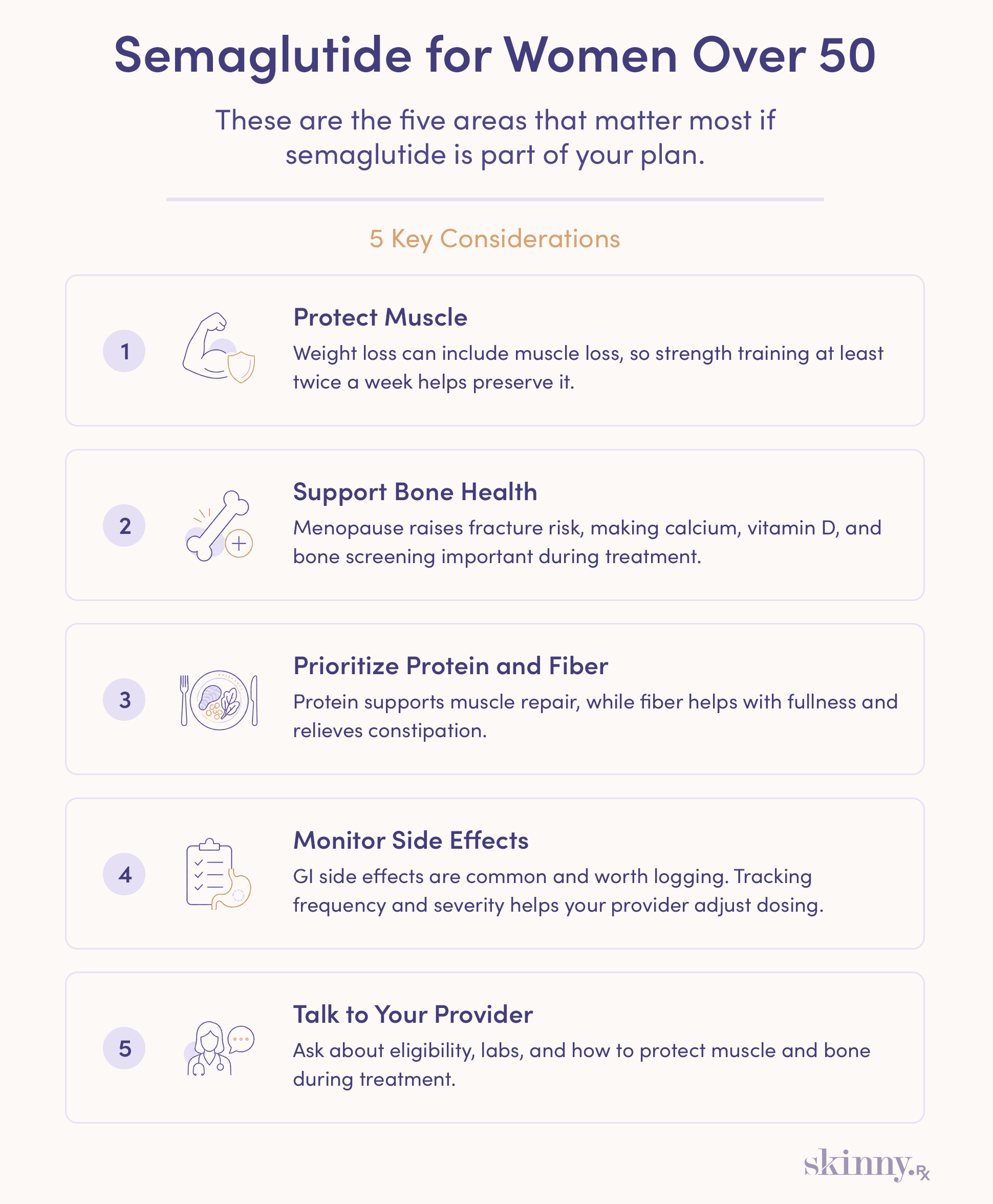
Preserving Muscle
One thing to know about using semaglutide is that it can cause weight loss through the loss of both fat and muscle.
And since women are prone to muscle loss both through aging and menopause, preserving muscle is extremely important for long-term health.
Maintaining a healthy level of muscle mass is necessary for several reasons:
- Mobility
- Posture
- Metabolism
- Injury prevention
One way to maintain muscle mass is by strength training.
Strength or resistance training is not only an important part of weight loss, but is also associated with a lower risk of developing cardiovascular disease, diabetes, and certain types of cancer.
Two days of strength training per week is recommended by the CDC for adults.
Supporting Bone Health
Declining estrogen during menopause can also impair bone health in women over the age of 50, increasing the risk of fractures and osteoporosis, a disease that thins the bones.
To protect your bone health, make sure you’re getting enough calcium, ideally from food sources when possible. Women over 50 generally need 1,200 milligrams a day, while younger women generally need 1,000 milligrams. Taking more than the recommended amount has not been shown to provide added benefit and may increase the risk of kidney stones.
You’ll also want to get enough vitamin D, which helps support calcium absorption and bone health. The recommended daily amount is generally 600 IU for women up to age 70 and 800 IU for women over 70.
Another benefit of strength training? It can help maintain bone density and reduce fracture risk.
Getting screened for baseline mineral bone health via a DEXA scan can also help you and your provider determine your prognosis and treatment plan.
Protein and Nutrition
Nutrition is also important for both healthy weight management and aging.
Focus on getting enough protein, the body's building blocks, to help repair muscles after strength training and build them stronger.
According to the Dietary Guidelines for Americans, most healthy adults should get between 10% and 35% of their daily calories from protein.
Or if you’re taking semaglutide, the suggested amount of protein is 1.2 to 1.6 grams of protein per kilogram of body weight per day, or 20 to 40 grams per meal.
You can increase protein from foods like eggs, chicken, fish, Greek yogurt, cottage cheese, tofu, beans, or protein shakes.
Another important nutrient while on semaglutide is fiber, which helps you feel satisfied and full after eating and combat medication side effects like constipation.
The dietary guidelines recommend 28 grams of fiber for adult females and 34 grams for adult males, and can be reached through foods like oats, lentils, chia or flax seeds, broccoli, Brussel sprouts, and blueberries.
Monitoring Side Effects
As we mentioned, semaglutide can cause some side effects, mainly gastrointestinal or stomach.
Besides constipation, these can include:
- Nausea
- Vomiting
- Diarrhea
- Bloating
- Indigestion
- Abdominal discomfort
- Sulfur burps (foul, rotten-egg-smelling burps)
- Acid reflux
These can go away over time for some, but they may not or could worsen if your doctor prescribes a dosage increase.
Pay attention to what side effects you experience, as well as how often and how severe, to keep your provider informed and up-to-date.
Doctors may also have you do routine bloodwork tests to check key biomarkers like blood sugar, kidney and liver function, cholesterol, and vitamin levels.
Questions to Ask a Healthcare Provider
Be sure to talk to your healthcare provider about your health goals and medical history, and ask these questions before starting semaglutide during menopause:
- Am I eligible for an FDA-approved GLP-1 medication?
- How do my blood pressure, cholesterol, A1C, and family history affect the decision?
- How should I protect muscle and bone health during weight loss?
- Should any labs or screenings be updated?
- How will we monitor side effects?
Frequently Asked Questions
Bottom Line
Weight management after 50 comes with real physiological challenges, and semaglutide can be a useful part of addressing them.
But it works best when paired with the right habits, consistent monitoring, and an honest conversation with your healthcare provider. Protecting muscle, supporting bone health, and staying on top of nutrition are not optional add-ons. They are what make treatment sustainable.
If you are considering semaglutide, the most important first step is talking to a clinician who understands your full health picture.
Explore Personalized Weight Loss Options
Start with an online assessment to help a licensed clinician determine whether a prescription weight loss treatment, along with guided nutritional support, may be appropriate for you.

By Rachel Sacks
Contributing Author
Rachel Sacks is a New York-based contributing writer with more than a decade of experience covering a range of topics, including weight loss, mental health, sexual wellness, skincare, and more. Her work has been featured in The New York Post, Healthline, Hims & Hers, Business Insider, and other notable publications. She graduated from Miami University in Oxford, Ohio, with dual degrees in Journalism and Art History.