

 Medically Reviewed

Key Takeaways
- Hair thinning on Ozempic or Wegovy is typically telogen effluvium, a temporary shedding phase triggered by rapid weight loss and nutritional stress.
- Rapid weight loss from appetite suppression can create calorie and nutrient shortfalls, prompting the body to redirect energy away from non-essential functions like hair growth.
- Hair shedding often appears 2–3 months after starting treatment, reflecting the delayed timing of the hair growth cycle rather than an immediate reaction to the medication.
- Protein intake plays a key role in hair health, and people losing weight on GLP-1 medications may need more protein to support both hair and muscle.
- Low iron levels can contribute to increased shedding, making balanced nutrition important during periods of rapid weight loss.
“Why am I losing hair on Ozempic?” You ask yourself, frustrated. GLP-1s are mainly used for managing diabetes and assisting with weight loss. They also have a number of emergent uses and a range of side effects. If you’ve noticed thinning hair after starting a GLP-1, it’s tempting to assume your medication is the culprit.
But it’s not—at least, not directly. Understanding hair loss on GLP-1s is important, but not as much as finding a practical solution. The good news: GLP-1 hair loss is both temporary and, almost always, reversible. Here’s what you need to know.
Does Ozempic Cause Hair Loss?
The short answer: There’s no evidence directly linking popular GLP-1s, like Ozempic and Wegovy, to hair loss. Yet hair loss has been observed in clinical data. Some studies show as many as 15% of participants experiencing some form of shedding while on a GLP-1, while other research acknowledges that evidence supporting any sort of causative relationship as “sparse” and “conflicting.”
What’s happening here? First, we need to distinguish between what most people think of when they hear “thinning hair” and what’s likely happening while you’re on a GLP-1.
- Alopecia is a dermatological term that describes permanent hair thinning due to aging or pre-existing genetic factors.
- Effluvium refers to the temporary shedding of hair follicles due to too much stress, insufficient nutrition, or other acute issues.
If you’re dealing with GLP-1 hair loss, it’s likely not because of any chemical interaction between the drug and your body. However, the circumstantial effects of these drugs tell a different story.
Explore GLP-1 Weight Loss
GLP-1s can support meaningful weight loss when prescribed by a licensed clinician. Take a quick assessment to explore personalized treatment options.
The Science of Telogen Effluvium
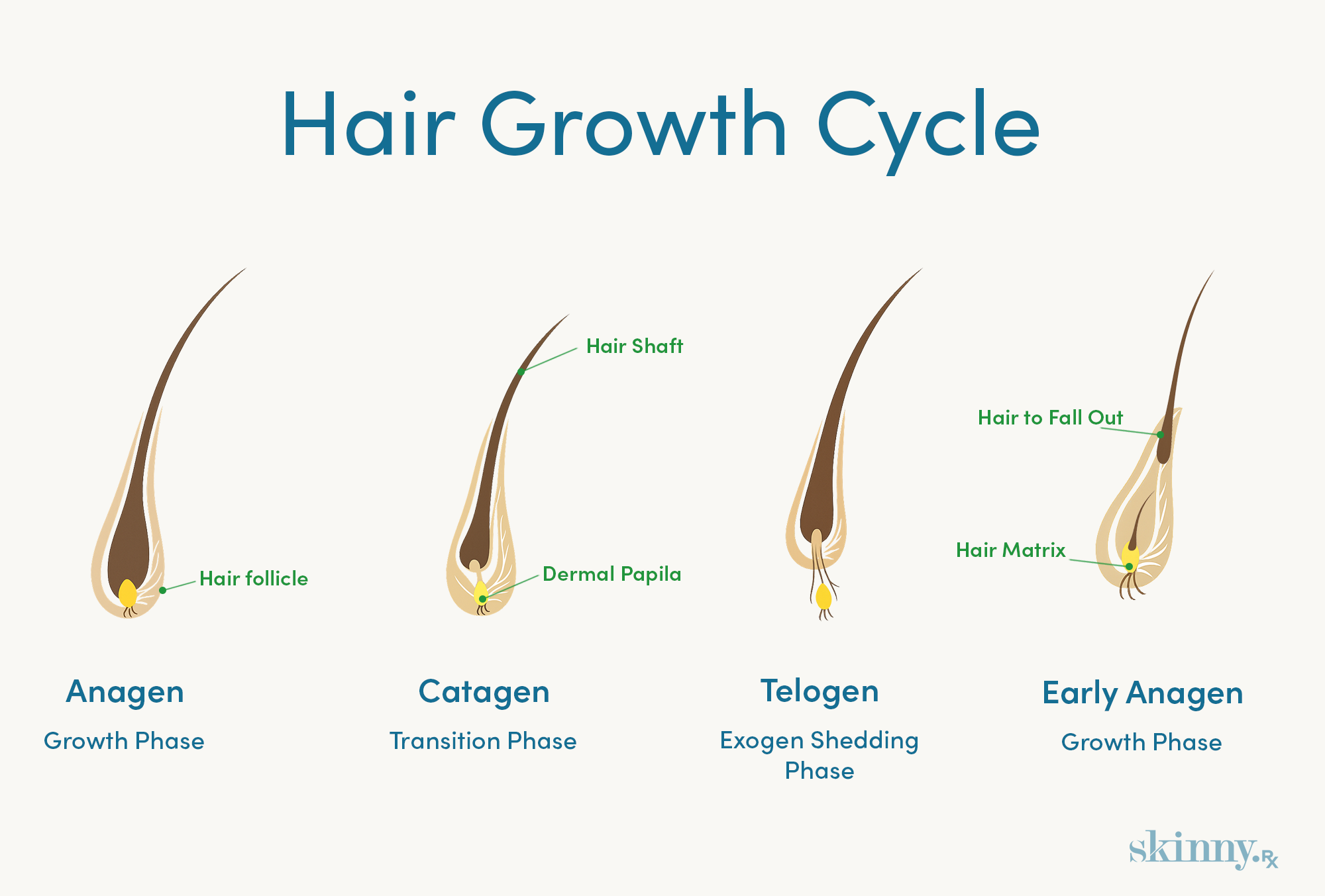
The lifecycle of human hair happens in different stages. Effluvium occurs when hair follicles are prematurely pushed into the telogen phase 3 to 4 months after a specific trigger, such as a significant shift in eating habits.
Telogen effluvium (TE) is distinct from androgenic alopecia in that it doesn’t concentrate in typical “balding” areas like the hairline and back of the head. Effluvium happens all across the scalp and is noticeable when brushing or washing hair.
How Rapid Weight Loss “Shocks” Your Follicles
Semaglutide and tirzepatide facilitate weight loss through appetite regulation—they dampen hunger, diminish cravings, and help you feel fuller, longer, after you eat. In practice, people losing weight on GLP-1s rely on the drug to create and maintain a calorie deficit.
Eating less than you need to maintain your weight forces your body to call upon stored fat reserves to make up the difference. The problem? Stored fat doesn’t contain essential vitamins and minerals for maintaining hair health, and eating too little can rob you of certain vital nutrients that help keep your hair healthy and resilient.
In a nutshell: Prolonged reductions in appetite create nutritional and caloric deficits. Your body compensates by shifting resources away from less-essential functions, like hair growth, to compensate, leading to acute hair thinning, or effluvium.
Why You’re Losing Hair Now
Most people don’t notice their hair falling out or going missing the day after doing their first GLP-1 injection. Many people begin noticing hair loss after weeks or months on their medication.
Why the lag? Nutritional deficits don’t take hold overnight. Nor do “malnourished” hair follicles immediately wither and shed. The hairs falling out now likely “died” weeks prior—refer to the diagram above—and new hairs are waiting to sprout once the dead follicles go.
This comports with weight loss rates on GLP-1s as well. Most people see a surge of weight loss early in their protocols, after completing titration. Weight loss then gradually slows and may plateau after a year or so on the medication.
Taken together, this means you’re most likely to notice shedding 2-3 months after starting a GLP-1. To mitigate, prevent, or restore lost hair, you need to know exactly what’s happening nutritionally.
What Causes Hair Loss on Ozempic?
The dosage of a drug determines its potency (and, usually, the severity of side effects). Calorie deficits work the same way. The bigger your “deficit dosage,” the more likely you are to encounter side effects—including hair loss.
The Core Culprit: Nutrition
Crash dieting is high-risk, high-reward; an aggressive calorie deficit will move the needle on the scale faster than a mild one. In exchange, you put yourself at risk of side effects like effluvium.
Here’s what the science says:
- According to one case study, “Rigorous calorie restriction” is a primary influence on “profuse hair loss” among crash dieters.
- A larger data set observed hair loss among dieters losing 8 or more pounds per month, with women and the elderly being at higher risk of telogen effluvium.
The sticky part if you’re on a GLP-1? You may inadvertently be in an excessive calorie deficit and not notice due to how the drug influences hunger signaling and amplifies satiety. It’s possible that you may need to eat more while on Ozempic or Wegovy to mitigate hair loss while continuing to lose weight—more on that later.
Protein Intake & Hair Loss
Protein contains amino acids, the “building blocks” of all sorts of organic material, hair included. When discussing nutritional deficiencies, inadequate protein intake is a hot-button issue. Without enough protein, your body can’t perform many of its important restorative functions.
For adults without contraindications, the standard evidence-based protein recommendation is .8 grams per kilogram of body weight per day, or about .36 grams per pound, to supply standard bodily functions, including the maintenance of muscle mass and hair.
“For patients losing weight, that standard is too low,” adds Dr. Daniel McGee, D.O. “I tell my patients to shoot for 1.2 to 1.6 grams per kilogram while they’re losing weight on a GLP-1.” Dr. McGee explained that the additional protein will not only help preserve muscle, it can also help prevent hair loss.

Many patients are aware of the recommended daily allowance for protein being 0.8 g per kg of body weight. However, for patients losing weight, that standard is too low. I will tell my patients to shoot for 1.2 g to 1.6 g of protein per Kg of body weight while they are losing weight on a GLP-1. Not only does this help preserve muscle, it also can help prevent hair loss. If hair loss does occur, I remind patients that it could be a sign that their diet needs some adjusting, and we can look at overall nutritional balance and add supplements as needed.
–
Dr. Daniel McGee, Board-certified Family Medicine Physician
The Roles of Iron & Ferritin
Beyond calories and protein, vitamins and minerals also play a role in hair health. Insufficient iron intake from food can reduce ferritin levels in the body.
The relevance? Studies have shown that diminished ferritin is correlated with telogen effluvium; one study published in the journal Cureus marked a “significant association,” arguing that ferritin levels are a notable biomarker for predicting acute hair loss.
How To Prevent Hair Loss on GLP-1s
Now that we have a handle on why you’re losing hair on Ozempic or Wegovy, it’s time to talk about solutions. Sure, shedding might be a temporary side effect, but that doesn’t make it easier to tolerate in the moment.
An added bonus: Some of the actions you can take to mitigate hair loss on GLP-1s are just good dietary advice as well. Improving your dietary quality can do more than keep your hair on your head.
Prioritize Protein
As discussed, your protein intake makes a meaningful difference in your hair health. If you’re in a significant calorie deficit due to using a GLP-1, you’ll also want to prioritize protein to help prevent muscle loss.
.36 grams per pound is your baseline, but higher intakes aren’t harmful. In fact, if you do strength training weekly to maintain muscle, you may want to significantly increase how much protein you’re eating. For regular exercisers who incorporate weight lifting, one gram per pound of body weight is the rule of thumb.
Additional Supplements
There’s some limited evidence suggesting certain supplements can make a difference in hair loss, too.
- One study showed that an oral amino acid supplement “effectively and safely improved” TE symptoms in a majority of patients.
- A 12-week trial involving an amino-acid-plus-collagen supplement bolstered the effects of other anti-hair loss interventions.
More broadly, a narrative review in the journal Dermatology & Therapy bottled the issue by calling vitamin & mineral supplementation a clear modifiable risk factor for hair loss. In plain English? Take your vitamins (and eat your protein).
When To See a Doctor
Temporary hair shedding is an unfortunate, but not overly rare, occurrence when taking GLP-1s—but Ozempic and Wegovy aren’t causing the issue directly. That’s down to the sustained and significant calorie deficit created by the drugs’ appetite-suppressing effects.
However, if you’re experiencing persistent, noticeable hair loss in specific areas, there may be an underlying issue worth investigating. Speak with your doctor to rule out any hormonal or thyroid-related problems. A physician can also advise you on taking more drastic measures, such as prescription hair treatments or adjusting your GLP-1 dose.
Talk to a Licensed Clinician About Your Options
If you’re navigating weight loss with GLP-1 medications and have concerns about side effects like hair shedding, a licensed clinician can help you evaluate what’s happening and adjust your approach if needed. Individual factors like calorie intake, protein levels, and overall nutrition can all play a role.
Take a short assessment with SkinnyRx to explore personalized weight-loss options, and connect with a licensed clinician who can help guide your treatment based on your health profile and goals.
Frequently Asked Questions

By Jake Dickson, NASM-CPT, USAW-L2
Contributing Author
Jake holds a B.S. in Exercise Science from UNC Wilmington and began his career as a personal trainer and weightlifting coach. In recent years, he’s moved behind the page as a writer and editor, contributing hundreds of articles and being featured as a subject matter expert. Today, Jake’s goal remains the same: to empower people to change their lives by bringing heady scientific topics down to ground level.