
 Medically Reviewed

Key Takeaways
- Tirzepatide does not directly increase testosterone, but weight loss from the medication may support healthier hormonal function.
- Excess body fat, especially visceral fat, lowers testosterone by increasing estrogen and disrupting endocrine balance.
- Insulin resistance and metabolic dysfunction can further suppress testosterone and limit how effectively the body uses it.
- Early evidence suggests improvements in erectile function and hormone levels may occur, but these effects are likely driven by weight loss rather than direct hormonal action.
- Preserving muscle mass through resistance training and adequate protein intake is critical, as rapid weight loss can reduce testosterone-supporting lean tissue.
You’re right to be worried about your testosterone levels. For men, healthy testosterone levels facilitate ambition, work ethic, sex drive, and metabolic function. Holistic wellness is all the rage, but what’s not talked about is how low T levels deprive men of our quality of life, especially as we age.
Tirzepatide isn’t hormone therapy. But if you’re worried about low T and you’re on a GLP-1, you might be surprised to learn that tirzepatide for testosterone levels is a potentially viable intervention for restoring proper endocrine function—and one that doesn’t require a lifetime subscription to TRT.
Overweight, Obesity, and Low Testosterone: The Connection for Men
There’s a biological link between obesity, insulin resistance, and low testosterone (hypogonadism). Excess body fat can disrupt male hormone balance, causing researchers to allege that obesity “is the clinical condition most strongly associated with lowered testosterone concentrations in men.”
More importantly, suppressed testosterone resulting from carrying too much body fat is a strong predictor of needing testosterone replacement therapy, or TRT, in the future. Here’s how it happens.
Visceral Fat and Estrogen Conversion
Our bodies store fat in two distinct categories. There’s subcutaneous (sits-under-the-skin) fat, and visceral fat, which coats the abdominal cavity and major organs. Subcutaneous fat accounts for most of the body fat lost during weight loss, but visceral fat is the real threat.
A 2017 systematic review and meta analysis of almost 90 studies on fat loss observed:
- Despite most people carrying more subcutaneous fat, weight loss interventions, including prescription drugs, produce a greater percentage of visceral fat loss.
- Fat loss does not happen discreetly; visceral fat loss is linked to subcutaneous.
- No weight loss strategy can preferentially target one type of fat deposit.
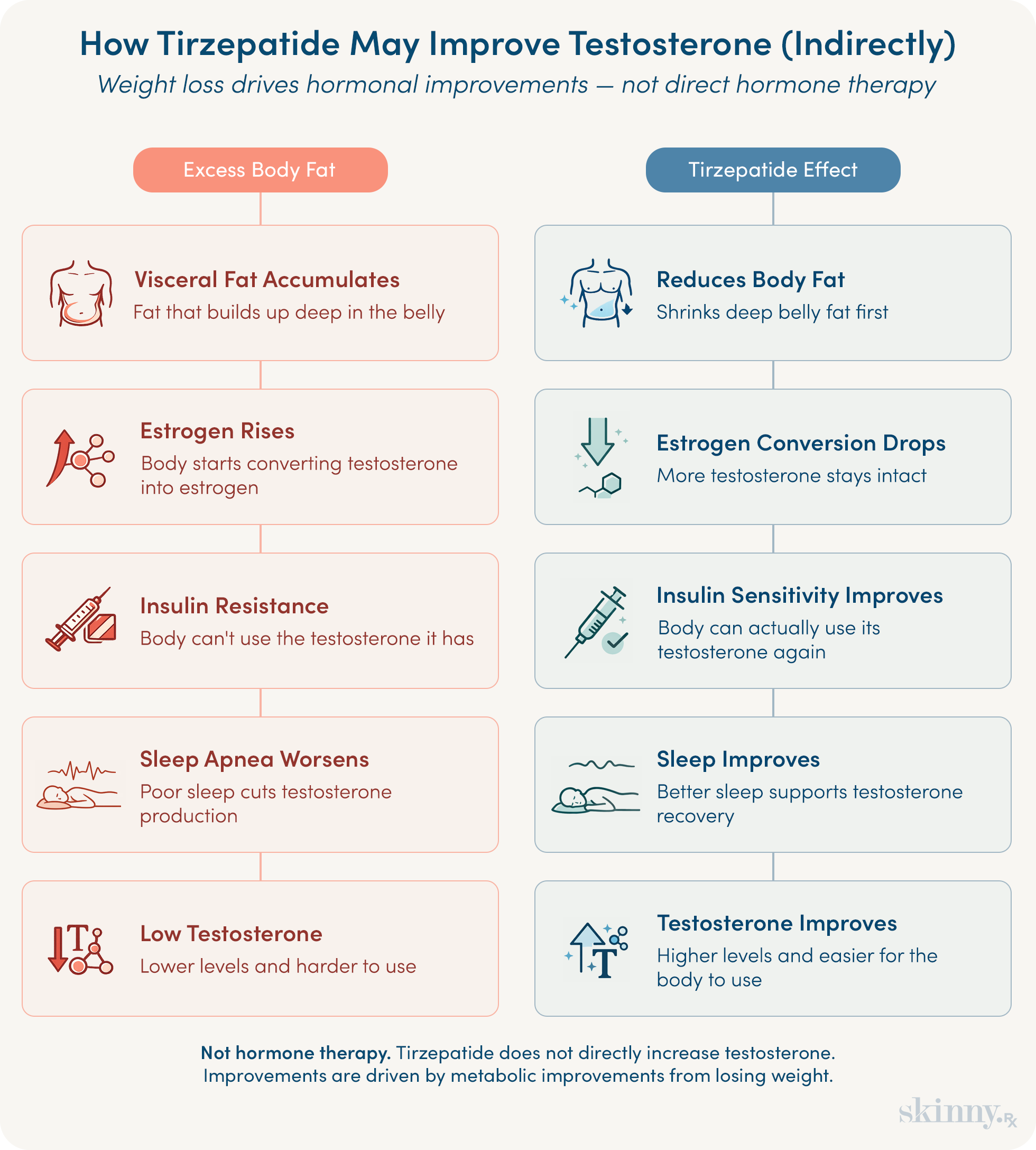
Visceral fat is considered more harmful because the deposits are metabolically active—sites where your endocrine system can produce estrogen. Increased estrogen secretion has been shown to counteract testosterone levels.
Reducing overall body fat levels also diminishes these visceral reserves, leading to improved hormonal function in the process—that’s the selling point of tirzepatide as a hormonal agent, in short. But there’s more to it.
Does Tirzepatide Boost Testosterone?
Tirzepatide is not hormone therapy in the literal sense; it encourages healthier hormonal function through weight management. That doesn’t mean tirzepatide for testosterone levels isn’t worthwhile, just that the relationship is correlational instead of causative.
That said, the latest research may be changing the conversation. We don’t have much data yet, but one study from late in 2025, which compared tirzepatide to both transdermal (through the skin) testosterone and placebo, made an argument worth considering:
Authors La Vignera & colleagues argued that tirzepatide may be effective in “improving both metabolic parameters, ED, and gonadal hormone levels in patients with obesity and metabolic hypogonadism,” also known as low testosterone levels.
It’s the most direct evidence of tirzepatide boosting testosterone so far, but it’s just one study. Let’s take a look at the broader mechanisms and how they may affect your T levels.

Men often think they have to choose between living with low testosterone symptoms or going straight to lifelong hormone therapy. In some cases, improving weight and metabolic health first may open another path worth considering.
–
Dr. Sajad Zalzala, MD, SkinnyRx Medical Director
Aromatase Activity
Visceral fat contains an enzyme known as aromatase. Aromatase converts testosterone molecules into estrogen. Recent research has proposed that this loop may contribute to health issues like insulin resistance and type-II diabetes. Put simply, the more body fat we accumulate, the deeper we trap ourselves in a vicious cycle.
Insulin Resistance
Insulin resistance describes an “impaired biologic response” to the secretion of the regulatory hormone insulin. Poor insulin response is the number-one concern for diabetes patients, but insulin resistance resulting from obesity can also double down on testosterone suppression.
Research shows a strong inverted relationship between insulin resistance and sex-hormone binding globulin (SHBG); the more insulin-resistant you become, the lower your concentration of SHBG, which facilitates testosterone expression. Not only are your testosterone levels lower than they should be, but you aren’t getting full value out of what you have, either.
Sleep Apnea
When it comes to testosterone levels, obesity and certain lifestyle factors like stress steal the spotlight. Sleep apnea (erratic breathing while asleep) can have a particularly stinging effect on male testosterone levels, according to research in the journal Andrology.
A 2024 clinical trial on the interactions between tirzepatide, sleep apnea, and obesity produced some encouraging findings. Not only did a year-long tirzepatide regimen improve sleep apnea markers across the board, but those suffering from more severe cases saw the greatest improvement.
Key Takeaways
- Obesity increases visceral fat levels, which can disrupt normal hormonal function.
- Downstream effects include insulin resistance and sleep apnea, impairing your body’s ability to utilize available testosterone.
- Low t-levels in overweight or obese men are a confluence of internal factors—using tirzepatide can help you untangle the mess.
See If Tirzepatide Is Right for You
If appropriate, get access to clinician-guided tirzepatide treatment tailored to your weight loss goals and overall health.
2026 Clinical Outlook: Tirzepatide for Male Metabolic Health
Tirzepatide started as a treatment for patients with diabetes. It’s since accumulated clinical support as a superior weight loss tool than semaglutide (for some patients)—that weight change catalyzes a host of downstream metabolic improvements, including untangling a briar of hormonal issues.
However, weight loss, especially large amounts in short periods of time, isn’t all sunshine. Losing a lot of weight quickly can also disrupt your body’s metabolic function. Luckily, there are steps you can take to mitigate collateral damage while investing in better testosterone function long-term.
- Skeletal muscle mass is strongly linked with testosterone levels. The more you have, the higher your T.
- Excessive rates of weight loss (think above two pounds per week, generally) increase the risk of your body harvesting muscle tissue to meet energy needs.
- Studies on GLP-1-induced weight loss indicate up to 40% of the weight you lose can come from valuable muscle.
If you’re using tirzepatide for testosterone improvements, you need to take measures to ensure your weight loss is sustainable and productive. On the muscle preservation front, that means lifting weights to discourage muscle wasting and eating more protein than usual—contemporary evidence-based protein recommendations for active lifters range from 1.6 to 2.2 grams per kilogram of body weight.
Put plainly, skeletal muscle is very much a “use it or lose it” thing. If you’re trying to restore testosterone levels on tirzepatide, but are skipping the gym and not including protein in your diet, you’re shooting yourself in the foot.
It just so happens that these lifestyle changes also encourage other metabolic improvements, too. Low and high testosterone levels alike don’t happen in a vacuum; you need to cross your T’s, so to speak.
Considerations With Testosterone Replacement Therapy (TRT)
If you’re trying to improve your testosterone levels, you may have seen blips across social media of men viewing tirzepatide as an “exit strategy” for artificial hormone support. The data don’t lie—there’s a “substantial increase” in men needing exogenous hormone therapies to combat endocrine dysfunction from conditions like obesity.
If you’re overweight or obese and are on medical testosterone, shedding the extra pounds will almost certainly improve your levels. However, it’s not guaranteed, and you absolutely should not quit TRT therapy cold turkey to hop on tirzepatide instead.
Consult with your physician or specialist if you want to take a more holistic approach. However, bear in mind that some men on TRT will require some exogenous support for the rest of their lives, depending on the root cause of the issue.
That said, when it comes to weight loss, testosterone levels, and quality of life for men, it’s almost all upside.
Bottom Line
Tirzepatide won't fix your testosterone overnight, and it was never designed to. But for men carrying excess weight, low T rarely exists on its own. Visceral fat, poor sleep, and insulin resistance all push in the same direction over time.
Losing the weight addresses each of these at the root, and for some men, tirzepatide can be a clinically supported way to get there. Resistance training and adequate protein matter too. Muscle mass and testosterone are closely linked, and weight loss alone won't protect one without the other.
If you're considering a GLP-1 and want to know whether it's the right fit for your situation, we at SkinnyRx offer a free assessment that connects you with providers who can evaluate your health profile and recommend a clinically appropriate approach.
Frequently Asked Questions

By Jake Dickson, NASM-CPT, USAW-L2
Contributing Author
Jake holds a B.S. in Exercise Science from UNC Wilmington and began his career as a personal trainer and weightlifting coach. In recent years, he’s moved behind the page as a writer and editor, contributing hundreds of articles and being featured as a subject matter expert. Today, Jake’s goal remains the same: to empower people to change their lives by bringing heady scientific topics down to ground level.