
 Medically Reviewed

Key Takeaways
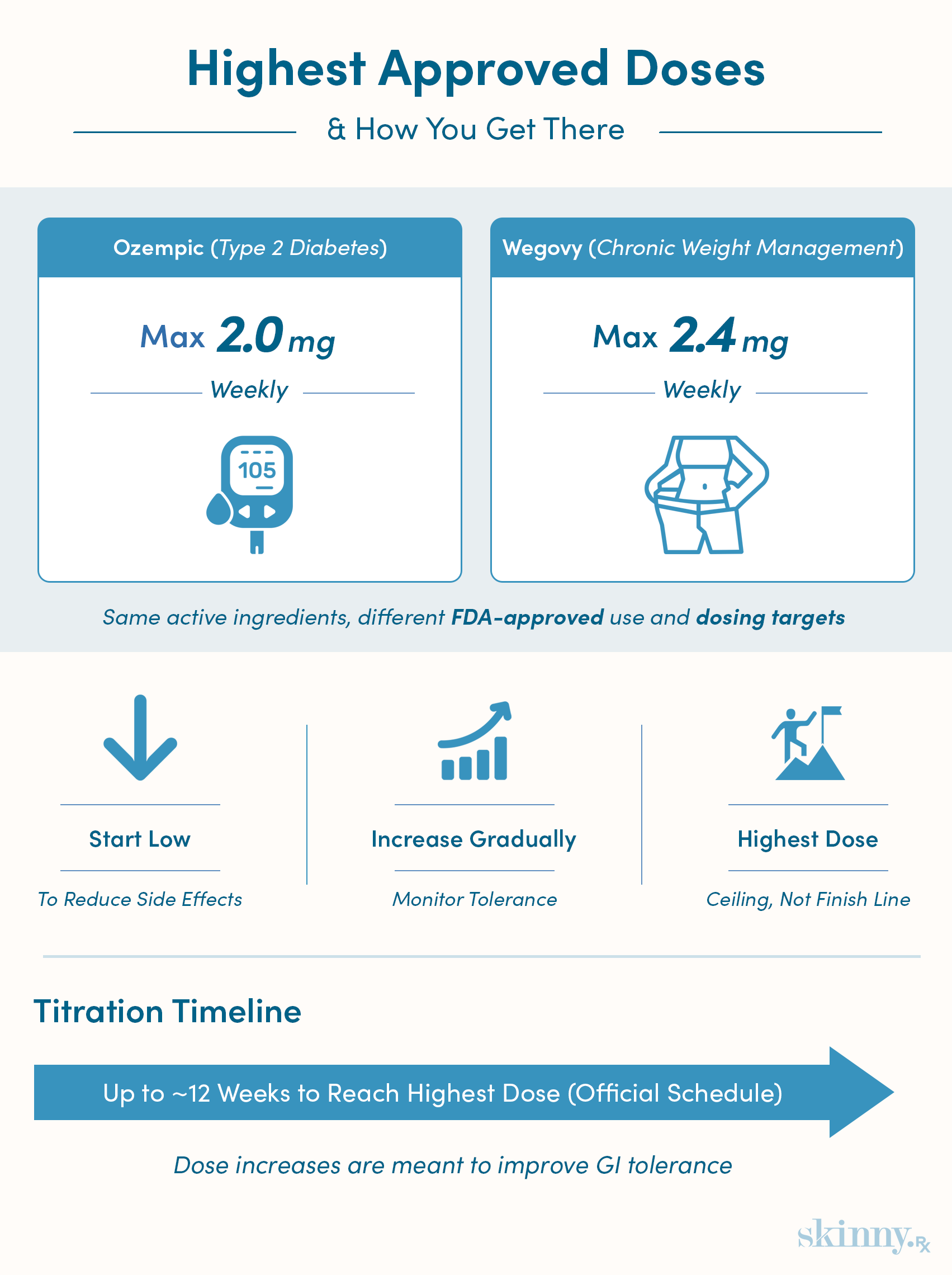
- The highest FDA-approved dose differs by medication and use, with Ozempic capped at 2.0 mg weekly for type 2 diabetes and Wegovy capped at 2.4 mg weekly for weight management. These are the highest approved weekly doses for each indication.
- Higher doses are associated with greater average A1C reductions and weight loss, but benefits may plateau as side effects increase.
- Maximum doses are safety ceilings, not goals, and many patients see results without reaching the highest dose.
- Gradual dose titration allows the body to adjust to semaglutide, helping reduce gastrointestinal side effects as doses increase.
- Long-term success often depends on finding the minimum effective dose rather than staying at the maximum.
When it comes to medication, you can have too much of a good thing. Calibrating the appropriate dose of semaglutide is crucial for maximizing your results while minimizing side effects.
Here’s what we know: Higher doses are associated with greater average A1C reductions and weight loss.
That said, your goal shouldn’t necessarily be to race toward the highest dose of semaglutide. You and your physician should collectively decide what dosage of semaglutide best fits your needs and, more importantly, that you can tolerate potential side effects.
This article will outline the nuances of semaglutide dosing, define dose limits for both Ozempic and Wegovy, and break down the critical protocols you must stick to while using GLP-1s.
The Fundamental Difference: Semaglutide by Indication
Semaglutide is a GLP-1 receptor agonist. These medications can have profound impacts on managing diabetes symptoms, controlling body weight, and may have even wider applications in the future.
Like all drugs, using GLP-1s comes with potential side effects, many of which depend on the dose you’re taking.
Maximum Approved Dose for Type 2 Diabetes (Ozempic)
According to manufacturer Novo Nordisk, the maximum Ozempic dose for type-2 diabetes is 2mg per week. However, if you’re taking Ozempic, you’ll begin with a much lower entry dosage of .25mg.
Maximum Approved Dose for Chronic Weight Management (Wegovy)
On a chemical level, Wegovy and Ozempic are the same compound. The distinction arises from Novo Nordisk seeking separate FDA approval for this medication specifically for chronic weight management.
Wegovy’s maximum approved dose for weight management is 2.4mg per week. As with Ozempic, you’ll likely start with a much more conservative dose and gradually ramp up.
The Rationale Behind Dose Limits and Titration
Ozempic and Wegovy’s maximum doses aren’t goals to hit, they’re safety ceilings—limits you may not even need to reach in order to reap the benefits.
What Is Dose Titration?
Dose titration refers to the process of gradually increasing the amount of medication you’re taking over time, rather than jumping directly into the maximum dose. Titration schedules accomplish several things:
- Provide “adequate and effective” treatment in the most efficient manner possible
- Minimize redundant or wasteful use of medication
- Monitor the adverse effects of the medication at different levels
Despite both being the same GLP-1, Wegovy and Ozempic have different titration schedules for a reason; to mitigate side effects while approaching the relevant dosage for managing diabetes symptoms and enhancing weight loss, respectively.
The Dose-Response Relationship
All drugs adhere to a dose-response relationship in some form—the more you take, the stronger the effects (and side effects) become. Moreover, taking higher amounts of a substance doesn’t always make it more potent. It’s up to you and your physician to conduct a cost-benefit analysis of increasing your prescription.
Why Slow Escalation Matters for GI Tolerance
For example, clinical trials show that higher doses of semaglutide produce stronger gastrointestinal side effects, which are among the most common adverse effects of taking the medication.
However, the stomach and digestive system are resilient and adaptable. Think of a lesson you likely learned at the kitchen table early in life; if you scarf down your dinner as fast as you can, you’re probably going to give yourself a tummy ache. Take slower bites and the same meal is palatable instead of nauseating.
By stretching out the titration schedule of semaglutide with more modest increases in dose, you can give your body time to adjust to the side effects and diminish their intensity.
Expert-Guided, Sustainable Weight Loss
Discover how GLP-1s, combined with expert support, can help you reach lasting weight loss results.
Clinical Evidence: Efficacy at Maximum Dose
Let’s take a closer look at what the science has to say about Ozempic and Wegovy’s efficacy at their maximum prescribable dosages.
Sustained Results: Trial Data on Diabetes Control
The maximum prescribable dosage of semaglutide has increased as additional research is published. That said, clinicians have taken detailed looks at how different dosages affect diabetes symptom management.
In a 40-week SUSTAIN trial, authors Frias & colleagues found “semaglutide [at] 2mg was superior to 1mg in reducing A1C” alongside benefits to weight management. The higher dose provided a “treatment intensification option” with a similar safety profile for nearly a full year.
Peak Weight Loss: Trial Data on Chronic Management
Data on semaglutide’s long-term efficacy on weight management at moderate to high doses is similarly promising.
- A landmark paper in 2021 describes patients taking 2.4mg (the maximum dose of Wegovy) for 68 weeks, and yielding “sustained, clinically relevant” weight loss of up to 15%.
- A 2024 meta analysis of clinical trials concluded that 2.4mg semaglutide produces sustained weight loss that is “well tolerated and safe.”
That said, there is a recognized semaglutide weight loss plateau. For most people, semaglutide makes it much easier to manage their weight by reducing “food noise” and other compulsions. Scale weight change tends to slow between 12 and 18 months of use.
Long-Term Considerations
Is semaglutide a for-life medicine? It depends; patients with diabetes have an indefinite need, while weight loss is often viewed as a temporary endeavor. Unfortunately, studies show that folks tend to gain some (or all) of the lost weight back after they come off semaglutide.
As such, it’s important to consider best practices for long-term use of semaglutide, no matter what your primary purpose is.
The Importance of Minimum Effective Doses
The dose makes the poison, and you don’t need a sledgehammer to do something you could accomplish with a scalpel. When it comes to long-term use of any drug, it pays to be efficient and consider how much value you can get out of how little you take.
If you’re on semaglutide, this may look like meeting with your physician after some time to discuss reducing your dose to the minimum effective level; the lowest amount you need to maintain the effects.
For many people, semaglutide provides much-needed breathing room to get a hold of stray health habits that have created unwanted weight gain. If you feel you’ve developed a better relationship with eating, have fewer cravings, and are regularly physically active, you may be able to reduce your semaglutide dose and continue on a positive trajectory—without the side effects of a higher dose.
Choosing between GLP-1s and deciding how dosing should be approached is not something most people should guess at. At SkinnyRx, you can start with a short assessment that reviews your health history and goals, then work with a licensed medical provider who helps determine the right option and guides dosing carefully over time.
Frequently Asked Questions

By Jake Dickson, NASM-CPT, USAW-L2
Contributing Author
Jake holds a B.S. in Exercise Science from UNC Wilmington and began his career as a personal trainer and weightlifting coach. In recent years, he’s moved behind the page as a writer and editor, contributing hundreds of articles and being featured as a subject matter expert. Today, Jake’s goal remains the same: to empower people to change their lives by bringing heady scientific topics down to ground level.