
 Medically Reviewed

Key Takeaways
- Missing a single GLP-1 dose does not stop the medication from working or cause immediate weight regain.
- Ozempic and Wegovy allow a late dose up to five days after a missed shot, while Mounjaro and Zepbound allow a late dose only up to three days.
- If you are outside your medication’s late-dose window, the missed injection should be skipped, and you should wait for your next scheduled shot.
- Taking two doses at once to make up for a missed injection increases the risk of nausea, vomiting, and other serious side effects.
- Going more than 14 days without a GLP-1 dose may require medical guidance before safely restarting your medication.
Don’t panic.
Missing a GLP-1 dose isn’t the end of the world. In fact, studies tell us it’s quite common. If you’re here because of a missed GLP-1 dose, whether that be semaglutide or tirzepatide, you need to know what your options are and how to take the next step.
This guide covers everything you need to know about adjusting your GLP-1 dose schedule if you, for any reason, miss your scheduled shot. Here’s what you need to know at a glance:
- Missing a single dose of a GLP-1 medication won’t affect how it works long term.
- Different drugs have different “safety windows” for late injection.
- If you’re past that safety window, your best bet is to just wait for your next scheduled dose.
- If it’s been over 14 days since you’ve been able to administer a dose, call your doctor.
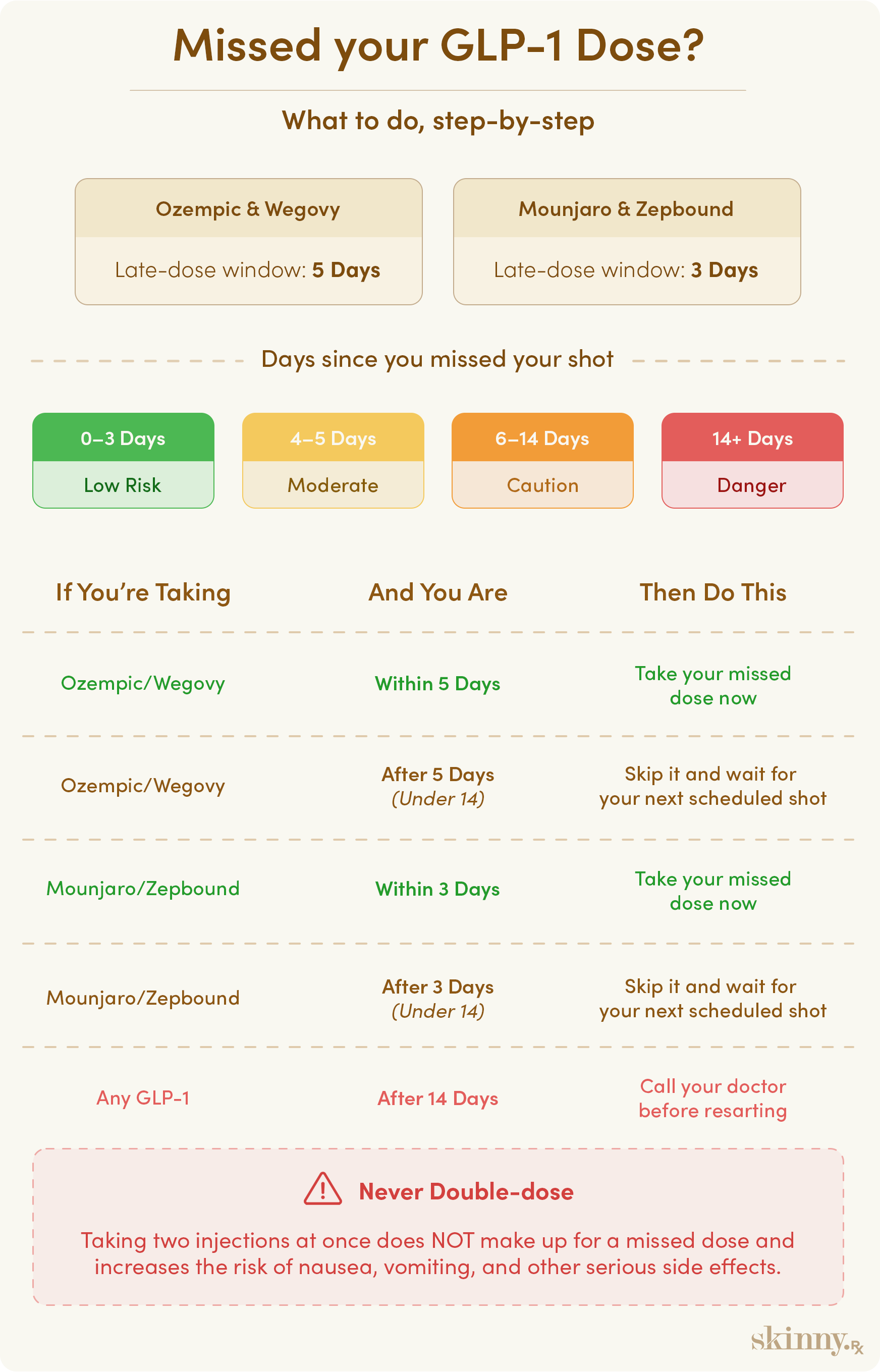
Missed GLP-1 Dose: Safe Late-Dosing Windows
Why is a missed GLP-1 dose not an emergency? GLP-1s stay in your system for weeks once you’ve titrated up to your therapeutic dose. One missed injection doesn’t mean a trip to the hospital or the end of your weight loss journey.
That said, each drug comes with its own guidance on the “window of safety”—how long you have after your scheduled dosing to safely administer the drug.
- Ozempic & Wegovy: 5 days to administer a late dose.
- Mounjaro & Zepbound: 3 days to administer a late dose.

Sometimes I see patients panic when they miss a dose. I tell patients not to panic—it happens more often than people admit. What matters most is avoiding the urge to ‘catch up’ by double-dosing, which can cause unnecessary side effects. In most cases, following the medication’s safety window or simply waiting until the next scheduled dose is the safest move.
–
Dr. Sajad Zalzala, MD, SkinnyRx Medical Director
Missed GLP-1 doses aren’t always the result of a lapse in memory. Logistical issues, such as breakdowns along the supply chain or shortages at the pharmacy, can impact your dosing diligence.
If you find yourself out of pens on dose day and you can’t get ahold of more immediately, there’s no reason to panic. Temporary stalls in availability are often resolved within the medication’s safety window.
When To Skip and Wait
However, there are situations in which it may be wiser to simply wait for your next dose. If you’re outside the safety window, call your doctor or pharmacist for their recommendation. You may be advised to simply wait for your next injection.
Whatever you do, do not double-up on doses of a missed GLP-1 medication. Taking twice as much at once won’t make up for a missed injection, but will likely lead to pronounced acute side effects.
Re-Titrating & the Two-Week Rule
In the event you miss multiple scheduled doses, you may need to reevaluate your GLP-1 titration schedule or the ramp-up period that gets you from the starting dose to your designated therapeutic dose.
The two-week rule refers to the margin after which it may not be safe to resume your prescribed dose if you’ve missed multiple injections. While GLP-1s stay in your system for weeks, injecting high doses (2.4mg of Wegovy or 15mg Mounjaro, for example) may cause serious adverse effects.
UCLA recommends seeking a doctor’s advice if you somehow can’t access your injection pens on time after 14 days, whether due to a pharmacy shortage or simply forgetting to pack them on a vacation.
Risks of Double-Dosing GLP-1 Medications
If you feel you’ve “fallen behind” on your GLP-1 medication schedule by missing a dose, it might seem like injecting twice is a good idea. However, not only will double-dosing not make up for a missed dose, but it also comes with serious health risks.
Severe Gastrointestinal Issues
Based on existing research, severe stomach problems are among the leading issues with GLP-1 overdosing. Nausea, vomiting, and conditions like site reactions, headaches, and nasopharyngitis have been reported.
Blood Sugar & Hypoglycemia
The principal effect (and original use) of semaglutide was for the regulation of symptoms associated with type-II diabetes. As such, it’s thought that irregular dosing of GLP-1s may in some cases create or worsen hypoglycemia.
That said, research is inconclusive. One systematic review of the various adverse reactions of GLP-1s alleged that while side effects of semaglutide and tirzepatide are dose-dependent, “...dose escalation could not rise the concurrent rates of [hypoglycemia]...”
Worth noting: Dose escalation and double-dosing are not the same thing. There’s limited available evidence on the impact of double-dosing GLP-1s on hypoglycemia—but there is no credible evidence or support in favor of doing so, either. Play it safe.
Your Weight Loss Journey, Guided by Experts
Everyone’s weight loss journey is different. Learn whether a GLP-1 medication could be a safe, effective option for you through a short medical assessment.
Tips to Never Miss a GLP-1 Dose
A missed GLP-1 dose isn’t a death sentence. But that doesn’t mean you shouldn’t take every precaution to stay on track with your injection schedule. Sticking to a plan is sometimes easier said than done. Here are some practical, easy-to-implement tips for never missing a GLP-1 dose again.
Anchor It
“Anchoring” refers to pairing the task with another habit that you’re already diligent about; something you never forget to do. That way, you’ll be automatically reminded when the time comes.
Say your injection day is on Sunday, the same day you take out the trash. Injection pens need only be refrigerated prior to their first use (check the guidance available for each medication, as room temperature storage guidelines vary). Storing replacement garbage bags alongside your pens is a way of anchoring the task to something you don’t need to be reminded to do.
Track It
You can also set up a tracking system that reminds you when it’s time to take your GLP-1 injection. This can look like a calendar on the fridge, or a recurring reminder alert programmed into your phone. Visual cues or basic alerts are often more than enough to improve adherence.
Gamify It
If you’d rather get creative with it, there are ways to turn your GLP-1 injection schedule into a game. Develop a “challenge” to overcome and put a reward structure in place—you can even get your partner or children involved as well.
For instance, you can allow for a family movie night or a trip to the ice cream parlor the following day, if you remember to administer your dose by 7 o’clock that day. Or, try going for a “hot streak”; every time you hit 10 scheduled doses in a row, reward yourself with something you’ve wanted to indulge in.
Missing a dose or feeling unsure about what to do next is more common than most people realize, and it helps to have medical guidance when things feel unclear. Taking a short assessment with us at SkinnyRx can help you explore doctor-guided weight-loss options and understand which option best fits your health and weight-loss goals.
Frequently Asked Questions

By Jake Dickson, NASM-CPT, USAW-L2
Contributing Author
Jake holds a B.S. in Exercise Science from UNC Wilmington and began his career as a personal trainer and weightlifting coach. In recent years, he’s moved behind the page as a writer and editor, contributing hundreds of articles and being featured as a subject matter expert. Today, Jake’s goal remains the same: to empower people to change their lives by bringing heady scientific topics down to ground level.