

 Medically Reviewed

Key Takeaways
- Zone 2 cardio gives GLP-1 users a lower-intensity way to build endurance without jumping into harder workouts.
- Walking is one of the easiest ways to start, and beginners can build up gradually as their fitness improves.
- Low appetite on GLP-1s can make harder workouts more difficult to fuel, so keep cardio manageable on lower-energy days.
- If you’re experiencing vomiting, diarrhea, dizziness, or other GLP-1 side effects, scale back exercise until you feel better.
- If you are new to regular exercise or unsure how your GLP-1 may affect your workouts, talk with your healthcare provider before starting.
Cardiovascular exercise is one of the best things you can do for your health. But that doesn’t mean you need to hit a spin class or spam sprint workouts.
If you’re on a GLP-1 medication, Zone 2 cardio—that’s low-to-moderate intensity—can increase your activity level, build endurance, and improve your health without interfering with the drug’s side effects.
“It's exciting that GLP-1 treatment often becomes a springboard for lifestyle change,” says Daniel McGee, D.O. “As patients begin losing weight and feeling more comfortable moving, many become interested in exercise for the first time. I often recommend starting with something simple like walking at a conversational pace and gradually building from there.”
Here’s how to approach Zone 2 cardio on GLP-1s: what it is, how to start, and when to check in with your doctor if you have concerns.
What Is Zone 2 Cardio?
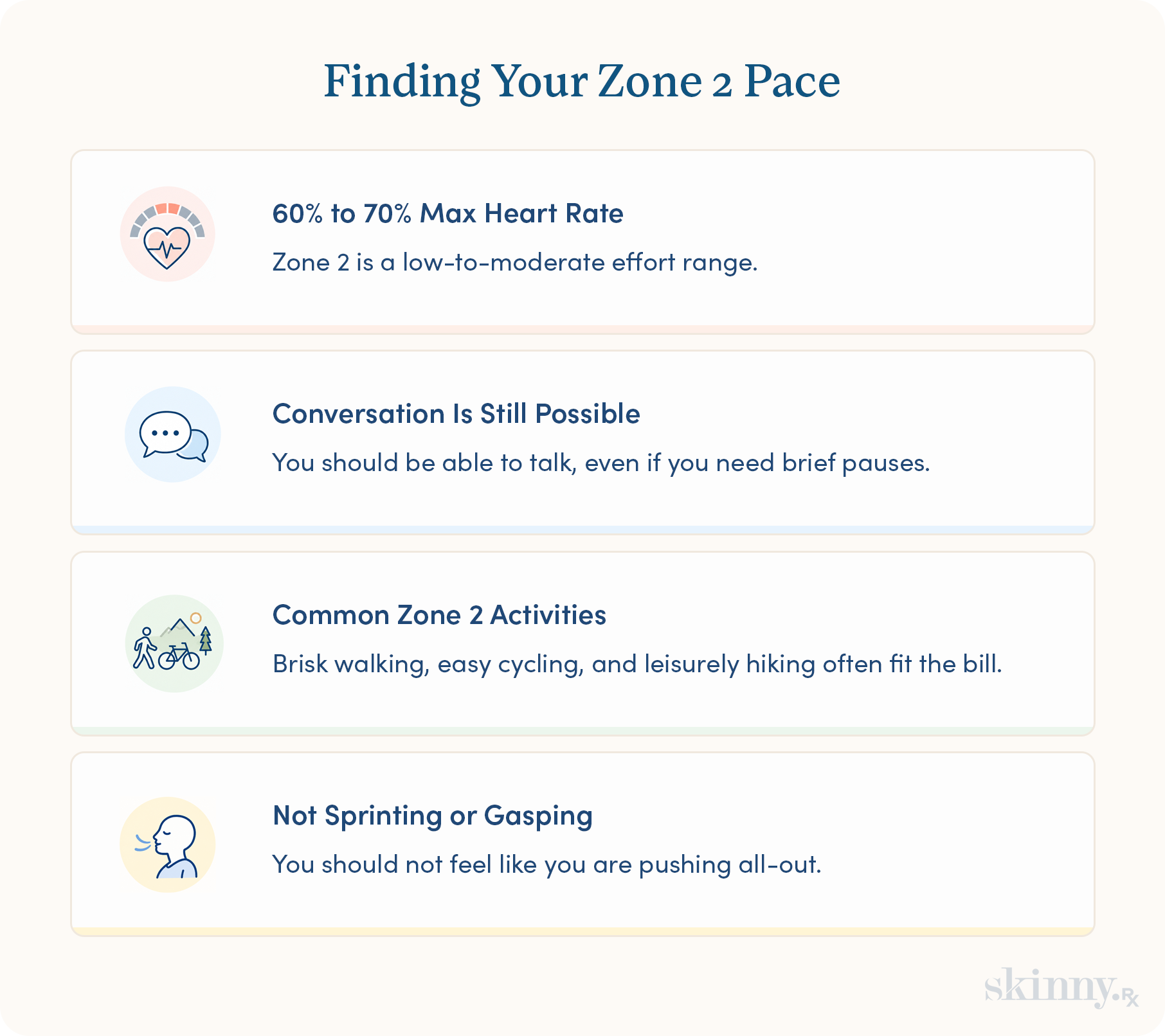
Zone 2 cardio refers to a specific range of heart rate intensity: between 60 and 70% of your maximum heart rate. According to the Cleveland Clinic, while you’re in Zone 2, “a light conversation is possible, though you might need to stop here and there to catch your breath.”
A brisk walk, easy cycling, or a leisurely nature hike are generally considered Zone 2 activities.
How Cardio Supports Weight Loss on GLP-1s
GLP-1 medications do not directly create weight loss. Their mechanism of action involves reducing appetite by curbing cravings and slowing the rate at which your body digests meals, making you feel fuller longer.
For many people, the medication alone is enough to create weight loss. But research consistently shows that a combination of GLP-1 medications plus lifestyle interventions like exercise produces better, longer-lasting results.
Regular exercise is also a pillar of general health. The American Heart Association recommends around 150 minutes of moderate-intensity activity for most adults weekly. It may sound like a lot, but when you break it down to 30-minute walks every weekday, getting your Zone 2 cardio in is quite manageable.
Weight Care With Guidance Built In
Get GLP-1 treatment and clinician support as you build an exercise routine, work through appetite and energy changes, and figure out what pace is right for you, all in one app.
How To Start If You Are New to Cardio
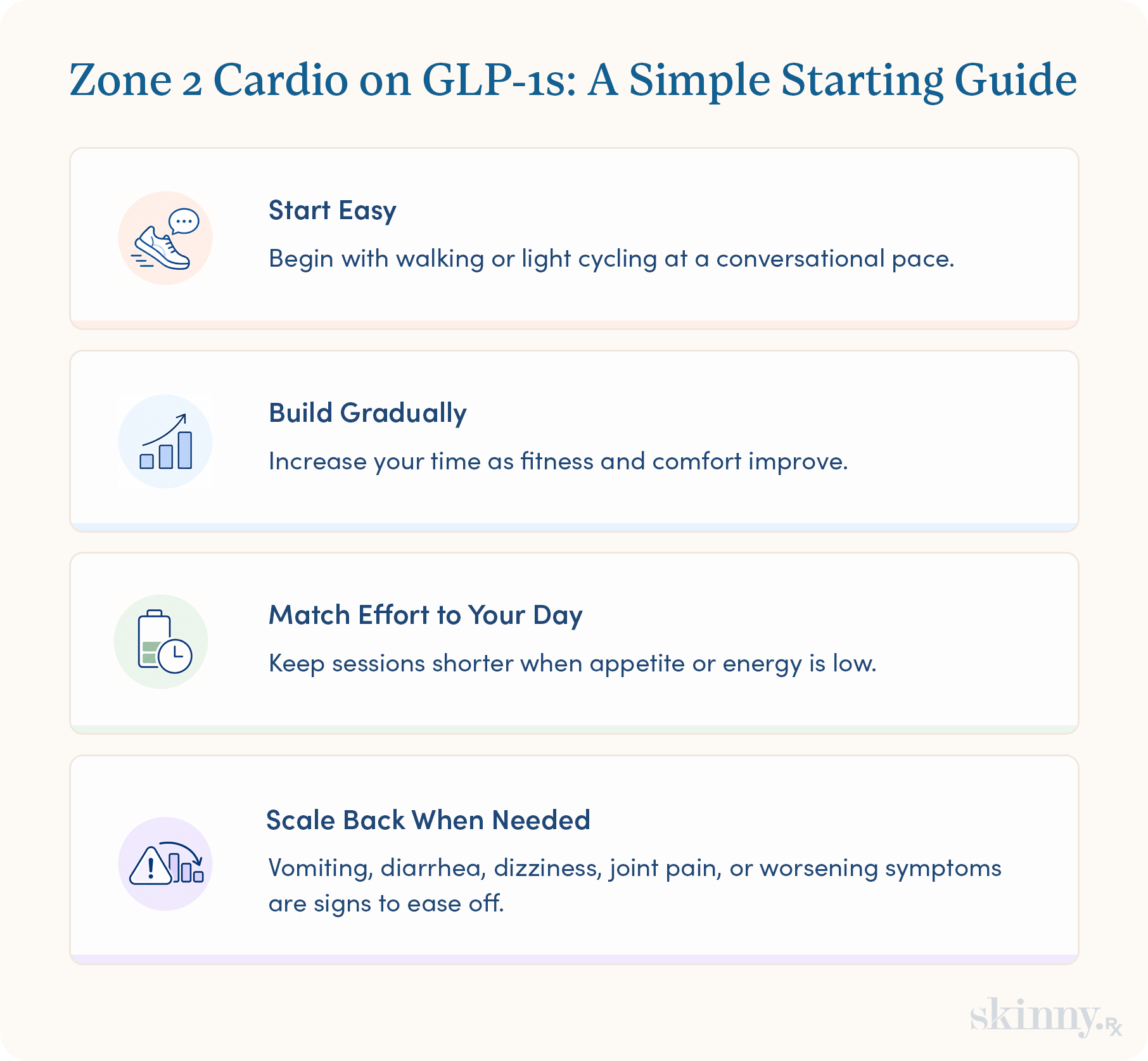
Zone 2 cardio may be “easy” compared to HIIT or circuit training, but you should still be tactful, especially if you’re new to having a dedicated exercise routine. Start slow and establish a base. For most people, walking is the most accessible entry point.

It's exciting that GLP-1 treatment often becomes a springboard for lifestyle change. As patients begin losing weight and feeling more comfortable moving, many become interested in exercise for the first time. I often recommend starting with something simple, like walking at a conversational pace, and gradually building from there.
–
Dr. Daniel McGee, Board-certified Family Medicine Physician
You can also explore:
Cycling
Cycling puts less pressure on your joints than walking. Outdoor cycling is great for exposure to nature, but hitting the stationary or recumbent bikes at your local gym works just fine as well, especially on low-energy days when you’d rather stay seated.
Elliptical
Ellipticals offer a more dynamic experience than walking without the impact on your joints. Most elliptical stations have arm handles as well, allowing you to get some upper-body training in while working your legs.
Swimming
Swimming reduces joint stress to near-zero, but is not an accessible form of Zone 2 cardio for everyone. If you have access to a pool and are dealing with joint pain, a leisurely swim can work wonders. If your GLP-1 is causing nausea, reflux, or other GI symptoms, avoid vigorous swimming soon after eating.
Cardio “Snacks”
You don’t need to do long, dedicated cardio workouts to get into Zone 2. As your fitness improves, it will take longer to get your heart rate up because your system is becoming more efficient. For true beginners, exercise “snacks”—periods as short as two to five minutes—add up quickly without being stressful.
Beginner Zone 2 Cardio Progression Example
- Week 1: 10-15 minutes of leisurely walking 3 days per week
- Week 2: 15-20 minutes of walking 2 to 4 days per week
- Week 3: 20-30 minutes of walking 5 days per week
- Week 4: 30+ minutes of walking daily
You can swap walking out for your preferred cardio modality.
How To Pace Yourself When Appetite Is Low
All exercise depends on fuel. If you’re using a GLP-1, you’re likely eating less than you need to fuel lots of high-intensity training. Zone 2 cardio is pretty easy to recover from, but you may still notice issues if you’re undereating.
- On low-appetite days, keep your cardio short and sweet.
- Prioritize protein intake and hydration every day.
- Plan your activity around the time of day when you feel most energetic.
- Monitor side effects like dizziness or joint pain and adjust accordingly.
When To Slow Down (Or Ask Your Doctor)
It’s important to be mindful of side effects during an exercise routine. This is doubly true if you’re on a GLP-1 because the medication’s side effect profile can negatively synergize with exercise. Stomach issues and fluid loss are relevant concerns for GLP-1 users; you don’t want to double down with too much exercise too quickly.
Excessive sweating or too much jostling compounds those risks. If you’re suffering from GLP-1 side effects like vomiting or diarrhea, it might be wise to hold off on doing too much Zone 2 cardio until things settle down.
If you don’t exercise regularly, consult your healthcare provider before starting a Zone 2 cardio regimen. Here are some questions to keep in your pocket:
- Is my current metabolic health status tolerant of an exercise routine?
- Should I adjust my eating or drinking habits around my workout plan?
- What GLP-1 symptoms may contraindicate an exercise plan?
- How much exercise is appropriate for my current fitness level?
Bottom Line
Zone 2 cardio offers a manageable way to build endurance and stay active while taking a GLP-1. Starting slowly, whether with a short walk or a few minutes of easy cycling, is enough to begin building a routine.
Increase the pace or duration as your energy and appetite allow. On low-appetite days or when GI side effects are active, pay attention to how you feel and scale back when needed.
If you’re new to exercise or have concerns about how activity may affect you while taking a GLP-1, talk with your doctor before starting.
Frequently Asked Questions
Weight Care With Guidance Built In
Get GLP-1 treatment and clinician support as you build an exercise routine, work through appetite and energy changes, and figure out what pace is right for you, all in one app.

By Jake Dickson, NASM-CPT, USAW-L2
Contributing Author
Jake holds a B.S. in Exercise Science from UNC Wilmington and began his career as a personal trainer and weightlifting coach. In recent years, he’s moved behind the page as a writer and editor, contributing hundreds of articles and being featured as a subject matter expert. Today, Jake’s goal remains the same: to empower people to change their lives by bringing heady scientific topics down to ground level.