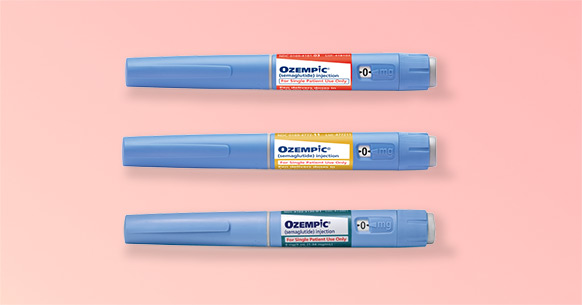

 Medically Reviewed

Key Takeaways
- Ozempic and Rybelsus may cost around $1,000 per month, and Wegovy up to $1,400 without insurance.
- Novo Nordisk savings cards can reduce the cost of Ozempic or Wegovy to as low as $25 a month for eligible insured patients.
- Cash-pay discounts from NovoCare, GoodRx, LifeMD, and Costco can lower out-of-pocket costs to roughly $499 per month.
- Medicare Part D now covers semaglutide for patients with a BMI over 27 and cardiovascular disease, expanding access nationwide.
- Compounded semaglutide is not FDA-approved and is not reviewed by the FDA for safety, effectiveness, or quality before it is marketed.
For some, and contrary to its recent proliferation, the cost of semaglutide is flat-out prohibitive. But here’s the good news: There are ways to reduce the cost, even if you don’t have health insurance.
Whether you’re trying to manage your type-2 diabetes or use semaglutide for weight loss, you deserve to have access at a reasonable price. The first step is understanding all your options, so let’s dive into the specifics of semaglutide’s cost in 2026 (and beyond).
Semaglutide Cost With Insurance in 2026
Before you do anything: It’s essential that you verify any financial information regarding a medication you’re currently taking, or intend to take, with your healthcare provider.
With that said, we must also acknowledge that semaglutide, like all medications, varies in price. There are multiple factors at play that influence its price tag—we’ll get there, but don’t expect a static cost in all cases..
With insurance, you can get semaglutide for weight loss or diabetes for $25 per month or less, though the exact value will vary based on your provider. Not all insurers will provide full coverage if you’re taking semaglutide for weight loss, for instance.
The Role of Prior Authorization
If you’re pursuing semaglutide for an off-label purpose, it pays to seek prior authorization from your doctor.
Prior authorization refers to a process in which your healthcare provider requests approval from your insurer to prescribe you a medication. Without prior authorization, your health insurance may not elect to cover the cost, especially in cases where your doctor is prescribing you something for a purpose outside its traditional use.
Your doctor should be able to provide more specifics about the most cost-effective path for you to take.
Medicare and Medicaid Coverage
As of early 2026, those on Medicare Part D may be eligible for semaglutide coverage if they meet specific criteria, according to the AJMC. Criteria include a BMI greater than 27 and needing assistance with managing symptoms of cardiovascular disease.
Additionally, you will typically be eligible for coverage if you’re taking Ozempic to control type-2 diabetes symptoms.
Clinically Guided GLP-1 Weight Loss
Your weight-loss journey deserves real clinical support. Connect with a licensed clinician, get a personalized semaglutide treatment plan, and stay on track with ongoing care.
Cash Price for Ozempic, Wegovy, and Rybelsus (Without Insurance)
The manufacturer, Novo Nordisk, pursued separate FDA approvals to cater to different needs. Ozempic and Rybelsus are indicated primarily for the management of type-2 diabetes, while Wegovy is approved mainly for weight management.
If you’re insured, pursuing one of these medications for its approved use generally reduces cost. Some insurers won’t cover a medication for off-label use whatsoever.
But if you’re not insured, you need to know exactly how much you’ll have to open your wallet to get a hold of semaglutide.
Ozempic Cost Without Insurance
The uninsured list price for a month’s supply of Ozempic, according to the manufacturer, is $1,027.51 in 2026. Pricing can fluctuate by dosage and pharmacy of choice as well.
Get it for less: Novo Nordisk provides a steep cash-pay discount in the United States for buyers who utilize platforms like GoodRx, LifeMD, and even Costco. This program reduces the uninsured monthly cost of Ozempic to $499.
Wegovy Cost Without Insurance
The manufacturer’s list price for Wegovy if you’re uninsured falls approximately around the $1,400 per month mark. If provided by certain pharmacies or at different dosages, the cost can go up to as much as $1,600.
Get it for less: The same cash-pay program, called NovoCare, that reduces the cost of Ozempic is also available to those seeking Wegovy, which can lower it to $499 per month.
Rybelsus Cost Without Insurance
The official list price for Rybelsus is $997.58 per month. In some cases, the out-of-pocket price for Rybelsus can range from $1,100 to $1,240 per month—as with the other two semaglutide medications, the exact cost can change based on your dosage and pharmacy of choice.
Unfortunately, Rybelsus doesn’t yet have as many savings options or promotions as Ozempic or Wegovy. That said, some platforms, like SingleCare, can provide coupons which will modestly reduce the price depending on which pharmacy you go to.
The Impact of Pharmacy Choice
At a glance, it might seem strange that the price of a medication can vary based on the pharmacy you get it from. After all, semaglutide is semaglutide. Here’s why:
- Pharmacies set their own individual mark-ups to account for operational costs and other internal expenses.
- Some pharmacies opt to honor price agreements established within networks.
- If you have a discount card, you’ll often be able to negotiate with individual pharmacies over the exact amount of your discount.
- Pharmacies will often adjust cost to account for fluctuations in drug supply. For a popular medicine like semaglutide, supply variability can be quite high.
National pharmacies, like CVS or Walgreens, tend to have higher prices, but a more consistent supply of semaglutide due to the logistical resources at their disposal. Conversely, your local mom-and-pop pharmacy may not always have semaglutide available, but their pricing options tend to be more flexible.
How to Save in 2026
Whether you’re uninsured or have coverage, you’re wise to pursue any cost-cutting avenues at your disposal while starting your journey with semaglutide. Let’s run through a few of your options.
Manufacturer Savings Cards
Novo Nordisk provides savings cards that, in some cases, can significantly reduce the cost of Ozempic and Wegovy—if you’re insured—to as low as $25.
Patient Assistance Programs (PAPs)
PAPs are patient-friendly programs organized either by the manufacturer or a third party with the intent of providing financial support to eligible seekers. To be eligible for a PAP, you typically must have a low income or lack health insurance, and be a permanent resident of the United States or Puerto Rico.
You can find more information about the manufacturer Novo Nordisk’s PAP here.
Third-Party Discounts
Certain pharmaceutical platforms can also provide discounts on semaglutide. We touched on SingleCare regarding Rybelsus above, but others like GoodRx, RxSaver, or Blink Health are worth investigating as well.
Mind that these savings will not usually cover a significant portion of your out-of-pocket costs, but they’re worth pursuing regardless.
Final Tips for Patients
Semaglutide costs vary widely depending on your insurance coverage, the specific medication prescribed, and the pharmacy you use.
The most important step you can take is having an honest conversation with a licensed clinician before making any decisions based on price alone. A clinician can help you understand which medication is appropriate for your health profile, what coverage options may apply to your situation, and what savings programs you may be eligible for.
Cost is a real and valid concern, but it should inform your path forward rather than drive it. The right treatment plan is one that is both medically sound and realistically sustainable for you over the long term.
Clinically Guided GLP-1 Weight Loss
Your weight-loss journey deserves real clinical support. Connect with a licensed clinician, get a personalized semaglutide treatment plan, and stay on track with ongoing care.
Frequently Asked Questions

By Jake Dickson, NASM-CPT, USAW-L2
Contributing Author
Jake holds a B.S. in Exercise Science from UNC Wilmington and began his career as a personal trainer and weightlifting coach. In recent years, he’s moved behind the page as a writer and editor, contributing hundreds of articles and being featured as a subject matter expert. Today, Jake’s goal remains the same: to empower people to change their lives by bringing heady scientific topics down to ground level.