
 Medically Reviewed

Key Takeaways
- Stopping GLP-1 medications can make maintenance harder because hunger increases, fullness signals decrease, and calorie needs drop at a lower weight.
- Eating enough protein and fiber helps you stay fuller longer and naturally supports the same satiety pathways GLP-1s target.
- Strength training at least twice per week helps preserve lean muscle, which supports metabolism and improves long-term weight stability.
- Sleep, stress management, and ongoing support play a critical role in preventing weight regain and sustaining the health improvements achieved during treatment.
People taking GLP-1 medications for weight loss may discontinue them for various reasons. Some people decide to stop taking GLP-1s when their weight loss plateaus or they are satisfied with their outcomes.
Others may stop due to the cost, accessibility, or stigma. Common gastrointestinal side effects that are especially severe or do not resolve within a few weeks, such as nausea, diarrhea, constipation, or vomiting, are also common reasons for stopping the medication.
As you may already know, GLP-1s work by mimicking two hormones. GIP and/or GLP-1 signal the brain that you are full and slow the rate of gastric emptying, or how quickly a meal leaves the stomach and enters the small intestine. This delayed emptying helps you eat less because you feel fuller for longer, which is one of the main ways GLP-1s support weight loss.
If you have stopped taking a GLP-1 medication or are preparing to do so in the future, you may be wondering how to adapt your diet and exercise patterns to help sustain your weight loss long-term.
Working with your healthcare team, including your physician and a registered dietitian, can help ensure that you transition off the medication as seamlessly as possible and prevent weight regain.
The Maintenance Trap: Why Most People Regain Post-GLP-1
Weight regain is generally expected when people discontinue taking GLP-1s. In one study, participants regained two-thirds of their previous weight loss within the year after stopping the medication.
Improvements in cardiometabolic markers, such as blood pressure, cholesterol levels, and fasting blood sugar levels, are also likely to reverse when discontinuing a GLP-1. Several metabolic adaptations make it challenging to sustain weight loss long-term, including hormonal changes, increased “food noise,” and the “energy gap.”
Shifts in Hunger Hormones
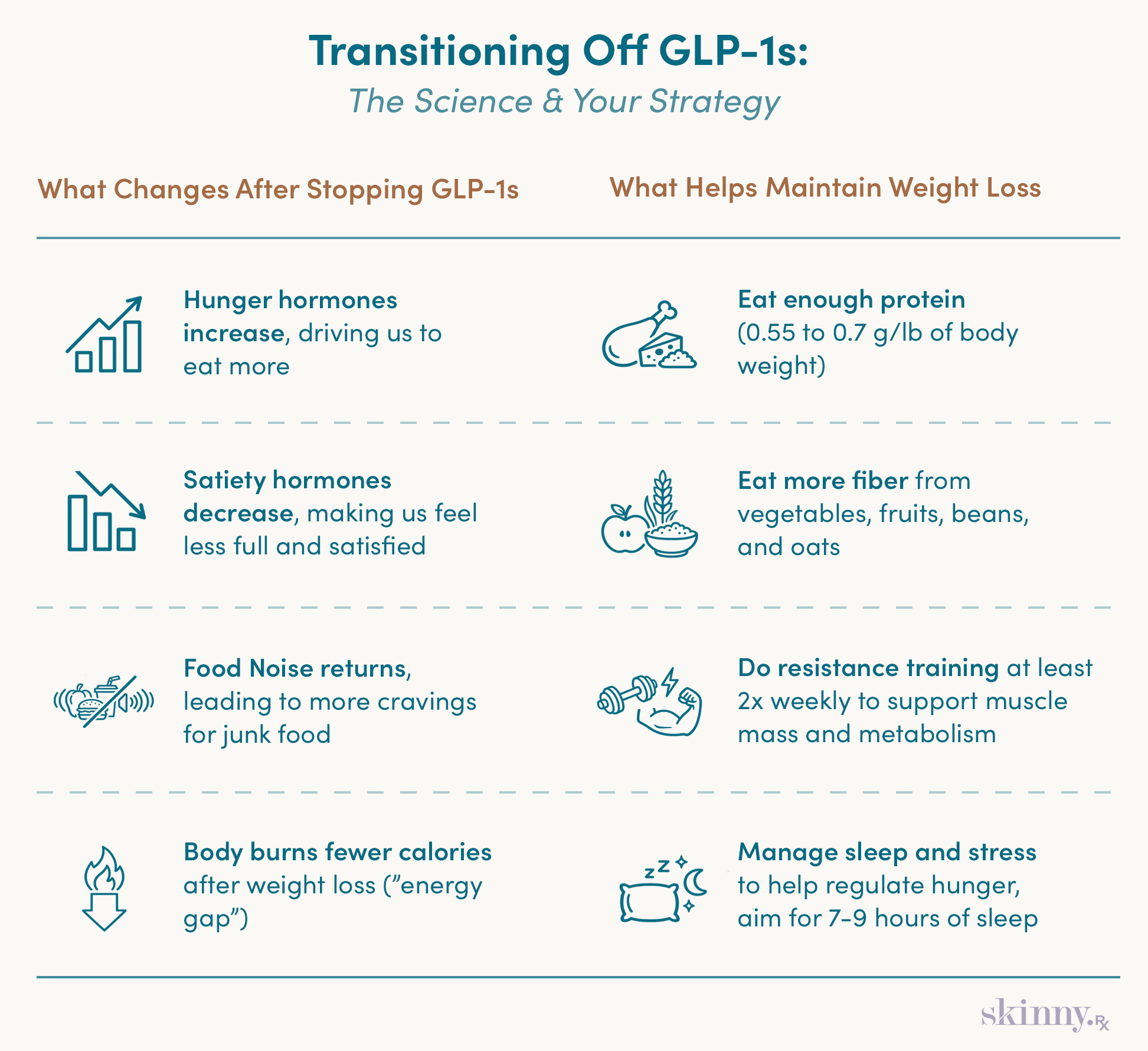
Hunger and satiety are partially driven by hormones released from the gut to the hypothalamus (a region of the forebrain). After weight loss, ghrelin levels increase (promoting hunger), while peptide YY and natural GLP-1 levels decrease (reducing satiety signals).
These shifts in hormones make weight-loss maintenance more challenging when your brain receives more hunger signals and fewer satiety signals.
The Return of Food Noise: A Biological Reality
Relatedly, many GLP-1 users report a diminished “food noise” that makes their weight-loss journey feel more manageable. Food noise is described as constant, intrusive, and unwelcome thoughts about food, your next meal, or dieting, which can negatively impact your quality of life.
When discontinuing GLP-1 medications, food noise is likely to return, and is theorized to be one of the key reasons for weight regain.
Understanding the “Energy Gap”
Next, total energy needs typically decrease after weight loss. For example, at a higher weight, your body may have been burning 2,500 calories per day, but your new body size is only burning 1,900 calories per day.
The amounts you were used to eating (to maintain your higher weight) now exceed what your body needs. This “energy gap” can be challenging for many people when their bodies require less energy, yet their hunger hormones drive them to eat more.
A Holistic Approach to Weight Loss Maintenance
Though it may be tempting to focus on calories alone, discontinuing GLP-1s after weight loss is a key window to reset and adopt a holistic approach to weight-loss maintenance. Maintaining a healthy weight requires a healthy dietary pattern and regular exercise, along with attention to other aspects of your health and well-being, such as sleep, self-care, and social connection.
A Healthy Dietary Pattern
A healthy dietary pattern is a cornerstone not only for weight-loss maintenance but also for overall good health. A healthy dietary pattern includes:
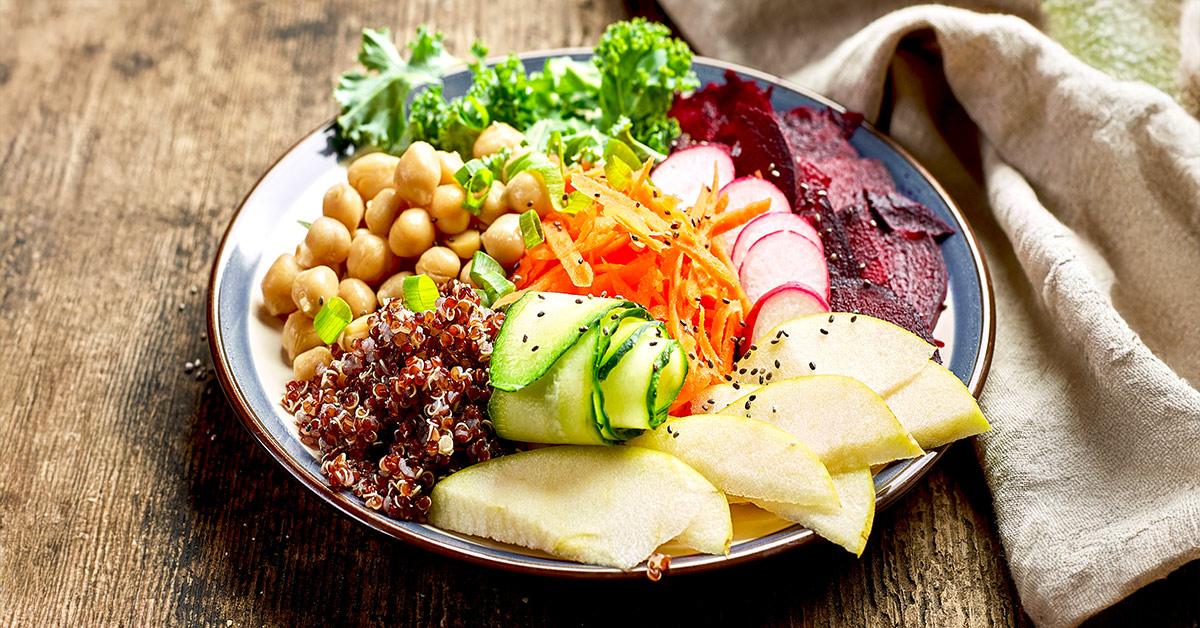
- Vegetables: Choose a variety of differently colored vegetables, including dark green (e.g., kale, spinach, collard greens), red (e.g., bell peppers, radishes, beets, tomatoes), orange (e.g., sweet potatoes, winter squash, carrots), and purple (e.g., eggplant, cabbage, bell peppers).
- Fruits: Enjoy fruits of all colors, such as red (e.g., strawberries, raspberries), green (e.g., kiwi, apples), blue or purple (e.g., blueberries, blackberries), and yellow (e.g., bananas, pineapple).
- Whole grains: Focus on whole grains (e.g., oatmeal, barley, wheat, quinoa, brown rice, whole grain cornmeal) and minimize refined grains (e.g., white flour, crackers, bread products made with refined flour).
- Lean protein: Protein sources can be plant-based (e.g., beans, legumes, nuts, seeds) and animal-based (e.g., fish, poultry, beef, lamb, pork, dairy, eggs).
- Healthy fats: Choose healthy fats when cooking (e.g., olive oil, sunflower oil). Nuts, seeds, and fatty fish are also good sources of both healthy fats and protein.

Start With Medical Guidance
If you're exploring GLP-1 medications for weight loss or seeking a more structured approach, professional oversight matters. Take a quick SkinnyRx assessment to review your options and receive a personalized care plan designed to help you achieve safe, sustainable results.
Natural Satiety: Foods That Mimic GLP-1 Effects
Certain dietary strategies can mimic the effects of GLP-1s by promoting satiety and delaying gastric emptying naturally.
Protein and Healthy Fats Stimulate Satiety Hormones and Delay Gastric Emptying. The gut naturally produces hormones that signal the hypothalamus of the brain that you are full and delay gastric emptying. These include GLP-1, GIP, peptide YY, and cholecystokinin (CCK), among others. The gut primarily secretes these satiety hormones in response to protein, fats, and/or carbohydrates.
For these reasons, a balanced diet that provides all three macronutrients is essential for maintaining weight loss. Additionally, a higher-fat, higher-protein meal delays gastric emptying, similar to the effects of GLP-1s.
For protein, you may have been following the 1.2-1.5 grams of protein/kg of body weight guideline while on your GLP-1 medication. This level may help promote satiety during weight-loss maintenance, especially if you are strength-training. Note that the RDA, or the minimum recommended intake for healthy adults, is lower at 0.8 grams of protein/kg of body weight.
For healthy fats, focus on unsaturated fats from oils, nuts, seeds, avocados, and fatty fish. Limit saturated fat by limiting or reducing intake of fatty cuts of meat, egg yolks, and full-fat dairy.
Fiber is a key nutrient for weight-loss maintenance. Dietary fiber is a type of carbohydrate and is found only in plant foods. Fiber can be classified as insoluble or soluble based on how it acts in the water-based environment of your intestines. Both types of fiber are beneficial to your health for different reasons, but it’s soluble fiber in particular that will slow the rate of gastric emptying, similar to GLP-1s.
Soluble-rich foods include vegetables, fruits, beans, lentils, whole grains, and legumes. For example, ½ cup of cooked navy beans provides 9.6 grams of fiber, 1 cup of raspberries provides 8 grams of fiber, and 1 oz of almonds provides 3.5 grams of fiber.
Plus, certain types of fibers are fermented in the large intestine and produce compounds called short-chain fatty acids. These stimulate the gut to produce GLP-1 and other satiety hormones naturally, which may be especially beneficial when discontinuing your medication.
Current recommendations for daily fiber intake are for total fiber and do not specify amounts for specific fiber types. Recommended intakes vary by sex and age; males aged 19-50 should consume at least 38 grams, while those aged 51 and older should aim for at least 30 grams. Females ages 19-50 should consume at least 25 grams, while those 51 and older should aim for 21 grams.
The Power of Exercise
You likely already know that exercise can help support weight loss, as well as your overall metabolic health and well-being. A solid physical activity program is especially important for GLP-1 users.
Notably, a recent study reported that participants who included exercise during GLP-1 treatment maintained weight loss more successfully one year after discontinuation than those who did not exercise regularly.
While all types of exercise (e.g., aerobic, strength, flexibility, balance) are beneficial for your health, strength training is particularly helpful for maintaining lean body mass and supporting weight-loss maintenance. The American College of Sports Medicine and the U.S. The Department of Health and Human Services recommend strength training at least two days per week.
Strength training is any activity that makes your muscles work harder than usual and increases your muscles’ strength, size, power, and endurance. Examples of strength-training exercises include weightlifting, resistance band exercises, stair climbing, hill walking, cycling, push-ups, sit-ups, squats, and yoga.
Beyond Diet and Exercise
Lastly, a holistic approach to sustained weight loss includes not only a good nutrition and exercise routine but also a broader view of your health and wellness. One key aspect of overall health is a good sleep routine, encompassing both duration and quality.
Research supports that sleep deprivation is counterproductive to weight loss and maintenance because it drives people to consume more total energy (calories), as well as more carbohydrate- and fat-rich foods.
Other key aspects of health include social connections, stress management, and avoidance of risky substances. Together with nutrition, exercise, and sleep, these are often described as the six pillars of lifestyle medicine, or a holistic approach to your health.
Results are easier to maintain when GLP-1 treatment decisions are made with structure and follow-up care. A quick SkinnyRx assessment connects you with a licensed provider to review appropriate weight loss options and next steps.
Frequently Asked Questions

By Whitney Linsenmeyer
Assistant Professor of Nutrition and Dietetics
Whitney Linsenmeyer, PhD, RD, is an Assistant Professor of Nutrition and Dietetics at Saint Louis University and a National Spokesperson for the Academy of Nutrition and Dietetics with expertise in fad diets, culinary nutrition, and transgender health. Her research focuses on gender-affirming nutrition care, and she brings a joy-first approach to food science and eating behavior.