

 Medically Reviewed

Key Takeaways
- Semaglutide is not confirmed to directly cause hair loss; in many cases, other factors are responsible.
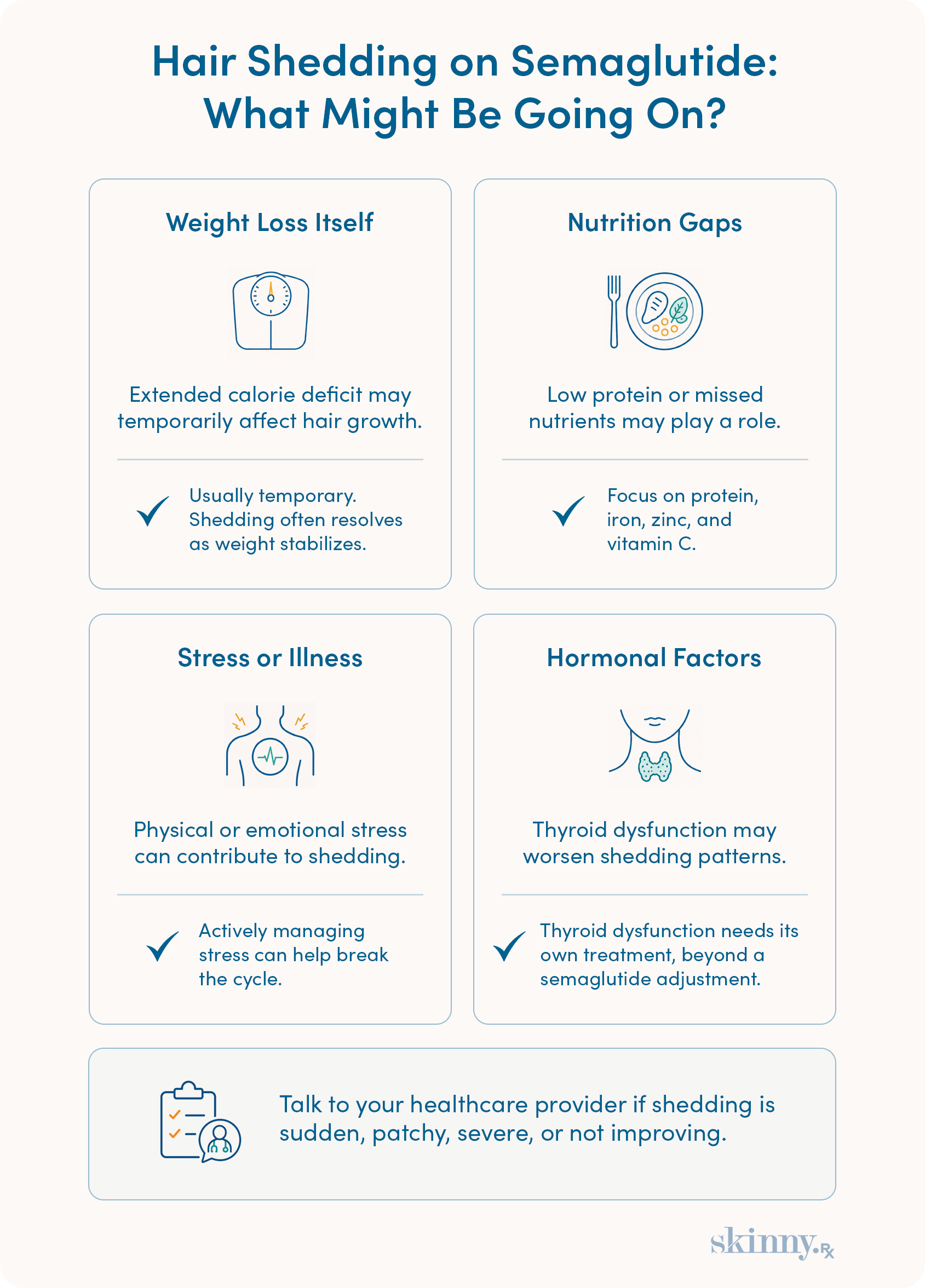
- The more likely culprit is the weight loss itself; cutting calories for extended periods causes the body to deprioritize hair growth.
- This type of shedding is usually temporary and tends to resolve once the calorie deficit ends.
- Getting enough protein and key vitamins like iron and zinc can help reduce shedding risk during a calorie deficit.
- Sudden, patchy, or persistent hair loss that does not improve is worth discussing with your doctor.
GLP-1s are potent. However, that efficacy comes with the cost of side effects. Most semaglutide side effects are gastrointestinal, but you may have heard brand-name medications have a reputation for causing hair loss, too.
That reputation doesn’t align with reality. However, claims about semaglutide hair loss aren’t entirely unfounded. A systematic review on the topic, published late spring 2026, made some startling observations:
- The data “suggests an increased risk” of hair loss with certain GLP-1s.
- Patients taking semaglutide for obesity are at a higher risk.
- Women may be “disproportionately affected.”
Systematic reviews are considered among the most reliable sources of scientific evidence, but they don’t paint a complete picture. Hair loss can happen while taking semaglutide—but the medication itself isn’t always the culprit.
Does Semaglutide Cause Hair Loss?
Semaglutide isn’t confirmed to cause hair loss. Even the aforementioned systematic review calls for further investigation. That said, there are clinical trends:
- The prescribing information for Ozempic mentions alopecia, or hair loss, as a documented side effect.
- Some data show a significant number of patients experience hair shedding on a GLP-1.
But these findings have been contradicted elsewhere. Another systematic review from 2025 reported “conflicting” findings, with some participants even experiencing hair regrowth.
So, why the discrepancy? Many of the existing studies on semaglutide hair loss draw a correlational link, but shy away from highlighting a causative relationship. People taking semaglutide may lose their hair, but other factors make it difficult to attribute it directly to GLP-1.
Why Hair Loss Happens During Weight Loss
Telogen effluvium is the type of hair shedding most frequently associated with weight loss. Hair grows in cycles. Periods of stress—whether emotional or physical—cause hair follicles to change their natural growth cycle. It can lead to a seemingly sudden departure of hair.
Obesity is a serious physical stressor—but so is an aggressive weight loss regimen. The faster you drop weight, the more likely you are to suffer temporary “side effects.” The landmark study on semaglutide for weight loss mentioned a “sustained” effect—GLP-1 users consistently lose weight for months on end. For some, it’s a life-saving intervention.
However, extended weight loss means being in a caloric deficit for months at a time. A calorie deficit describes your body’s energy budget. When you eat fewer calories than your body requires to maintain functionality, it turns to stored fat to make up the difference.
When resources are scarce, your body smartly deprioritizes certain non-essential functions—like hair growth. Hair loss related to weight loss on semaglutide is often temporary and usually resolves once the calorie deficit ends.

A More Guided Way to Start
SkinnyRx helps you access GLP-1 weight-loss treatment when appropriate, with licensed provider oversight and ongoing support throughout your weight loss journey.
Other Causes to Consider
You may experience hair loss while taking semaglutide that has nothing to do with the drug itself, or the downstream consequences of a long-term calorie deficit.
Hormonal Changes
You may be suffering hair loss as a result of thyroid dysfunction. Your thyroid is responsible for assisting with hormonal regulation. Glandular dysfunction in the thyroid—particularly, hypothyroidism, a condition common in obese individuals—may worsen telogen effluvium.
Stress and Illness
It’s commonly known that you can stress until your hair falls out. The troublesome part is that this can manifest as a feedback loop; external stressors cause hair loss, which, by nature, stresses you out further, encouraging even more hair loss.
What You Can Track
If you’re experiencing hair loss on semaglutide, keeping a log can help you identify trends. This information may be of use to your healthcare provider, and can guide you toward making an informed decision about whether continuing semaglutide is right for you.
Note the following:
- Semaglutide starting dose and titration schedule
- Timeline of weight change
- Average daily calorie and protein intake
- Subjective perception of daily stress levels
- Descriptions of the shedding itself
These details may not seem relevant to you, but healthcare professionals can often discern things you overlook.
Preventing Hair Loss on Semaglutide
There’s no guarantee that you can prevent hair loss on semaglutide. Still, there are actions you can take that may help preserve hair density—and remember that telogen effluvium is temporary in most cases.
- Prioritize protein. Whole-food, animal-based protein sources contain valuable amino acids your body requires to preserve non-fat tissue in a caloric deficit.
- Get your vitamins. Iron, zinc, and vitamin C play roles in maintaining scalp health. Make sure you’re hitting your recommended daily intakes.
- Keep stress low. It’s easier said than done, but it matters.
For your safety, avoid trying prescription or over-the-counter hair regrowth products without first consulting with your doctor.
When To Talk To Your Doctor
Most hair loss on semaglutide is temporary. However, it may not be a trade-off you’re willing to make. Regardless, serious or disruptive side effects warrant a call to your healthcare provider. Be mindful of:
- Sudden or drastic shedding beyond the usual
- Distinct, localized patches of hair loss
- Shedding that is accompanied by other physical symptoms
- No change or improvement in rate of hair loss after months at your therapeutic dose
A doctor will usually order lab tests to determine if any relevant biomarkers are out of the normal range. From there, you’ll have a conversation about whether to adjust your semaglutide dose or try a prescription specifically for hair.
If there’s an indication of something more serious happening, you’ll likely be referred to a dermatologist to receive specialized care.
Bottom Line
Hair loss while taking semaglutide is real, but it's rarely a simple story. The medication itself hasn't been confirmed as the direct cause. In many cases, the more likely explanation is the weight loss process: a prolonged caloric deficit, nutritional gaps, hormonal shifts, or stress. Often, it's some combination of all of the above.
The encouraging part is that this type of hair loss is usually temporary. Eating enough protein, staying on top of key vitamins and minerals, and keeping stress in check can go a long way. If the shedding feels more significant than expected, or doesn't improve over time, that's worth raising with your healthcare provider.
Semaglutide can be a meaningful tool for weight loss. Like any intervention, it comes with trade-offs worth understanding. Knowing what to watch for and when to act on it puts you in a better position to make decisions that work for you.
Frequently Asked Questions
A More Guided Way to Start
SkinnyRx helps you access GLP-1 weight-loss treatment when appropriate, with licensed provider oversight and ongoing support throughout your weight loss journey.

By Jake Dickson, NASM-CPT, USAW-L2
Contributing Author
Jake holds a B.S. in Exercise Science from UNC Wilmington and began his career as a personal trainer and weightlifting coach. In recent years, he’s moved behind the page as a writer and editor, contributing hundreds of articles and being featured as a subject matter expert. Today, Jake’s goal remains the same: to empower people to change their lives by bringing heady scientific topics down to ground level.