

 Medically Reviewed

Key Takeaways
- Semaglutide isn't a cholesterol drug, but as weight loss and insulin resistance improve, it may modestly lower LDL and triglycerides, and sometimes raise HDL.
- As with weight loss itself, cholesterol changes tend to happen gradually, not overnight.
- Cholesterol results vary from person to person, depending on diet, exercise, sleep, family history, and overall health.
- Regular bloodwork can track changes in LDL, HDL, triglycerides, and total cholesterol during treatment.
- If you're on a statin, keep taking it unless your provider says otherwise. Semaglutide works alongside cholesterol treatment, not in place of it.
Semaglutide is a medication used for weight management and blood sugar regulation. Recent research suggests that the drug may also help with cholesterol levels. But what exactly is the connection between cholesterol and GLP-1s?
Turns out, it’s probably an indirect effect. Both weight and insulin resistance are risk factors for higher bad cholesterol and lower good cholesterol. Since semaglutide can help with losing weight and insulin resistance, it could have a ripple effect on cholesterol levels as well.
Continue reading to learn more about the connection between semaglutide, good cholesterol, and bad cholesterol. We’ll also dive into what exactly is “good” or “bad” cholesterol and other treatments and lifestyle changes to consider.
Cholesterol Numbers: LDL, HDL, Total Cholesterol, and Triglycerides
Before we get too far into the conversation about semaglutide and cholesterol, what exactly is cholesterol? In short, it’s a fat-like molecule found throughout the body. The body uses cholesterol to help make hormones, essential vitamins, and substances involved in digestion.
Cholesterol travels through the body via your bloodstream. It’s transported through the bloodstream on two types of proteins: low-density lipoprotein (LDL) or high-density lipoprotein (HDL).
When cholesterol travels via LDL, it may harm health, which is why this type is nicknamed “bad cholesterol.” Meanwhile, cholesterol that travels on HDLs offers heart-protective benefits. This type is referred to as “good cholesterol.”
If you regularly visit a primary care provider, they will order a cholesterol test at least once every one to five years. That test will provide four important numbers:
- LDL: The amount of bad cholesterol in the bloodstream.
- HDL: The amount of good cholesterol in the bloodstream.
- Total cholesterol: the amount of good and bad cholesterol in the bloodstream.
- Triglycerides: Very low-density lipoproteins (VLDL) carry triglycerides and cholesterol throughout the body. Triglycerides are a type of fat that’s commonly associated with a higher risk of heart disease.
Together, these four numbers provide an indication of overall heart health. They are measured in milligrams (mg) of cholesterol per deciliter (dL) of blood. HDL and LDL numbers are particularly helpful to know, because higher HDL numbers are associated with stronger heart health, while higher LDL numbers suggest someone is at an increased risk of heart disease.
Why Weight Loss Can Affect Cholesterol
Many factors influence cholesterol levels. Some, such as family history and genetics, cannot be altered. Others, like diet or smoking, are things you can change. If someone is overweight or obese, losing weight may help increase HDL levels and lower the amount of bad cholesterol.
One of the reasons losing weight may help is because when people lose weight they usually eat foods with lower amounts of bad cholesterol. They may also increase their physical activity, which helps lower bad cholesterol and increase good cholesterol.
But the connection is about more than someone’s workout or eating habits. A 2023 study in the Journal of Lipid Research found that obesity-induced inflammation had more VLDL cholesterol than LDL cholesterol. That means that if someone has inflammation caused by obesity, the quality of bad cholesterol may become worse.
Diabetes and Cholesterol
Type 2 diabetes is another health condition that can impact cholesterol levels. About 34.9% of people with diabetes have hypercholesterolemia, which is the medical term for when people have too much bad cholesterol.
A key feature of type 2 diabetes and prediabetes is insulin resistance. This is when the body doesn’t respond to insulin, a natural hormone, as it should.
While insulin is known for its role in blood sugar regulation, it has other roles for health. This includes playing a role in regulating cholesterol production. When someone experiences insulin resistance, cholesterol levels in the body may be impacted too.
Another connection is that insulin resistance results in an increase in the number of fatty acids in the liver. The liver turns those fatty acids into triglycerides, then releases them into the bloodstream as VLDL.
Support Built Into Your Weight Care
SkinnyRx combines GLP-1 treatment with clinician guidance, personalized nutrition support, and progress tracking, all in one app.
What Research Suggests About Semaglutide and Cholesterol
If someone’s cholesterol levels are not within a healthy range, a healthcare provider may prescribe a cholesterol medication. Statins are the most common cholesterol medication, with the Centers for Disease Control and Prevention (CDC) estimating that around 50% of people who take a medication for cholesterol levels take a statin.
Another medication that may help is semaglutide. This medication is not FDA-approved for cholesterol, and it will not directly impact cholesterol levels. Instead, it may help with blood sugar regulation and weight loss.
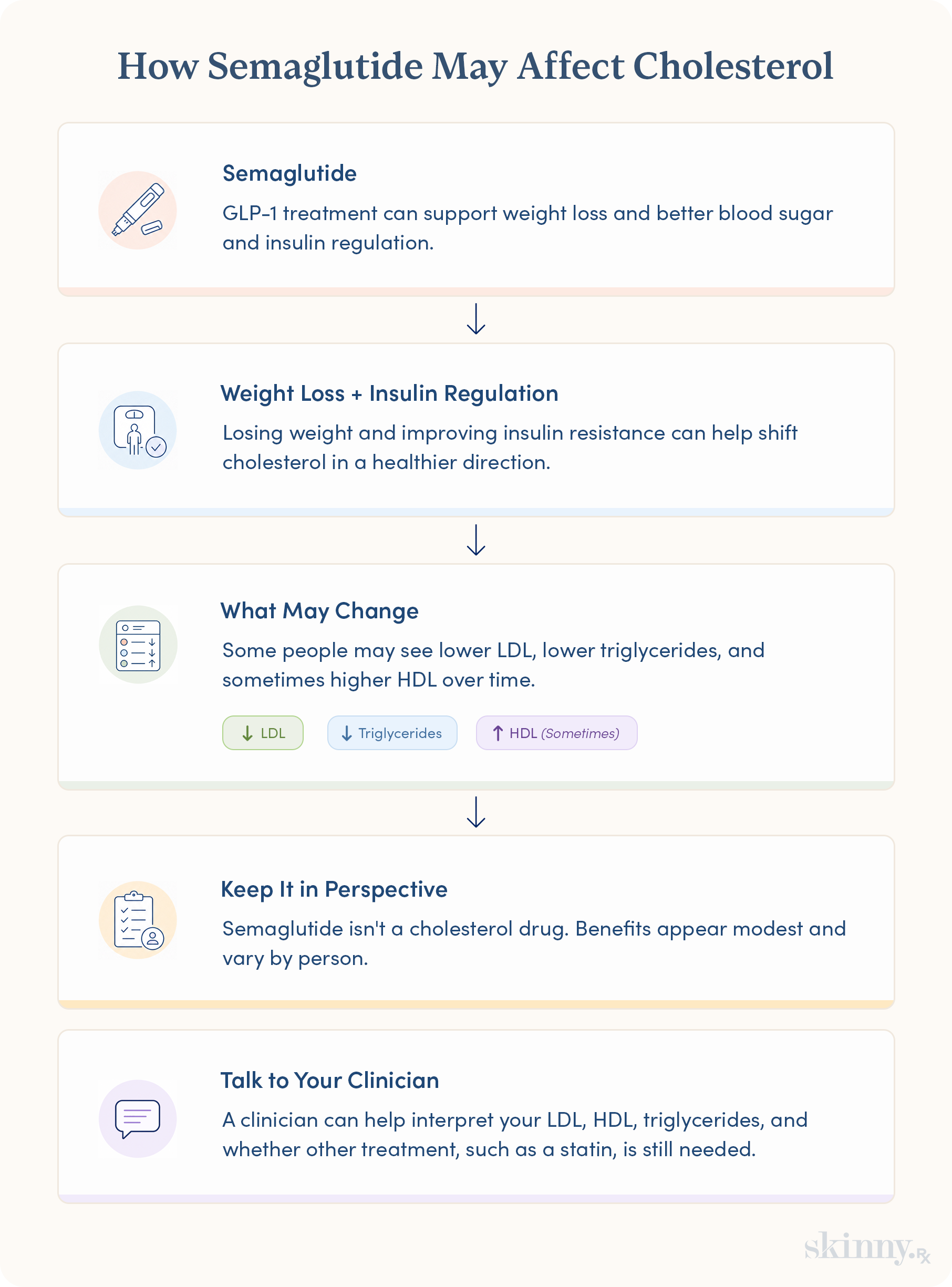
Multiple clinical trials back up semaglutide’s indirect effect on cholesterol levels:
- In a 2022 trial with 104 participants who had type 2 diabetes, the total cholesterol, bad cholesterol, and triglycerides decreased significantly after taking semaglutide.
- The authors of a 2025 meta-review concluded that semaglutide lowered bad cholesterol and increased good cholesterol in the reviewed clinical trials. This finding applied to trial participants who used semaglutide for weight loss and blood sugar regulation.
- A 2025 review on all of semaglutide’s heart health benefits also highlighted that the medication indirectly affected cholesterol levels.
Plus, it’s safe to take semaglutide and statins together. Some studies even suggest that taking the two drugs together is more effective at lowering bad cholesterol than taking either on its own.
Lifestyle Factors That Influence Cholesterol
While medication plays an important role in reducing bad cholesterol and increasing good cholesterol, it’s not the only factor. Habits and lifestyle decisions also influence cholesterol levels.
Independent of weight or insulin resistance, these choices can help improve cholesterol:
- Limit the amount of trans and saturated fats that you eat: Instead, eat an abundance of vegetables, fruits, legumes, lean meats, seafood, and whole grains.
- Exercise more often: Aim to meet the CDC’s minimum of two strength training sessions and 150 minutes of aerobic exercise (walking, running, swimming, etc.) a week. If you can’t meet those guidelines, any exercise is better than none.
- Manage stress: Being overly anxious or worried can increase cholesterol levels.
- Get seven to nine hours of quality sleep: When we don’t sleep enough, there’s a greater risk of higher bad cholesterol levels.
- Quit smoking: Smoking can increase bad cholesterol levels and lower good cholesterol.
If taking semaglutide, what you eat and how often you exercise also influence the medication’s effectiveness. A 2024 trial found that participants who combined semaglutide with a guided exercise program lost more weight than those who took semaglutide without changes to their workout routine.
Another review emphasizes that following a healthy diet resulted in greater insulin regulation and weight loss in patients receiving semaglutide.
Why Lab Results Vary From Person to Person
First, there isn’t one optimal cholesterol range that applies to everyone. Instead, healthy cholesterol levels depend on your:
- Age
- Overall health
- Family history
- Gender
Certain medical conditions, such as diabetes or a history of strokes or heart attacks, influence what cholesterol numbers are deemed healthy as well. A healthcare provider can help you interpret your lab results and provide specific targets.
Questions to Ask Your Clinician About Cholesterol
Cholesterol is an important indicator of health. If you’re unsure what your cholesterol numbers are or what they mean, ask a healthcare provider:
- When was the last time I had my cholesterol levels checked? Should we retest them again soon?
- What are my cholesterol numbers?
- Are you concerned about the amount of bad cholesterol in my blood?
- Are there any steps you recommend taking to improve my cholesterol levels?
If a healthcare provider indicates that cholesterol levels are high, they will recommend a plan that focuses on changing modifiable factors, such as diet or weight. They may also order regular bloodwork throughout to determine if cholesterol levels are improving.
When someone has too much bad cholesterol and not enough good cholesterol, they may want to ask a healthcare provider:
- What are the most important lifestyle changes I can make?
- Should I start a statin or another medication that directly addresses cholesterol levels?
- Are there any other medications I should consider?
- How often should we retest cholesterol levels?
The Bottom Line
Semaglutide was designed to help with weight loss and blood sugar control, not cholesterol. Still, the two can be connected. As weight decreases and insulin resistance improves, LDL, HDL, and triglycerides may change as well.
Research suggests these changes are generally modest and vary from person to person. Cholesterol is also influenced by diet, exercise, sleep, family history, and other health factors.
If you’re taking semaglutide, it should not be viewed as a replacement for cholesterol treatment. Keep up with recommended bloodwork and talk with your provider about what your numbers mean for you. If you take a statin, continue it unless your provider recommends otherwise.
Frequently Asked Questions
Support Built Into Your Weight Care
SkinnyRx combines GLP-1 treatment with clinician guidance and practical tools for nutrition and progress, all in one app.

By Angela Myers
Contributing Author
Angela Myers is a freelance health writer covering weight management, healthy aging, and nutrition. Her work has appeared in AARP, Well+Good, and Forbes, among others. Before starting her writing career, she conducted award-winning research on how to improve sexual violence prevention courses on college campuses. That research sparked a passion for health communication, and she's been writing about making healthcare accessible and inclusive ever since.