
 Medically Reviewed

Key Takeaways
- GLP-1 side effects and illnesses like colds, flu, or stomach viruses can share the same GI symptoms, making them easy to confuse.
- You usually don’t need to stop your GLP-1 if you get sick, but call your doctor if symptoms become severe or persistent.
- Vomiting and diarrhea can quickly increase dehydration risk, especially during titration.
- If you have diabetes, follow your sick-day plan and report unusual blood sugar or ketone readings to your physician.
- Seek medical care if you can’t keep fluids down, feel faint, or have diabetes-related readings outside your sick-day range.
Nobody likes getting sick. The “best” part of the common cold is knowing what to expect in terms of symptoms. But if you’re on a GLP-1 medication, things can become uncertain quickly. Stacking symptoms can leave you asking questions such as:
- Should I still take my medication while I’m sick?
- Am I nauseous from my GLP-1, or from the illness?
- Is it normal to experience this much exhaustion?
First things first: You shouldn’t impulsively adjust your GLP-1 medication dosing just because you’re sick. If you’re having serious symptoms or complications, call your physician for professional guidance.
That said, this article will help you understand the added risks of being sick on a GLP-1 and how to avoid them.
If You’re Already Sick
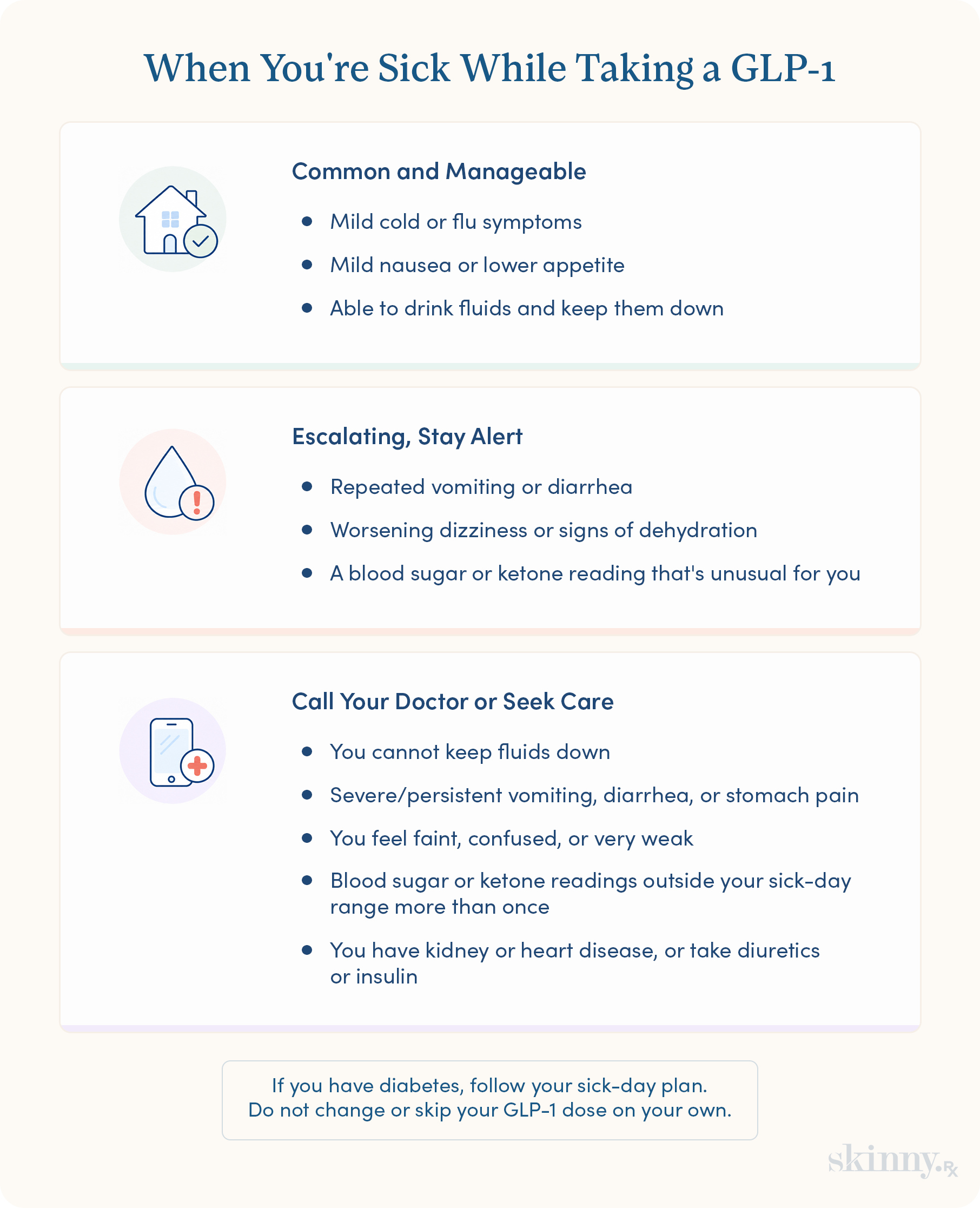
Seek prompt medical guidance if you cannot keep fluids down, have severe or persistent vomiting or diarrhea, feel faint or confused, have signs of dehydration, or have diabetes-related warning signs in your sick-day plan.
Why Sick Days Matter on GLP-1s
Most GLP-1 side effects are gastrointestinal. Many common illnesses, like the cold, flu, or stomach viruses, confer gastrointestinal symptoms as well. Meanwhile, fevers or food poisoning can affect hydration status and eating habits.
Put simply: GLP-1s and common illnesses often cause similar issues. When combined, these symptoms warrant extra concern and may require medical attention.
This means you need to know what symptoms you’re experiencing and be able to tell the difference between tolerable discomfort and when you need to see a doctor.
Vomiting, Diarrhea, and Dehydration Risk
When it comes to illness, fluid loss is a real concern. It can happen and escalate faster than you expect during a period of illness.
Symptoms like vomiting and diarrhea—also hallmarks of many GLP-1 medications, especially during the titration period while you’re adjusting to the medicine’s presence in your system—can quickly deplete you past the point of what you can replenish on your own.
Severe dehydration can lower blood pressure and affect circulation, as well as putting you at risk of dizziness or fainting.

Most illnesses don't require stopping your GLP-1, but they do require paying closer attention to your body. The biggest concern isn't usually the medication itself—it's the combination of vomiting, diarrhea, poor fluid intake, and dehydration. If you can't keep fluids down or you're becoming lightheaded, it's time to call your healthcare provider.
–
Dr. Sajad Zalzala, Board-certified Family Medicine Physician and Medical Advisor at SkinnyRx
Kidney Function and Severe GI Symptoms
Your kidneys depend on effective circulation to filter waste, and dehydration from acute illness can further strain kidney function.
Some studies have shown how GLP-1 medications may elevate the risk of acute kidney dysfunction. However, direct kidney injury from GLP-1 medications is extremely rare, with only a small number of documented cases, and kidney injury in otherwise healthy people is even less common.
Most reported cases involve people managing other conditions at the same time, such as diabetes, high blood pressure, or vascular disease, and who are taking multiple other medications concurrently.
If You Have Diabetes, Follow Your Sick-Day Plan
People typically take GLP-1 medications for chronic weight management or for the drugs’ original purpose of managing diabetes. If you’re diabetic, you should already have a protocol in place for managing your blood sugar while sick.
That protocol should remain your fallback—certain case study data have shown how “normal” glucose readings can conceal underlying issues due to reduced food intake or gastrointestinal symptoms. Bad data can lead you into a false sense of security.
If you’re tracking your blood sugar and ketones diligently, it’s worth reporting unusual readings to your physician as soon as possible.What To Ask Your Healthcare Provider
Your health history affects everything from your GLP-1 dosage to how you handle symptoms while sick. If you’re already feeling under the weather, it’s a bit too late to ask what to do during an oncoming sick day—you should stick to mitigating symptoms as much as possible, monitoring closely for any progression that may warrant a trip to the doctor’s office.
However, if you’re still healthy or suspect you’re beginning to come down with something, the best thing you can do is arm yourself with information. If you can get in touch with your physician quickly, ask questions like:
- How do I stay ahead of dehydration if I get sick on my GLP-1?
- Should I consider electrolytes or other supplements while getting sick?
- What red-flag symptoms should prompt me to seek medical attention?
If you’re on any other medications, make mention of them and how they might interact with illness symptoms as well as your GLP-1.
When Symptoms Need Prompt Medical Care
The common cold is called so for a reason; feeling “under the weather” doesn’t typically mean needing medical attention, even if you’re on a GLP-1. However, telling routine symptoms apart from more severe issues makes all the difference. Here’s how to know you might need to go to the doctor:
- If you can’t keep fluids down
- If your vomiting, diarrhea, or stomach pains are debilitatingly severe or persistent
- If you feel faint or fragile
- If you’re diabetic and your markers fall outside your sick-day ranges more than once
- If you currently have kidney or heart disease, or are taking diuretics or insulin
Seek immediate medical attention if you align with multiple of these factors at once. You aren’t automatically in danger, but it’s worth playing it safe. People do still die from complications of the common cold. Even “minor” symptoms, if left untreated, can escalate into serious problems.
Bottom Line
Getting sick while taking a GLP-1 can make it harder to tell whether symptoms are coming from the illness, the medication, or both.
Pay close attention to hydration and warning signs such as being unable to keep fluids down, persistent vomiting or diarrhea, dizziness, or fainting. If you have diabetes, follow your sick-day plan and continue monitoring your blood sugar and ketones as directed.
If symptoms are severe, persistent, or unusual for you, contact your healthcare provider rather than adjusting your GLP-1 dose on your own.
Frequently Asked Questions
Weight Care With Support Built In
Get GLP-1 treatment, clinician guidance, and ongoing support as your appetite, routine, and progress change, all in one app.

By Jake Dickson, NASM-CPT, USAW-L2
Contributing Author
Jake holds a B.S. in Exercise Science from UNC Wilmington and began his career as a personal trainer and weightlifting coach. In recent years, he’s moved behind the page as a writer and editor, contributing hundreds of articles and being featured as a subject matter expert. Today, Jake’s goal remains the same: to empower people to change their lives by bringing heady scientific topics down to ground level.