

 Medically Reviewed

Key Takeaways
- Semaglutide and the ketogenic diet both reduce appetite and regulate blood sugar through complementary mechanisms.
- Combining them can enhance fat loss and improve metabolic health, but may also intensify side effects such as nausea or constipation.
- Starting both at once can overwhelm the body; adjust to semaglutide first, then gradually reduce carbohydrates.
- Early keto adaptation may limit endurance and energy, particularly for individuals who engage in regular exercise.
- Limited carbs can lead to fiber and micronutrient deficiencies, making hydration and electrolyte balance essential.
- Prioritizing protein supports muscle preservation, while ongoing medical supervision ensures safe, sustainable results.
If you’re taking semaglutide for weight loss, you’re probably also on the lookout for other ways to enhance your results. Scholars agree that combining semaglutide with a healthy diet can help to support weight loss and improve overall health. Semaglutide may change your relationship with food, but it can be a blessing in disguise—especially if you’re thinking of trying the ketogenic diet.
“Keto”, as it’s known, has been around for years. About a hundred, to be specific. It’s a straightforward dietary plan which involves drastically reducing your dietary carbohydrate intake, encouraging your body to use fat as a primary fuel source. Keto was originally devised as a treatment for other health conditions, but as it turns out, it can also help curb cravings and, in some cases, create substantial weight loss.
Which, as it happens, has some similarities to how semaglutide works as well. Here’s what you need to know about taking semaglutide for weight loss on keto, as well as the risks of combining a keto diet with GLP-1s.
What To Know About Semaglutide and Keto
Let’s set the table: Semaglutide and keto are different interventions meant to create changes in your body, such as weight loss, body recomposition, and blood sugar regulation. Semaglutide is a pharmaceutical; keto is diet-focused—a series of choices that happen in the kitchen.
Once you understand how they work to achieve these goals, you can better grasp the risks and benefits of doing keto while on semaglutide.
How Semaglutide Creates Weight Loss
Semaglutide is a GLP-1 receptor agonist. Put simply, it mimics a hormone that produces a variety of metabolic effects. Studies tell us that, mechanistically, semaglutide works to:
- Reduce appetite and hunger signaling
- Steady blood sugar
- Slow the rate at which your food out of your stomach and into your small intestine, making you feel fuller longer
All of which assist with changing your behaviors such that you consume fewer calories over time. It’s essential to note that semaglutide does not physically burn fat. It discourages overeating and can help you adjust your relationship with food.
How the Keto Diet Creates Weight Loss
The ketogenic diet was originally developed in the early 20th century. Not for weight loss, but as a way of managing epileptic symptoms like seizures. It’s still commonly used for that purpose, but contemporary keto dieters primarily practice it for its purported health benefits.
Here’s a rundown of how the keto diet works similarly to semaglutide to affect weight loss:
- Typically, carbohydrates are digested and become glucose, the body’s standard fuel source for nearly all functions
- Keto dieters include only a trace amount of carbohydrates (20-50g per day) into their diet
- Absent a dietary source of glucose, the body shifts to using energy stored in body fat, as well as energy from dietary fat and protein
- When the body rapidly breaks down fat, either dietary fat or stored fat in the body, ketone bodies are formed
- The process of converting stored fat into usable energy is called ketogenesis
Here’s the thing: Being in a ketogenic state on its own isn’t enough. You can still gain weight on keto if you’re consuming more calories than your body needs.
That said, some data scholars have argued that low-carb diets like keto target both weight loss and blood sugar control—similar to semaglutide. As such, it’s easy to think that combining them will double down on the results.

Expert-Guided, Sustainable Weight Loss
Discover how proven medications such as semaglutide or tirzepatide, combined with expert support, can help you reach lasting weight loss results.
Semaglutide and Keto: Benefits and Risks
Semaglutide is known for its potency in suppressing hunger, regulating blood sugar, and ultimately helping you shed pounds.
But that’s not to say it's all upside when combining semaglutide and keto. Here’s what you need to know.
Benefits of Combining Semaglutide With Keto
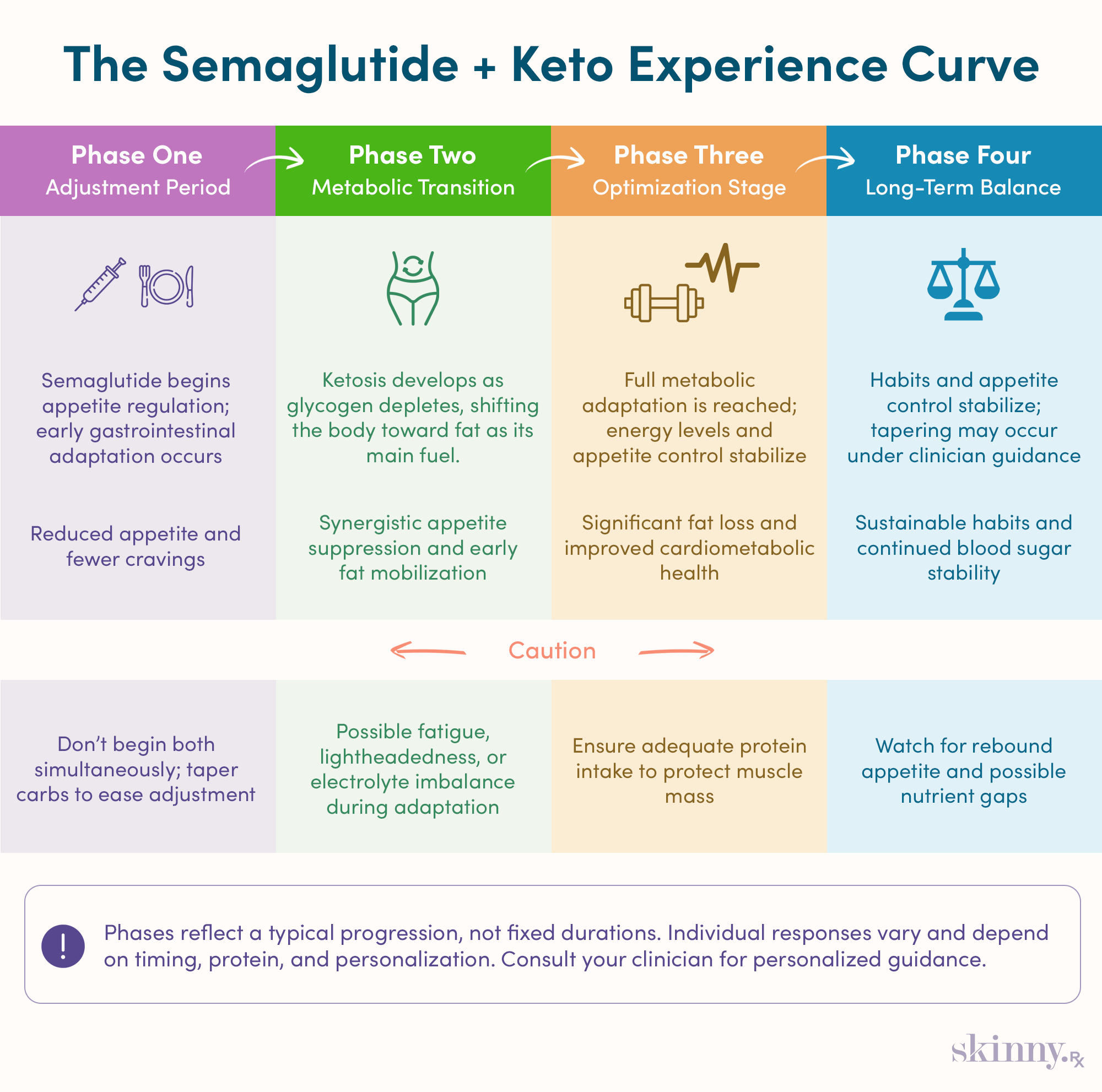
Keto has a lot going for it, and combining GLP-1 with a ketogenic diet may speed up your weight loss efforts. Let’s take a closer look at how these two interventions can work synergistically.
Better Overall Health
Some scholars have examined the holistic effects of adopting a new diet while on semaglutide for weight loss.
In addition to finding that low-carb diets—keto is the de facto example here, but not specifically mentioned in this study—produce better dietary adherence than low-fat diets, foods with antioxidant or anti-inflammatory properties may also synergize with GLP-1s on a metabolic level.
Enhanced Appetite Control
Semaglutide and keto both have strong effects on reducing appetite and cravings. While folks tend to report that semaglutide broadly reduces the desire to eat, keto works mainly by removing the hunger “peaks and valleys” that tend to come with eating high-carb foods.
A keto diet is considered to have a high satiety value due to its high-fat nature; high-fat meals take much longer to pass from the stomach to the small intestine compared to high-carbohydrate meals. Plus, a hormone called cholecystokinin (CCK) is released with the intake of fat, which is another satiety signal sent to the brain.
Improved Cardiometabolic Health
Semaglutide was initially prescribed to help those suffering from type-2 diabetes. Its cardiovascular health benefits have been thoroughly documented. However, you might be surprised to learn that the keto diet has similarly compelling benefits, according to some data.
In 2020, authors Choi et al. analyzed scientific trials of the keto diet’s effects on metabolic parameters, ultimately reporting, “Our study findings confirmed that ketogenic diets were more effective in improving metabolic parameters … as compared to low-fat diets.”
Sustainability After Semaglutide
When people get on semaglutide, the medication often takes the wheel in deciding the pace and voracity of their appetite. Unfortunately, this can also mean reverting back to your old eating habits once you come off of it—and gaining the weight you’ve lost right back.
If you don’t want to take semaglutide forever, you need a dietary approach that is easy to carry forward in life. Keto can provide that framework, since it is similar to semaglutide in its effects—recent research by Dyńka & colleagues even led the authors to argue that, “The ketogenic diet can often achieve the same results [as semaglutide] but arguably with fewer and less serious side effects.”
It’s important to note that the keto diet may be well-tolerated by some people but not others. In other words, if it’s not for you, there are other sustainable dietary patterns to consider.
Risks of Combining Semaglutide With Keto
Semaglutide and keto sound as if they go hand-in-hand, but they’re certainly not a perfect pairing in all cases. Here are some of the risks to be aware of if you’re considering adding keto to a GLP-1 regimen.
Potential Muscle Loss
One of the principal concerns for semaglutide users is muscular atrophy—losing muscle due to, in this case, insufficient fuel. Scholars have corroborated this concern, with one 2024 systematic review noting that up to 40% of the weight loss on semaglutide can come from “lean mass” like muscle.
If you’re doubling up on appetite reduction by taking semaglutide and doing keto, you may inadvertently boost your risk of muscular wasting due to rapid weight loss.
Two things can help prevent muscle loss on semaglutide; according to the Mayo Clinic, ensuring that your rate of weight loss doesn’t exceed about two pounds per week. If you’re consistently blowing past that, you’re likely eating too little.
Also, higher-protein diets have been shown to help conserve muscle mass during periods of energy restriction. Absent of sugars and starches, keto diets tend to come with eating more protein anyway.
Doesn’t Support Certain Exercise
Diet and exercise are the two halves of the weight change coin. While you’re on semaglutide, it pays to adopt an exercise routine you can stick to. However, omitting your body’s default energy source can make things a bit tricky.
Some studies have shown that very low-carb diets like keto translate to worsened performance in endurance training—a form of physical activity reliant upon glucose availability. On the strength training front, other data indicate a less-serious impairment.
You can certainly build muscle or get stronger while on keto, though these things are harder in general if you’re undereating
Limited Dietary Options
Keto is, by virtue, restrictive. You’re only permitted a very small amount of daily carbohydrate, one of the three primary macronutrients (alongside protein and fat). You’ll find some level of carbs in most foods, whole or composite.
As such, to stick to keto, you’ll have to get used to going without food sources that may be commonplace in your fridge or pantry. Studies tell us that low-carb dieters can be deficient in many vitamins and minerals.
Fiber is a particular concern given that the keto diet restricts many fiber-rich foods such as whole grains, fruits, vegetables, and beans. For those already facing semaglutide-induced constipation, a low fiber diet is likely to worsen the condition.

Following a healthy diet while taking semaglutide is critical to your overall health and well-being, and can help to manage common symptoms of the medicine. The keto diet may worsen common symptoms of semaglutide, like nausea and constipation.
–
Whitney Linsenmeyer, PhD, RD, Assistant Professor of Nutrition and Dietetics
Worsened Stomach Symptoms
Gastric distress is among the most commonly reported side effects of semaglutide, especially in the beginning stages of taking the medication.
Keto diets can produce similar unwanted issues—the “keto flu” is known for afflicting those adjusting to ketosis for the first time, and can come with many of the same symptoms as semaglutide, such as nausea or constipation.
The high satiety value of the keto diet may make semaglutide-induced nausea especially worse, while the limited nature of the keto diet may worsen constipation.How to Start a Keto Diet on Semaglutide: Practical Tips
If you’re on the fence about semaglutide, keto, or both, you need to arm yourself with the knowledge required to adjust to these interventions safely. Keep these practical tips in mind to stave off keto diet and GLP-1 side effects.
Don’t Start Simultaneously
Semaglutide and the ketogenic diet can both be disruptive to your stomach. Semaglutide has ramp-up periods, during which the last thing you need are more intense symptoms.
Make sure you’ve fully adjusted to your semaglutide regimen before taking the plunge on keto. And, when starting a keto diet, you may want to gradually reduce carbs rather than go cold turkey.
Also, your weekly semaglutide injection can cause lightheadedness, which could be significantly worsened if you’re also adjusting to having fewer carbohydrates in your system. Be mindful of how your semaglutide administration affects your body.
Prioritize Protein and Electrolytes
Whether you’re eating less in general or adopting a diet that restricts certain food sources, nutritional deficiencies come with the territory.
On semaglutide or when doing keto, you’ll want to ensure you’re getting adequate dietary protein (about .7 grams per pound of body weight, especially if you exercise), consuming enough electrolytes, and drinking plenty of water.
Consult Your Doctor and Registered Dietitian
Above all, you should have some level of medical supervision while on any medication. This is doubly important if you’re also considering making a substantial dietary adjustment.
Talk with your doctor and registered dietitian about your plans to start keto and heed their advice—it may not be a wise decision for your specific circumstances, and they’ll have the most informed perspective.
If you’re curious about whether semaglutide could support your goals, SkinnyRx offers thoughtful, clinician-guided care to help you move forward with clarity and confidence. You can take a short assessment to explore your options.
Frequently Asked Questions

By Jake Dickson, NASM-CPT, USAW-L2
Contributing Author
Jake holds a B.S. in Exercise Science from UNC Wilmington and began his career as a personal trainer and weightlifting coach. In recent years, he’s moved behind the page as a writer and editor, contributing hundreds of articles and being featured as a subject matter expert. Today, Jake’s goal remains the same: to empower people to change their lives by bringing heady scientific topics down to ground level.