

 Medically Reviewed

Key Takeaways
- Injection-site irritation stays localized and improves within a day or two, while allergic reactions can cause symptoms beyond the injection site.
- Anaphylaxis occurs in about 4 out of 10,000 people taking semaglutide annually and requires immediate treatment, often with epinephrine.
- Facial, lip, tongue, or throat swelling, trouble breathing or swallowing, fainting, or a rapid heartbeat signal a serious reaction requiring emergency care.
- GI symptoms like nausea or diarrhea alone aren't a reliable warning sign, but combined with other symptoms, they may indicate a reaction.
- Report any rash or allergic symptom to your prescribing provider, even if mild, so they can determine whether to continue treatment.
Taking a new medication can be overwhelming and a bit scary. That goes for any new prescription, including semaglutide. Like other treatments, semaglutide comes with possible side effects. Most are manageable and mild, yet two that concern some patients are a GLP-1 allergic reaction and injection-site irritation.
Both lead to similar symptoms, such as a rash or hives. With both, the injection site might be itchy or swollen. An allergic reaction, however, is more likely to be life-threatening if left untreated, and its symptoms extend beyond the injection site.
Continue reading to learn more about semaglutide allergic reactions, including what symptoms to look out for and how to determine if it’s an injection-site irritation or a serious reaction.
Important Note: Seek urgent medical care for swelling of the face, lips, tongue, or throat, trouble breathing or swallowing, severe rash or itching, fainting, severe dizziness, or a very rapid heartbeat.
What Is an Allergic Reaction?
If an allergen comes into contact with someone’s skin, nose, mouth, eyes, or respiratory tract, it may cause an allergic reaction. The symptoms vary depending on factors such as where the allergen comes into contact and how severe the allergy is.
In mild cases, symptoms may include:
- Hives (raised, red bumps on the skin) in one area
- Itching
- Rashes
- Nasal congestion
- Red or watery eyes
Signs of a more moderate or severe reaction are:
- Pain in the abdomen
- Difficulty breathing
- Chest tightness
- Diarrhea
- Wheezing
- Trouble swallowing
- Lightheadedness
- Redness on the face and/or chest
- Hives all over
- Swelling, especially of the tongue, lips, or face
Defining an allergen is also tricky, since these vary from person to person. Some people are allergic to peanuts, while others have an allergy to pet dander or pollen. A common subtype of allergens is medication ingredients. Someone, for example, could be allergic to the active ingredient or other ingredients in semaglutide.
Local Injection-Site Irritation vs. Allergic Symptoms
The FDA label lists that both allergic reactions and site irritation are possible side effects. A 2021 review by the American Diabetes Association reports a risk of site irritation of less than 1%. Allergic reactions are even rarer.
Yet the two share some common signs. Both may cause redness, itching, or irritation around the injection site, though they are two different things.
What Is Injection-Site Irritation?
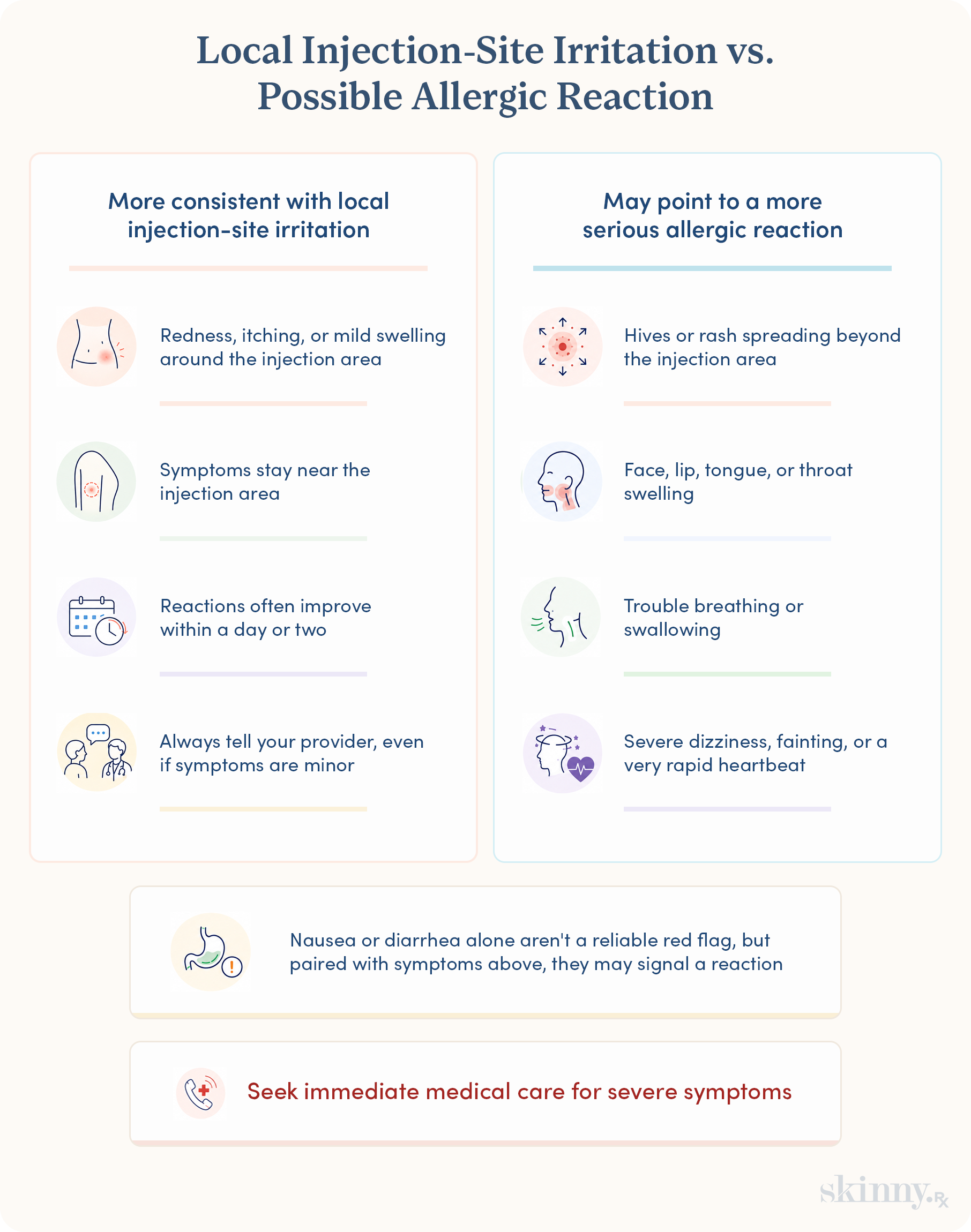
An injection-site reaction occurs in one location (where the injection was administered). Symptoms don’t occur all over the body and may be less severe. They typically last one or two days and may include itching, swelling, irritation, or redness at the injection site.
When this type of reaction occurs and semaglutide is otherwise effective, a doctor might recommend a rechallenge (taking the medication a second time at the same dose), followed by medical observation to see if the reaction occurs again.
What Does an Allergic Reaction to Semaglutide Look Like?
An allergic reaction can technically have the same symptoms at the injection site. However, it may also lead to symptoms beyond the site. Hives, for example, may be present where semaglutide was injected but also run up the arm. Additionally, allergic reaction symptoms will occur whether someone takes semaglutide as an injection or an oral medication.
In severe cases, allergens may lead to anaphylaxis. Anaphylaxis is a life-threatening, sudden reaction that requires immediate medical care. Often, treatment involves epinephrine, a medication and hormone, that helps manage anaphylaxis.
About four cases of anaphylaxis occur for every 10,000 people taking semaglutide in a given year. Anaphylaxis symptoms occur all over the body, not just at the injection site.

Weight Care Beyond the Prescription
The right weight-care treatment is important, but so is knowing what to do as things change. SkinnyRx provides you with access to GLP-1 treatment, clinician guidance, and ongoing support along the way.
Symptoms That May Signal a Serious Reaction
While anaphylaxis and other severe allergic reactions are rare in people who take semaglutide, they still happen. Here are some signs to seek emergency medical care due to the possibility of a serious reaction.
Hives or Widespread Rash
If an allergic reaction is caused by an injection, hives or a rash may occur. Hives are raised bumps that are typically red, itchy, and swollen. They can be small or big and may occur on any part of the body. A rash is an irritated, itchy, and red patch of skin. While they can lead to blisters or raw skin patches, they don’t have the classic red bumps of hives.
Both of these may manifest if the injection irritated the skin or if someone has an allergic reaction to semaglutide. If the reaction is severe, the rash or hives will spread well beyond the injection site. However, someone can also have a severe allergic reaction without any skin manifestations.
Face, Lip, Tongue, or Throat Swelling
If the face, lips, tongue, or throat swell, it’s typically a sign of a severe reaction. This may feel like a puffy tongue, a narrowing throat, or puffy lips.
Trouble Breathing or Swallowing
Trouble breathing or difficulty swallowing are two other signs of a serious allergic reaction. This may be due to the throat or tongue swelling, or they could occur independently. Someone may also experience wheezing, have a sudden cough, or make high-pitched sounds when trying to breathe.
Fainting, Severe Dizziness, or Rapid Heartbeat
When we don’t get enough air, we may feel dizzy or even faint. If someone cannot breathe due to an allergen, they may feel lightheaded.
The allergic reaction itself can also lead to an extremely fast heartbeat. We all experience a rapid heartbeat from time to time, such as before a big work presentation or first date. The difference is that the heartbeat is much faster during a serious allergic reaction than in a nerve-wracking situation.
Gastrointestinal (GI) Symptoms
Severe allergic reactions may trigger digestive symptoms like vomiting, diarrhea, and stomach cramps. The problem is, GI symptoms are also the most commonly reported side effects of semaglutide, meaning that these alone are not enough to indicate a serious allergic reaction.
Instead, GI symptoms with other symptoms above may indicate that an allergic reaction requires prompt medical attention. In contrast, semaglutide’s GI side effects often occur without the above symptoms.
What to Tell Your Healthcare Provider
If you have any of the symptoms of an allergic reaction, tell the prescribing healthcare provider. Even if it’s a mild irritation after injecting semaglutide or a small rash at the injection site, it’s worth bringing up in your next follow-up appointment or sending a message through your patient portal.
You can also document information that may help the provider determine the severity of the reaction, such as:
- Where the rash occurred
- If symptoms were near the injection site or widespread
- The presence or absence of hives or a rash
- Length of time between taking a semaglutide dose and symptoms
- Any new foods, supplements, skincare products, or other medications you tried around the time of the reaction
- Any swelling in the face, lips, tongue, throat, or eyes
When a healthcare provider determines that someone has an allergy to an ingredient in semaglutide or symptoms are part of an immune reaction, they will likely recommend stopping semaglutide and may offer alternative treatment options.
If experiencing facial swelling, trouble breathing or swallowing, dizziness, a rapid heartbeat, or fainting, seek immediate medical care. You should, however, alert the prescribing provider that you had a severe allergic reaction after receiving emergency care so they can adjust treatment.
Weight Care With Support Built In
The right weight-care treatment is important, but so is knowing what to do as things change. SkinnyRx gives you access to GLP-1 treatment, clinician guidance, and ongoing support along the way.
Questions to Ask Before Your Next Dose
If you’re nervous about a semaglutide rash or swelling after semaglutide, bring up these concerns with a healthcare provider before your next dose.
During that appointment, you may want to ask specific questions, such as:
- Should I be concerned about my reaction to semaglutide?
- Do you recommend continuing with treatment?
- If so, is there anything different I should do when taking my next dose of semaglutide?
- What allergic reaction signs should I look out for if taking another dose?
- What is the best way to contact you or receive medical care if I notice any signs of injection-site irritation or an allergic reaction?
The Bottom Line
A rash or hives after semaglutide doesn’t automatically mean something serious is happening, but it’s still worth paying attention to. Local injection-site irritation usually stays around the injection area and tends to fade within a day or two, while an allergic reaction may cause symptoms beyond the injection site.
If you notice facial or throat swelling, trouble breathing or swallowing, severe dizziness, fainting, or a very rapid heartbeat, seek immediate medical care. For milder symptoms, contact your prescribing provider. They can help you understand what may be causing the reaction and determine whether treatment should continue.
Frequently Asked Questions

By Angela Myers
Contributing Author
Angela Myers is a freelance health writer covering weight management, healthy aging, and nutrition. Her work has appeared in AARP, Well+Good, and Forbes, among others. Before starting her writing career, she conducted award-winning research on how to improve sexual violence prevention courses on college campuses. That research sparked a passion for health communication, and she's been writing about making healthcare accessible and inclusive ever since.