

 Medically Reviewed

Key Takeaways
- Semaglutide users report headaches at a higher rate than non-users, per FDA labeling and STEP trial data (16.8% vs. 11.7%).
- Most reported GLP-1 headaches occur within the first seven days of treatment or after a dose increase.
- Eating less, dehydration, low blood sugar, and sudden changes in caffeine intake are common triggers.
- Fluids, regular meals, rest, and an appropriate OTC pain reliever may help with mild headaches.
- Seek medical care if a headache is severe, worsening, unusual for you, or comes with vision changes, slurred speech, loss of balance, or vomiting.
Headaches can occur for many reasons, and the majority of us will experience a headache at one point or another. However, people who take semaglutide tend to experience headaches at a higher rate than the general population. Headaches are even listed as a possible side effect on the drug’s label from the Food and Drug Administration (FDA).
Continue reading to learn why headaches may happen when taking semaglutide, signs it’s time to contact a healthcare provider about GLP-1 headaches, and steps you can take to decrease the risk of headaches when taking semaglutide.
Are Headaches a Semaglutide Side Effect?
The FDA states that headaches are a possible side effect of semaglutide. In the STEP clinical trials, 16.8% of participants who took semaglutide experienced headaches.
Of the participants who did not take a weight loss medication, only 11.7% experienced headaches. The higher risk for the semaglutide group existed whether someone took an oral or tablet form of semaglutide or an injection.
GLP-1 headaches may be mild, or they could be more severe. Semaglutide is even associated with a higher chance of a migraine. A migraine is a moderate to severe headache accompanied by other symptoms, such as sensitivity to light or smells, nausea and vomiting, and fatigue.
Can Semaglutide Help With Some Headache Types?
Most headaches on semaglutide occur in patients who take the medication for blood sugar regulation, not to help manage weight. A 2025 review suggests that semaglutide may even help alleviate two types of headaches in people who are overweight or have obesity: idiopathic intracranial hypertension (IIH) and migraines in people with obesity.
IIH is a chronic condition where there’s too much fluid around the brain. This fluid creates extra pressure in the head, which can lead to headaches alongside tinnitus, temporary blindness, double vision, blind spots, tense neck and shoulders, and loss of side vision.
The possible reduction in these two types of headaches for a specific patient subset does not mean semaglutide is a headache medication—and other types of headaches are still very much a possible side effect.
When Do Semaglutide Headaches Happen?
A 2025 review in Frontiers in Pain Research looked at various medications that may cause headaches, including semaglutide. As part of that review, they reflected on headache patterns for the various drug types.
As the chart below demonstrates, the majority of reported GLP-1 headaches occurred during the first week of treatment.
Note: These percentages refer to the number of headaches reported in each timeframe, not the number of trial participants who experienced a headache.
Why Headaches May Happen During Treatment
Semaglutide headaches occur due to how habits and health change while on this medication. “Semaglutide doesn't just change appetite,” explains Sajad Zalzala, MD, board-certified family physician and medical advisor at SkinnyRx, “It changes daily habits. Patients often eat less, drink less, and sometimes unintentionally skip meals. Those changes can increase the likelihood of headaches, which is why hydration, nutrition, and consistent routines remain just as important as the medication itself.”
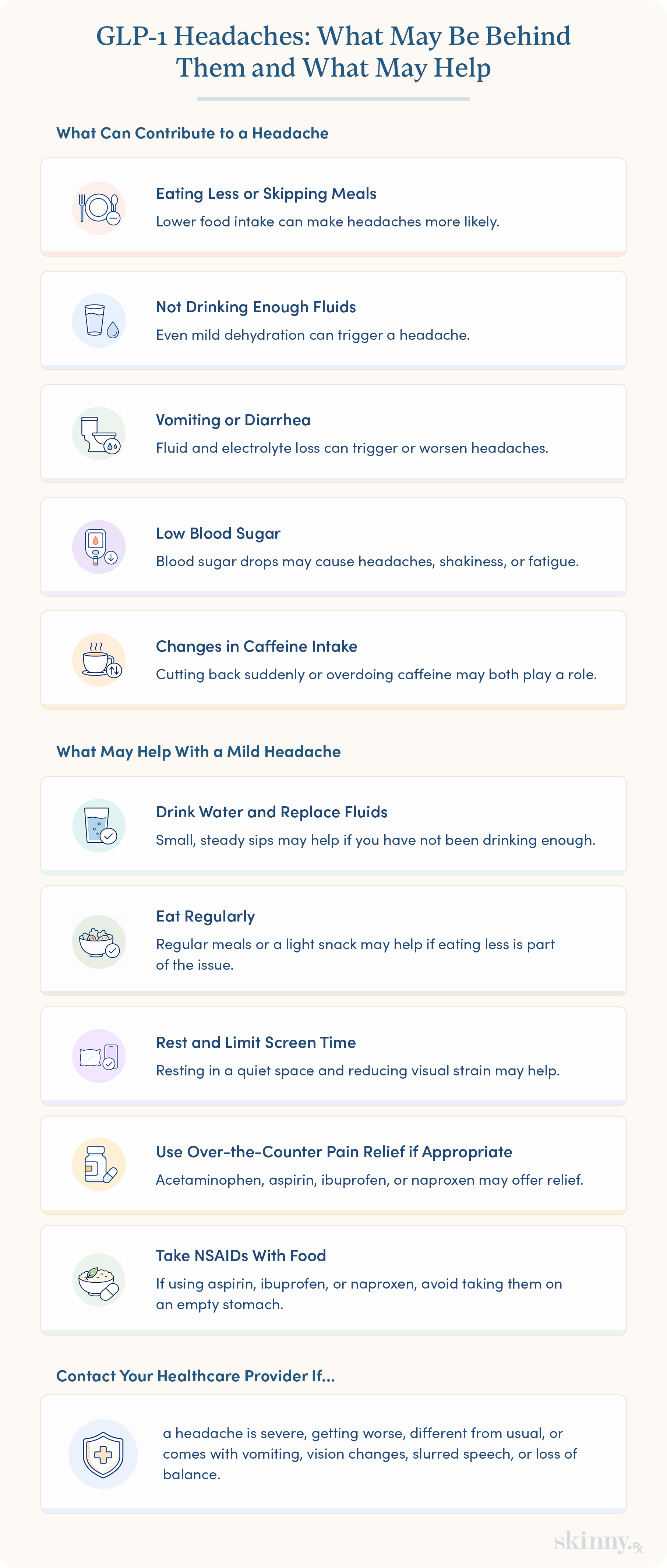
Eating Less Than Usual
Semaglutide mimics GLP-1, a naturally occurring hormone. Part of this hormone’s job is to control appetite, or how hungry someone feels throughout the day. When someone takes semaglutide, the drug activates receptors that reduce appetite. Semaglutide also slows down digestion, which means someone may feel full for longer after eating.
Together, these two factors mean people on semaglutide may eat less than before. This can have a positive effect on weight management, though eating less is associated with an increased risk of headaches. This is especially true if someone fasts or skips meals.
Blood Sugar Changes
Eating less may cause a blood sugar drop. Additionally, semaglutide is associated with blood sugar regulation, regardless of if someone eats the same as before they took this drug. This potential blood sugar drop may be beneficial if someone has high blood pressure.
People with a higher risk of low blood sugar, however, may experience hypoglycemia while taking semaglutide. Hypoglycemia is when blood sugar drops below the healthy range; if it occurs, someone may experience various symptoms, including headaches.
Dehydration or Electrolyte Shifts
If someone is dehydrated, they may experience a headache. Dehydration is a lack of water in the body. It often means there is less fluid in the brain, potentially leading to a headache.
But lack of water isn’t the only dehydration concern; electrolytes play a role in maintaining hydration too. Electrolytes are minerals found in bodily fluids. They not only help us stay hydrated, but also play a role in muscle maintenance, nerve function, blood pressure stability, and more. If electrolytes are imbalanced, it may lead to headaches and other adverse effects.
Weight Care Beyond the Prescription
The right weight-care treatment is important, but so is knowing what to do as things change. SkinnyRx gives you access to GLP-1 treatment, clinician guidance, and ongoing support along the way.
Nausea, Vomiting, or Diarrhea
Semaglutide doesn’t directly cause dehydration or an electrolyte imbalance. It does, however, cause gastrointestinal (GI) side effects like nausea, vomiting, and diarrhea. If vomiting or diarrhea is severe, someone may lose significant water or electrolytes, resulting in dehydration.
Caffeine Changes
It is safe to drink coffee, caffeinated teas, and other foods and drinks with caffeine while taking semaglutide. However, since semaglutide slows down gastric emptying, that caffeine may sit in your digestive tract longer than before.
While caffeine is known for providing an energy boost, that’s not its only health effect. It may also irritate the GI tract if you have a sensitive stomach or consume large quantities of it.
This may contribute to symptoms such as diarrhea and vomiting, especially if caffeine stays in the stomach longer than before. In turn, this may result in dehydration, with headaches as a potential side effect.
This doesn’t mean caffeine is a no-go when taking semaglutide. Consuming 400mg or less of caffeine most likely won’t lead to GI side effects or dehydration for most people. The appropriate amount for you depends on various factors, such as if you have anxiety, a GI condition, high blood pressure, a hypersensitive stomach, or certain heart conditions.
And if you’re already a caffeine drinker, it’s important to note that headaches are a known withdrawal effect.

Semaglutide doesn't just change appetite - it changes daily habits. Patients often eat less, drink less, and sometimes unintentionally skip meals. Those changes can increase the likelihood of headaches, which is why hydration, nutrition, and consistent routines remain just as important as the medication itself.
–
Dr. Sajad Zalzala, Board-certified Family Medicine Physician and Medical Advisor at SkinnyRx
Figuring Out Your Headache Triggers
Many headache triggers are modifiable. If, for example, you are drinking less water than usual or eating less than usual, you can track food and/or water intake to make sure you get enough.
The following checklist may be helpful in finding personal headache triggers while taking a GLP-1:
- Am I drinking less than usual?
- Have nausea, vomiting, diarrhea, or constipation changed my water intake?
- Am I skipping meals because my appetite is lower?
- Did I suddenly reduce caffeine?
- Do I use insulin, sulfonylureas, or other diabetes medications?
- Is the headache new, severe, worsening, or different from my usual pattern?
What May Help With Mild Headaches
If you have a mild headache, consider taking over-the-counter pain medications such as acetaminophen, aspirin, or ibuprofen. These medications are considered to be safe to take with semaglutide and may offer headache relief.
Important Note: If you take an NSAID such as ibuprofen or naproxen (Aleve), avoid taking it on an empty stomach. Because semaglutide slows gastric emptying and may reduce how much you eat, taking NSAIDs with food or milk can help reduce stomach irritation and bleeding risk.
Some lifestyle tips may also help:
- Drink plenty of water
- Try to reduce stress if possible
- Rest as much as necessary, but don’t sleep more than usual, as that can make the headache worse
- Avoid screens if possible
- Do not drink alcohol
When a Headache Needs Medical Attention
Make an appointment with a healthcare provider if experiencing a headache that interferes with daily life or is more severe than the ones you’ve had before. For mild and moderate headaches, you can usually make a regular appointment with a healthcare provider.
Severe headaches may be a sign of a more serious health condition, such as a stroke or a brain tumor. If you cannot see a healthcare provider quickly, seek emergency medical care if the headache:
- Comes on suddenly, especially if it feels explosive
- Lasts more than a few days
- Is accompanied by a high fever, nausea or vomiting, slurred speech, loss of balance, memory loss, or difficulty moving parts of your body
- Occurs in just one eye, alongside redness in that eye
- Wakes you up during sleep
- Makes it difficult to fall asleep
Questions to Ask Your Healthcare Provider
If experiencing headaches while taking semaglutide, here are some questions to ask the prescribing healthcare provider:
- Why are these headaches occurring?
- Is there any information I should track (e.g., water intake, meal times) to identify headache triggers?
- What should I do if I experience a headache while taking semaglutide?
- Should medication doses be reviewed if I keep having headaches?
The Bottom Line
Headaches can occur with semaglutide, especially early in treatment, but they may also be related to changes in eating, hydration, blood sugar, or caffeine intake. Tracking when headaches happen and what has changed in your routine may help you identify a pattern.
Mild headaches can often be managed with simple steps like drinking enough fluids, eating regularly, and resting. A few small adjustments may be enough to keep mild headaches from interfering with treatment.
If headaches are severe, keep returning, or feel different from what you normally experience, talk with a healthcare provider.
Frequently Asked Questions

By Angela Myers
Contributing Author
Angela Myers is a freelance health writer covering weight management, healthy aging, and nutrition. Her work has appeared in AARP, Well+Good, and Forbes, among others. Before starting her writing career, she conducted award-winning research on how to improve sexual violence prevention courses on college campuses. That research sparked a passion for health communication, and she's been writing about making healthcare accessible and inclusive ever since.