
 Medically Reviewed

Key Takeaways
- GLP-1 medications can make it easier to eat less, but steep calorie deficits may cause muscle loss alongside fat loss.
- Creatine may help GLP-1 users maintain muscle mass, improve training performance, and sustain day-to-day energy during weight loss.
- A small increase on the scale after starting creatine is usually water retention, not fat gain, or a sign that treatment stopped working.
- Creatine works best as part of a broader muscle-preserving routine that includes enough protein and regular resistance training.
- Anyone considering creatine while using a GLP-1 should speak with their clinician first, especially if they have kidney concerns, diabetes-related complications, or other underlying health conditions.
Creatine is a lot of things, but let’s start with what it isn’t: It isn't a steroid, a hormone, or “bad for your kidneys.” For bodybuilders and athletes, creatine is a tier-one athletic supplement—for weight loss seekers, it can be an invaluable asset to preventing muscle loss on a GLP-1.
Here’s what you need to know about the benefits of creatine for muscle retention, cognitive function, and metabolic health.
Muscle Loss: The Hidden Risk of GLP-1s
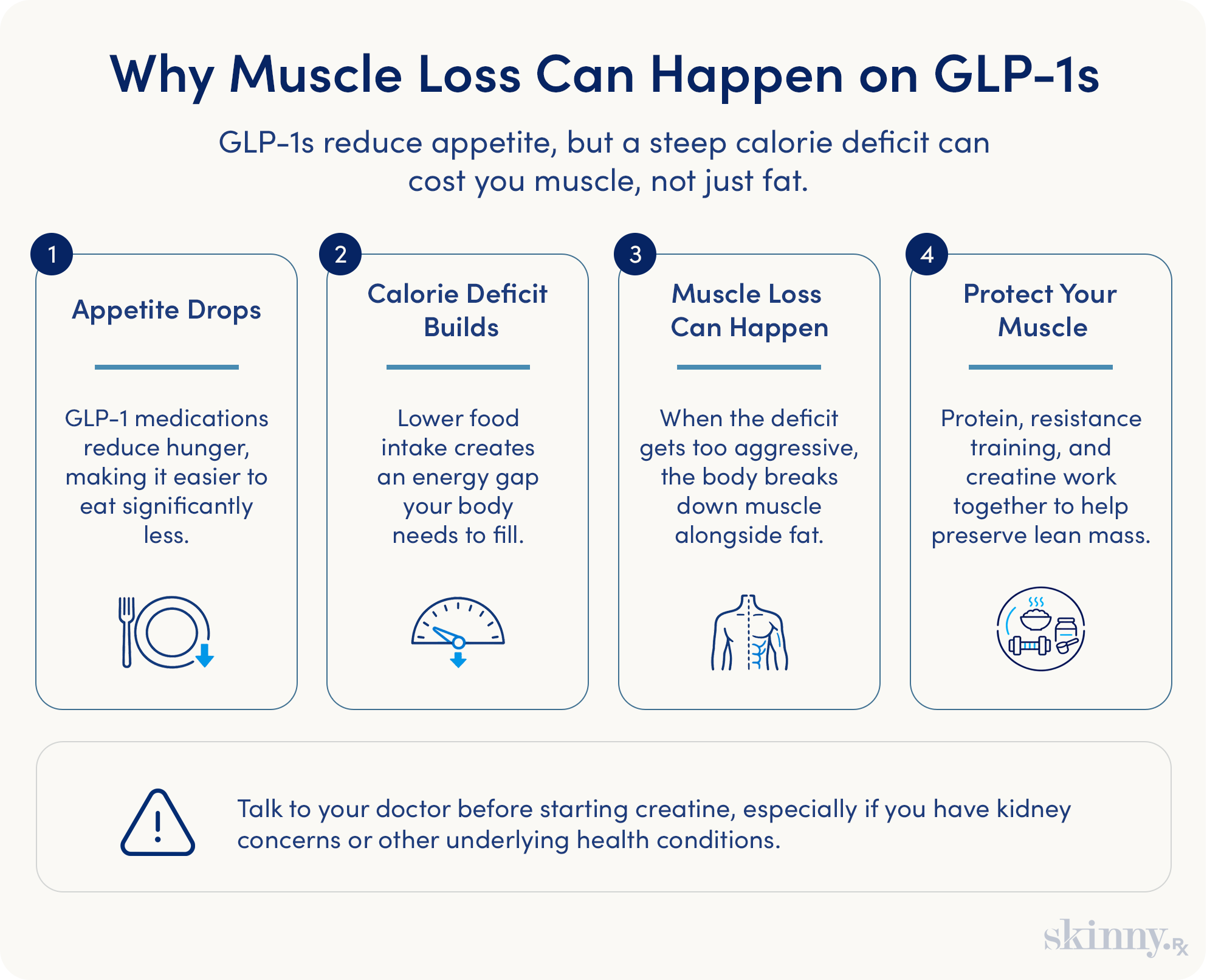
Simplistically, GLP-1s like Ozempic or Mounjaro are appetite suppressants. In addition to having effects on how your body metabolizes glucose and processes certain hormones, GLP-1 receptor agonists, as well as dual agonists like tirzepatide, act on receptors in your brain to curb cravings.
The real-world outcome? Consuming fewer calories over time. This is an energy deficit—a gap between the energy you need to function and what you’re bringing in. It forces your body to oxidize (burn) stored fat, leading to weight loss.
However, your body can only burn fat so fast. Steep and prolonged calorie deficits can force your body to break down muscle mass for energy to meet energy demands.
Losing muscle and fat creates the “skinny-fat” aesthetic due to a lack of tone and structure in the physique. To prevent skinny-fat on GLP-1s, you can adjust your energy deficit, eat more protein, lift weights, or add a supplement like creatine.
What Is Creatine?
Creatine’s reputation precedes it. It gained popularity among meathead culture and in sports settings for its ability to enhance work capacity and elevate power and strength output.
Put simply, creatine is a nitrogenous compound that your body already produces in small amounts; to achieve a therapeutic effect, most people need to turn to supplementation or dietary changes (there’s some found in red meat, for example).
How Creatine Works
Once you ingest creatine via a food or supplement, it is converted into and stored as creatine phosphate, a phosphagen that helps your body store more usable energy for short bursts of intense movement.
Will Creatine Make Me Gain Weight?
Let’s address the scale. Creatine is known to make you “gain weight,” but it’s not because your GLP-1 stopped working, or because creatine contains calories. The extra water retention—studies tell us people can pick up 2-3 pounds—shows up on the scale, but you shouldn’t worry about it.
Explore Personalized Weight Loss Options
Start with an online assessment to help a licensed clinician determine whether a prescription weight loss treatment may be appropriate for you.
Benefits of Creatine for GLP-1 Users
Creatine plays both offense and defense in your body. Sure, it helps you go harder in the gym and lift more weight, but for GLP-1 users, creatine’s protective benefits are the real draw.
Muscle Preservation
Creatine encourages your body to hold on to its muscle tissue. Muscle mass is a “use it or lose it” thing—research shows that creatine works synergistically with resistance training, making it a go-to for bodybuilders who put themselves through long periods of caloric restriction.
You’re probably not a bodybuilder, but resistance training is a must-do if you’re prioritizing muscle mass on GLP-1s. You can capitalize on the metabolic synergy between creatine and resistance training by hitting the weights twice per week.
Fighting the “GLP-1 Slump”
Some people experience an energy slump on GLP-1s. Not because of the medication itself necessarily, but due to the energy deficit it encourages. “Energy” can be tricky to define and study, but we can look at data on creatine’s impact on fatigue in specific circumstances:
- Older adults were more resilient to physical fatigue after 14 days of high-volume creatine supplementation.
- A recent trial provided creatine to patients suffering from fatigue and found that 6g administered daily was associated with “improvements in fatigue and strength.”
Neuroprotection and Mental Clarity
You may not think of creatine as a brain health supplement, but the brain uses approximately 20% of your total resting energy. And the latest research paints a compelling picture:
- In 2022, researchers found that creatine supplementation enhanced concentrations in the brain by 15%, possibly leading to improved cognitive acuity.
- A 2025 analysis found low creatinine levels—a byproduct of creatine itself, and a byproduct of age-related muscle loss—to be associated with increased risk of Alzheimer’s.
- There are ongoing clinical trials looking at creatine’s potential utility in curbing unwanted side effects from brain surgery.
Supplementing Creatine With GLP-1: How To Start
Creatine may have a daunting reputation, but it is one of the simplest and most agreeable sports supplements out there, with decades of evidence corroborating its safety for healthy people.
To supplement creatine on a GLP-1, take between 5 and 10 grams of creatine monohydrate powder once per day, mixed into plain water, with or without food. If your GLP-1 causes a sensitive stomach, take your creatine hours apart on injection day.
5 grams is the standard prescription, but some data have shown higher doses, particularly for larger people, to have additional benefits, but may worsen side effects like gas, bloating, or upset stomach.
Is Creatine Safe on GLP-1s?
Creatine has a reputation for being stressful or dangerous for those with renal disorders. Since impaired kidney function is a byproduct of type-2 diabetes, you’ll want to consult with your doctor if you’re on a GLP-1 and thinking of using creatine—even if your prescription is just for weight loss.
That said, creatine’s harmful effects on the kidneys are overstated for people without specific contraindications. Put simply, if you haven’t had kidney issues in the past and your doctor doesn’t flag any concerns, creatine is safe to use with GLP-1s.
Creatine Loading
You don’t need to “load” creatine or intentionally consume large amounts over the course of a week to reach saturation faster. The Cleveland Clinic argues that it doesn’t make a difference in the long term and may cause unwanted gastrointestinal side effects.
Bottom Line
GLP-1 medications are a powerful tool for weight loss—but weight loss and fat loss aren't always the same thing. Without the right support, the scale moving down can come at the cost of the muscle underneath.
Creatine won't replace resistance training or adequate protein intake. But for GLP-1 users looking to protect their physique, maintain their energy, and get more out of every workout, it's one of the most well-researched, cost-effective, and straightforward supplements available.
Five grams a day, mixed into water. Decades of safety data behind it. No prescription required.
If you're already on a GLP-1 and haven't considered creatine, it's worth the conversation with your doctor—especially if muscle loss, fatigue, or mental fog are part of your experience. The goal isn't just a lower number on the scale. It's a body that's stronger, leaner, and more resilient on the other side of treatment.
Frequently Asked Questions
Explore Personalized Weight Loss Options
Start with an online assessment to help a licensed clinician determine whether a prescription weight loss treatment may be appropriate for you.

By Jake Dickson, NASM-CPT, USAW-L2
Contributing Author
Jake holds a B.S. in Exercise Science from UNC Wilmington and began his career as a personal trainer and weightlifting coach. In recent years, he’s moved behind the page as a writer and editor, contributing hundreds of articles and being featured as a subject matter expert. Today, Jake’s goal remains the same: to empower people to change their lives by bringing heady scientific topics down to ground level.