
 Medically Reviewed

Key Takeaways
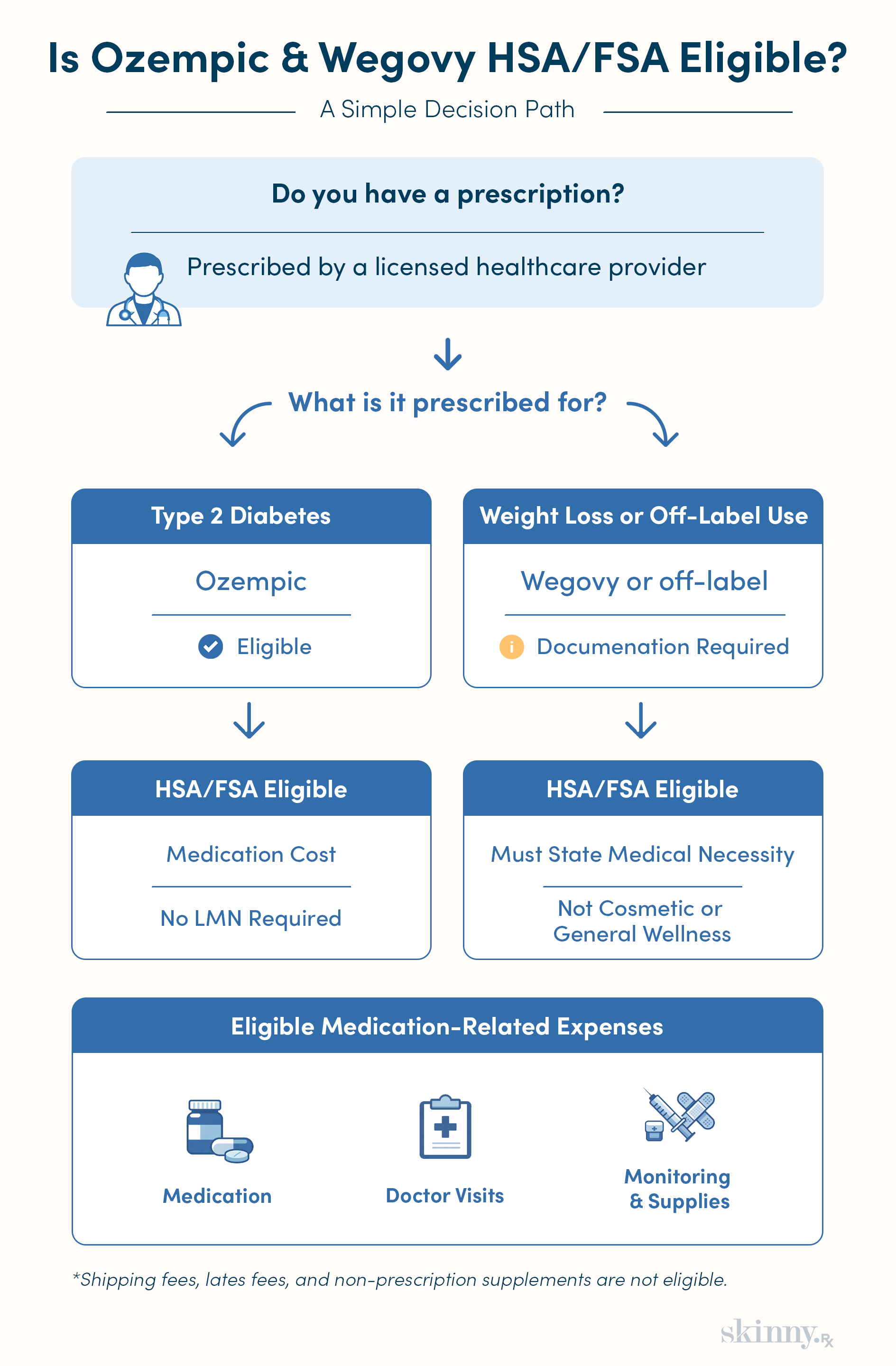
- GLP-1s are generally HSA/FSA eligible, but coverage depends on the medical reason for the prescription. Ozempic for type 2 diabetes typically qualifies without extra documentation, while weight loss use may require additional approval.
- Weight-loss prescriptions for Wegovy or off-label use usually require a Letter of Medical Necessity stating that the treatment is medically necessary and not for cosmetic or general wellness purposes.
- HSA and FSA funds can be used for more than the medication itself, including doctor visits, dose monitoring, and injection-related supplies tied to semaglutide treatment.
- Some expenses are not HSA/FSA eligible even with a prescription, such as shipping fees, late fees, travel costs, and non-prescription supplements.
- Submitting a successful HSA or FSA claim requires proper documentation, including receipts and LMN paperwork when applicable, and claims are often processed within a few business days.
For some, diet and exercise aren’t the hardest parts of losing weight on semaglutide—it’s affording the drug in the first place. While GLP-1s are shaking up the health and wellness industry in a big way, studies show the hefty price tag for semaglutide can be a real deterrent for those who need it most.
That’s why it’s so essential to know how you can reduce the cost of semaglutide. We’re breaking down HSA/FSA eligibility for semaglutide, what it takes to get a hold of a letter of medical necessity for weight loss, and more.
Understanding HSA and FSA Fundamentals
Uninsured buyers seeking Ozempic or Wegovy at the retail price are facing a monthly cost exceeding $1,000. Whether you have insurance or not, it’s essential to know all prospective pathways to making GLP-1s financially realistic.
Here’s the short answer: Since Ozempic and Wegovy received FDA approval for type 2 diabetes and weight loss, respectively, they are generally eligible for payment through HSA/FSA accounts.
What Qualifies as a Medical Expense (IRS Rules)
The U.S. Internal Revenue Service (IRS) outlines its criteria for semaglutide as a health expense under Publication 502. 502 specifies that medical expenses count as “the costs of diagnosis, cure, mitigation, treatment, or prevention or disease,” including the conditions which semaglutide medications have been approved to treat.
The caveat: Expenses related to “general health”—the IRS uses a daily multivitamin as an example—aren’t HSA or FSA-eligible.
That is precisely why you must have certain documentation in line if you want to use semaglutide for weight management.
The Basic Rule for Prescription Drugs
Broadly speaking, insurance-related costs for prescription drugs do fall under HSA and FSA eligibility. If a doctor signed off on it, you’ve got a green light to mitigate most associated expenses through your HSA or FSA.
Semaglutide Eligibility: Diagnosis Matters Most
When it comes to semaglutide eligibility, purpose is everything. The context in which you are prescribed semaglutide—and, thus, the brand name you get—determines how much your HSA or FSA can shoulder the financial burden.
Ozempic for Type 2 Diabetes: Straightforward Eligibility
Ozempic injections are FDA-approved for the purpose of treating type 2 diabetes symptoms. As such, if you receive an Ozempic prescription, you’re eligible to use HSA or FSA funds to reduce your expenses.
Wegovy for Chronic Weight Management: The LMN Requirement
Things become more complicated if you receive an Ozempic prescription that isn’t expressly for managing type-II diabetes; that’s considered off-label use, which, if you want to draw from an HSA or FSA, requires a Letter of Medical Necessity (LMN).
Navigating the Letter of Medical Necessity (LMN)
The LMN stipulation applies to Wegovy, even though it has been FDA-approved for weight loss. LMNs are documents written by healthcare providers justifying the necessity of a medication or treatment. They’re often used to verify the release of funds from HSAs or FSAs.
For Wegovy to be HSA/FSA-eligible, you need an LMN indicating that weight reduction is of specific and timely relevance to your physical health, and not a general or aesthetic pursuit.
Components of a Valid LMN: What Your Doctor Needs
A valid LMN must state that the drug in question (Ozempic or Wegovy, in this case) is essential for the treatment of a specific disease under certain criteria. For example, overweight or obesity is considered a health risk above a certain BMI level, or if it increases the risk of developing associated issues like hypertension or diabetes.
To draft an LMN, your physician will need to include:
- Your name, date of birth, and insurance (if applicable)
- Your specific diagnosis
- The specific medication or service you require
- An explanation for its relevance in treating your condition
- The physician’s credentials
“Medical necessity” has a specific meaning. Your physician must be able to explain why the treatment itself is the best option available, how it will improve the condition, and back these claims with clinical evidentiary support.
Expert-Guided, Sustainable Weight Loss
Discover how GLP-1 medications, combined with expert support, can help you reach lasting weight loss results.
Beyond the Medication: Other Medication-Related Expenses
Semaglutide comes with a hefty price tag, but one that HSA/FSA approval can significantly lighten. However, the financial burden of the medicine itself isn’t the only cost worth considering.
Injectable Supplies and Related Devices
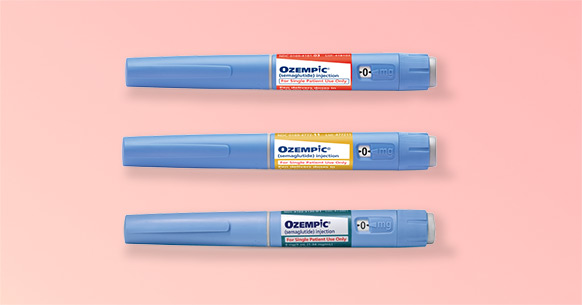
Whether you’re getting Ozempic or Wegovy, it is administered subcutaneously via injection pens. The medicine itself doesn’t come in a vial; the pens are pre-filled and included. As such, you don’t need to worry about justifying an injectable as a valid HSA/FSA expense. Other devices or equipment, such as sanitizing wipes, are generally covered.
Associated Doctor Visits & Monitoring
While on semaglutide, your doctor will generally want to see you several times after receiving your prescription. GLP-1 dosages are titrated, meaning you start small and gradually increase to an effective threshold (called the therapeutic dose) over a period of several weeks, to ensure you can tolerate potential side effects. That monitoring process and the costs associated are HSA and FSA-eligible.
Ineligible Expenses To Watch Out For
Not everything is HSA/FSA eligible, even if you have a prescription or LMN on hand. Tertiary expenses like late fees, shipping and handling if getting your medicine by mail, or travel expenses to retrieve your prescription don’t count. The same goes for non-prescription items advised by a physician alongside your medication; think vitamins or general health supplements.
Claim Submission and Documentation: Your Action Plan
If you’re preparing to submit an HSA or FSA claim, you need to have your ducks in a row. If you’ve never done so before, don’t fret—it’s simpler than you think.
- Gather all relevant documentation, such as receipts or prescription information
- Log into your HSA or FSA account
- Begin a new claim or reimbursement request
- Upload relevant documentation
- Submit
Assembling your documentation and submitting a claim may feel daunting, but know that once you submit, things generally move pretty quickly. The official government FSA service notes that most claims are processed within two business days after verification.
If navigating coverage rules, eligibility requirements, and out-of-pocket costs feels overwhelming, you’re not alone. At SkinnyRx, we focus on making GLP-1 care more accessible by offering doctor-guided options for semaglutide and tirzepatide that are both clinically appropriate and cost-conscious. If you’re exploring whether a GLP-1 may be right for your goals and circumstances, a short assessment can help clarify your options and next steps before moving forward.
Frequently Asked Questions

By Jake Dickson, NASM-CPT, USAW-L2
Contributing Author
Jake holds a B.S. in Exercise Science from UNC Wilmington and began his career as a personal trainer and weightlifting coach. In recent years, he’s moved behind the page as a writer and editor, contributing hundreds of articles and being featured as a subject matter expert. Today, Jake’s goal remains the same: to empower people to change their lives by bringing heady scientific topics down to ground level.