

 Medically Reviewed

Key Takeaways
- Large FDA and clinical reviews have not found a higher risk of psychiatric adverse events, including suicidal thoughts or actions, with GLP-1 medications.
- Mood changes on GLP-1s can stem from more than the medication itself, including changes in identity, self-image, or eating-related coping habits.
- GLP-1s affect dopamine and reward pathways, which may change how some people experience pleasure from food and other activities.
- Any new or worsening mood, sleep, or appetite symptoms should be reported to a healthcare provider.
- If you have thoughts of self-harm or suicide or feel unable to stay safe, seek immediate help and call or text 988 in the U.S.
GLP-1 weight loss medications have seen increased use since the Food and Drug Administration (FDA) first approved them in 2005 to treat type 2 diabetes. Now, GLP-1 receptor agonist medications are also increasingly used for weight management.
Like any medication, GLP-1s do come with label warnings noting potential risk of acute kidney injury, thyroid C-cell tumors, severe gastrointestinal illness, and severe mood changes, including anxiety, depression, and suicidal ideation. However, recent reviews by the FDA have asked GLP-1 manufacturers to remove the warnings of suicidal behavior.
If you’re currently taking one of these weight loss or diabetes medications — or are considering starting one — you may be wondering about the possibility of anxiety, depression, mood changes, or reports about suicidal thoughts.
Below, we’ll cover the mood changes that can occur during major weight, appetite, sleep, health, or life changes, what the FDA review means, and signs GLP-1 users should watch for.
Why Mood Questions Come Up With GLP-1s
GLP-1 use can bring significant changes for users, whether it affects their appetite, sleep, weight, or health through how the drugs work.
These medications mimic a natural hormone called glucagon-like peptide-1 that:
- Increases how full you feel after eating
- Slows digestion so food stays in the stomach longer
- Quiets “food noise” in the brain
- Signals the pancreas to make more insulin when blood sugar rises
- Prevents too much glucose from entering the bloodstream
While results vary for individuals, some include reduced blood sugar, less food eaten, lowered weight, and improved sleep apnea.
However, while large-scale reviews have found no direct causal link between these medications and depression or suicidal ideation, some users have noticed their mood is impacted in negative ways.
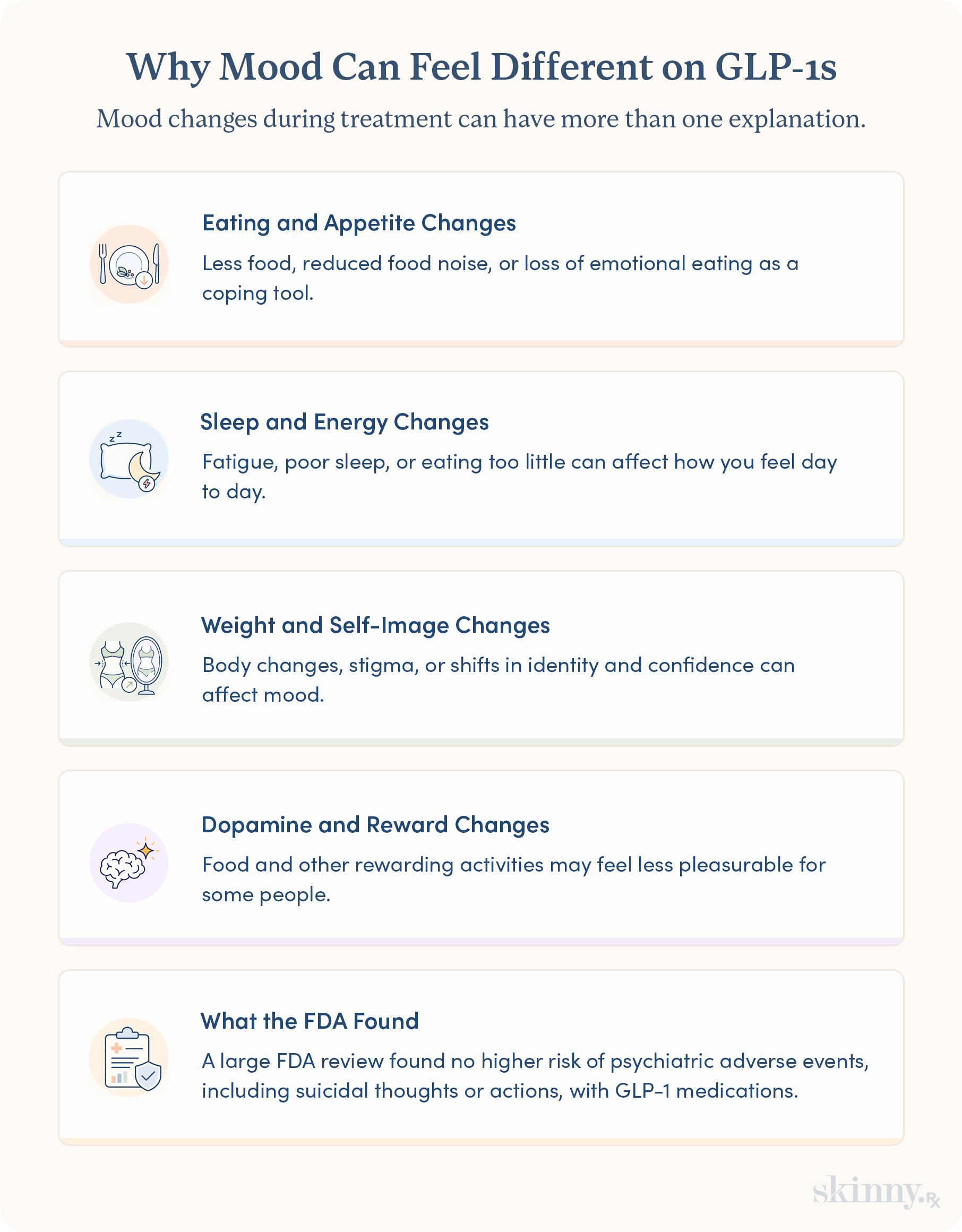
Quieting "Food Noise" Can Unmask Other Emotions
For instance, GLP-1s quiet “food noise”, which, according to a 2023 review, is “rumination and obsessive preoccupation about food,” even when not actively hungry — something which GLP-1s seem to help suppress, according to current research.
While quieting this noise may bring relief for some, it can also highlight stress or emotional challenges that were previously masked by eating.
Some may have also turned to emotional eating to cope with symptoms related to depression, anxiety, or stress. Several months into GLP-1 treatment, they may find themselves still dealing with these feelings.
While GLP-1s may reduce the act of emotional eating itself, they don’t take away the feelings that initially caused the coping behavior.
Weight Loss and Identity
Despite the popularity of the medications, many GLP-1 users may carry stigma or shame around using them, as weight is seen as a personal responsibility rather than a medical issue.
Psychological changes could be brought about by the physical changes that accompany GLP-1 use, as well.
For example, losing weight can change someone’s identity — especially if their self-concept was tied to their weight or previous size. Some may notice a lag between self-image and how the body has changed.
Losing weight doesn’t always come with improved self-image or self-confidence, either, as a changing body can draw more attention or an individual may be grieving their old body.
Weight Care That Adapts With You
If prescribed, get access to GLP-1 treatment, clinician guidance, nutrition support, and progress tracking together in one app.
The Two-Way Link Between Weight and Mood
Meanwhile, weight gain and mental health are linked in both directions. Depression, anxiety, trauma, and binge eating have resulted in weight gain over time, while obesity is connected to higher rates of mood disorders, such as anxiety and depression.
And clinical evidence has shown that when GLP-1 treatment stops, weight returns, which may bring back mental health symptoms.
Dopamine and Reward Changes
GLP-1 drugs also affect dopamine, a brain chemical responsible for motivation, reward, and pleasure, among other functions. Studies show that GLP-1s activate inhibitory neurons in the ventral tegmental area — a central hub in your brain’s reward-processing circuitry — which, in turn, suppress dopamine activity.
While this can reduce the dopamine spike someone might get from eating certain foods, it can also reduce the pleasure they feel from other activities that provide quick pleasure. Since they no longer get as much pleasure from eating these foods, they may feel as if they have “less emotion”.
What the FDA Review Found
After new or worsened depression symptoms and suicidal thoughts were reported in people who used GLP-1s, the FDA conducted a review of the medications.
A large FDA meta-analysis of 91 placebo-controlled clinical trials involving over 107,000 patients showed no higher risk of psychiatric adverse events, including suicidal thoughts or actions, among users of GLP-1s.
As a result, the FDA has requested the removal of warnings of increased suicidal behavior or ideation from relevant labels.
Another large study from 2024 also found no link between GLP-1 medications and suicidal ideation.

GLP-1s can change far more than the number on the scale. They change eating patterns, reward pathways, daily routines, and sometimes the coping strategies people have relied on for years. That's why I encourage patients to monitor not only their weight but also their mood, energy, sleep, and overall sense of well-being.
–
Dr. Sajad Zalzala, Board-certified Family Medicine Physician, Medical Advisor at SkinnyRx
Mood Symptoms to Take Seriously
While the FDA advised those taking GLP-1s to continue the use of their medication as prescribed, they also noted people should discuss any concerns with their healthcare providers.
New or Worsening Anxiety
While anxiety is a normal stress response, it becomes a medical disorder (generalized anxiety disorder, for instance) when it lasts a long time or prevents you from completing daily tasks and activities.
One large 2024 study found that people with obesity who were on GLP-1s had a slightly elevated risk of anxiety.
Some common signs of anxiety include:
- Feeling restless or irritable
- Trouble concentrating
- Fast heartbeat
- Trouble sleeping
- Sweating
- Shaking
- Nausea
Depression Symptoms
The same 2024 study above also found that GLP-1 users had almost double the risk of major depression.
More than being sad or irritable for a few days, depression is a mood disorder that affects how you think, feel, and behave for several days. Depression can even make simple tasks like sleeping, eating, working, and bathing difficult.
Typical signs of depression are often:
- Feeling empty
- Overeating or not eating enough
- Sleeping too much or not enough
- Feeling hopeless, irritable, or anxious
- Isolating from family and friends
- Increasing use of alcohol or drugs
- Increased thoughts of death or suicide
- Losing interest in activities
GLP-1s can cause a temporary flat mood or lack of pleasure in some users — referred to as anhedonia, which is a symptom of depression.
However, anhedonia from weight loss or diabetes medication is oftentimes temporary. Depression is diagnosed if symptoms occur nearly every day, for at least two weeks, with one of the symptoms being a depressed mood or a loss of interest in most activities.
Sleep, Appetite, and Energy Changes
GLP-1s can affect sleep, energy, and especially appetite. However, you should let a healthcare provider know about worsening changes.
Appetite suppression is typical with a GLP-1 receptor agonist and is usually experienced within the first few weeks of use, depending on the individual.
But you should talk to a doctor immediately if total appetite loss leads to severe under-eating, dehydration, extreme dizziness, fainting, inability to keep fluids down, or unintentional rapid muscle loss.
While these medications have also been found to help conditions like sleep apnea, they may affect short-term rest by causing side effects like heartburn, diarrhea, nausea, headaches, or even low blood sugar at night.
It should also be noted that insomnia can be caused by more than one thing, with physical and psychological factors both playing a role.
Fatigue or low energy levels are often a side effect of GLP-1s, possibly due to decreased calorie intake, metabolic lag from the body adjusting to new blood sugar levels, or dehydration from vomiting or diarrhea.
Low energy from the medications is usually temporary, within the first few weeks, and returns with dose increases.
But if fatigue interferes with your daily life, you’re experiencing signs of dehydration, have severe abdominal pain, or are experiencing signs of dangerously low blood sugar, consult a healthcare professional.
Thoughts of Self-Harm or Suicide
Certain behaviors can indicate thoughts of suicide or self-harm, such as:
- Talking about wanting to die or being a burden to others
- Feeling empty, hopeless, or trapped
- Feeling like you have no reason to live
- Extreme feelings of sadness, anxiety, or anger
- Unbearable emotional or physical pain
- Making a plan to die
- Researching ways to die
- Taking dangerous risks
- Extreme mood swings
- Using drugs or alcohol more often
Seek immediate help if you have thoughts of harming yourself or someone else, feel unable to stay out of danger, or have sudden severe mood or behavior changes. In the U.S., you can call or text 988 to connect with the Suicide & Crisis Lifeline.
What to Tell Your Healthcare Provider
When talking to a healthcare provider about GLP-1 anxiety or depression, clearly describe the specific symptoms, when they started, how long they’ve lasted, how severe they are, and any potential triggers like extreme fatigue or low calorie intake.
It may be helpful to keep a notebook when you start taking the medications, not only to track what you eat, weight, or other health metrics, but also your mood, sleep, and energy levels.
While large studies don’t indicate a connection between the medications and mood disorders or suicidal thoughts or behavior, individual mental health varies.
Questions to Ask Before or During Treatment
You can also ask your provider some questions, either if you’re already taking a GLP-1 or are curious before starting:
- Have I had depression, anxiety, bipolar disorder, eating disorder history, or suicidal thoughts before?
- Who should I contact if symptoms worsen?
In addition to talking with your doctor, it’s important to take time to reflect on your mental health and ask yourself some key questions regarding your health, such as:
- Did my symptoms start or worsen after a dose change, appetite change, sleep disruption, or major weight change?
- Am I eating enough to support energy and mood?
- Has alcohol use, caffeine use, or medication use changed?
While it may be difficult to face tough mental or emotional issues, it’s an important part of your overall health.
The Bottom Line
Large-scale studies have not found a direct link between GLP-1 medications and depression or suicidal ideation. The FDA reached the same conclusion after its review and asked manufacturers to remove related warnings from drug labels.
Even so, some people notice changes in mood, energy, sleep, or appetite while taking these medications. Those changes are still worth paying attention to, especially if they are new, worsening, or affecting daily life.
Track how you’re feeling and talk with your healthcare provider if something changes. If you have thoughts of self-harm or suicide, call or text 988 right away.
Weight Care That Adapts With You
If prescribed, get access to GLP-1 treatment, clinician guidance, nutrition support, and progress tracking together in one app.
Frequently Asked Questions

By Rachel Sacks
Contributing Author
Rachel Sacks is a New York-based contributing writer with more than a decade of experience covering a range of topics, including weight loss, mental health, sexual wellness, skincare, and more. Her work has been featured in The New York Post, Healthline, Hims & Hers, Business Insider, and other notable publications. She graduated from Miami University in Oxford, Ohio, with dual degrees in Journalism and Art History.